The Polio Vaccine Was a Miracle—and We Must Not Forget It
As a polio survivor, I am a dinosaur today. My great hope is that our country’s living memory of the disease ends with my generation.

IN THE SPRING OF 1954, hundreds of thousands of American schoolchildren lined up to receive the Salk vaccine. I was in the fifth grade, feeling oddly sad. I fully appreciated the profound good news that a cure had been found for polio, a disease that paralyzed an average of 20,000 American children a year, but I was also worried. Would other people still understand why my right foot flopped and my left resembled a clubfoot? I was sometimes shunned for fear of contagion, though not everyone shied away. My mother dressed me cute and I was photographed more than once to raise money for the March of Dimes.
I contracted polio during the 1950 epidemic when the United States saw more than 33,000 reported cases. Two years later, in 1952, there would be 57,879 more of us. Polio survivors could be seen pretty much everywhere—wearing braces, using crutches, maybe in a wheelchair. At my school, there was a boy who had been robbed of so many muscles that he could not sit up. Every day, his mother and our teacher hooked him into a sling and fastened him to his desk.
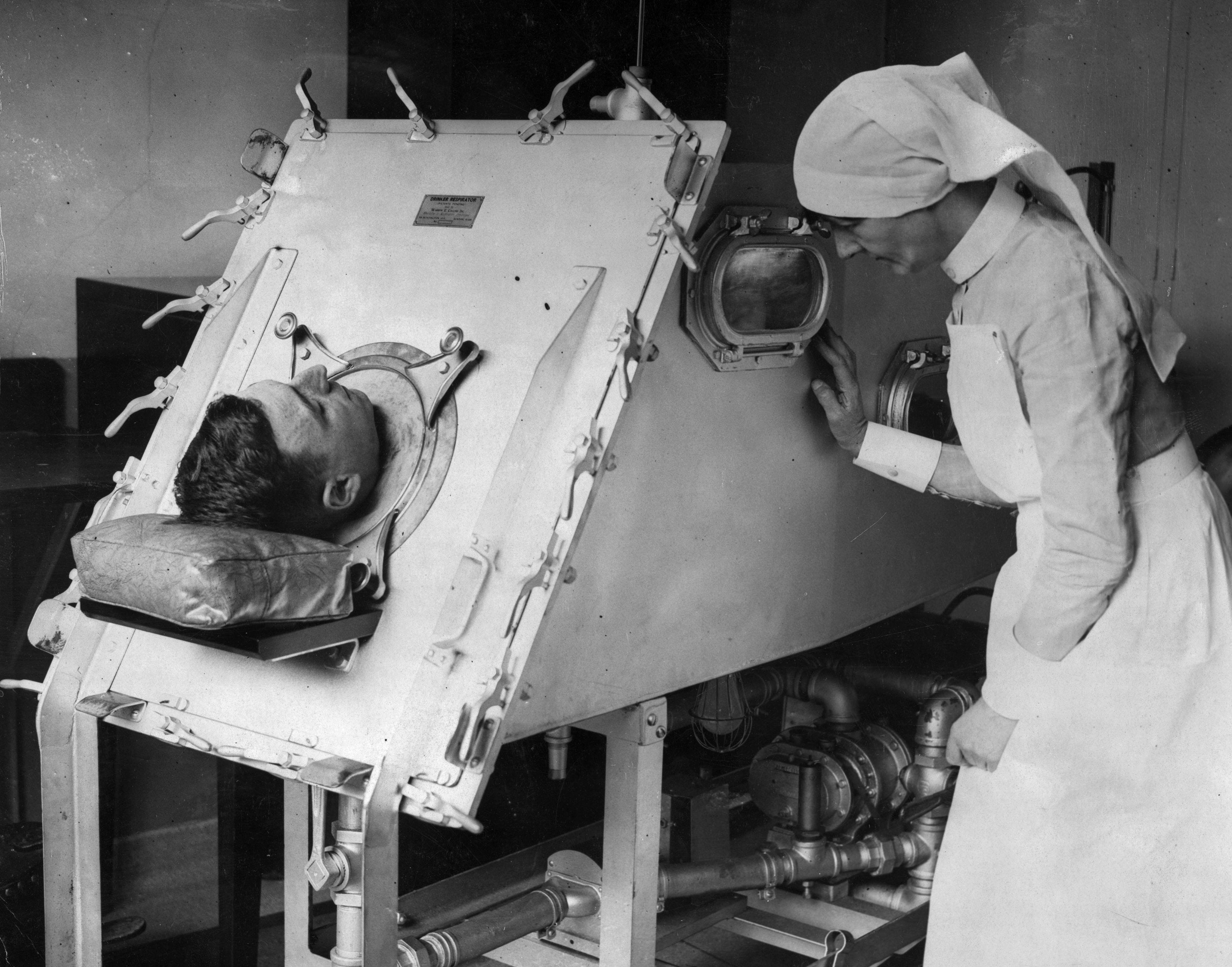
I was 6 years old when I was diagnosed and rushed from my little cotton town in Arkansas to an isolation hospital in Memphis. I stayed there for three months, resting next to an iron lung to help me breathe if needed. It was the only thing I was really afraid of. After two days of sleeping off a fever, I woke up to find I was paralyzed from the waist down. The next day, my ability to sit up returned. But when two children near me died, I decided I was being saved for something.
Whenever my mother tried to tell her side of this story, how she prayed all night that I would be spared, saying, “I promised HIM you would . . . ,” I always stopped her. I didn’t want to hear that she’d promised that I would cure cancer or ingrown toenails or become the first female pope (which would have been really hard since we weren’t even Catholic). I didn’t need that kind of pressure. I had already decided at the age of 5 that I would be a writer, a storyteller using the magic of silent language to make a reader feel good about being alive. In the hospital, this decision became what I have always described as a calling, but I have never been given to understatement. My nickname was the Screaming Mimi, after the name of a WWII bomb, because I was so spunky.
When the Salk vaccine was given to the nation’s second graders, I was selfishly wondering if I was on my way to becoming a dinosaur, a relic seen only in history books.
The fact that a cure had been found after fifty years of searching was certainly a cause for celebration. Jonas Salk appeared on See It Now with Edward R. Murrow. When asked about a patent for the vaccine, he said there was none. “Could you patent the sun?” he asked. His statement set a standard for altruism.
The triumph over the poliovirus cannot be fully appreciated without knowing about the intense competition between two physician-scientists: Salk and Albert Sabin. The human being’s love of competition doesn’t often look pretty—displaying our most selfish traits—yet many manmade miracles have come from a rush to end suffering and a desire to be recognized for it.
Born in New York City the child of Jewish Russian immigrants, Salk entered high school when he was only 12. He fell in love with science’s power to self-correct: Ask a question, try an experiment; if it fails, try another, and on and on until an answer appears.
When he was ready for medical school, his options were limited by the fact that elite universities openly discriminated against Jews. Salk entered New York University, which was inexpensive and open to Jewish students, and studied virology.
Albert Sabin, who was eight years older than Salk, came with his parents from Poland to escape the murderous pogroms that killed Jews after World War I. His family settled in New Jersey, where Sabin entered high school.
To work on his English, Sabin read Microbe Hunters by Paul de Kruif and Arrowsmith by Sinclair Lewis, two major bestsellers of the 1920s that brought to life the intellectual adventures of medical science. If the stories romanticized the curing of diseases and dismissed the grueling work involved, Sabin did not care.
In his sixth year as president, Franklin D. Roosevelt struck a blow against polio by creating the National Foundation for Infantile Paralysis. This private charity launched the March of Dimes, which recruited Hollywood figures such as Eddie Cantor, Jack Benny, and Bing Crosby to ask every American to send a dime to the White House, to go toward finding a cure. Americans knew Roosevelt had contracted the poliovirus when he was 39 years old, but few saw the effects. The president’s secret was preserved by a “splendid deception,” as writer Hugh Gallagher has described it. Roosevelt enjoyed a pact with the press, according to which he was never to be photographed being carried into a building or sitting in his wheelchair.
Few knew the president was actually paralyzed in the lower half of his body. His valet dressed him lying down to save the president’s energy. His braces were painted black to make them disappear in photographs. His suit pants were hemmed several inches too long so that when he sat down and crossed his legs, his pants would cover his braces. Strong men carried him where he needed to go: to his car, into buildings, below deck on a boat. When going upstairs, they lifted him by his elbows to make it seem as if he was walking between them. He gave speeches from his car, holding on to a pole to make it seem as if he were standing. When he gave his first inaugural address, “We have nothing to fear but fear itself,” he was fighting a pervasive fear that he would fall in public. After the famous call for dimes to be sent to the White House, so many dimes arrived that a truck had to haul them to the Treasury Department. Franklin Roosevelt’s image is now on every dime in tribute to his search for a cure.
ROOSEVELT CHOSE HIS FORMER LAW PARTNER, Basil O’Connor, to be the director of the March of Dimes Foundation. Years later, by coincidence, O’Connor met Salk while traveling on an ocean liner. O’Connor introduced Salk to his daughter, who was recovering from polio. Impressed with the scientist’s empathy, O’Connor remarked that Salk “sees beyond the microscope.”
By the time that Salk and Sabin began their race to find a vaccine, some of the most basic questions about the virus had been answered. Karl Landsteiner in 1908 took a liquid sample from the spinal cord of a boy who had just died of polio and passed it through a filter. Landsteiner then injected the sample into the stomachs of two rhesus monkeys, one of whom quickly became paralyzed. Since a bacterium is bigger than a virus and would have been unable to pass through the filter, the experiment established that polio was caused by a virus.
A virus always needs a host—a living entity for its own survival—but in the case of the poliovirus, the carrier might be asymptomatic.
The next big question to solve was the portal of entry. How did the virus get into the body? For a while, it was thought the virus entered through the nasal passages. All sorts of chemicals were inserted into nostrils to develop a barrier. Even Sabin came up with his own nasal barrier, but then he took on performing autopsies of those who had died from the poliovirus. When he found no virus in the nasal passages but found virus in the alimentary tract on its way to the stomach, he established that the virus was spread by the fecal-oral route, entering through the mouth and multiplying in the intestine and then passed from child to child.
Thus began Sabin and Salk’s great disagreement. Sabin set about producing a vaccine with a small amount of live attenuated virus on a sugar cube for a child to swallow, so as to travel the usual way though the body to produce lifelong immunity. Salk believed that a dead poliovirus should be injected into the body to call up antibodies to fight off an invasion by a live virus. His method was to trick the body into reacting as if it had already had the virus.
In either man’s theory, a large quantity of poliovirus would be needed, and it was believed that the poliovirus could only exist in nerve tissue. Then, in 1947, in a lab at Boston Children’s Hospital, John Enders—a charming, happy-go-lucky physician-scientist who later came up with the measles vaccine—told residents Tom Weller and Fred Robbins to see if the poliovirus would grow in kidney and other tissues. They had been working on the chickenpox virus but that day had several strains of poliovirus stored in the lab.
Whenever Enders had live virus on hand, he maintained strict protocols, not even allowing his wife to visit his lab. Weller and Robbins carefully placed a strain of poliovirus in a flask with kidney tissue and it thrived. The longstanding belief that the poliovirus could not be grown in non-nerve cells was upended. For their contribution to understanding the poliovirus, Enders, Weller, and Robbins were awarded the Nobel Prize.
A year later, Salk began his typing project. From working on the flu virus that had killed so many in the epidemic of 1918, he knew there were different strains of flu. He assumed there could be multiple strains of the poliovirus and set about determining how many.
He worked seven days a week for three years, passing 196 strains of poliovirus through rhesus monkeys shipped from India. Since the Hindu religion viewed monkeys as sacred, their capture, travel, and time in laboratories had to be carefully monitored. At the same time, however, the Indian government was eager to send them to America because monkeys there were multiplying at an incredible rate and destroying crops.
Loaded onto planes and flown to London, they arrived in the United States and were sent to a farm in South Carolina built for them by the March of Dimes Foundation. Each month some were sent to the typing laboratories at a cost of $26 per monkey. The virus was then given to a monkey and, once muscle weakness appeared, the animal was euthanized and its spinal cord harvested for the virus. That strain of the virus was then injected into the brain of another monkey, and on and on in an exhausting and brutal process of elimination.
The facts were adding up. The virus was bred in fecal matter carried by children who passed it around to other children. The carrier could show no symptoms, whereas other infected children would be partially paralyzed or lose the ability to breathe.
The typing project lasted from 1949 to 1951, costing more than $1,200,000, most of it going to the care of the monkeys. Some 17,000 rhesus monkeys gave their lives to identifying three strains of the poliovirus; one that could produce a mild case, similar to a cold; the second, paralysis; and the third, Bulbar polio, which led to difficulties with breathing, often causing death.
After Salk identified the three strains, he set about choosing specimens to put in a vaccine to provoke a ferocious immune response. His favorite was the Mahoney strain, isolated in 1941 from a family in Akron, Ohio, who were asymptomatic but had contact with others who fell ill.
When Salk put the Mahoney strain into monkey kidney tissue, it destroyed the tissue rapidly. The second strain was isolated from the spinal tissue of a British soldier who died in an epidemic in Egypt in 1943. For the third strain of poliovirus, Salk chose what he called the Saukett strain, taken from a young polio victim in the Pittsburgh hospital where he was working.
He then had to come up with a way to keep the monkey tissue alive long enough to grow the virus to use in thousands of vaccines. Almost serendipitously, the answer came from a laboratory at the University of Toronto. Medium 199 was a synthetic nutrient made from sixty ingredients that enabled the poliovirus to grow without a living host. It would not need a monkey’s blood supply to thrive.
Salk tinkered with the best way to kill the poliovirus. His method relied on the findings of other scientists. He used formaldehyde in a ratio of 250 to 1, which was tricky. He had to make sure there was enough live virus to immunize a child safely. He tasked a colleague with finding a way to identify live virus by a color test.
Next loomed the biggest question: How to harvest the virus to inoculate a million children? Julius Younger, according to David Oshinsky’s superb history Polio: An American Story (from which many details of this article are taken), revived a process known as trypsinization, which is a technique employing the enzyme trypsin to break down the proteins to detach from the flask or culture dish in which they were being cultured. Trypsinization became the perfect way to harvest the poliovirus to use in a vaccine.
With the field trials coming up, Salk worried that the Mahoney strain was too strong to use. He vaccinated himself and his three children. Since the cost of offering the vaccine to the nation’s children would be huge, mothers went door to door in another March of Dimes campaign. Parents were desperate to find a cure and the fund drive brought in $55 million dollars.
Sabin, in the meantime, tested his sugar cube vaccine on prisoners who volunteered, each swallowing three cubes to create immunization for each of the three strains.
Jonas Salk was in a hurry. He acquired test volunteers at two institutions in Pennsylvania. One was a private long-care hospital, the other a state institution for cognitively impaired children. The testing was conducted in secret to avoid giving rise to false hopes. The first volunteer that Salk chose was Bill Kirkpatrick, who was in the long-term hospital. The previous Labor Day weekend Kirkpatrick was getting ready for the upcoming football season by running laps when he was struck down by the virus, paralyzing him below the waist. He was eager to become Salk’s first volunteer.
Salk took blood samples of his volunteers to see the levels of antibodies in their bloodstream. He looked for immunity to Type I, II, or III of the poliovirus. He tinkered with the adjuvant, which is the chemical the vaccine rides on as it enters the body to increase the immune response. Sometimes he used mineral oil; sometimes he used none; sometimes he mixed all three types of virus together in a trivalent vaccine. Then he went home and worried. He did not sleep well.
The results of the field trial came in. “It was the thrill of my life!” Salk later said. The vaccine proved to be safe, and the immune response was high, lasting for months. By then, though, the largest public health experiment in history would take years of planning. To inoculate 1.5 million children would be complicated and, while the vaccine was ready, it would not arrive in time for the 57,000 children who would contract the virus that year, 1952.
DURING SALK AND SABIN’S RACE for a vaccine, I was in the isolation hospital, recovering. I was missing the rest of first grade, which has become a great excuse for why I can’t spell. My classmates were given an assignment to write get-well cards for me, which I eagerly read. “Will you be my special one?” “I wil b happi you back.” “I lov you.” Whether I was being showered with kindness out of pure compassion or my classmates’ fear of a bad grade, it did not matter to me. When I returned to school, I found I was almost as popular as Elvis and accepted the attention with great pleasure.
It has been said that Franklin Roosevelt never thought of himself as being unable to walk, that in his dreams he was always running or walking briskly. Me too, and, much to my embarrassment, I still harbor a bad feeling against my fifth-grade kickball captain who told me I couldn’t be the pitcher at recess because I couldn’t run fast enough to handle a bunt.
In 1969, a movie based on William Faulkner’s last novel, The Reivers, was released. When I saw it, I recognized what I’d been looking for. A character says that in Jefferson, Mississippi, people regarded the outside of a person as having nothing to do with what was inside—that the body was just what you spent a day in and slept in, a mere vessel for the soul.
It was not long before the Screaming Mimi spunkiness that had given me my nickname took over. I put my cat in my grandmother’s bed because she thought of cats and snakes as the same, and the feeling of my cat’s tail around her legs sent her whooping and hollering out of bed in her nightgown.
As I began to date, my father would teasingly tell any boy who came to pick me up, “I’ll give you ten dollars if you can keep her out until 11:00.” And I’d always pitch back, “Don’t take a check from him; it’d only bounce.”
I’ve always held a grudge against ol’ Tennessee Williams for making that young girl in The Glass Menagerie so pitiful she couldn’t get a boyfriend. The essence of a person transcends orthopedic shoes or a floppy walk.
All the same, it was a poignant day when I watched a pediatrician give the Sabin sugar cube to my own young children.
After the 1954 Salk vaccine was injected into the arms of the nation’s children—even though there was a collective sigh of relief from all parents—it did not go smoothly. In 1955, in what is called the Cutter Incident, a great number of vaccines were compromised, causing 40,000 cases of polio, leaving 200 children with varying degrees of paralysis, and killing 10. Salk was devastated. The search for what went wrong became frantic.
It was discovered that one of the pharmaceutical companies that made the vaccine did so with live virus stored in vats in the same rooms where the vaccine was bottled. The live virus likely became airborne and contaminated the packaged doses, or the vaccines sat too long in storage allowing sediment to gather, shielding the live virus from the formaldehyde. Fifteen scientists were called to testify at a special session on Capitol Hill to determine if inoculating the nation’s children should be continued. Salk told friends he couldn’t stop identifying with the people who were paralyzed through the terrible mistake. He admitted that, for the first time in his life, he felt suicidal.
Finally, the experts voted 8–3 to continue the inoculation program. Salk refrained from voting. New protocols were put in place to oversee vaccine production.
In response to several outbreaks in Russia, Sabin was asked to come to Russia to give his vaccine. In 1959, ten million Russian children swallowed the Sabin oral vaccine in the largest public health trial in history.
TODAY, THERE ARE ABOUT half a million of us polio survivors. Like WWII veterans, we are dwindling. In the 1980s, some of us began to experience muscle weakness reminiscent of our original bout with the virus. Researchers finally decided the virus was not reawakening in us but that our symptoms were coming from the wear and tear on healthy nerve cells. The motor neurons that had made it through the initial polio attack sprouted extra branches to compensate for what was lost. Over time, these degenerated in the normal aging process as well as from the demands we put on remaining motor neurons. I probably wore out many of mine on a tennis court.
Now, at age 82, I have done a deep dive into the life of Franklin Roosevelt to find out how he managed. In his last years, he worried about the weakening of his thumbs, which had been paralyzed during the first days of the initial poliovirus attack. Only his cousin, Daisy Suckley, knew that he feared being unable to sign his name in public and practiced writing his signature in private.
As for me, I had to give up tennis. I am now losing the ability to walk, but I can’t complain since for over seventy years I have led an athletic life, written over a dozen books, been married to a pediatric neurosurgeon (one of the best), raised two children, and have cooked an estimated 17,000 meals, not counting breakfasts, for my family, and ridden in a world horse show and not fallen off.
Countering rumors that the vaccine is unsafe or causes AIDS is the challenge facing the polio vaccine now.
I’m thrilled to be a polio dinosaur. I am living proof that even though the Salk vaccine did not arrive in time to prevent my limp or rejection as a kickball pitcher, science is the workshop of miracles. Physician-scientists are the artisans working through the night, arguing, racing, debating seemingly crazy ideas, all the while taking on complex questions to find a cure to benefit all of humankind. Vaccines are manmade miracles among us.
 | A guest post by
|