Prepare for a Post-America World Order
It will take a long time to recover America’s credibility after Trump’s foreign policy chaos.

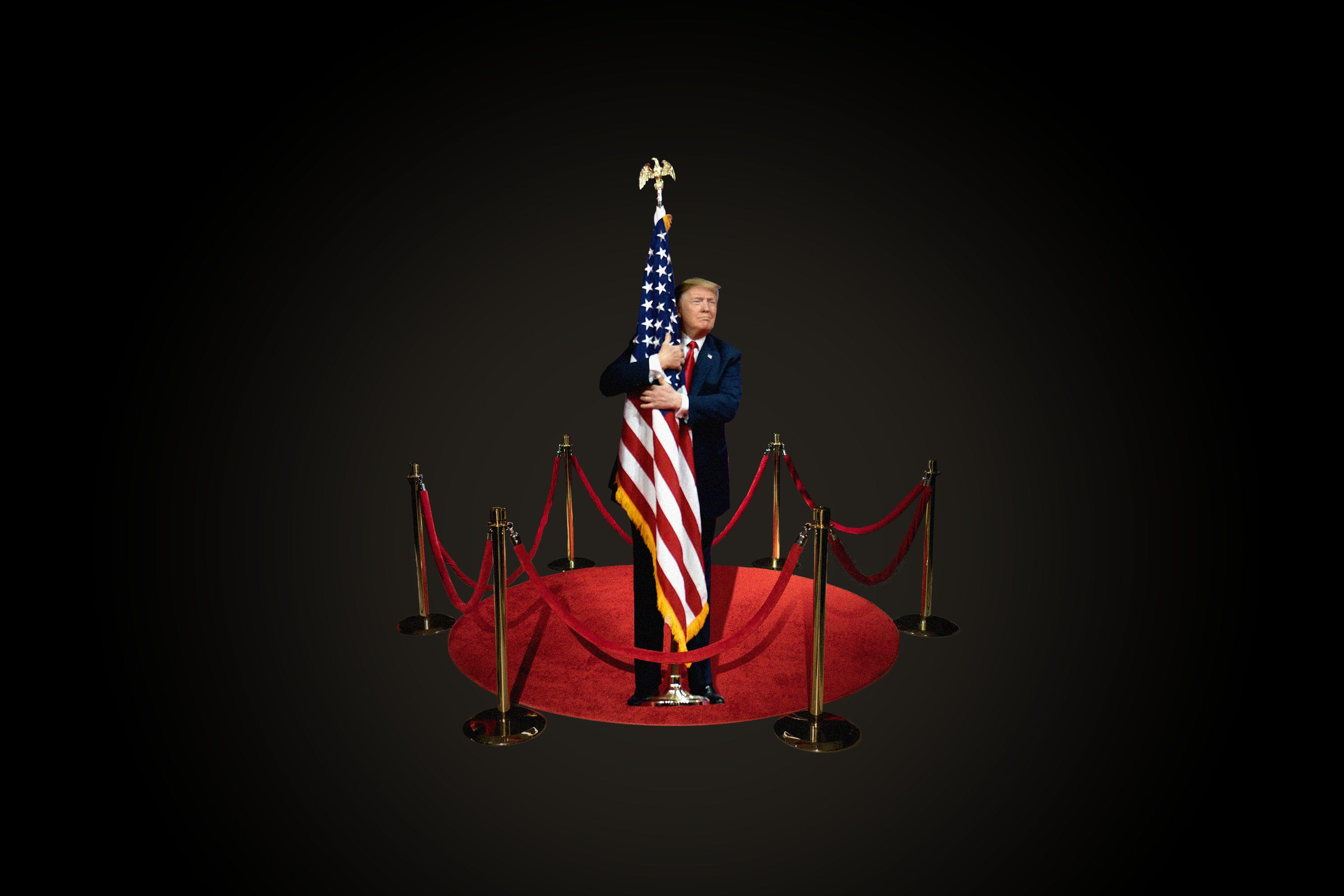
AS DONALD TRUMP LURCHES from one erratic foreign policy decision to another, America’s traditional allies and partners wonder if the United States possesses anything resembling a coherent strategy for its dealings with other countries. While Americans wrestle with Trump’s impulsive decision-making at home, democratic leaders around the world are attempting to guess what Trump and Trumpism mean for the U.S.-led international order. And they are starting to plan for a world without it.
From here out, any U.S. ally or partner has a strong interest in trying to get as little done with the United States as possible until Trump is gone (or, at the very least, constrained by a Democratic Congress). That might take a while.
America First risks becoming America Alone.
This is a change. Since at least the end of World War II, much of the world has looked, with some grumbling, to the United States for leadership. Generations of American policymakers understood that America was well served, and its power enhanced, when the rest of the world generally trusted it to do what it said it would do.
Such faith in American motives and consistency is impossible today. It is getting harder to understand what constitutes U.S. foreign policy at any given moment, beyond recognizing that it exists largely as an extension of the president’s shifting moods. And while various senior officials and MAGA influencers have attempted to articulate an “America First” foreign policy, none of these efforts withstand Trump’s words and deeds.
Consider recent events. The United States sought to lock up a trade deal with the European Union early, and the EU agreed. A deal was signed. But then Europe didn’t send as much military support to the Persian Gulf during the current conflict as Trump, for whatever reason, apparently thought they would, or should, and he responded with a late-night social media post announcing he would tariff their cars and trucks. But then he didn’t. The deal was finalized earlier this week, but given Trump’s threats against Greenland and recent comments on European security, it’s not clear that, given their time over, the EU would bother attempting such a deal today.
After the Supreme Court struck down most of Trump’s tariffs, the president announced a new global tariff that threw into question every deal the United States had reached with trading partners, including major ones like Japan. Countries that had just locked up a deal with Trump suddenly had no idea if their deal still held, or even what the true rate of the new tariff was. (No matter: a U.S. court killed the new tariff two months later, anyway.)
Look north, to my home country of Canada, one of the United States’ closest partners. Last year, Doug Ford, the premier of Ontario—a province with deep U.S. trade ties—aired an ad on U.S. TV highlighting the conservative icon Ronald Reagan’s opposition to tariffs. The White House responded with a tantrum, calling a halt to vital negotiations needed to determine the future of the United States–Mexico–Canada trade agreement with only months left to go. Following Trump’s signal, Commerce Secretary Howard Lutnick described, behind closed doors, the White House’s desire to reshore the North American auto industry within American borders.
That all happened last fall. Fast forward to this week: Even after Canada has moved to meet some U.S. demands by pledging major defense spending boosts—indeed, the country has already begun spending the money—the Department of Defense’s resident America Firster, Under Secretary for Policy Elbridge Colby, announced a pause to the Permanent (ahem) Joint Board on Defense, a bilateral military planning group first established eighty-six years ago.
Our situation up here reflects that of the global community more generally. In a sudden move announced last week, the United States cancelled the deployment of 4,000 combat troops to Poland, originally intended to shore up NATO’s strength near the Russian border. The change happened with so little warning that it seems to have caught even senior U.S. military officials off guard. Poland has been one of the louder pro-America voices in recent years, especially compared to some of the traditional Western European powers. It didn’t matter.
One U.S. official suggested the redeployment was a short-term move ultimately intended to draw down troops in Germany, another target of Trump’s ire. While plausible, unfortunately this theory does not help to clarify the larger foreign policy vision being pursued—especially in light of a Truth Social post Trump put up yesterday announcing a further reversal with a promise of a new deployment of 5,000 troops to Poland.
Meanwhile, the president went to China and, taking strategic ambiguity to an absurd length, made comments that left observers openly wondering whether the United States wishes to provide defense support, including weapons sales, to Taiwan—much to the apparent surprise of the Taiwanese.
We’re way beyond the art of the deal here. Such whiplash-generating decisions are far too erratic to give meaningful negotiating leverage to Trump; indeed, his caprice is having the opposite effect. Trump is incentivizing his would-be partners to avoid making deals with him at all, and, to the greatest extent possible, reduce their reliance on the United States and with it American influence.
The response by democratic partners and allies has been predictable. Canadian Prime Minister Mark Carney has carved out a veritable side gig in showing up at prestigious forums to declare the end of the era of American global leadership. European leaders are increasingly blunt in their own public comments to and about Trump, whose wrath is so hard to avoid it can no longer really be feared. Canada, Europe, and allies across Asia may be tip-toeing around Trump at the moment, but they are also rapidly seeking out new trading partnerships. It’s hard to fully wean oneself off the gigantic American economy, particularly when, as in Canada’s case, you share a continent with it, but there is an active effort underway. This is especially true when it comes to hard power. Even as countries around the world embark on military buildups, U.S. defense contractors have never looked less appealing, with fears that Trump could use them or their wares as leverage over the country’s international partners. The long-term damage being done to U.S. industry is incalculable.
There is a deeper problem related to Trump’s chaotic persona and his record-breaking disapproval ratings at home and abroad. He has turned the act of bargaining with the United States itself into something no Western leader can casually risk. Any potential deal with Washington is going to require sacrifice and concessions in the hopes of securing an agreement with America—never mind the awkward photo-ops. It’s no surprise that the world leaders who connect most with Trump are from authoritarian regimes or backsliding democracies. Why would any democratic leader—Canadian, European, Japanese, anyone—risk domestic problems for a deal with this administration? What possible incentive is there to do anything but go through the motions and suffer what you must, at least until the midterms?
There’s a hockey term that applies here. (Every Canadian writer is required by royal decree to drop one into an article, so here’s mine). It’s called “ragging the puck.” This is what happens when a team gets possession of the puck and spends a few seconds just skating around with it, or maybe passing it back and forth between players. You rag the puck when you want to run down the clock a few seconds, or change the momentum in the game. You’re not really accomplishing anything when you’re ragging the puck, but you’re eating time, and you’re also denying the other side the initiative.
They might not know the term, but right now, that’s what every traditional friend of America is figuring out they must do. Buy time. Rag the puck. Give Trump a cheap win he can tweet about, one that doesn’t cost you and your country too much. But don’t actually invest any effort in trying to accomplish something real or substantive. There’s no point. The midterms are only six months away, and it’s possible that a Democratic Congress will impose some sanity on this cracked administration.
But even that is an awfully big assumption. No U.S. partner or ally can take for granted that big Democratic gains in November will be of much help. Indeed, given the authority presidents have to shape foreign policy, it’s likely that the less freedom Trump has to act at home, the more he will seek to act out abroad.
Until and unless Trump is no longer president, few democratic leaders will see any real value in negotiating with him. The biggest question of all is whether this situation persists after he eventually leaves office. A country that chose to elect him twice could easily elect someone similar or worse in the future, especially since Trump has so thoroughly transformed the GOP in his image.
Liberal democracies around the world need to think long and hard about a future in which America plays no meaningful leadership or stabilizing role in the Western alliance at all—and that’s one of the better scenarios on offer. The damage Trump is doing and has done to American power and prestige is hard to quantify. And we’ve still got years to go.
 | A guest post by
|