Putin’s Bots and Drones Target Trust
And the American media ecosystem leaves us vulnerable.

“We are drowning in information, while starving for wisdom.”
–E.O. Wilson
INFORMATION IS ONE OF THE FOUR traditional elements of national power, alongside diplomacy, military, and economic strength. Those elements make up the “DIME” that national security experts use in strategy development. Of the four, information is the one most often overlooked, or dismissed as soft or secondary. That is a mistake: Information shapes perceptions, drives alliances, corrodes trust, and determines the resilience and power found in democracies.
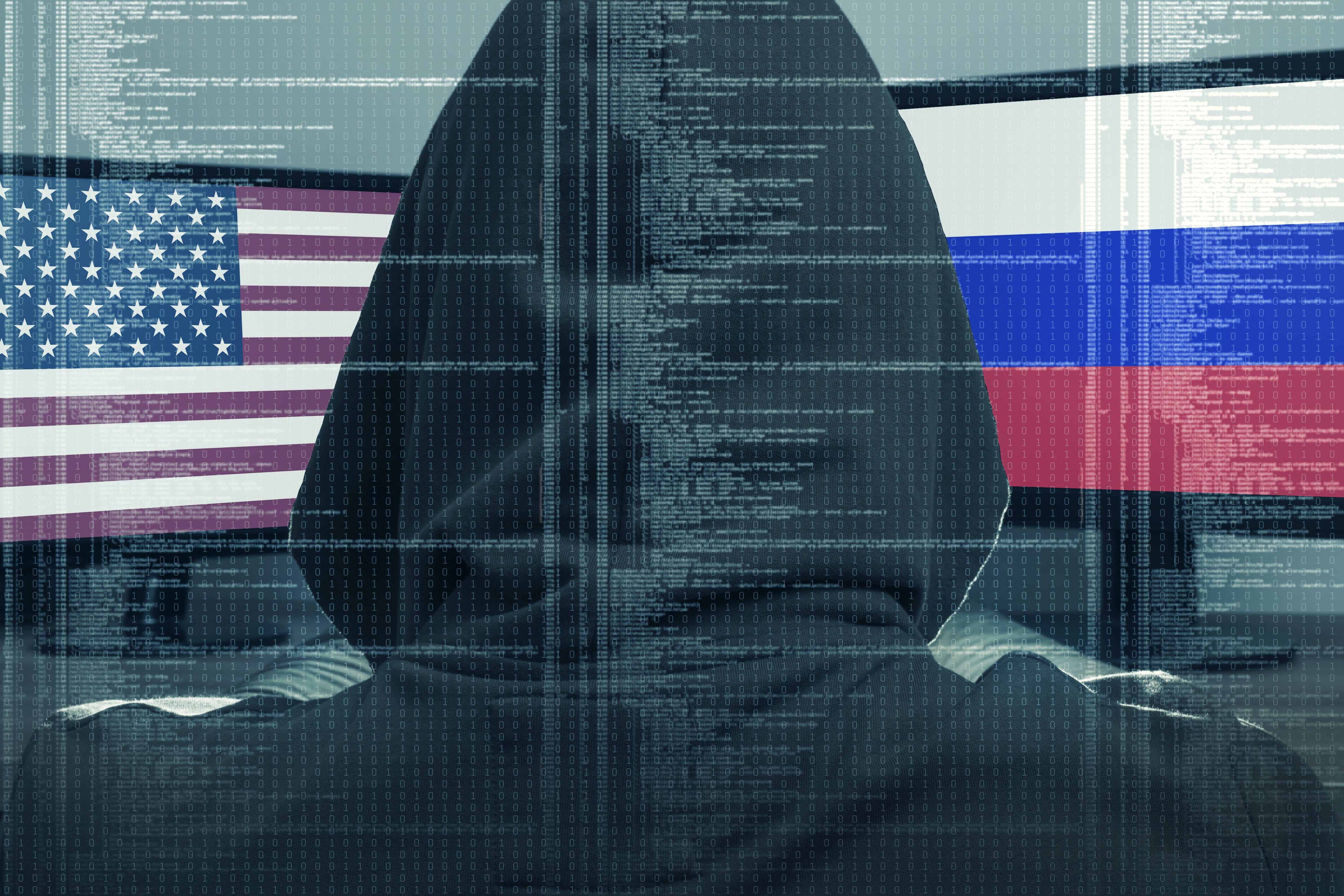
The last week has offered two sharp examples of how information can be weaponized. Within hours of the shooting of Charlie Kirk one week ago, bot accounts flooded social media with conspiracy theories, claims of government coverups, and “deep state” narratives. Many started invoking “civil war.” There is good reason, based on precedent, to believe these accounts were run by Russian botfarmers with the goal of harvesting division and hate from Americans on both the left and the right.
At the same time, a different kind of Russian provocation was playing out in Europe. Drones from Russia crossed into Polish airspace, as they had done previously in Moldova and Romania. Within hours, Russian state media and Duma delegates were crowing that NATO and the United States had done nothing in response. For the government-controlled TV network RT (formerly Russia Today) it was the occasion for a disinformation campaign designed to project strength abroad and weakness in the West.
These incidents—one domestic tragedy twisted online, the other an international provocation that violated a nation’s sovereign territory met with propaganda—are both pages from the Russian playbook. Both demonstrate how Moscow uses information as a weapon, exploiting different audiences for the same goal: weakening democratic trust and emboldening authoritarian control.
The Kirk shooting was a human tragedy—but for Vladimir Putin’s Russia, such tragedies are opportunities. And increasingly, rather than relying only on disinformation (that is, misinformation intended to deceive), Russia makes use of what is sometimes called malinformation: the deliberate seeding of distortions and half-truths that are designed to pit Americans against each other, make the United States appear as a failing nation on the world stage, and erode faith in the very institutions meant to keep us safe.
It is working. In part because Americans now live in a media ecosystem where pathos—the emotions of outrage, fear, tribal affirmation—drowns out logos, the reasoned appeal to logic, and ethos, or human character. Too often, reason and credibility are smothered under the emotions of hashtags and headlines. The dopamine rush from “owning” the other side replaces careful engagement with facts.
Russia doesn’t have to invent this from scratch. They simply amplify what is already there, feeding existing suspicions and magnifying distrust. Because Americans have grown accustomed to treating online narratives as entertainment, the corrosive effect goes largely unnoticed until the damage is done.
THE DRONE INCURSION INTO POLAND exposed another side of Russia’s strategy.
On the ground, there was no inaction. Poland responded immediately, scrambling jets, restricting airspace in its eastern region, and consulting allies under NATO’s Article 4 provision. NATO aircraft from multiple nations joined the mission, as they have done so often when Russian aircraft have entered NATO airspace. Together, they precisely executed the kind of rapid coordination that has been built over the last two decades, since the start of the Baltic Air Policing mission. These actions showed discipline, professionalism, and credibility.
But if you tuned in to Russian media, you’d never know it. Moscow’s state channels and handpicked Duma delegates painted an entirely different picture: NATO had done nothing, Poland was humiliated, the alliance was floundering. The goal was to convince ordinary Russians that their emboldened leader—flush from victories in both Alaska and China—had stared down NATO and won. President Trump didn’t help when he shrugged off the nineteen Russian drones entering Polish territory as a possible “mistake.”
This is an old pattern I’m familiar with from my service in Europe. Putin has used ‘below the threshold’ aggression for years: instances not enough to trigger NATO’s Article 5 collective defense clause, but just enough to intimidate, confuse, and collect intelligence. He’s done it in Ukraine, Georgia, Moldova, across the Black Sea, in the Baltics, and in the Arctic.
Through the years, NATO has developed muscle memory. Its military responses are faster, more coordinated, and increasingly credible. Russia presses; NATO responds. That pattern matters because it signals resilience and resolve. But while NATO’s military response has grown sharper, democracies’ information response—compared to Russia’s—has grown weaker. The hard truth is that democracies have allowed their own information power to atrophy, and in some cases have contributed to that increased weakness. That imbalance is proving very dangerous.
During the Cold War, the United States understood that information mattered. We created the Voice of America, Radio Free Europe, and Radio Liberty—outlets that broadcasted truth into closed societies. They were not propaganda mills. Their credibility came from careful reporting, high standards, and a reputation for telling audiences what their own authoritarian governments refused to admit. Millions behind the Iron Curtain relied on them, and their impact endured for decades.
But over the past thirty years, much of that capacity has been eliminated or gutted. We dumbed down and focused inward. Our domestic media landscape fragmented into warring echo chambers. Systems that once projected credible information abroad fell into disrepair, even as adversaries like Russia, China, and Iran built sophisticated state-controlled information machines. And now Trump is working to dismantle U.S. international media, gutting Voice of America and seeking to defund Radio Free Europe/Radio Liberty and their related organizations.
Now, when Russia mocks NATO’s response to a drone incursion, or floods American social media with conspiracy theories after a mass shooting, we are reactive and fragmented. Our leaders respond with isolated statements, our media amplifies the noise, and our citizens can’t tell truth from fabrication.
That isn’t a communications problem. It is a national security vulnerability.
It is worth adding a nuance here. Russia’s information machine is far from perfectly calibrated. It can be clumsy, sometimes laughably so. Its English-language propaganda often falls flat, its narratives transparent to skeptical audiences. Yet, over time, the sheer volume, consistency, and state-directed purpose of its campaigns provide an effect far beyond the quality of its individual messages.
That is the difference between a system and a personality.
President Trump is a highly effective marketeer, using media instinctively to dominate coverage, craft spectacle, and capture attention. But his use of information is aimed at immediate gratification and personal aggrandizement. Putin’s use of information, by contrast, is built into the Russian state: systems, processes, and practice designed to advance strategic objectives.
On the world stage, Putin is the pariah—isolated, distrusted, presiding over a weak military further weakened by the war in Ukraine, and a drastically shrinking economy. But in the information domain, Putin has the advantage. His lies are crude, but they are consistent, coordinated, and backed by a whole-of-government machine. Trump’s spectacles may grab headlines, but they dissipate quickly as he moves onto the next issue. Putin’s disinformation and malinformation build layer upon layer until doubt itself becomes the dominant narrative.
Some democracies have recognized this reality and acted accordingly. Estonia, scarred by its experience under Soviet domination, rebuilt itself as a digital democracy after regaining independence. It did so not just by investing in broadband and cybersecurity, but by teaching its citizens digital literacy from an early age.
Estonians learn how to identify fake news, question sources, and engage responsibly online. They don’t outsource the defense of truth to a handful of platforms or agencies—it is a whole-of-society responsibility. I have seen and worked with them; they are an intelligent and informed people, and a healthy nation.
The United States, by contrast, has left its citizens largely unprepared for this new battlespace. We expect people to navigate a flood of disinformation on their own. And malinformation corrodes trust from within, amplifying division and weakening confidence in institutions.
The common thread is trust. In the West, Putin’s goal is to erode it. In Russia, Putin’s goal is to manufacture it. Both advance his strategic aim: weaken Western unity and strengthen authoritarian control.
NATO’s military responses to Russian provocations over the last week showed vigilance, discipline, and resolve. But in today’s environment, defending democracy requires more than air intercepts and naval patrols. It requires systems and networks, professionals who understand the power of information, and citizens prepared to think critically before they click, share, or believe.
Both drones and lies test our defenses. One in the skies, the other in our minds. Both require vigilance, discipline, and resolve. Both demand systems and professionals who know this terrain.
Because without trust, no alliance, no democracy, and no society can endure.
 | A guest post by
|