Rob Reiner, 1947–2025
One of the best and most versatile directors of his era.

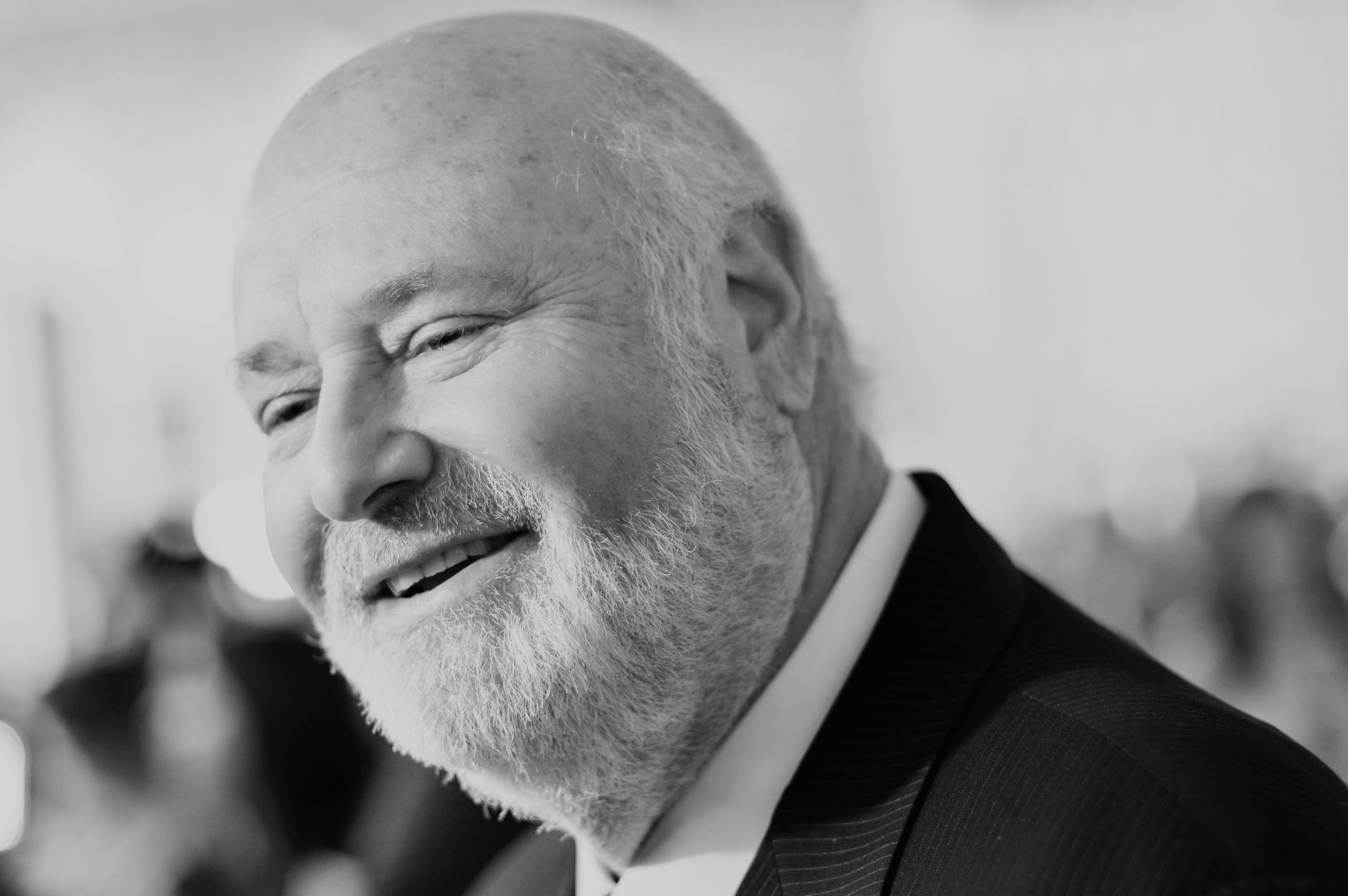
LATE SUNDAY NIGHT, shocking reports started rolling in that Los Angeles firefighters had found two bodies in a home owned by Rob Reiner. The deceased were later confirmed to be Reiner himself and his wife, Michele; they were found with stab wounds in their own home. This is tragic and nonsensical; I’m sure we’ll learn more about the cause in the days to come. I don’t really want to contemplate it.
For now, let us remember his life and his work.
I would be hard pressed to forget it: In a very real way, Rob Reiner’s films defined my adolescence, straddling the line between childhood and adulthood in a way that both helped me make sense of the world—how to balance friendships and relationships; when to laugh and when to cry; whether or not we can handle the truth—and showed that filmmakers need not be pigeonholed, that they could work in any genre if they had a story to tell. He wasn’t showy, he didn’t have a distinct visual style. He had something better.
Versatility.
Between 1984 and 1992, Reiner directed six stone-cold classics, all of them in slightly different genres, some of them practically defining those genres.
This Is Spinal Tap (1984) might not be the first mockumentary, but it’s the first mockumentary most of us remember seeing and loving and quoting for years on end. Reiner both directed and played the director of the fake documentary at the heart of the picture; his performance as Marty Di Bergi is a sort of meta double duty that helped blend the reality and the fiction into a seamless whole. (So much so that Oasis singer Liam Gallagher took Spinal Tap to be a real band, according to brother and bandmate Noel.) And it laid the foundation for the entire genre as we understand it today, given the teaming of Michael McKean, Christopher Guest, and Harry Shearer, who would ply the genre over and over again starting with Guest’s Waiting for Guffman in 1996.
Two years after Spinal Tap, Reiner would direct Stand By Me, which is arguably the greatest coming-of-age movie of the decade, if not of all time. (It is also, arguably, the greatest Stephen King adaptation of all time, but that’s an entirely different essay.) It’s a simple story—four teenage friends set off to see a dead body, learning much about themselves and each other in the process—and it is classic in its simplicity. It doesn’t matter that these are four kids in the 1950s; the arguments they have about cartoon characters and the problems they have with their parents and the resentments they have toward the world are just as relevant today as then.
If Stand By Me defined the life of the child, The Princess Bride—released just one year later—would define childhood’s imagination, albeit with a winkingly adult eye. Adapted from the book by William Goldman, who also wrote the script, The Princess Bride introduced so many items into the cultural lexicon (rodents of unusual size; “mostly dead”; “Inconceivable!”) that I almost don’t know how I’d react to references to the film being banned. There aren’t too many films that have rejiggered the cultural shorthand as thoroughly as The Princess Bride did.
Though When Harry Met Sally…, released just two years after that, gave it a run for its money. I’m sorry, this remains the single greatest romcom ever made (apologies to Sleepless in Seattle), the sort of movie that is both entertaining as hell to watch and that makes all those friendships you’re wrestling with in your late teens and early 20s ever-so-slightly more complicated. (Not that I’m speaking from experience here.)
So if we’re keeping track, we’ve got the mockumentary, the coming-of-age film, the childhood fantasy film, and the romcom… so why not toss in a horror film, as well? Misery (1990) is one of those movies that manages the weird trick of being horrifyingly scarring—hobbling, not even once—as well as a basic cable classic, the sort of movie that just played on a loop on TNT and HBO throughout the 1990s. It’s anchored by virtuoso performances from James Caan and Kathy Bates, of course, but Reiner understood how propulsive the film needed to be. We never rest, we never linger, we just keep going and going until the crashing conclusion.
As an aside, Reiner was an absolute monster for pace in this period of his career: Misery is the longest of these movies by far, and it clocks in at a brisk (by modern standards) 107 minutes. One can’t help but think that his career as an actor in TV prepared him for an understanding of how to keep things moving, how not to bore the audience.
A Few Good Men is longer, of course, at 138 minutes, but it too glides on rails. And it is, maybe, worth noting here that Rob Reiner may be responsible for the patented Aaron Sorkin walk-and-talk, as Sorkin recounted in an interview about the making of this film included on the Blu-ray release. Reiner, who was adapting Sorkin’s stage play for the screen, casually suggested combining two sequences via a moving conversation, and, voila: a cliché is born. (I discussed A Few Good Men at greater length with JVL and Sarah here, if you want more on this modern classic.)
And I haven’t even really spent any time discussing the man’s acting, but he was so goddamn funny. Any time Reiner showed up, you just knew the director had carved out something perfect just for him, as in, just to pick one example, The Wolf of Wall Street, where Martin Scorsese asked him to try to play the voice of reason in a room full of cokeheads who thought it fine to use the corporate credit card to pay prostitutes. The mounting frustration with Leonardo DiCaprio’s band of goons practically defines the mood of the next 10 years of American life.
There’s more, of course—I’d even mount a cautious defense of the much-loathed North—and I’m sure others at The Bulwark will discuss his political efforts at greater length. He was a staunch opponent of Donald Trump and a liberal activist, working on a number of propositions in California over the years, including efforts to overturn a state ban on gay marriage and efforts to fund childhood services. In many ways he was the archetypal actor-activist, for better or worse.
But his directorial run from 1984 to 1992 is remarkable; I literally cannot imagine anyone pulling off anything like that today, particularly in such a compressed period of time. These films are all foundational texts, just a murderer’s row of endlessly rewatchable entertainments that helped define what I and many others looked for in a movie.
His life, and contributions to comedy… went to eleven 🥺💚🫶
I’m in shock. TCM was showing the movies of Christopher Guest the other night, and of course Spinal Tap was on.
I just can’t believe it.
As a child of the 70’s, I watched Reiner on All in The Family. Then in the 80’s, I loved all his movies, especially When Harry Met Sally.
Rob Reiner cared passionately about this country, and I respected his opinions, and advocacy. He was a good man. 💔
His documentary on his great friend Albert Brooks was wonderful.