How Rob Reiner Made Children His Issue
Pushing for greater investments in early childhood development, he improved the lives of countless kids.

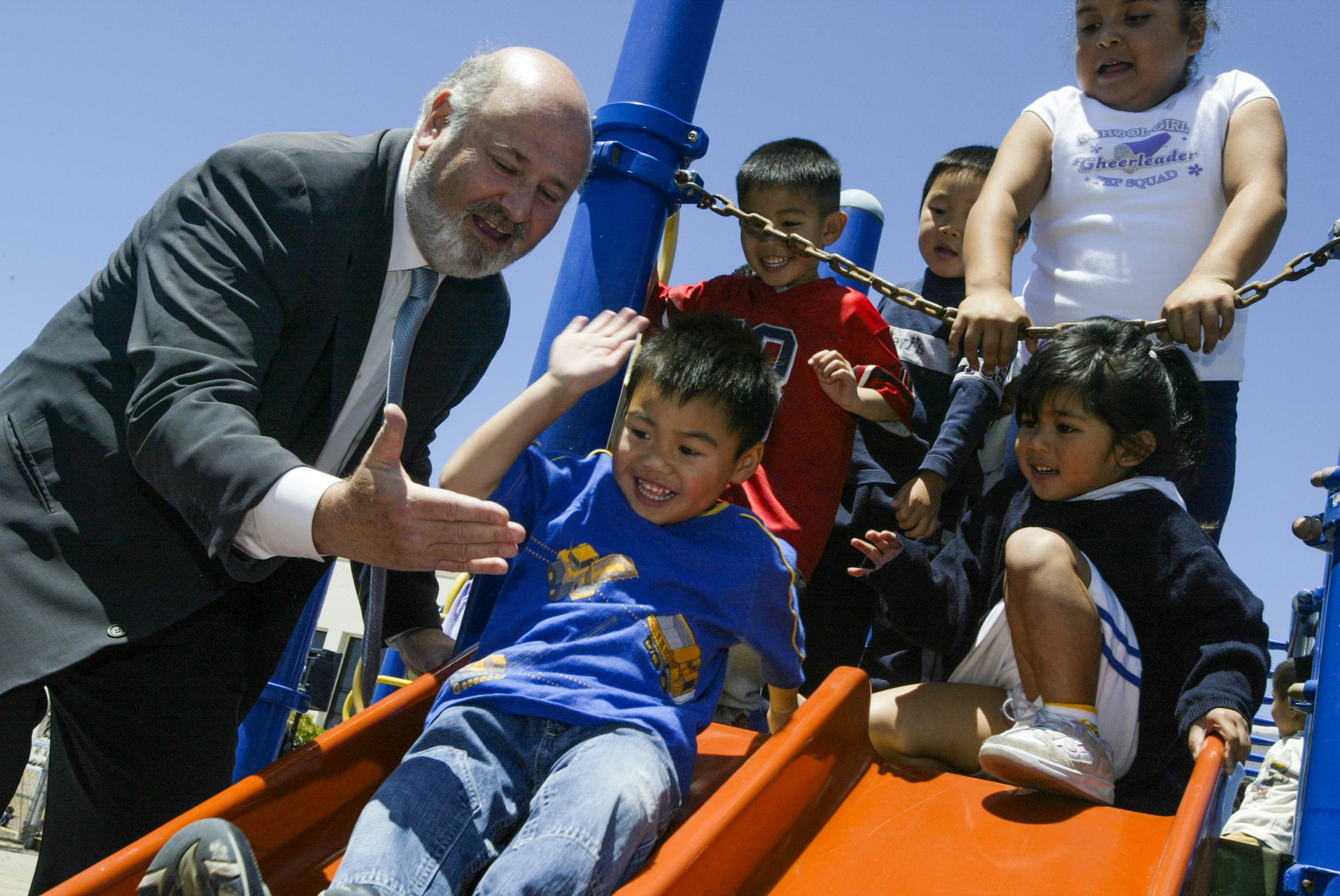
I CAN’T STOP THINKING ABOUT ROB REINER, and the tragic irony of the one day I ever spent with him.
It was June 1998, and he was campaigning up and down California for Proposition 10—a ballot initiative with the aim of investing in children between birth and age 3.
I was a reporter covering national politics for USA Today. My idea was to shadow Reiner and see what this was all about. What he was all about. And what it meant to be rich, powerful, and able to bypass the legislative process.
I brought the requisite journalistic skepticism to the story. He was campaigning like a candidate for office, I wrote—except that he was skipping that step and proceeding straight to making a law. He said any citizen could get involved, and I said but you’re not just any citizen, and he retorted: “And isn’t it great when somebody has the power base and uses it for the good of the people?” He called himself “the cavalry coming to the rescue,” and I wrote that some longtime children’s advocates privately saw him “less as cavalry than as a two-ton truck crashing down their quiet side street.”
Reiner’s passion for this subject started personally. As his first marriage was falling apart (he and Penny Marshall would divorce in 1981), he learned in therapy that some of his own problems traced back to his early childhood in a chaotic show-biz household. This sparked an interest in early-brain development—and in the mid-1990s, at the suggestion of second lady Tipper Gore, he made it his cause. At a time when he was raising three young children himself, he learned all he could about the miracle of early brain development, and developed what struck me as “an almost messianic sense of mission” to spread the word about that critical stage.
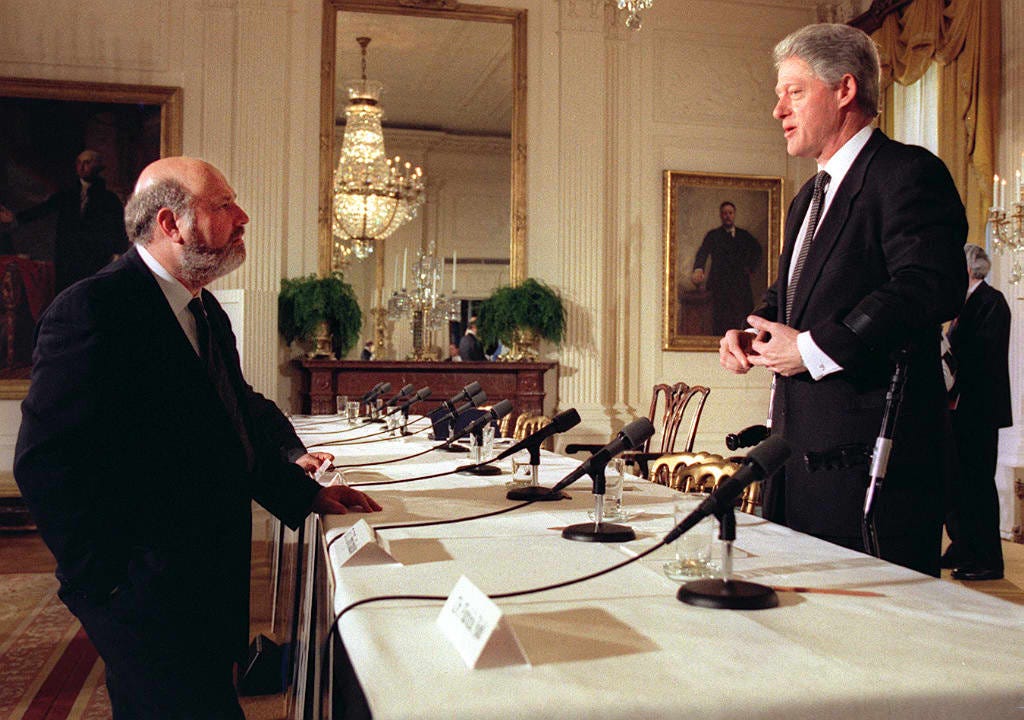
He started an advocacy group called “I Am Your Child.” He talked ABC into broadcasting a special about early brain development, Newsweek into publishing an issue about it, President Bill Clinton into having a White House conference on it. The culmination was Proposition 10, which I described as Reiner’s “two-year crusade to save babies and toddlers from bad parenting, and society from its consequences.”
I’m a whole lot older and hopefully wiser now than I was then, about both legislating and parenting.
Some political commentators in recent decades have worried that the rise of ballot initiatives, often bankrolled by well-heeled groups and individuals, was undemocratic. And to some extent, I shared that concern. But after covering nearly a half-century of legislatures in West Virginia, Pennsylvania, and Washington, D.C., I understand much better why people with means and drive are moved to bypass legislatures that deliver infrequently, incompletely, or not at all, and sometimes in direct opposition to what people want or the evidence shows.
That’s how voters in various states have raised the minimum wage, allowed for legal abortion, expanded Medicaid coverage, and made many other decisions. Ballot initiatives aren’t perfect democratic tools, and they can certainly be abused. But they can also be an important tool of responsive government.
IT’S BEEN EQUALLY ILLUMINATING, and sobering, to raise two sons and develop a friend circle of parents, from K-12 right up to now, in our senior citizen years. My children were 8 and 12 that day when I was running around California with Reiner—a little older than his three (7, 4, and a six-month-old baby), but still far from the adults they would one day be. Their futures gleamed somewhere in the distance. All good things were possible.
This faith, this optimism, was at the heart of Reiner’s case for a new tax on cigarettes, with the proceeds used to finance services for pregnant women and young children. That day, we visited a help center for parents, a Rotary Club, a newspaper editorial board. Some people didn’t know who he was. Some joked that they knew him for years only as Meathead, his character on All in the Family. He teasingly told a questioner that of course he knows Sally Struthers—“I’ve kissed Sally Struthers.”
Among Reiner’s fans back then was the late author-pediatrician T. Berry Brazelton. He had never heard of Reiner or Meathead, he told me, but he was thrilled when Reiner called about his interest in the issue, and he was a star participant in the White House conference: “It’s a hard fight, and we haven’t been very successful without him.”
The tobacco industry fought Proposition 10 and the vote was close, but it passed that November—the first dedicated funding stream in the nation for children 5 and under. Those resources created the California Commission on Families and Children, known as First 5 California, commissioner Kris Perry said last week, as well as “historic growth in children’s access to early care and education, health care, home visits, early literacy and public education.”
First 5 Chair Katie Albright credited Reiner’s leadership and policy framework with “California’s subsequent achievement of preschool for all.” His legacy will live on through the generations his work has touched, she said.
Reiner aspired to nothing less than transforming lives. And he wasn’t wrong. Not at all. The period from birth to age 3, or 4, or 5 really is a magic window.
It just isn’t a failsafe.
No parent can control fate. Or biology. Or personality. No parent can control addiction, or mental illness. All parents learn this, for themselves or through others. Rob and Michele Reiner knew it firsthand during years of agonizing struggle to help their younger son. Their deaths, allegedly by his hand, are almost unbearably public and personal at the same time.
Unthinkable, even. Not in the realm of the imagination. At least mine. But this from their good friend, Maria Shriver—this I believe: “They loved their kids so much, and they never stopped trying to be really good parents.”
Really, that’s the most and the best anyone can ever do.
 | A guest post by
|