Save D.C. Golf From Donald Trump
The city’s courses are not meant for the elite. They’re meant for the people. The president is trying to change that.


I TOOK MY 5-YEAR-OLD SON TO PLAY GOLF at East Potomac Golf Links a few months after President Trump’s first inauguration. The public course sits so close to official Washington, a strong golfer could reach the Jefferson Memorial with his or her driver. But my son and I were first learning the game, playing a round with my father-in-law, his grandfather. Somewhere on the back nine, my son lost his first tooth. I came close to my first birdie.
The future of that place where we first played together, a public course where three generations can share a round for less than a dinner out, is now in question. The Trump administration has moved to take control of not just East Potomac—which a White House spokesperson called “decrepit” earlier this year—but also the city’s two other public courses, one at Rock Creek and the other at Langston, which borders the Anacostia River.
The Trump administration’s effort to take over the public status of the courses began last fall. Debris from the demolition of the White House’s East Wing was dumped between a few holes at East Potomac. Soon after, the administration terminated a fifty-year lease held by the National Links Trust, the nonprofit managing the three courses through the Department of the Interior.
The Trump administration argued the trust had failed to improve the facilities. That White House spokesperson said the president would restore their “glamour and prestige.”
But in reality, the trust was doing just that. It had recently invested $8.5 million in the courses, with additional improvements to come. The Trump administration’s takeover of East Potomac now faces a legal challenge from a group of local preservationists and golfers, arguing that the planned transformation would violate the course’s public purpose.
Let’s hope they win. Golf may seem like a matter for the elite. An argument over the design of courses may seem even more entitled. But this debate is about more than a game. It’s about how we as a society value our shared public spaces. And it’s about the need for us to preserve those spaces precisely so that they are not just the playgrounds of the elite and the privileged.
None of the public courses in D.C. are ideal for Club Champions or professionals. The fairways are patchy. The greens are far from pristine. You can very well go a full round hitting a hundred shots (and, trust me, I’ve been there) without losing a ball.
But that hardly matters. You don’t play East Potomac or Rock Creek or Langston because of Donald Ross greens or Pete Dye bunkers. You play there because you can, because they offer time outside with your kids in a city that often puts more value on time in the office. These courses aren’t meant to challenge you; they’re designed to get you outside. They are functional gateways to the game. It’s why a weekend tee time runs less than $50, about half the price of many public courses in the region.
The courses are public in the fullest sense, and in a sport with a long record of exclusion, that distinction is part of their value. While President Warren Harding inaugurated the course at Rock Creek, and the Jefferson and Roosevelt Memorials are a short walk from East Potomac, nowhere is golf’s history more present than at Langston. Named for Howard University Law School’s founding dean, John Mercer Langston, the course became a haven for black golfers many decades before most courses in the country were integrated. Lee Elder, the first African American to play in the Masters, taught and managed there for years. Today, Langston serves as the practice facility for Howard University’s golf team, which was established through a seven-figure investment from Steph Curry in 2019—a gift that helped extend the game’s outreach to communities that had been excluded from it.
On most weekends, you can see much of the same at each course: middle-aged men sneaking the rest of a six-pack into golf bags before their round, kids of various races learning to putt from their parents, retirees finishing up nine holes, settling a few bets. Few places bring so many different people together in the city.
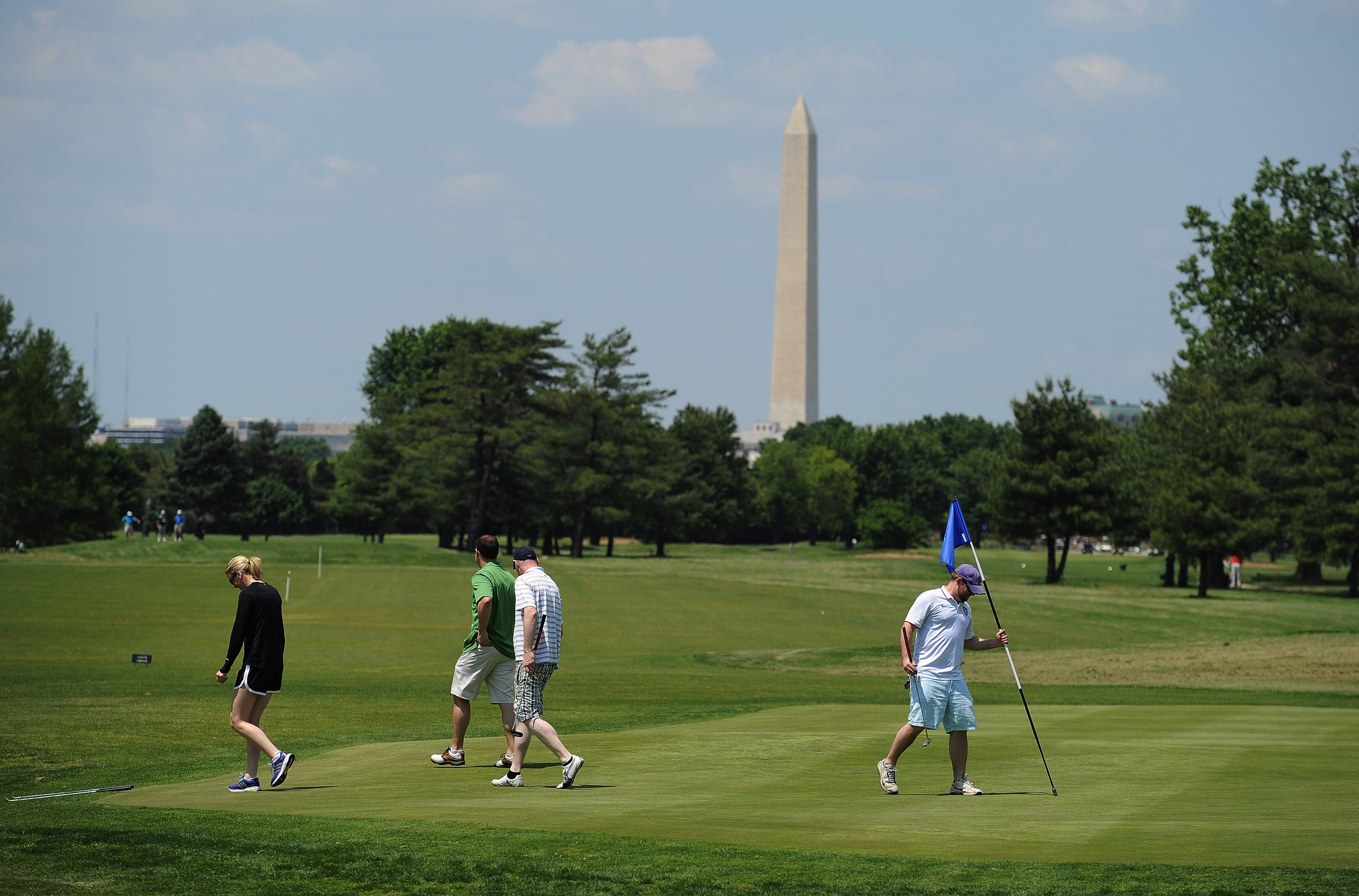
Arriving at East Potomac last spring, my son and I were paired with a black man in his thirties from West Virginia, working in IT in D.C., and a Japanese-American kid in his twenties who had just started at an accounting firm. We had plenty of time to talk, waiting for some novices playing in front of us. But we never discussed politics. We gave each other the best advice we could offer, commiserating over putts that lipped out and marveling at the Washington Monument on the horizon. It never occurred to us that something so innocent as a game of golf needed saving.
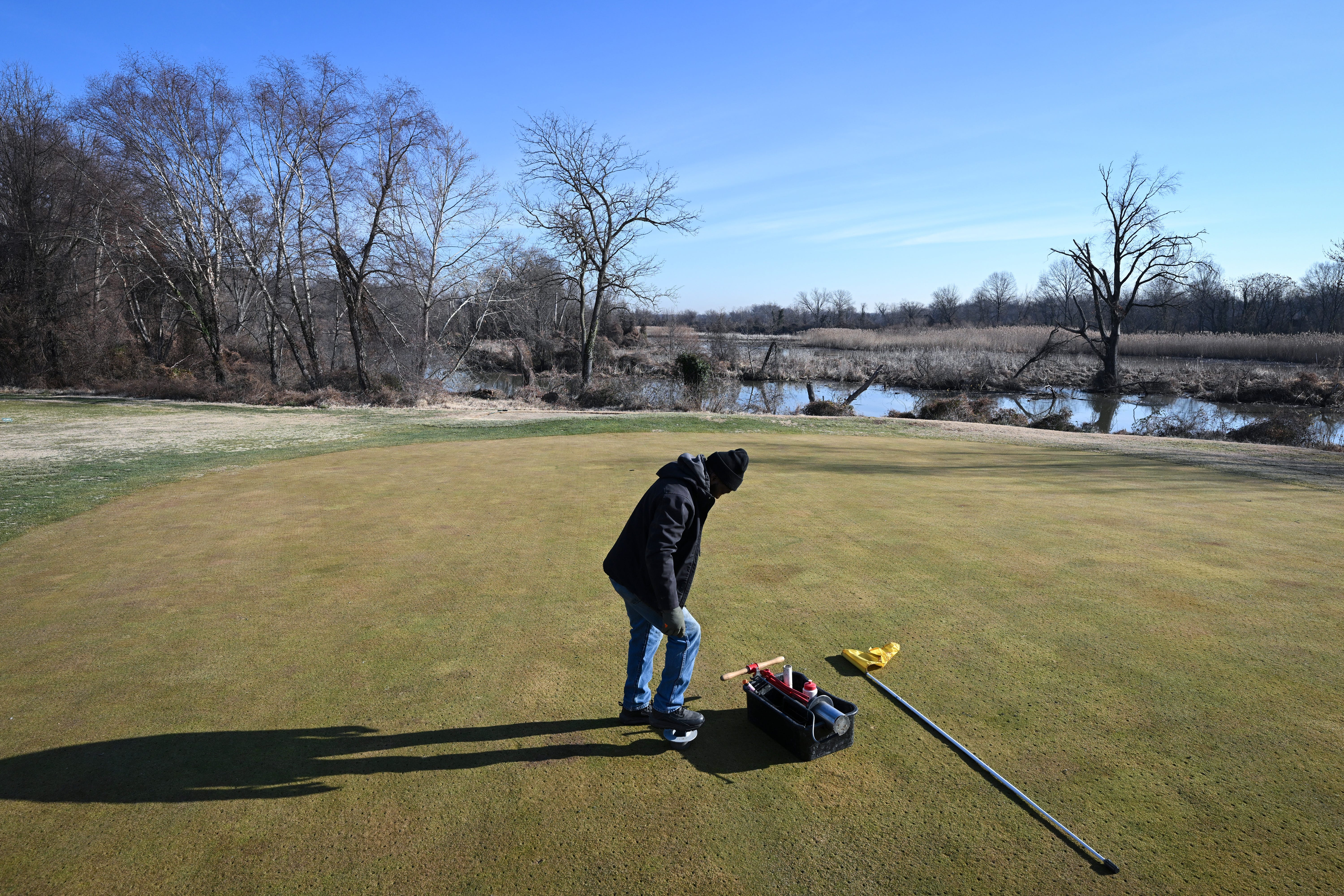
Resistance is rarely launched from a golf course. There have been no marches to save them from the administration’s efforts to take them over. There are no signs of protest outside the facilities. They have no alumni network or donor class with a stake in the outcome. But where elite universities and white-shoe law firms have buckled under the Trump administration’s pressure, Trump’s swing at public golf in D.C. faces a challenge. While the trust’s renovation of the Rock Creek course has been suspended, play continues at Langston and East Potomac, though the trust is now operating the courses without the security of its terminated fifty-year lease. At East Potomac, the complaint from the DC Preservation League and two local residents, arguing that Trump’s plans for transformation would violate several federal laws, is moving through court. A judge has asked the defense to provide initial discovery. As spring returns to Washington, golfers can still find an affordable tee time at two of D.C.’s public courses. If only for now.
TRUMP, OF COURSE, IS AN avid golfer. East Potomac is not (yet) up to his standards. He doesn’t play it, though his helicopter, Marine One, often flies nearby. It must look enticing from above. Indeed, the course’s location on the Potomac is ideal for the kind of high-fee course that would attract a wealthy clientele or even professional events. And that is the transformation being offered: replace beers in golf bags with $15 cocktails, attract more lobbyists and fewer IT workers, raise the greens fees above $200, with a small discount for residents. The course would be a gem, no doubt, but without the same character, access, or history.
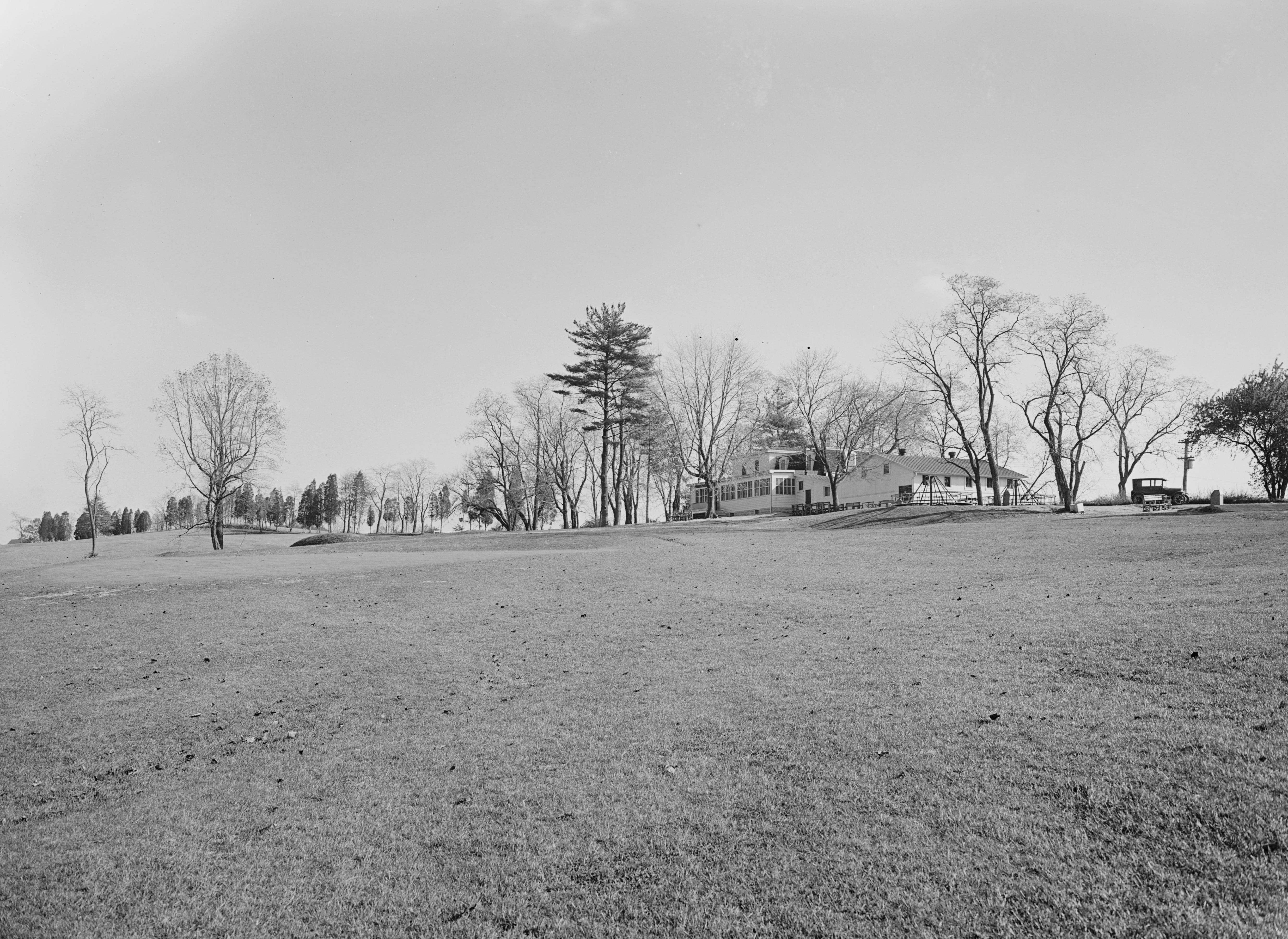
But turning over the courses to Trump’s handpicked architects (assuming he doesn’t just design them himself) would do more than transform a few golf courses. It would roll back more than a century of progress. East Potomac sits on Hains Point, land reclaimed by the U.S. Army Corps of Engineers and preserved for the public. Construction on the clubhouse began around 1917; it was later upgraded by the Public Works Administration in the 1930s. After the Second World War, Hains Point became part of the city’s civic life, a place to play golf for Washington’s growing middle class in the shadow of monuments that belonged to all.
Making an elite sport accessible in the center of the nation’s capital was a statement. Trump’s takeover would be another. It would signal that democratic spaces are no longer a public trust but subject to a capricious president’s taste and will.
When my son and I return to East Potomac this weekend, he will probably hit the ball farther than me. He’ll tell me to keep my head down, that I can’t take any mulligans, and that a second beer on the back nine won’t improve my game. I don’t know how many more springs we’ll be able to return. I hope there will be many.
Patrick Granfield served as a national security appointee in the Obama administration, and, most recently, as senior adviser at the U.S. International Development Finance Corporation (DFC). He is a 20+ handicap.