

Iran Is More Than Just a Target Set
Military action—especially unsupported by diplomatic, economic, and information efforts—could make things worse.

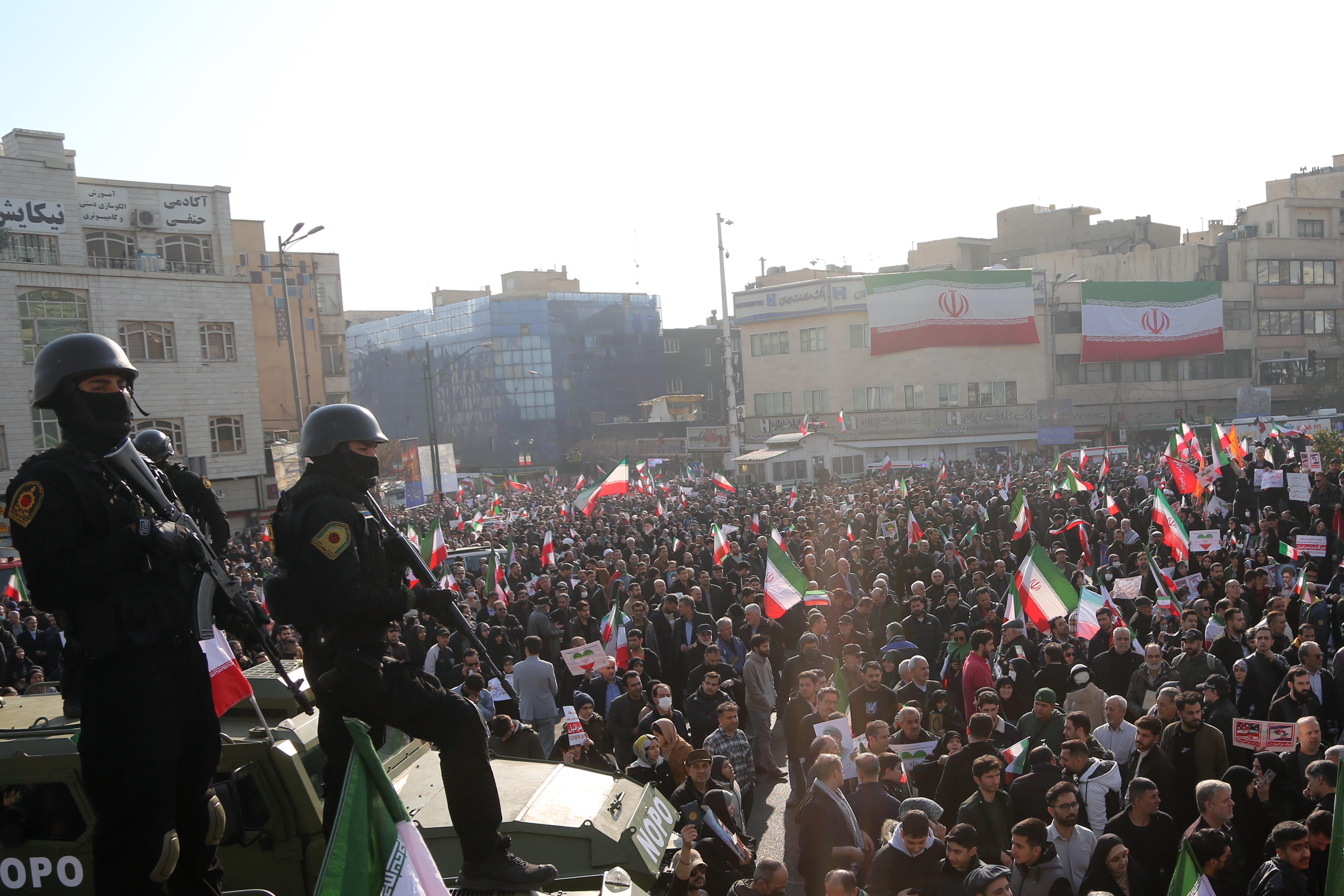
WHEN UNREST ERUPTS INSIDE IRAN, it is often portrayed—especially in Washington—as something sudden, singular, or externally provoked. The current uprising is none of those things. This round of unrest is driven less by ideology, theology, or political differences than by economics: extreme inflation, massive unemployment, crippling drought, increasing corruption, the exponentially rising pressures of sanctions, and the widening gap between a privileged ruling class and an increasingly desperate citizenry.
Students of history and the military arts know that uprisings rooted in economic survival erupt differently than those driven by ideology, politics, or social liberalization. They are also harder to suppress with rhetoric, harder to deflect with nationalism, and harder to resolve without extensive change. They’re less likely to be confined to an educated, urban middle class and more likely, as the current protests have, to spread across the country. That may be why protests motivated by economic distress tend to provoke larger and more brutal responses. Reports that thousands of protesters have already been killed underscore that this Iranian regime sees this unrest not as episodic dissent, but as a direct and growing threat to its grip on power.
Because of the inherent danger instability in Iran could pose to the wider Middle East, as well as the alluring opportunity of a more responsible government in Tehran, some may think the Trump administration’s instinctive response should be airstrikes against the Islamic Revolutionary Guard Corps, Iranian government facilities, and other internal security elements, but those kinds of approaches would almost certainly miss the strategic mark. Bombing the regime’s enforcers does nothing to address Iran’s economic collapse. Worse, it risks reinforcing the Iranian hardliners’ core narrative: that Iran’s suffering is the product of the West’s aggression rather than domestic misrule. That’s because when authoritarian regimes under internal strain are attacked from the outside, they often consolidate power, silence internal rivals, and rally wavering security forces around the flag.
That strategic reality is likely well understood by many inside the White House, even if it is often obscured in public debate. When President Trump signals an impending action against Iran—for example, by telling the Iranian protesters that “HELP IS ON THE WAY”—the assumption is that military force would be at the center of the discussion, because that’s how these moments are typically handled. But making a military strike the first option would be a drastic mistake.
Usually, crises like this are not framed as a binary choice inside Oval Office. They are debated as combinations of options, weighed according to their second- and third-order effects over time, with predictions red-teamed to establish possible failure points. Those discussions usually occur within the Principals Committee, where senior cabinet officials, intelligence leaders, and the chairman of the Joint Chiefs test assumptions, challenge instincts, and argue through consequences. The first question should never be “What can we hit?” but rather, “What end state are we trying to achieve, and what actions would make it worse?”
In this case, the vital first question senior policymakers must ask and answer is whether the protests have the potential to topple the government. Based on that answer, they can then move on to decide what role they think the United States should play—helping the protesters throw off their oppressors, trying to discourage violence against civilians, merely trying to contain any possible unrest, or some other goal. Whatever it is, there should be a clear, easily explained connection between the administration’s goal and benefits for the country—certainly something more concrete than demonstrating “toughness.”
Diplomatic options are usually discussed first, not because they are dramatic, but because they shape legitimacy. Coordinated pressure with allies, careful public messaging, and multilateral engagement aim to keep the focus on the regime’s choices rather than America’s. If repression were to be framed as an internal failure with international consequences—rather than a response to U.S. threats—it would narrow Tehran’s room to maneuver and limit its ability to redirect public anger outward.
Governmental information and influence tools follow closely behind. These discussions should focus on amplifying Iranian voices rather than American ones, countering disinformation without directing protest movements, and supporting access to uncensored information for populations facing surveillance and shutdowns. The distinction between enabling access—where a technology such as Starlink could be critical—and orchestrating unrest is important. Ignore this critical domain of strategy, and the regime’s propaganda would write itself.
Economic measures are often next in line. Broad sanctions during periods of unrest can deepen civilian suffering and blunt protest momentum, especially given the extensive damage to the Iranian economy caused by existing sanctions. At this point, Iran is so heavily sanctioned that the question may be less about new restrictions than about more resources to enforce ones already in place. Precisely targeted financial pressure against individuals responsible for repression, tighter enforcement against corruption and sanctions evasion, and quiet signaling about what economic relief might be brought through a change in the government are more consistent with the current underlying problem: an economy hollowed out by mismanagement and predation.
Intelligence and law-enforcement tools, though rarely visible, should also be a part of these conversations. Gaining intelligence that provides insights into whether elements of the internal security forces remain cohesive, whether elites are hedging, and whether fractures are emerging inside regime institutions matters far more than symbolic action. So does monitoring the risk that violence against protesters escalates further—a real concern when many are already reported dead.
Which brings us to what should be last in the discussion: military options. When the kinetic options are discussed, they will likely be about posture rather than action and punishment. U.S. force protection, allied deterrence against regional escalation, and contingency planning are at the forefront; direct strikes aimed at influencing reaction to protests are not. Every experienced national security professional understands that foreign forces rarely confer domestic legitimacy—and often destroy the conditions protesters need to succeed. The secretary of defense and the chairman of the Joint Chiefs should present various courses of action for the application of military force and their connection with key allies on these issues; those recommendations should be extensively “war-gamed” to determine the best possible outcome short of the use of force.
If President Trump announces “action” against Iran, the real measure of our government’s seriousness will not be the volume of rhetoric or the visibility of force. It will be whether the response reflects an understanding that this uprising is rooted in economic collapse, that legitimacy cannot be bombed into existence, and that the greatest risk is not doing too little—but doing something that helps the regime survive.