Support the Troops. Demand Accountability.
The secretary of defense conflates the warriors with the war.

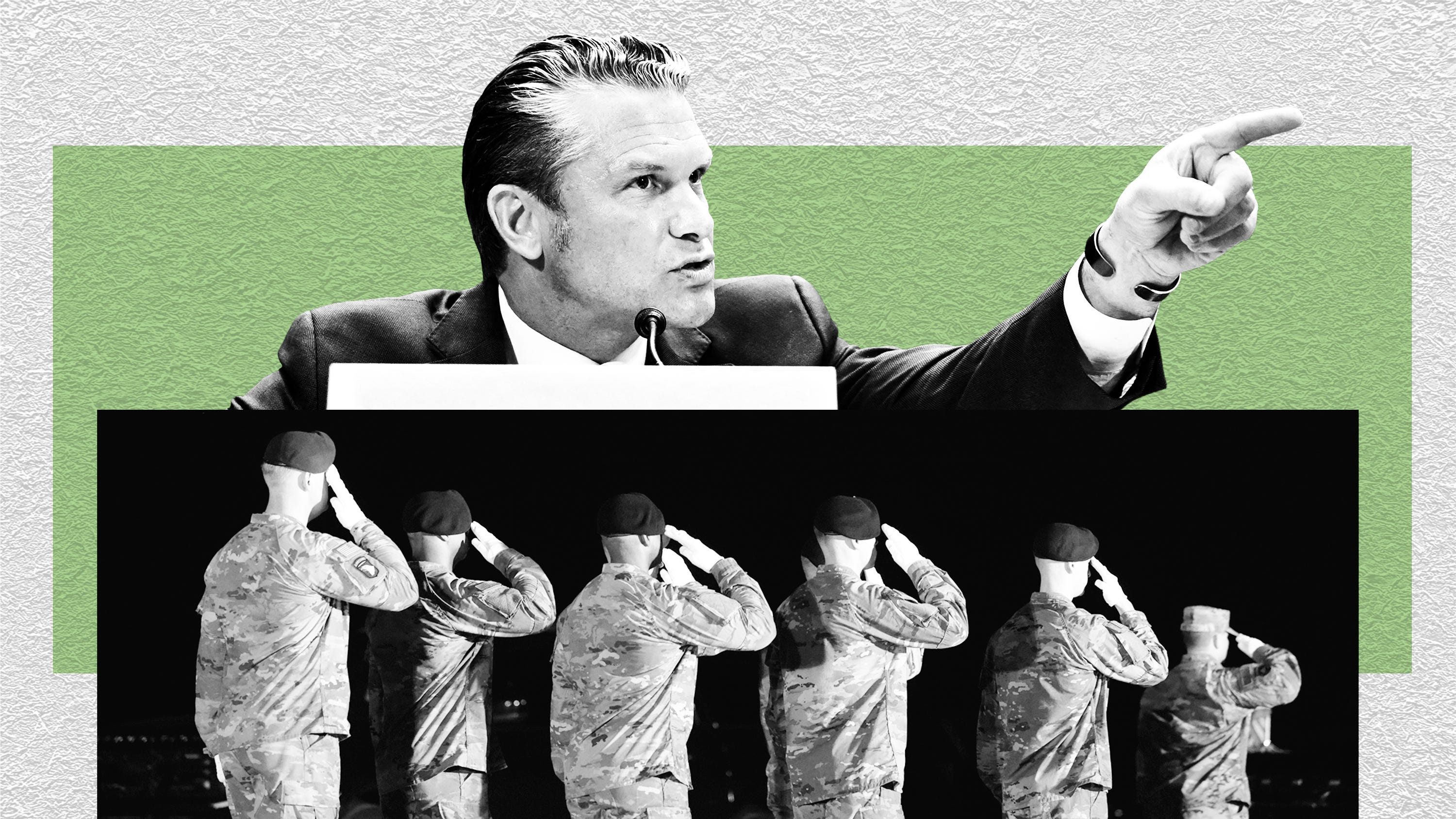
WHEN SEN. GARY PETERS QUESTIONED Defense Secretary Pete Hegseth about the administration’s handling of the conflict with Iran, Hegseth responded by accusing Peters of denigrating the military.
That wasn’t what Peters was doing. In fact, even before Peters asked Hegseth a question, he offered comfort to the families of those who had given their lives in the Iran war. “I want to begin by first echoing my colleagues’ comments,” he said, “and joining them in mourning the loss of American service members who were killed in action these few days. My thoughts are with their families, with the service member who remains missing, and with all those injured during the strike. And I will continue to pray for their families.” He very quickly went out of his way to express admiration for the service members carrying out extraordinarily difficult missions: “I have long said the United States has the strongest military in history, in the world, and I have no doubt that our brave service members can execute any mission and prevail in any battle.” His criticism was directed not at the troops, but at the civilian leadership responsible for defining the mission, establishing the strategy, and honestly describing the results. That distinction matters.
When I was a young lieutenant, stationed in Germany on my first assignment, I had a conversation with an old veteran in my unit who had been a medevac helicopter crew chief in Vietnam. He was highly decorated, and he was relaying some of the adventures that were reflected in the medals he wore on his chest.
He was young when he got drafted. He didn’t want to go to war, but he answered his country’s call. He flew hundreds of missions, saved untold numbers of lives, was wounded, recovered, and after a year of service, eventually came home. He told me he was proud of all he did in service to his country—proud enough to choose to make a career in the military—but when his plane landed in San Francisco and he stepped into the terminal wearing his khaki uniform, he experienced something disheartening. As he walked through the airport, strangers cursed him, called him baby killer, and even spat on him.
Then, in a changing mood, he looked down and quietly said something that has stayed with me ever since: “It made that whole year seem like a waste. I didn’t agree with the war, either, but it seemed my fellow citizens were confusing the war with the warrior.”
His disappointment wasn’t rooted in the hardship of combat, because soldiers understand hardship. It was his realization that many Americans could not distinguish between the man who had served and the policy that had sent him there. That confusion reappeared during Secretary Hegseth’s testimony this week.
In our constitutional system, the military does not choose the wars it fights. Soldiers, sailors, airmen, marines, guardians, and coasties execute lawful orders issued by civilian leaders. Their professionalism lies in carrying out those missions to the best of their ability, regardless of the politics and the policies surrounding them. Supporting the military does not require supporting every military operation, nor does questioning the wisdom of a campaign diminish the courage of those asked to fight it.
In fact, the opposite is true.
One of the highest forms of respect all citizens can show our military is demanding that our armed forces be committed only to missions with clear objectives, realistic plans, sufficient resources. This is especially true for those who serve in government who make the decisions—or non-decisions—about war and peace. For our leaders, respecting the military means telling the American people the honest truth about progress and setbacks, casualties and costs. For the rest of us, holding civilian leaders accountable for those responsibilities is our way of honoring those in uniform.
Too often, political leaders blur these lines. When strategy is challenged, they wrap themselves in the valor of the troops. When operational shortcomings are exposed, they imply that criticism somehow insults those risking their lives. This may be an effective political argument, but it is a dangerous civic one. The sacrifice of those in uniform should never become a shield protecting policymakers from legitimate scrutiny.
We owe our warriors gratitude, respect, and every resource necessary to accomplish the missions. We owe our civilian leaders rigorous oversight, honest debate, and accountability for their actions and the missions they assign.
We also owe ourselves, as citizens of a great republic, a government that is responsive to our needs and expectations. That applies to the military as much as to anything else. We respect the troops by ensuring that their missions are aligned with the priorities of the country, and we respect ourselves by ensuring that the bravery and sacrifice of those in uniform doesn’t cause us to forget why their calling is called “service.”
It is a cynical ploy by Hegseth and the administration to hide behind respect for the troops. They know full well that the individuals charged with executing operations did not spontaneously decide to go to war and are not responsible for Trump's choices. Hopefully voters can see that, too.
Thank you, sir. Well said.