This Tejano Music Star Could Upend Gerrymandering in South Texas
The son of a migrant farmworker, he can hit a bullseye from a mile out with a long-range rifle—and he’s getting Democrats’ hopes up.

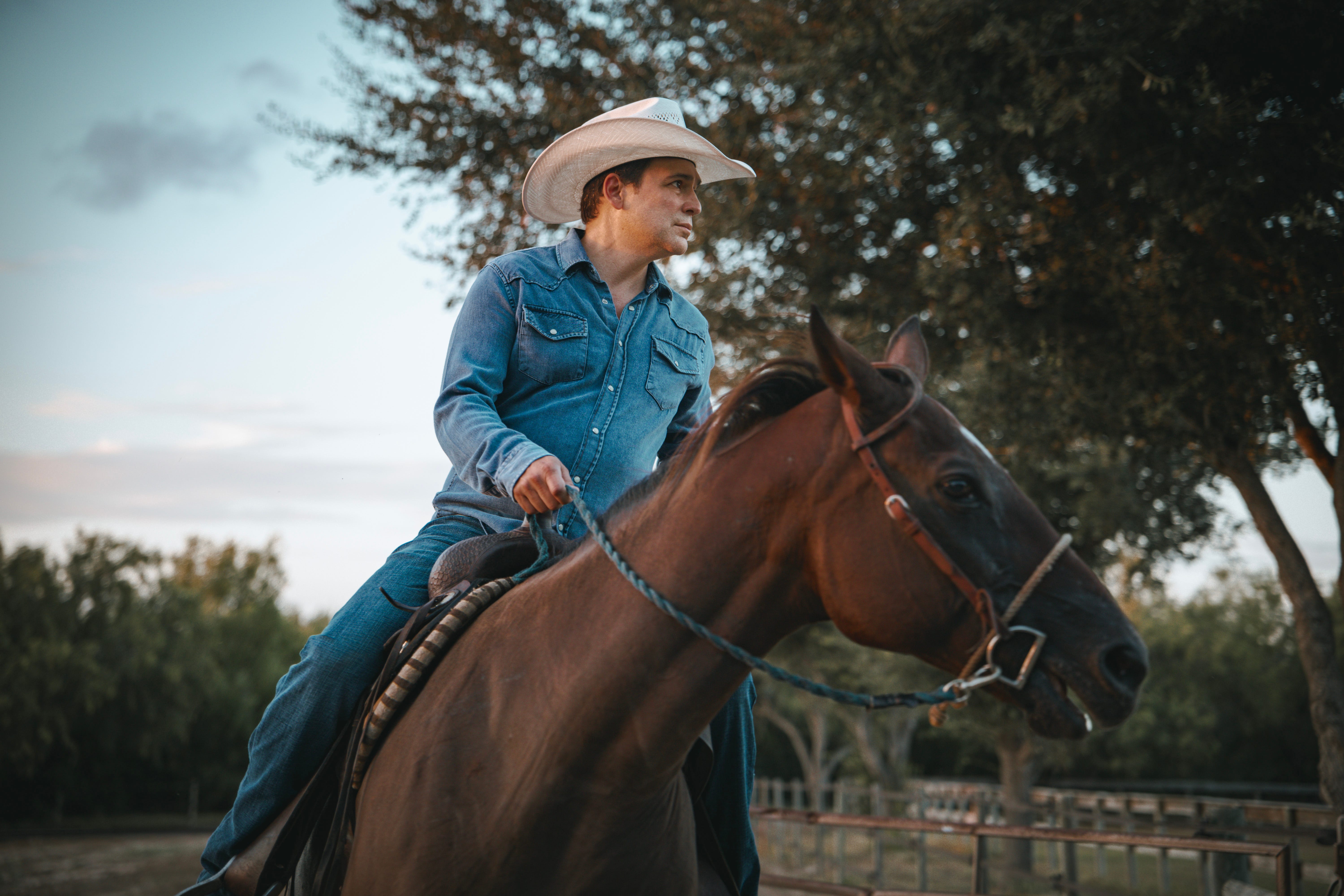
BOBBY PULIDO HAS RUN FROM immigration agents before.
Well, not really. But he did run from bumbling fake agents in a humorous music video for a song called “Algun Dia” a decade ago. Today, the entertaining and optimistic video—about a man’s desire to achieve the American Dream, wanting a big house and a nice car since he already had a girl (who secured him his papers)—has almost eight million views.
Pulido’s achievements in the music industry are the stuff of dreams: He is a five-time Latin Grammy nominee (with one of those nominations resulting in a win, and one only just announced) and a twenty-two-time Tejano Music Award nominee (eight wins), with 6.6 million monthly listeners on Spotify. But nowadays, the star is stepping up to a new stage. On September 17, he announced his run for Texas’s 15th Congressional District. As things stand, Pulido might be the only Democrat who can flip a seat blue in the newly gerrymandered state.
Pulido’s first challenge will be defeating emergency physician Ada Cuellar in the March Democratic primary. If he succeeds there, he will face the district’s Republican incumbent, Rep. Monica De La Cruz, in the general election next fall.
In his launch video, Pulido states he’s “cien por ciento”—100 percent—a south Texas Tejano (a Texan of Hispanic descent) guided by “dedication, hard work, and the grace of God,” taking a cue from the success of the “God, Family, and Country” message Texas Republicans like Gov. Greg Abbott have used in recent years to tighten their grip on the state.
But Pulido also used his launch video to tell the story of his father, José Roberto Pulido, who became a successful musician after spending his earlier years traveling state to state as a migrant farmworker.
“I know for us, immigration is a human issue and an economic issue—good families torn apart, y nuestra comunidad—living in fear,” Pulido says, wearing his trademark cowboy hat on a ranch. “I’m sick of seeing that. Yes, we have to get the criminals out and secure the border, but we can do that without destroying families and our south Texas economy.”
In an interview, Pulido told me how his father’s and grandfather’s experiences as migrant farmworkers inform his candidacy on the charged issue of immigration. He recalled his grandfather proudly telling him that although he could only afford to feed his family potatoes and beans, he never took a penny from the government. Pulido says that spirit is an authentic part of the culture of South Texas.
“This country’s always been the country that gave people a chance . . . we wanted the best of everybody,” he said. “It just seems like now, especially with this administration, it’s become almost, Not you, not you, but only certain segments of the population—and it ends up being that a lot of the segments of the population that they’re okay with, don’t look like me.”
He said while he doesn’t think that ideology represents everyone in the opposing party, there is “a little base of it, in the Republican party, . . . of white nationalism.” Pulido remembers reading Pat Buchanan’s 2004 book, How the Right Went Wrong. Donald Trump appears to have accepted the book’s arguments, he says—namely, Buchanan’s claim that the United States is losing its white Anglo-Saxon identity.
Hearing those echoes of Buchanan helped Pulido understand why the Trump administration has shown no real interest in fixing the immigration system, even if Trump has flirted with the idea from time to time in front of TV cameras.
“I hear him one day where he’ll say, There’s good workers the farmers have, and we gotta do something about that, and then days later Stephen Miller comes out and says, Business as usual—the raids continue,” he said. “I feel like they want to have their cake and eat it, too. They want Latinos to vote for them, but they’re not willing to fix it.”
Even with two Latino candidates facing off in a place like South Texas, immigration won’t be the only issue in the race. Water rights and health care will also be prominent. (In his launch video, Pulido confesses he doesn’t even have health insurance because it’s so expensive.) But, unavoidably, Donald Trump and his destructive immigration policy will be the race’s central concern.
Pulido’s task might be made marginally more difficult by Republican gerrymandering. The 15th district is one Trump won by 18 points in 2024, before Republican state lawmakers started changing the maps to ensure Democrats win even less. The new district has become 1 percent Trumpier, the Texas Tribune reported, but Texas Democrats say the new boundaries pull in counties that were more favorable to their candidates last year, which could ultimately doom De La Cruz and Republicans in the Rio Grande Valley.
Pulido says you can’t gerrymander the Tejano culture out of these small red towns that have become part of his district, meaning there could be even more winnable votes than analysts and strategists have assumed.
“A lot of these areas, they’re all Tejanos. . . . The people like the music, they understand it. I get them, they get me, and, believe it or not, a lot of them vote Republican, and I don’t have a problem with them. They’re good people, and I feel like I have a connection with them,” he said, recalling a recent performance he gave in a “ruby red” part of South Texas where voters told him they’re with him. “I think as long as you stay true to your values and to the people, they don’t care about the party—they really don’t.”
Even here, on the topic of gerrymandering, Pulido shows a bit of swagger, which is fitting for a music star. It’s also something his party has lacked in recent years. While other Democrats have grasped for it, he’s come by it honestly through a combination of personal authenticity, charisma, and a real understanding of a specific community. It’s the sort of political alloy that could help individual candidates like Pulido counteract GOP gains.
Released the day Pulido launched his candidacy, a Democratic poll from Public Policy Polling found De La Cruz leading Pulido in a close head-to-head race, 41 percent to 38 percent, with 21 percent of polled voters undecided.
A senior Texas Democrat said Pulido represents as good a shot as Democrats will have to flip a seat in a district where Republicans enjoy a double-digit advantage.
“He lives in Edinburgh, so he’s very much of the community. He’s not a Hollywood star who decided to run for office—he grew up in the Rio Grande Valley and still lives there,” the source said. “He performs Tejano music, so he’s able to appeal to people on a cultural level more than just a political level, and I think that’s going to be very helpful to him. He has a chance to turn this into a straight-up popularity contest, which he could actually win.”


Pulido Likes Hunting, Fishing, and is a ‘Hell of a Long-Distance’ Shot
Texas Democrats are already telling aggrandizing tales about the political neophyte. One of the stories making the rounds is that he can hit bullseyes from two miles away. Was it true? I asked him.
It’s actually from a distance of one mile, he clarified. He told me that during the pandemic, when his shows were canceled, he dove deeper into his hobby of long-distance shooting, competing in Precision Rifle Series events and in longer-range events where he loads his own ammo. It’s in the long-range events that he has competed against—and beaten—police, former military, and even Green Beret snipers, as he did at the Blackjack Challenge. Over the past two years of the challenge, he says, he’s been the overall leader in points.
“My oldest boy, his name is Remington, I named him Remington because the Remington 700 is the best bolt action ever made,” he said, noting that coming up among the region’s ranchlands made hunting a big part of life from early on. He shot his first white-tail deer when he was 7 years old, and three of his boys “harvested” their first white-tail deer when each was only 5.
Pulido says the major cultural divide in the United States is not between Democrats and Republicans but between rural areas and cities. He believes that while progressives have people’s best interests at heart, they tend to err when it comes to cultural issues—for example, in seeing guns as a problem when people in South Texas view them as a way of life. Progressive environmental advocacy—as articulated in policies like the Green New Deal or fracking bans—are similarly problematic for folks in rural areas, who hear a coded threat: “You’re going to take away my job, and I’m not going to be able to feed my family.”
“They’re not bad people on either side, but it gets sold a certain way, and I think that those little things start chipping away at Democratic support in rural communities,” he said.
But Pulido saves his harshest words, not for fellow Democrats or Trump, but for his expected 2026 opponent, the incumbent Republican: Rep. De La Cruz.
De La Cruz draws his ire because even though she signed on to a letter by Republicans in the Congressional Hispanic Conference warning Speaker Mike Johnson not to make deep cuts to Medicaid—which, as the letter put it, would “have serious consequences, particularly in rural and predominantly Hispanic communities where hospitals and nursing homes are already struggling to keep their doors open”—she ultimately voted to pass Trump’s signature legislation to codify those very cuts.
“Her loyalty is with the party,” he said. “She’s basically just a puppet vote for them. She’ll do whatever they say, and I don’t even think she needs much whippin’ by Mike Johnson.”
But the success or failure of Pulido’s campaign will ultimately depend on whether the people of the Rio Grande Valley agree with his diagnosis of what ails their community in the age of Trump, like decreased tourism from Mexico and a visceral culture of fear over deportations gripping residents, and accept his recommendation to stop taking bad medicine being pushed on the community by the Trump administration.
“You can’t fix stuff with fear. Fear is like you take an antibiotic that’s really strong, that kills the bacteria, but it also kills the good bacteria. It kills everything and what they’re doing with their policies is killing everything,” he said.
He described the policies as counter to the best interests of South Texans.
“They don’t care about how it affects our economy, they’re campaigning on the fact that ‘Border traffic is down, nobody is coming, that’s great.’ According to them, that’s great. Down here in the valley, that’s like the death of us.”
This is how the rest of the Dems need to talk. Sensible border/asylum policies combined with a sensitive & humane approach to hard-working families headed by undocumented immigrants and a hardline but lawful approach to all criminals (regardless of citizenship, race, etc). C'mon guys, you can walk, breathe, hum, and chew gum at the same time - just give it a try.
Never thought I'd see the bulwark and tejano music mentioned in the same breath, thanks Adrian. Love it.