

When a Text Message Shatters International Trust
A message sent to the Norwegian prime minister on Sunday could threaten decades of progress in building up the NATO alliance.

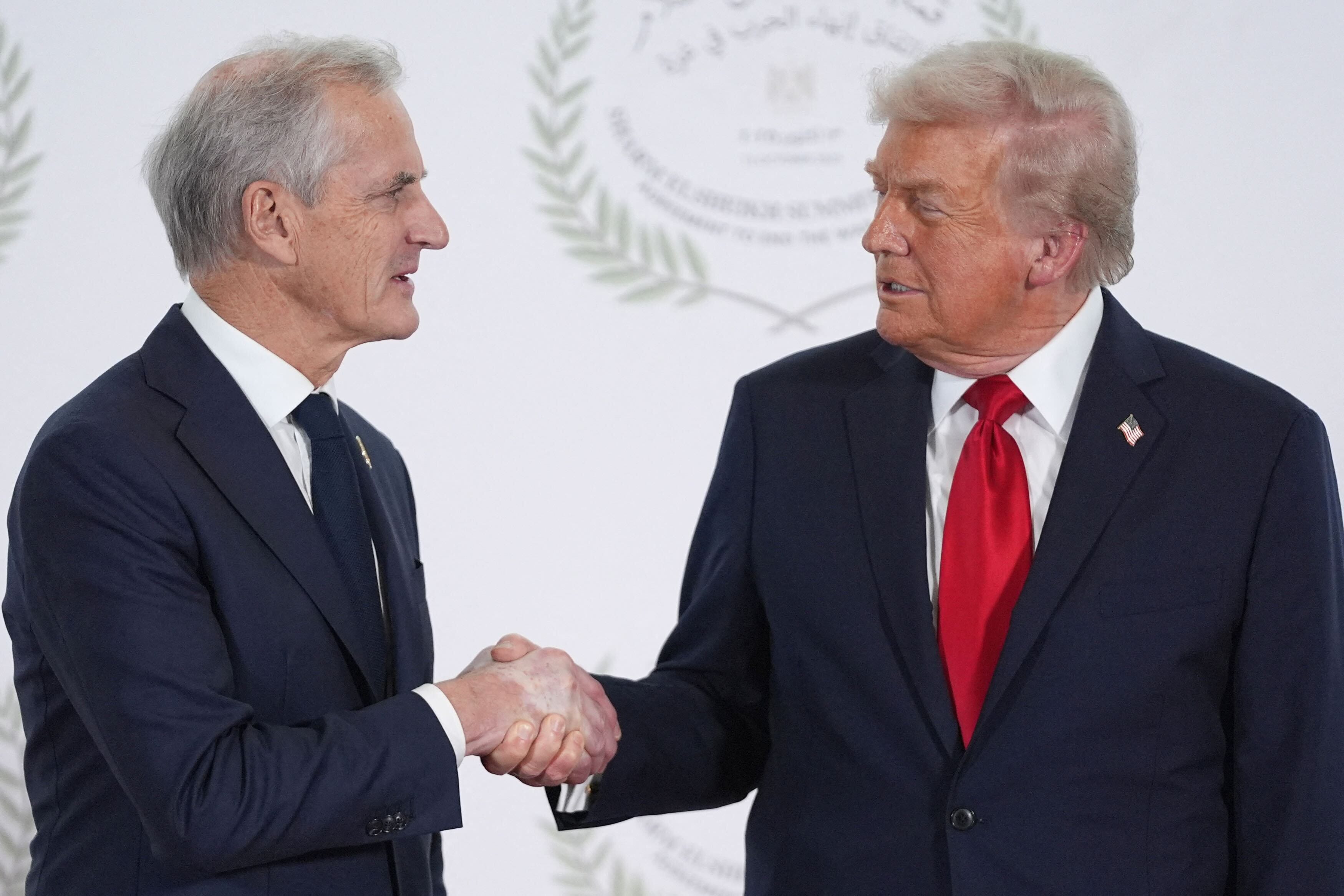
IN RESPONSE TO A REQUEST FOR a de-escalatory phone call on Sunday, President Trump sent a text message to Norwegian Prime Minister Jonas Gahr Støre that was subsequently circulated by the National Security Council to U.S. ambassadors. It was not a private communication; nor was it a diplomatic trial balloon. It was designed to cause a stir, particularly in Europe, where the message will have a profound effect on not just allies but also our military. And it should have an equally profound effect on Congress and our military leaders.
Anne Applebaum—one of the most perceptive analysts of European politics and transatlantic relations writing today—shared and analyzed Trump’s full text in the Atlantic, arguing that it should be treated not as hyperbole and excess but as a warning. She is right. I would even go a step further and argue that the implications of the message extend beyond what she describes, reaching into the foundations of our international alliances: trust, military professionalism, and American leadership itself.
Because it is an important and consequential document, here again is Trump’s full message to Støre:
Dear Jonas: Considering your Country decided not to give me the Nobel Peace Prize for having stopped 8 Wars PLUS, I no longer feel an obligation to think purely of Peace, although it will always be predominant, but can now think about what is good and proper for the United States of America. Denmark cannot protect that land from Russia or China, and why do they have a “right of ownership” anyway? There are no written documents, it’s only that a boat landed there hundreds of years ago, but we had boats landing there, also. I have done more for NATO than any other person since its founding, and now, NATO should do something for the United States. The World is not secure unless we have Complete and Total Control of Greenland. Thank you! President DJT
Applebaum and others have already said much about the message’s inaccuracies, its tortured grammar, its fixation on personal grievances. Those critiques are accurate, but they miss the more consequential issue: not tone, but intent.
Trump’s text reflects a worldview in which sovereignty is negotiable, alliances are conditional, and territory can be claimed by a personal assertion, notwithstanding any law. It assumes that the world’s most capable military—the United States Armed Forces—exists as a tool of one person’s will, and it is appropriate for that military to compel obedience from allies and bend nations and institutions to the desires of that individual. The text presumes that an alliance built up over more than seventy-five years will simply yield—that partners will acquiesce, treaties will be set aside, and professional military judgment will be overridden by personal loyalty.
That is a profound misunderstanding of how both alliances and the American military function—and how they should. And Europe understood this immediately.
In the days since Trump’s text was circulated, senior officials from across NATO ramped up their already publicly affirmed commitment to Denmark. Several European leaders went further, stating plainly that Trump’s use of tariffs to punish European nations supporting Denmark’s position on Greenland could trigger a major economic response, up to and including restricting American access to the world’s largest single market. These were not emotional reactions or rhetorical flourishes tossed off on social media or published in the opinion sections of national newspapers. They were deliberate, stabilizing signals being sent by heads of government with the support of their citizens.
I agree that Trump’s campaign of sustained belligerence and implied threats of military action against Denmark, Greenland, and NATO is wrong, and so do the overwhelming majority of Americans.
Over the course of my career, I worked closely with all thirty-two NATO nations—commanding multinational formations in combat, training and exercising side by side in peacetime, planning contingencies, and learning, humbly, how much American security depends on the partnership, competence, and resolve of our allies. I came to deeply respect these nations for what they contribute, how seriously they take their responsibilities, and how they admire our military. I also learned that true alliances are sustained not by fear or coercion, but by mutual respect, shared sacrifice, and trust built over time.
Trust among allies is never automatic. It is earned exercise by exercise, deployment by deployment, and even disagreement by disagreement, provided those disagreements are resolved within a shared framework. We had just such a framework, and it rested on a simple operating principle, one we used as a mantra in European Command: We are stronger together. Our shared security reduced risk, deterred adversaries, and prevented escalation. It allowed nations with different histories, cultures, and threat perceptions to act collectively without surrendering their sovereignty.
That foundation is now being strained to a point of cracking—not because European allies are abandoning it, but because the United States is growing more and more hostile and insulting toward our partners.
The president’s text frames NATO less as a collective alliance than as a loyalty test. It treats territorial control as a prerequisite for security rather than stability as the product of cooperation. It ignores treaties ratified by Congress and honored for generations, brushing them aside for coming into conflict with Trump’s sense of personal grievance.
This is not how alliances become stronger and endure. It is how they fracture.
THIS BRINGS US TO THE DISCOMFITING QUESTION of the U.S. military’s role in a scenario linked to a fracturing military alliance.
I am not a lawyer, nor do I claim expertise in treaty law. But after decades of command, I do understand the intricacies of formalizing alliances. While the Constitution gives the president the power to make treaties, with the advice and consent of the Senate, treaties become part of U.S. law under the Supremacy Clause and as federal statutes. President Truman was the primary driver of the North Atlantic Treaty, which was signed by the United States along with eleven other founding member states on April 4, 1949 and ratified by the Senate by a vote of 82–13 in July of that same year. The United States is therefore bound by both international and U.S. law related to the document.
If, hypothetically, commanders of the U.S. military were directed to conduct offensive operations against Greenland—territory governed by Denmark, a NATO ally under a treaty to which the United States is a party and which was invested with the force of law by Congress—that order would raise first-order moral, legal, and constitutional questions. Senior military commanders would be required to raise those questions. In doing so, they would not be insubordinate. Their questioning would instead represent fidelity to their constitutional oath. It’s worth reiterating that American officers are taught that obedience is not blind, and orders must be lawful.
European observers know all this, too. They seem to see the situation more clearly than many Americans do, something European leaders have demonstrated by closing ranks—not against the United States per se, but against the uncertainty and, to a degree, criminality brought about by the current administration. They are signaling to one another and to the world that the NATO alliance is larger than any one leader, and that collective security cannot be undermined by an individual leader’s personal resentment, embrace of historical revisionism, or ignorance of the law.
Which brings us to Congress, and specifically the members of our Senate.
If there is any institution charged with stabilizing a situation like this, it is the legislative chamber that ratifies treaties and, in collaboration with the House, that authorizes the use of force and funds the military. Silence by any member of Congress in this moment would be an abdication. Truthfully, it would be negligent.
Our senators—particularly those who profess support for the military and reverence for alliances—must all say, clearly and publicly, that treaties matter, that allies matter, and that American power is strengthened, not weakened, by restraint and respect for law. If they do not, other nations will draw further conclusions about the state of our nation—and, as our European allies have done, they may begin planning accordingly.
Letters can end alliances and start wars. In our age, even a bad text message can do the same. It’s now up to Congress to decide which future it intends to defend.