The Best Military ‘Option’ for Greenland: Let It Be
Attacking an ally with special forces would be the wrong tool for the wrong mission.

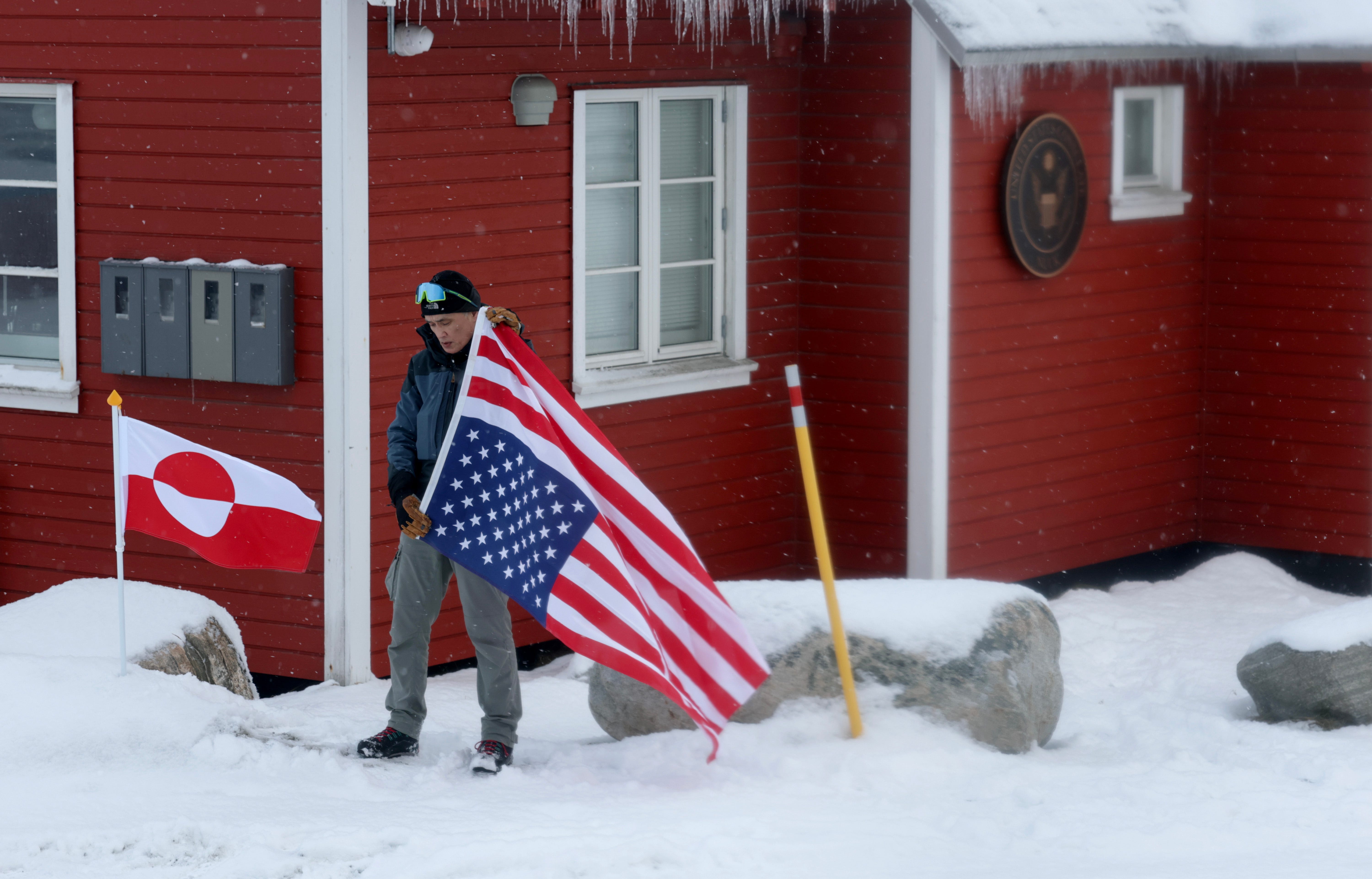
THERE IS A DIFFERENCE BETWEEN leverage and lunacy. To wit: asking the world’s most elite and secretive special operations force to brainstorm ways to “attack” an island three times the size of Texas populated by roughly 56,000 people, most of whom already host and love American troops, is lunacy.
Yet here we are.
President Trump has reportedly tasked the U.S. military with providing “options” regarding Greenland—specifically requesting that the Joint Special Operations Command develop potential military scenarios. The implication—left vague but unmistakable—is that where diplomacy, money, and basic common sense have failed, force might somehow accomplish Trump’s longstanding fixation on acquiring the world’s largest island from Denmark, a NATO ally.
If true, Trump’s request doesn’t merely reflect a misunderstanding of geopolitics. It reveals a deeper confusion about what the U.S. military is designed to do—and what it is not.
JSOC is not a freelance mercenary outfit that springs into action whenever a president has an interesting thought. It is a subordinate command within Special Operations Command (SOCOM), operating squarely within the normal military chain of command and under U.S. and international law. I worked with these forces in Iraq; they are extraordinarily capable, disciplined, and lethal—when executing the missions they are built to perform.
Those missions include hostage rescues, counterterrorism raids, and operations against high-value targets. They do not include planning invasions of allied territory. Asking JSOC for “options” to attack Greenland is roughly equivalent to asking a SWAT team to provide blueprints for annexing Vermont. It misunderstands both the scale of the task and the purpose of the force.
Which raises an obvious question: What would “special operations” against Greenland even mean?
Greenland is not a rogue state, an ungoverned space, or a gray-zone problem. It is an autonomous territory within the Kingdom of Denmark, a NATO member, and a place where the United States already operates military installations—with Danish consent. During overseas flights, I often flew on military aircraft that had refueling stops at Thule Air Base (now Pituffik Space Force Base).
Special operations forces do not “take” countries. At most, they seize discrete objectives in support of a much larger conventional campaign. There is no plausible JSOC mission set that accomplishes a military takeover of Greenland without instantly escalating into open conflict with Denmark—and by extension, with NATO and maybe the European Union. There is no deniability here, no ambiguity, no covert fig leaf thin enough to cover an armed attack on allied territory in the North Atlantic.
Which is where disbelief gives way to alarm.
Greenland is covered by NATO’s Article 5. An armed attack on it would legally constitute an attack on Denmark, potentially triggering collective defense obligations among alliance members. (The EU also has a collective defense obligation, though it is not often considered as significant as NATO’s despite its stronger wording.) In other words, the United States would be attacking the very alliance it helped design—invoking rules meant to deter Russia and later adapted to confront terrorism, not to enable American expansionism.
Even setting NATO aside, U.S. law presents its own obstacles. Congress—not the president alone—holds the power to authorize war. There is no authorization, no emergency rationale, and no credible legal theory under which attacking Greenland would be permissible. That likely explains reports suggesting the chairman of the Joint Chiefs and other senior military leaders have resisted engaging seriously with such planning at all. Good for them. In this case, the system—imperfect as it is—appears to be doing its job.
But what is most striking about this episode is not the idea itself, but how casually it appears to have been floated. Riding the high of the bombing of the Iranian nuclear program and the raid on Caracas, the president appears to be using the U.S. military less as a constitutional instrument of national defense and more as a prop in a geopolitical fantasy—one where power is assumed to be frictionless, law optional, and alliances disposable.
Donald Trump is trying to wage war on the cheap, which is a mistake when attempted against a genuine enemy, to say nothing of an ally.
Measured disbelief is the only reasonable response, because the alternative is to treat this as operationally serious—and it isn’t. It is serious, however, as a signal: of how easily the language of force drifts away from its consequences, and how much quiet professionalism is required inside military institutions to simply say no.
Greenland is not for sale. JSOC is not a land-acquisition tool. And NATO is not a suggestion.