The Birth Pangs of the U.S. Navy
It was founded 250 years ago today—and, oddly, was promptly ordered to attack what is today its biggest base.

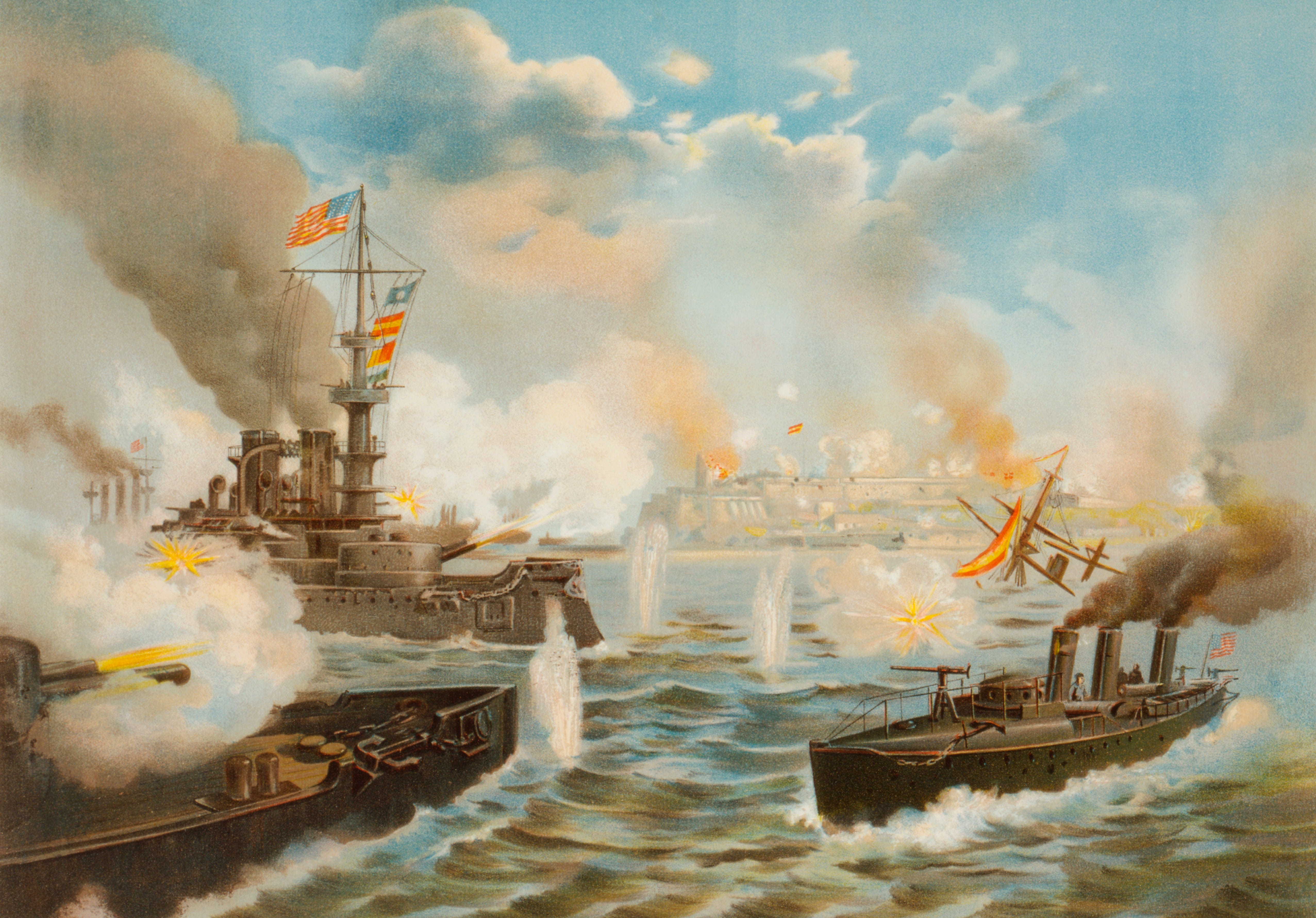
IT WAS, AT FIRST, George Washington’s navy. In September 1775, the frustrated commander of the Continental Army paid out of pocket to charter a schooner to harass Britain’s Royal Navy in Boston harbor. Weeks later, the Continental Congress was shamed into ponying up enough money to convert two small merchant vessels into warships and to form a naval committee. This the Congress did on October 13—the day that would later be selected to mark the founding of the United States Navy.
On Sunday, October 5 of this year, President Donald Trump trekked down to the Naval station in Norfolk, Virginia—the world’s largest—to commemorate the birth of the U.S. Navy at what is considered the service’s capital. But 250 years ago, Norfolk itself was the target of the first mission of what became the Navy, an irony lost during what Trump acknowledged was a political rally and which featured a blaring rendition of the Confederate hymn “Dixie.”
By the arrival of autumn in 1775, New Englanders like John Adams were urging the delegates at the Second Continental Congress in Philadelphia to support funding for a maritime force to combat Britain’s overwhelming naval superiority.
Southerners, however, balked at paying for a fleet they feared would only benefit New Englanders and which they doubted could stand up to the might of what was then the world’s most formidable fleet. “The maddest idea in the world,” is how Maryland’s Samuel Chase put it. A compromise was worked out in which individual colonies would outfit armed vessels.
Then a new threat emerged. That summer, Virginia’s royal governor, Lord Dunmore, had abandoned the colony’s landlocked capital of Williamsburg for the booming city of Norfolk, a deepwater port close to Chesapeake Bay. With money borrowed from local Scottish merchants, he converted several merchant ships into warships to complement his handful of Royal Navy vessels. He then set about seizing patriot smugglers carrying desperately needed supplies like gunpowder and arms. The patriots were defenseless.
On October 6, Chase complained on the floor of Congress that Dunmore had broadened his attacks to include Maryland vessels, blaming Virginians for inaction. Richard Henry Lee responded that his colony “is pierced in all parts with navigable waters” and that “his Lordship knows all these waters.” The result, he acknowledged, could be “decisive destruction to Maryland and Virginia.” That alarming prospect turned the tide in favor of the naval advocates—and, within a week, the Navy was born.
THE URGENCY ONLY GREW when a Royal Navy force attacked the Virginia port of Hampton two weeks later, marking the first battle between Britain and the patriots south of New England. Then, on November 15, in the wake of a victory over a patriot militia in what is now Virginia Beach, Dunmore proclaimed freedom to indentured servants as well as enslaved people owned by patriots, if they would fight for the king. He created the British military’s first black regiment as hundreds of black Americans seeking liberty streamed to Norfolk from as far away as Massachusetts.
Patriots panicked. “If, my dear sir, that man is not crushed before spring, he will become the most formidable enemy America has,” Washington wrote Lee, referring to Dunmore. “His strength will increase as a snowball by rolling; and faster, if some expedient cannot be hit upon to convince the slaves and servants of the impotency of his designs.”
On December 22, Congress named Esek Hopkins as “commander in chief of the fleet of the United Colonies.” A Rhode Island merchant, he had previously served as captain of a slave ship during a particularly notorious voyage in which his crew shot and killed at least eight African captives. By the time the ship landed, more than half of the nearly two hundred Africans had perished, many by suicide.
In the first week of January, Hopkins received his orders to proceed “with the utmost diligence” to Norfolk with a fleet of eight small armed vessels, plus two small Maryland ships set to rendezvous with this little fleet. The Marine Committee called for a surprise attack to catch Dunmore’s multiracial forces off guard, but it took weeks to outfit the vessels. In the meantime, Virginia’s patriot forces burned Norfolk, blaming the deed on the governor. Dunmore nevertheless continued to raid the shores, while building up his fleet and training new black recruits.
Not until late January did the Continental flotilla make its way south through the Delaware Bay, only to become trapped in ice for more than a month. By the time the vessels reached the Atlantic Ocean, Hopkins had had enough of the bitter weather. The commodore decided to bypass the Chesapeake altogether. “I did not think we were in a condition to keep on a cold coast,” he later explained to John Hancock, president of the Continental Congress. Instead, he set course for the warmer climes of the Bahamas and the less well-defended port of Nassau.
The March 3 landing there of marine soldiers—the first action of what would become the U.S. Marine Corps—went off without a hitch, and Hopkins returned north with “several warlike stores,” including 38 barrels of gunpowder, vital for the fight against Britain.
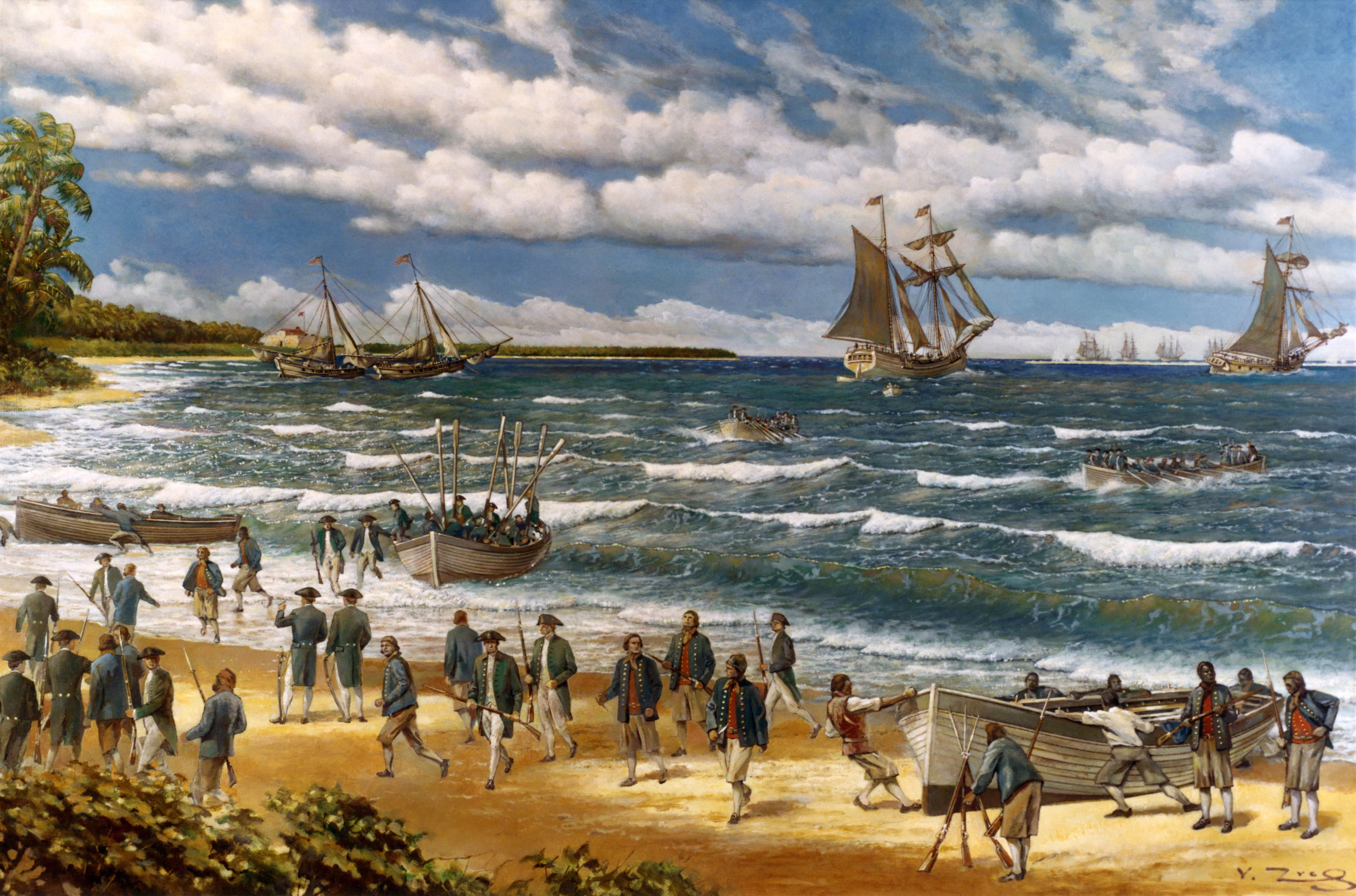
After Nassau, Hopkins was a hero in the North—but Southern delegates were furious that he had bypassed Virginia. Even Hancock lambasted his “frequent neglect or disobedience of orders.”
The following August, the Navy’s first commodore was hauled before Congress to explain his behavior. By then, Dunmore had been forced out of the Chesapeake, but Southern delegates still seethed. Adams decried “that anti-New England spirit which haunted Congress,” while Hopkins insisted that he had been given discretion to alter his mission.
Jefferson, however, argued that the officer had “a premeditated design” to avoid Norfolk and sail on to Nassau. A vote of censure against the commodore narrowly failed, but two years later, Hopkins was relieved of his command for insubordination.
THE CONTINENTAL NAVY didn’t survive the budget cuts that followed victory in the American Revolution, but it was re-established in 1794. Norfolk, meanwhile, was slow to recover from its destruction. In the twentieth century, its fine harbor and proximity to Appalachian coal deposits made it the Navy’s port of choice. The fleet quickly grew into the world’s largest and most effective.
That era seems to be coming to an end. What Trump did not mention in his speech Sunday was that China now operates 234 warships compared to the U.S. Navy’s 219. Quantity is not quality, but naval experts agree that the East Asian behemoth is well on its way to challenging American dominance on the high seas. But at his September 30 meeting with top military officials, the president focused instead on form rather than function. “I don’t like some of the ships you’re doing, aesthetically,” he complained, dismissing explanations that new hulls are designed to avoid enemy detection. “An ugly ship is not necessary in order to say you’re stealth.”
Instead, Trump suggested the Navy should bring back battleships, the last of which was decommissioned in 1958. It was as if President Theodore Roosevelt had urged his admirals to abandon their new steel ships for wooden sailing vessels. Adams and Hopkins might not have known whether to laugh or cry.
 | A guest post by
|