‘The Bride!’ Review
Every slugger will tell you: Big swings usually lead to big misses.

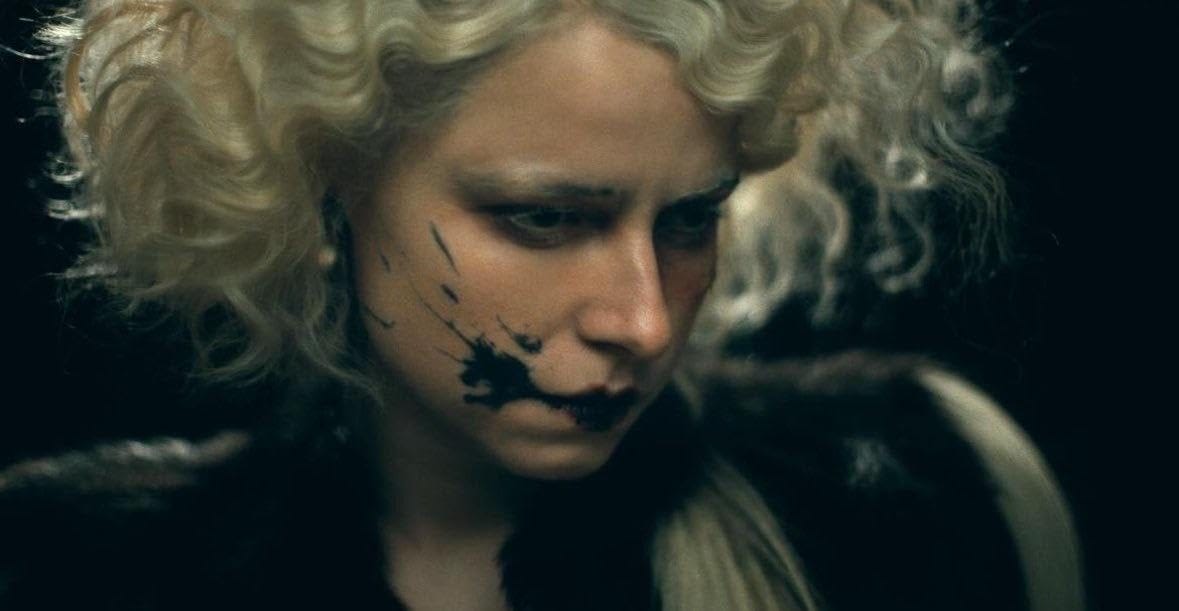
IN THE 2008 FILM BRONSON, the titular character, a prisoner played by Tom Hardy, is told by a visiting art teacher that his art—a series of faintly grotesque yet charmingly amateurish and immature cartoons—is “interesting.” Bronson asks him what that means. This teacher replies, “Interesting’s good! Bravado, you know? You know, you can’t pin it down. Can’t compute. Can’t tie that up in a nice little pink bow.” In other words, the teacher has no idea what it means.
Despite what Bronson’s teacher suggests, interesting is not the same as “good.” They are not antonyms, precisely—“interesting” movies are often quite good—but the two terms are sometimes in tension with one another. If you see a critic describe a film as interesting, or praise the director and stars for taking a “big swing,” you know you’re in for an “interesting” movie.
The Bride! is an “interesting” movie. It is decidedly not a “good” movie.
Spectacularly ill-conceived from start to finish and stuffed to the gills with lots of Big Choices from stars Jessie Buckley and Christian Bale while having only the loosest grasp of the ideas it is playing with—a sort of cataclysmic mishmash of post-MeToo, post-ACAB mutterings—The Bride! does manage to be interesting. It’s never boring! You’re never tempted to look away from the screen, even when writer-director Maggie Gyllenhaal’s script goes into spastic repetition or Buckley jerks her head like she’s coping with Tourette’s.
The issues start almost immediately, with a black and white framing device suggesting Mary Shelley resented her masterpiece, Frankenstein, and wanted to write something else entirely. The thing she wanted to write, we’re led to believe, is . . . this? The Bride!, I guess? And that’s why she, Mary Shelley as played by Jessie Buckley, takes over the body of Ida, also played by Jessie Buckley, in Chicago in the 1930s. Mary Shelley, possessing Ida, mouths off about a mob boss, whose flunkies take her outside, and while outside, she gets thrown down a flight of stairs, breaking her neck.
You may have questions about what I’ve just described and I can assure you I have no answers.
But we do have a dead body, and soon we meet the monster in search of a bride, “Frank” (Bale). This stitched-together creature is portrayed as an incel, but a sweet one: constantly apologetic, worried at giving offense due to his bad odor. Desperately lonely, Frank implores one Dr. Cornelia Euphronius (Annette Bening) to make him a bride. She demurs at first and then, curious to see if she can match the accomplishments of Dr. Victor Frankenstein, accepts. Et voila: The titular bride is (re)born.
You may have questions about what I’ve described and I can assure you, I only have more questions.
Just, for instance: In the world of the film, Dr. Frankenstein himself seems to be real—Euphronius is familiar with his works and has a life-giving apparatus of her own at least partially based on his work—and yet the Bride’s body is repeatedly possessed by the mind of Mary Shelley, the author of the very fictional Frankenstein. The who we know, but the “why?” and the “how?” not so much. I suppose we are to take all of this as a variety of magical realism, which is why, e.g., we later see Frank and the Bride delivering dialogue on a drive-in movie screen despite not being in the movie being shown, but it’s all quite muddled.
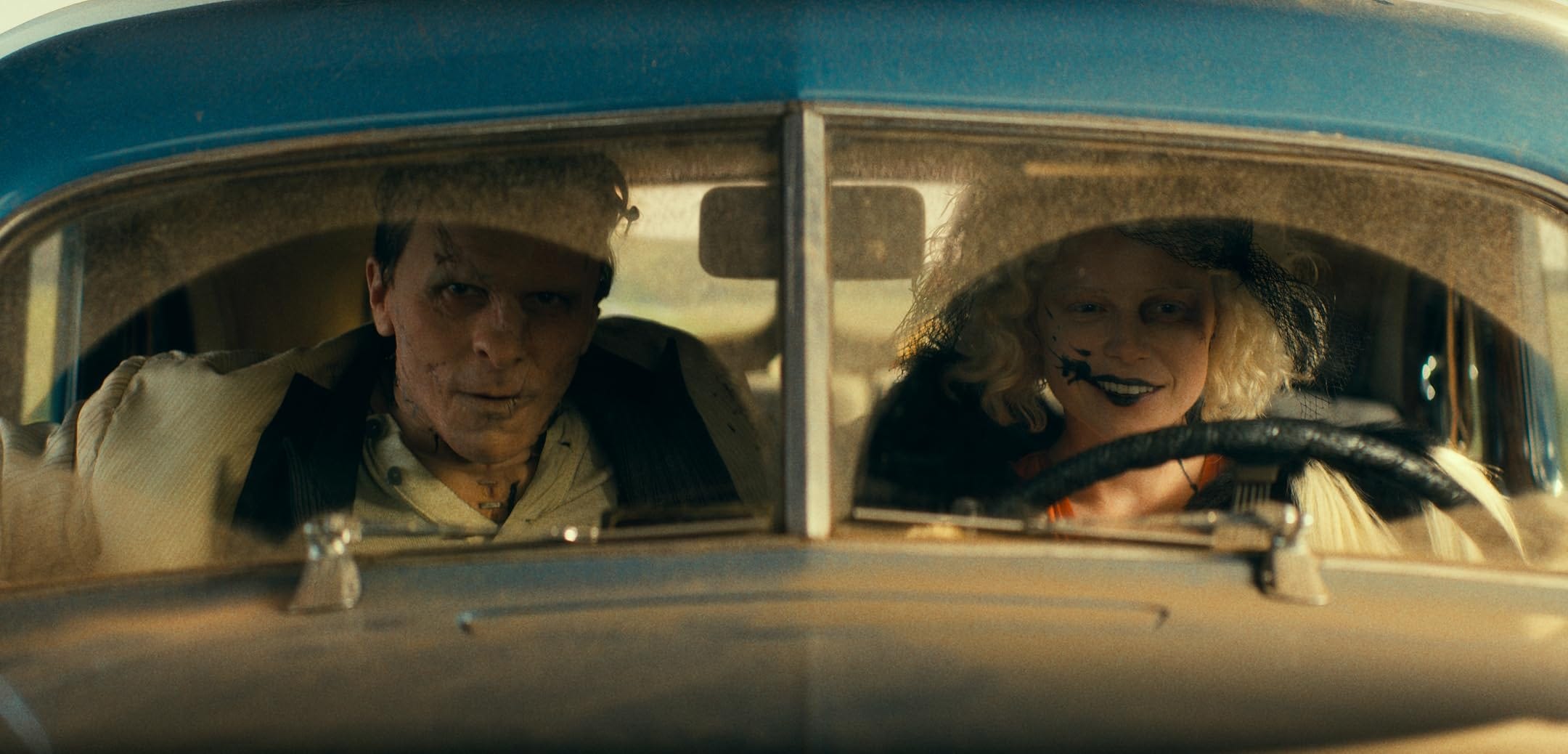
It doesn’t help matters that Buckley delivers her lines in shuddering, juddering accents that swing wildly back and forth from the British Shelley to the Chicagoan Ida, or that she’s saddled with terribly mannered dialogue that I’m sure looked great on the page but simply does not work spoken aloud, at all. You have to give her credit for taking a big swing here, and one imagines that the producers of Hamnet are glad that Oscar voting is almost over so she can’t pull a Norbit on them.1 It’s all very interesting! None of it is very good.
Anyway, our heroes go to the most annoying nightclub in history, which is playing the worst music ever performed while also being filled with cross-dressing goths and New Wave kids. And yet in this underground scene, they still manage to stumble upon two straight guys who decide to try to rape the Bride. Big mistake, and Frank makes sure they pay for their transgressions, but his outburst sends them on the run. What follows is something like Bonnie and Clyde with a monstrous twist. Will the cops find them? Can Det. Jake Wiles (Peter Sarsgaard) atone for his sins, about which we care nothing at all since they seem to have been invented halfway through the production of the film and parachuted in like a care package floating onto a crater-filled battlefield? Who can say.
I’m sure much will be made in the months and years ahead about the depth of meanings and feelings this movie is suffused with, that it’s a masterpiece of camp, that it represents the marginalized and gives voice to the voiceless. These arguments will all be quite interesting; I can’t wait to read those essays. None of them, sadly, will make the movie good.
Eddie Murphy was widely considered the favorite to win an Oscar in 2007 for his work in Dreamgirls, only to have his campaign derailed by the disastrous release of Norbit, one of the most-loathed movies of the year. I am not saying The Bride! is as bad as Norbit, precisely. But that’s only because Norbit wasn’t even an “interesting” movie.
"Can Det. Jake Wiles (Peter Sarsgaard) atone for his sins, about which we care nothing at all since they seem to have been invented halfway through the production of the film and parachuted in like a care package floating onto a crater-filled battlefield? Who can say."
Boffo, 10/10, no notes.
I am a big Jesse fan and will watch her in everything she does. Peter Bradshaw of The Guardian loved this movie. I look forward to watching with both your review and The Guardian's in mind. Thanks Sonny!