‘The Death of Robin Hood’ Review
A story about the stories we tell about ourselves.

MICHAEL SARNOSKI, THE WRITER-DIRECTOR of The Death of Robin Hood, is a man interested in storytelling. Specifically, the stories we tell about ourselves to ourselves, and what that demonstrates to others.
All three of his films thus far—Pig, A Quiet Place: Day One, and now The Death of Robin Hood—concern loners living on the fringes of society. But they’re more concerned with ideas of self-conception and self-presentation. Hence the scene in Pig where chef Robin Feld (Nicolas Cage) confronts one of his old prep cooks about the ridiculous molecular gastronomy restaurant he’s opened when Robin knows that, in his heart, he didn’t want to present foodies deconstructed truffles, he wants to serve old-fashioned pub cooking to normal folks. His sweaty plea that “everybody loves it” is rejected with a simple truth from Rob: “None of it is real. The critics aren’t real, the customers aren’t real . . . because you aren’t real.”
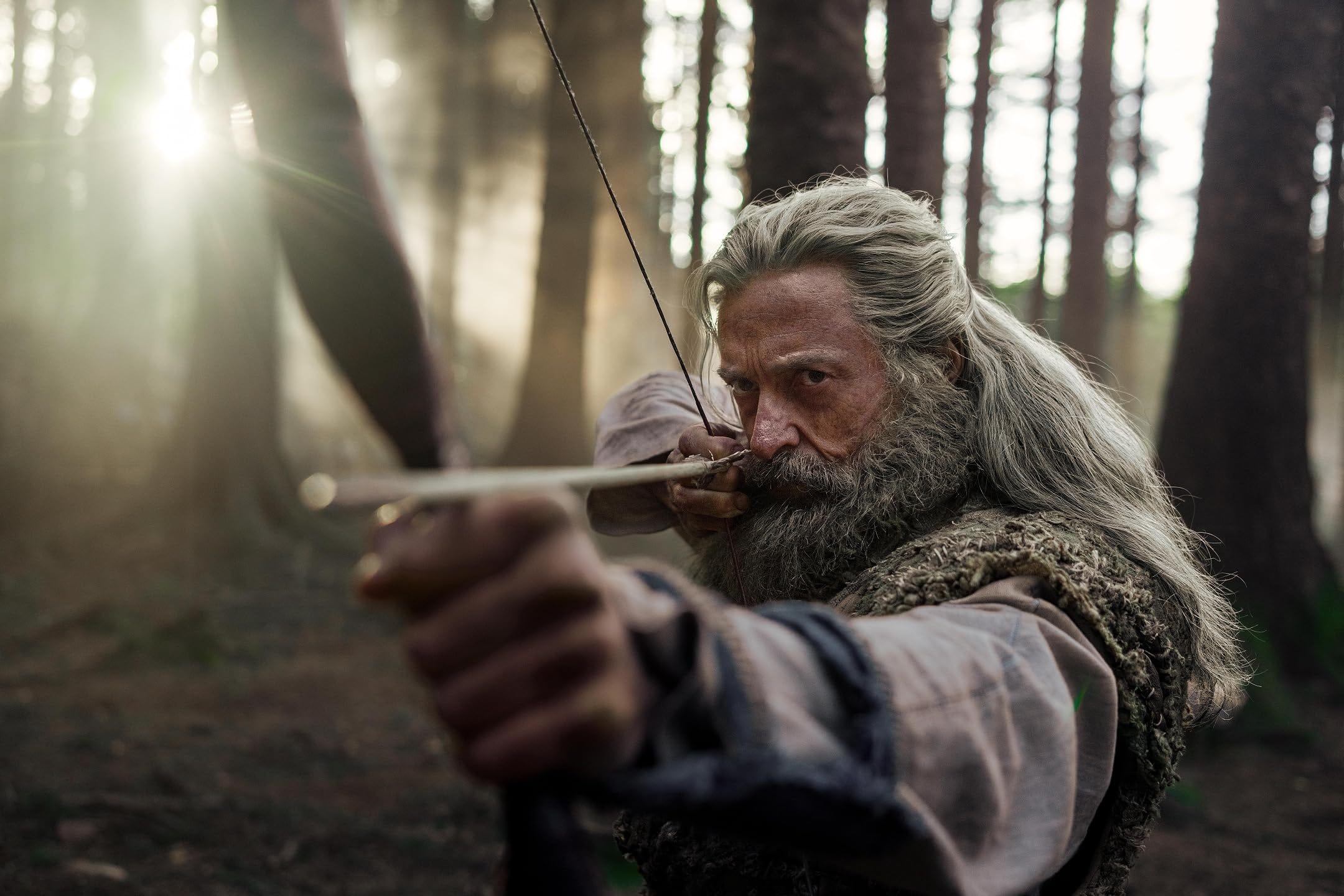
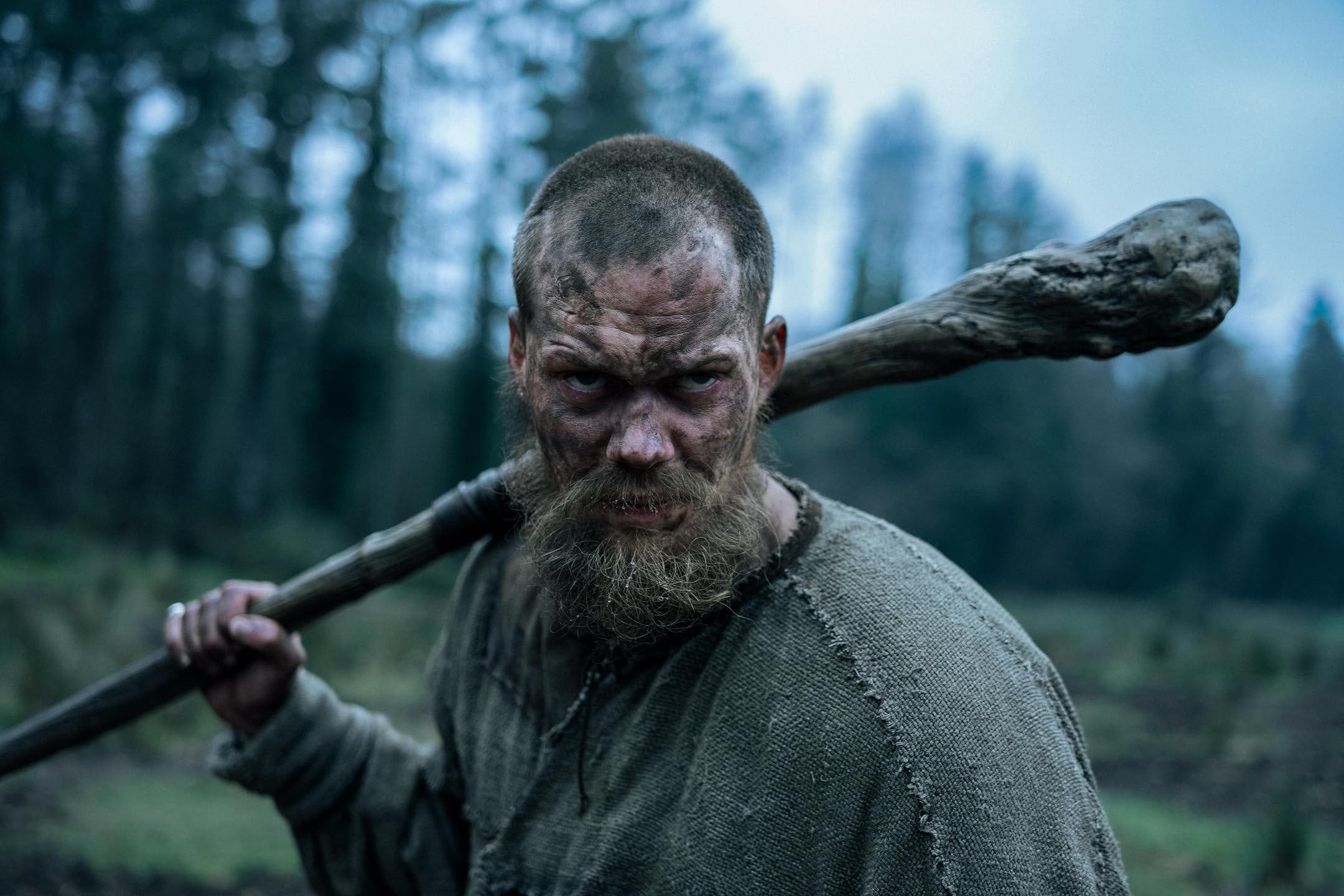
The Death of Robin Hood is about the different uses of lies and truths, their varied purposes. We learn early on that Robin Hood (Hugh Jackman) and his merry man Little John (Bill Skarsgård) were no noble brigands. Rather, they were brutal murderers, killers par excellence, and we get a number of exceedingly visceral examples of how good they were at their work in the opening forty minutes of this film. Stabbings, beatings, burnings, and, naturally, a few good arrow shots here and there.
But this iteration of Robin Hood is not stealing from the rich and giving to the poor. He and Little John were stealing to live, killing as they went, burning men, women, and children alive. The legends that cropped up around Robin were encouraged by the man himself to cover his tracks and sneeringly wink at the carnage left behind. “People saw meaning where there was none,” he says with a sigh, shortly before another brutal killing.
And again, I feel the need to warn folks about just how grotesque this section of the film often is: It’s not often I flinch from the screen, but there are a handful of truly intense traumas that made me grimace. The end result of all this, the culmination of the fables clashing with reality, is a never-ending cycle of blood feuds. Little John killed a man and took his farm; the family of the dead man returns to kill Little John, his wife, and his daughter; Little John and Robin kill them (though not before Little John’s wife is murdered) and put an arrow through the eye of a child who stumbles home to tell of the bloodshed; that boy’s clan rolls out again to take their revenge and continue the cycle.
It isn’t until Robin is brought to an island priory run by Sister Brigid (Jodie Comer) that the cycle is given a chance to break. He begged for death and instead found life. But can he find a reason to live? And will those who have taken refuge on this mysterious island accept him if they ever find out who, or what, he is? Most importantly: Will Little John’s young daughter, Little Margaret (Faith Delaney), be safe if anyone learns that his bloodline continues? Who deserves the truth, no matter how hard? Who needs a comforting lie to go on?
The Death of Robin Hood is a hard film to recommend. After the intense bloodiness of that opening sequence it slows to a crawl: This is a movie about the search for redemption, but it doesn’t end in cathartic, purifying bloodshed a là Unforgiven. Sarnoski is too contemplative for that, perhaps to a fault. But his seriousness and commitment to the ideals under consideration give the film real moral heft.
You may not mind the shift to a more languid pace, since the film simply looks great: Cinematographer Pat Scola (who worked with Sarnoski on his previous two features) makes excellent use of his 35mm film and natural light. There are these wonderfully backlit shots throughout that make the film sometimes feel as if it’s a shadow play, silhouettes doing combat against a burning hut or figures talking into the sun. The light itself almost feels like a character: in those first brutal forty minutes, there is a constant murk, an inescapable griminess. Wind and fog and snow and smoke obscure the sights. But once Robin lands on Brigid’s island, the murk lifts and the sun shines so bright it hurts your eyes. There’s a cleansing glow to the place, a beacon of light that shoots directly into Robin’s soul, exposing the darkness within.
Comer, as is often the case, is the all-star here; she simply has one of the most expressive faces in the business, and there’s a moment late in the film where you’re simply not sure what she’s going to do because of the torment that flickers across it. Jackman is good, though I have a hard time buying him as a soulless brigand. And Skarsgård is unrecognizable as Little John, though his accent could have used a little work simply for reasons of audience comprehension; I spent much of that first forty minutes idly wishing we had the option to turn on subtitles.
Thanks Sonny, I think I will skip this new version of Robin Hood. My favorite Robin Hood movie is "Robin and Marion" with Sean Connery, Audrey Hepburn, Robert Shaw and Nicol Williamson. The movie portrays Robin, Marion, the Sheriff, and Little John as rich and complex characters. Robin is an honorable man - he refuses King Richard's order to attack a castle occupied by just women and children - but his fatal flaw is believing in his own myth, a myth that he had disparaged earlier in the movie. Robert Shaw is terrific as the Sheriff, who finally understands how to beat Robin, but is undone by his own need to prove himself a better man than Robin. And by the end of the movie, we also see that Marion and Little John are much more complex and tragic characters than we imagined. I think the ending of the movie hurt its popularity - it certainly shocked me when I first saw it in college - but over the years I have come to see how it fits into the story that the movie is trying to tell. Movies like this are the reason why I love movies.
My wife and I went to see this film only because there was nothing else we hadn’t seen that interested us. We were blown away by the beauty and depth of the film—it took us by complete surprise. Sonny’s right about the brutality of the violence: we nearly walked out (and another couple did, in fact, leave). It was so beautiful visually—Sonny already mentioned the greys and the landscapes, but there are these beautiful, slightly out of focus shots of faces that add to the dreamy meditative quality of the film after the violent scenes.
It’s a movie that has something to say, and will stick with me, for sure, and I’ll be looking out for it on streaming so I can activate the subtitles.