The El Paso Balloon Incident Could Have Been a Disaster
Shooting experimental lasers next to a major airport without telling anyone—what could go wrong?

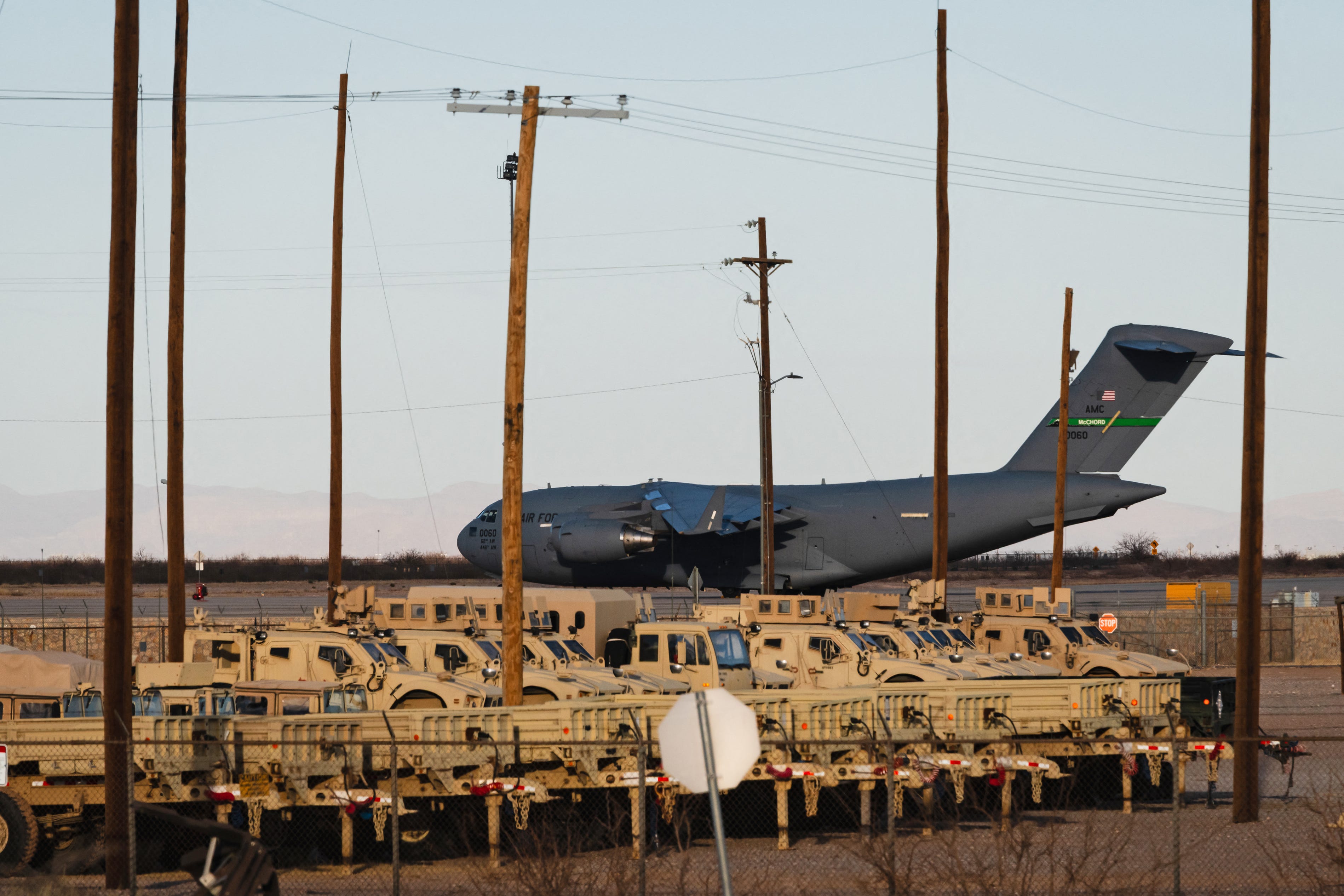
AFTER PROLONGED CONFUSION, we may have some clarity on what caused the emergency restriction on the airspace around El Paso International Airport: Someone used a sophisticated anti-air laser against what they thought was a drone launched from Mexico, but turned out to be a party balloon. Understandably, the first suspects were the Army units at Fort Bliss, which abuts El Paso and the airport. But it wasn’t the Army that fired the weapon.
According to the New York Times, Customs and Border Protection personnel fired an experimental anti-drone laser on loan from the Department of Defense at what they thought was a cartel drone—without sufficient coordination with the Federal Aviation Administration. That prompted the FAA to shut down the airspace around the airport up to 18,000 feet in an extraordinary emergency move.
But focusing on the harmlessness of the target obscures the deeper issue: Why was this weapon employed without the discipline that governs every legitimate use of force in the military?
Fort Bliss sits on the edge of El Paso. While it’s a large post, and it has a very isolated desert training area, it borders a large city with hospitals, businesses, highways, civilian neighborhoods, and a relatively large international airport.
The post is home to the 1st Armored Division, an organization I once commanded. Like every major installation in the Army, Fort Bliss operates under detailed standing operating procedures governing weapons employment—whether on a live-fire range, during air-defense exercises, or in any activity that could affect surrounding airspace or population centers.
Those procedures are not bureaucratic red tape. They are necessary safety barriers. They exist precisely because military commanders understand various immutable facts: weapons are dangerous, coordination for any training event is critical, citizens live nearby, and mistakes do not stay contained.
It’s therefore unsurprising—though deeply concerning—that reports indicate the Fort Bliss commander and the command and staff of Northern Command were as alarmed as the FAA by the balloon shoot-down. That’s because they know any uncoordinated weapons use is not merely unsafe; it is unacceptable.
From the first moment a soldier is issued a rifle, they are taught a principle so basic it becomes instinct: Know what’s beyond your target.
On a rifle range, soldiers shoot in an area that is determined by something called a “range fan.” That fan accounts not just for the direct fire of a weapon, but also for potential dispersion, ricochet, associated terrain, and human error. No one fires if the fan has not been cleared of people, vehicles, and structures. That logic and approach doesn’t disappear when weapons become more sophisticated—and it certainly doesn’t become any less important beyond the shooting range. When large weapons are used, there are established surface danger zone or areas, which are larger spaces controlled much like range fans.
Artillery units establish airspace coordination measures before firing their rounds into the sky on a path toward a target. Air-defense units, trained to shoot down aircraft or missiles, operate under particularly strict weapons control procedures. It can be tempting for them to think that their weapons are relatively small, and the sky is very big—what some call the “big sky, little bullet” belief—so what could go wrong? They are quickly taught that such thinking is unacceptable, for good reason. Instead, they are taught to ask: What else could this hit? and Where could the debris land and what damage would it cause? There’s always a chance of hitting something you don’t mean to hit, and debris always lands somewhere.
When an object is destroyed in the air—by missile, gunfire, or directed energy—pieces fall. Sometimes they fall unpredictably. Even in combat, these risks are addressed for the potential of civilian harm or friendly fire. In peacetime training, over a remote training area, there’s even less reason not to be careful. Near a city, these risks cannot be ignored.
The debris from the party balloon—if there was any, once the laser got done with it—wasn’t as much of a hazard as burning chunks of metal from an aircraft. But the laser itself could have continued through the target almost to infinity, potentially even striking another aircraft, given the proximity to the major El Paso airport.
From the FAA’s perspective, an uncoordinated use of a new military capability in controlled airspace represents an unknown hazard. Unknown hazards demand conservative decisions. Conservative decisions ground airplanes. The FAA’s immediate action of closing airspace until it could determine what happened was exactly the right call. It wasn’t an overreaction. It was professionalism.
If only the people operating the weapon had demonstrated the same professionalism as the FAA or the well-trained air-defense forces who normally operate such dangerous machinery. The most troubling aspect of this story isn’t that someone used a laser to down a balloon. It’s transfer of military-grade capability without the institutional culture that governs its use.
Weapons are not just hardware. They are part of a system: doctrine, training, reporting requirements, airspace coordination, and command accountability are all part of the fielding of any new piece of weaponry. In the military, no air-defense capability is fielded without integrating it into joint fires procedures and airspace deconfliction.
When a capability is handed to an organization that does not live within that robust culture—or is not fully trained in it—the weapon becomes a liability not only to those it’s aimed at, but also to those operating it and to anyone who happens to be nearby.
This is not an indictment of individual CBP personnel. It is an indictment of leadership decisions that conflate the possession of equipment with proficiency in using it. And this incident must be understood in a broader, more troubling context: the creeping militarization of domestic security forces.
When organizations like CBP or ICE are equipped—and rhetorically encouraged—to behave like battlefield units, the discipline that restrains military forces is often absent, while the consequences of misuse are magnified. The military trains obsessively not simply to apply violence, but to control it. Domestic law enforcement is—or should be—built around principles of protection and service, not area denial or threat neutralization.
Recent rhetoric suggesting the use of American cities as places to “train” the military underscores this danger. Cities are not training areas. Citizens are not role-players. And military force is not a substitute for civilian governance.
The El Paso incident isn’t an argument against technology. It’s an argument for professional boundaries. When weapons are used by the wrong agencies, without proper coordination or training, trust erodes—between agencies, between professionals, and between citizens and the institutions meant to protect them. And when conflicting accounts of what happened follow, that erosion accelerates.
The rules of air defense have not changed: Know what’s in the air, know what you’re shooting at, and know where the debris might land. The fact that these rules had to be relearned over a major American city next to a large international airport should concern anyone who understands how quickly accidents become tragedies—and how easily discipline can be lost when the use of deadly force is normalized.