The ‘Fog of War’ Is No Excuse
Mistakes are one thing; failures of moral judgment are another.

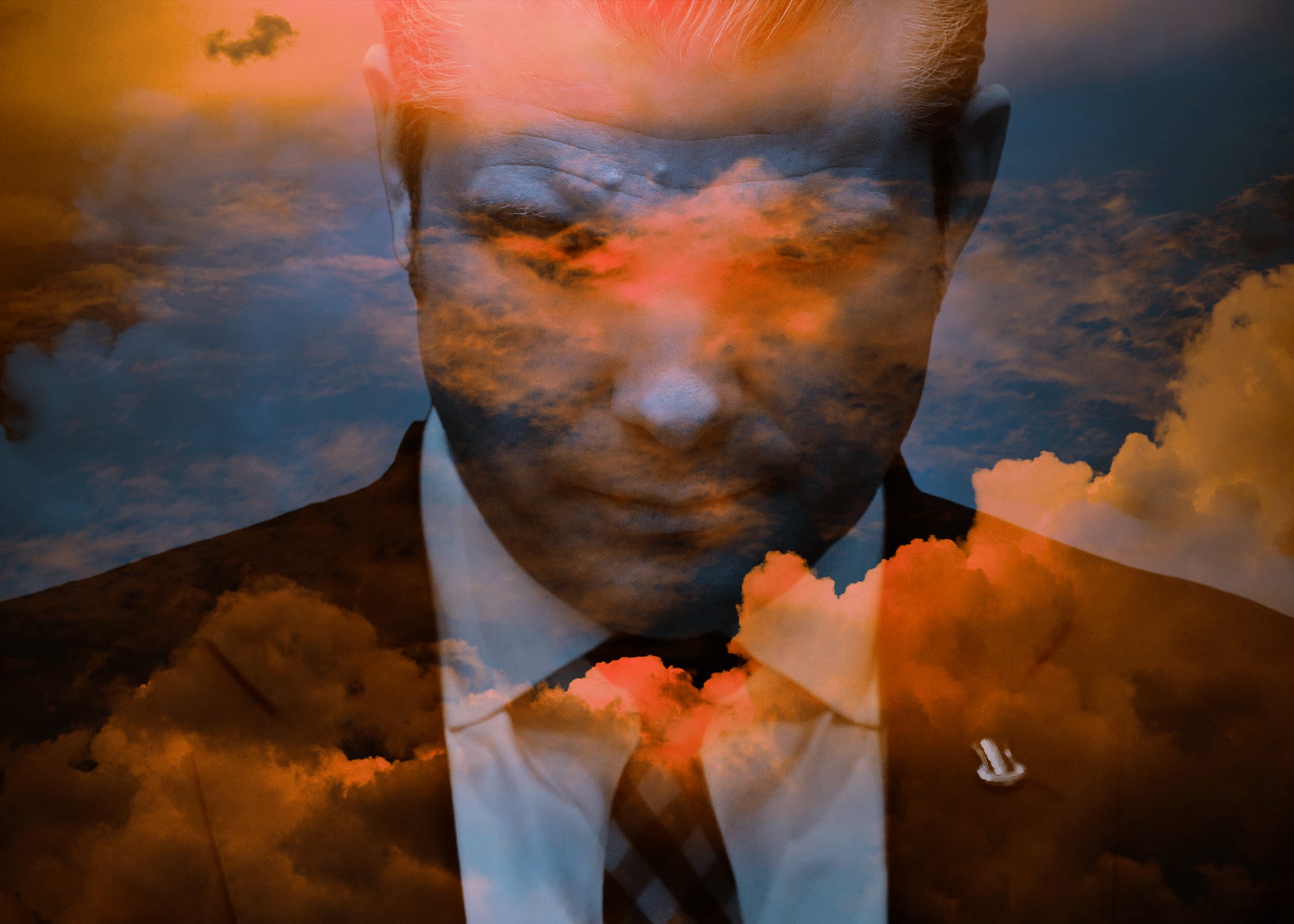
EARLY IN MY CAREER, I SPENT a year studying operational art, history, doctrine, and military theory at Fort Leavenworth. During that year, I became fascinated by the writings of Carl von Clausewitz. His treatise, On War, was filled with fascinating lessons from Napoleon’s wars in Europe that were surprisingly transferable to every modern challenge any military faces: conventional war, counterterrorism, intelligence-driven operations, even drug wars. A professor who heard me proclaim old Carl’s brilliance summed it all up: “If you want a new idea, read an old book.”
When Secretary of Defense Pete Hegseth defended the September 2 second strike on a small boat off the coast of Venezuela by saying he “couldn’t see” two wounded men clinging to the wreckage because of the “fog of war,” it caught my attention. It was a surprising malapropism of Clausewitz’s term “fog.” The excuse used by the secretary suggested an instinct to reach for language that sounds authoritative while leaving the public, the press, and perhaps even the military forces involved more confused than informed. Sometimes secretaries of defense have good reasons for being vague or avoiding direct answers to questions, but sometimes leaders use opaque or confusing language when they haven’t yet sorted out the facts but feel pressure to offer a response. A thorough and fair investigation of the September 2 boat strike should uncover if Hegseth has good reasons for giving less-than-clear answers about his words and actions that day.
The secretary’s misuse of Clausewitz is hardly the first time he’s been inexact with his language. In his confirmation hearing, he was asked about a proposal to remove the restrictions on a portion of the electromagnetic spectrum reserved for military use and open it up to civilians. It’s a highly technical and complicated question about which the secretary of defense should have an informed opinion. Hegseth’s answer was:
In this particular case, as far as spectrum, I look forward, as I have said before, getting a full—because this issue has come up a number of times in meetings. It is critically important with how our warfighters communicate across all services. So I am going to get a classified briefing immediately about how it would impact the spectrum, if it were to allow other companies or other—to be . . . And so I will go in with eyes only toward ensuring we have the capabilities we need and there is no disruption when I take that brief.
In September, when describing the missile attack on what Hegseth called a “drug boat” that has now embroiled the secretary in scandal, Hegseth said:
If you understand the military, you understand that decisions about strikes can be made at different levels. You give authorities based on strategic implications. Sometimes those authorities are held higher because they have strategic implications. Whenever possible, you want to push those authorities down to those making those decisions. So because of those strategic implications, those decisions will be made at higher levels, but eventually, we have great trust in our Navy, and our special operators, and our Army, and our Air Force, and others to make those decisions. And they will. And they’ll make them effectively.
Recounting earlier this week that he had seen the first missile impact a boat during the notorious September 2 strike, but not the follow-on missile that may have constituted a war crime, he explained, “I did not personally see survivors . . . because that thing was on fire and was exploded, and fire, smoke, you can’t see anything. You got digital, there’s—this is called the fog of war.”
Clausewitz is often credited with inventing the concept of the “fog of war,” but he never actually used that phrase (or its German equivalent). War, he said, is the “realm of uncertainty,” where most of what a commander relies upon is obscured by “fog of greater or lesser uncertainty.” He was not referring to literal smoke or blast effects. He meant the limits of human perception: incomplete intelligence, contradictory reports, fear, haste, poor communication, friction, and the tendency of people under pressure to mistake assumptions for facts. Fog was a metaphor for confusion and uncertainty, not an atmospheric condition.
That matters, because the secretary used the term as if it were a purely physical explanation for what he didn’t see, and why the second strike might have occurred when he left the room. But even if smoke existed—and the wounded men clinging to the ship were likely visible after the initial strike—Clausewitz reminds us that the real issue is not what could or could not be seen with a camera feed. The issue is what leaders thought they were seeing, what information they were relying on, and whether they would exercise the disciplined judgment required before ordering another missile to be fired.
In On War, especially in Book III, Chapter 10 (“Intelligence in War”), Clausewitz warns that most information in war is uncertain, much of it is wrong, and the commander’s greatest challenge is to sift what is reliable from what is imagined. Clausewitz describes the danger of acting on what one wishes to believe rather than what the evidence supports. Uncertainty, he wrote, cannot be eliminated—but competent leaders reduce it by slowing down, questioning assumptions, and resisting the urge to make quick decisions that feel decisive but may be disastrously wrong. I experienced all of these during combat, and gradually learned to counter these biases; I was never completely successful.
And that is why Secretary Hegseth’s explanation is so troubling. If the systems governing the targeting of a small boat—confirmation of targets, visual identification, proportionality, and discrimination—broke down, then the failure was not caused by fog. It was caused by the inability to penetrate “fog” through disciplined process and the rule of law. Modern militaries are designed precisely to prevent rapid-fire decisions based on guesswork or emotion. If operators identified survivors and those observations were either missed, dismissed, or overridden, that is not fog. That is a breakdown in leadership and moral judgment.
Here is where the danger grows. By invoking “fog” as a catch-all excuse, the secretary risks creating the conditions for blame to be pushed downward onto the very service members who executed an order under pressure. If he was the senior person in the room during the initial strike, he was in charge and responsible. Instead of clarifying what happened, he may have inadvertently—or intentionally—shaped a narrative that protects senior civilian decision-makers while placing the military leaders in a perilous position. The early indicators point to that possibility, and seasoned observers of civil-military relations know how quickly such patterns develop when accountability begins to drift.
Clausewitz also reminded us that friction—the accumulation of countless small, unpredictable obstacles—is always found in war. But he emphasized that competent leaders attempt to reduce that friction through preparation, training, clear command relationships, and sound procedures. Uncertainty is inevitable; cascading error is not. What happened on September 2 appears concerningly to be the latter, and nothing about the secretary’s explanation reduces that concern.
This incident now demands a thorough, transparent investigation. Not only because politics requires it, but because a professional military answers to the American people, and because trust depends on truth. Clausewitz wrote that commanders must cultivate “a sensitive and discriminating judgment” to discover the truth amid uncertainty. That responsibility extends to all the leaders who must now explain how this strike occurred, why the systems in place did not prevent committing what appears to be an unlawful act, and whether proper judgment was exercised.
Until those answers come, the fog remains—but it is not the fog described by Clausewitz. It is the fog created by incomplete explanations, premature defenses and excuses, and a concerning inability to distinguish between genuine uncertainty and an avoidable crime. In a democracy, clearing that fog is not optional. It is the duty of leaders who ask young Americans, and their senior generals and admirals, to carry out the hardest missions our nation requires.