The Spirit of Passover and the American Story
Liberation and new beginnings are themes of the Jewish holiday that can help us to revitalize our sense for the prospects and future of our country.

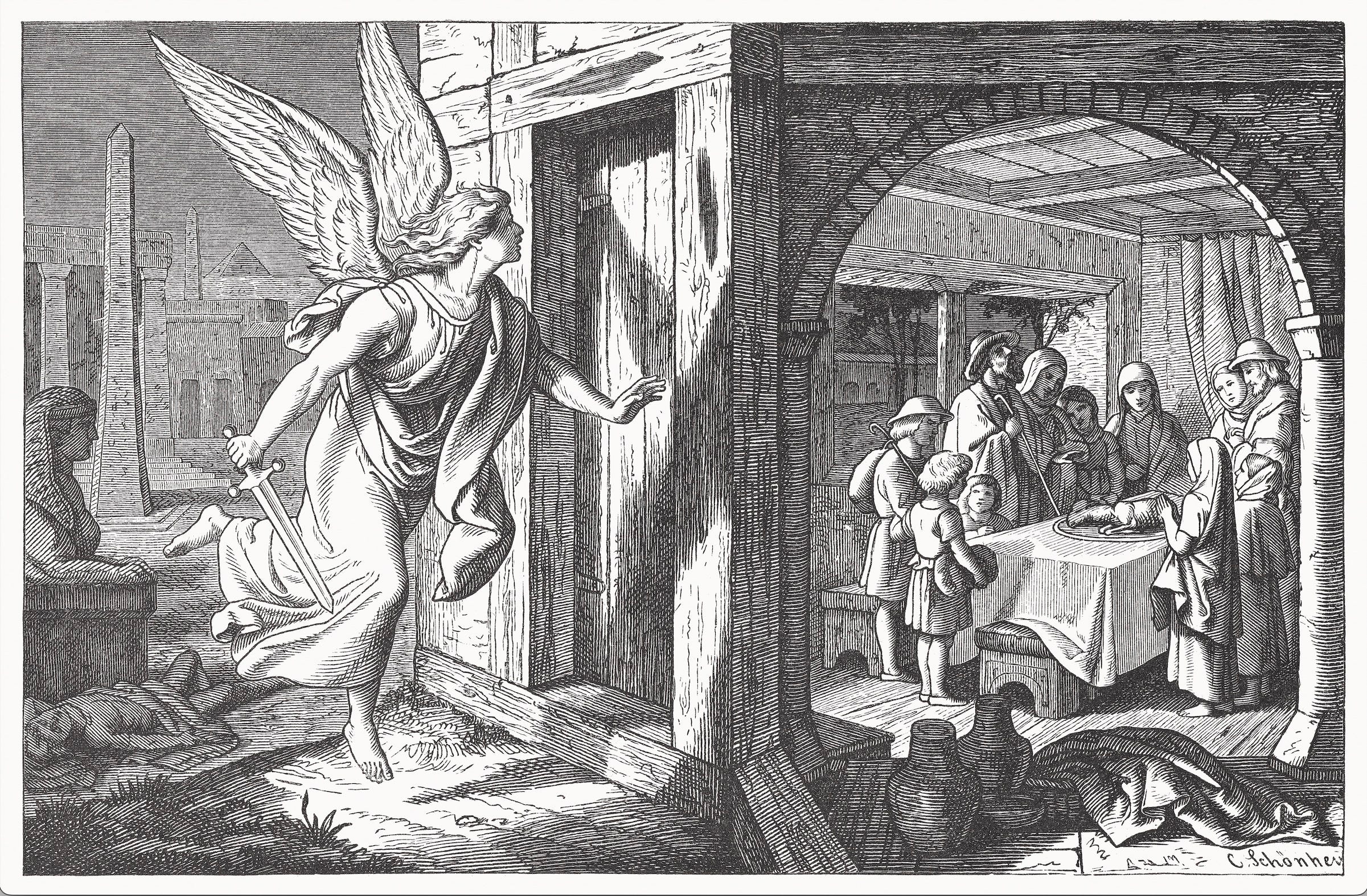
PASSOVER HAS ARRIVED in a season of challenge, complexity, and conflict for Jews: Israel’s wars rage in Lebanon and Iran, and around the world antisemitism is surging in many places where Jews once felt secure, at home, and even loved. In this moment of chaos and uncertainty, let us remember that the Passover originates with the Exodus from slavery in Egypt more than three millennia ago. Ours is a history filled with adversity and joy.
Over these thousands of years, in times of disaster or of glory, Passover has been a steady source of renewal. From generation to generation, Jews revivified the holiday narrative by reading and retelling it as the story of their own regeneration as a people and as individuals. This they did irrespective of time or place. Consider that Passover services were celebrated, without matzoh or wine, by newly enslaved Jews at Bergen-Belsen.
The perdurability of this Passover story of regeneration has much to offer anyone today who wishes to resuscitate the grand American narrative of renewal, new beginnings, and the fresh start. In fact, Jews have played a role in shaping this aspect of the national imagination over many years.
Resuscitation of this kind is becoming an urgent concern: Anti-democratic and authoritarian forces are striking at core American values. Our political leadership is more focused on growing its power beyond limits than on formulating responsible policy. And their actions are deepening global uncertainty and inviting the chaos of war, economic turmoil, and corrupt governance.
In this anxious environment, American Jews have an opportunity to reawaken their historic commitment to the American idea and provide a measure of clarity, direction, and hope to our anxious nation. In our Passover celebration of freedom, we can reflect upon how our forebears in earlier, similarly fraught times took responsibility for embracing and advancing American ideals.
Mary Antin was one such person, and her story merits reflection. After leaving czarist Russia as a teenager, Antin came to America, which she later characterized as “The Promised Land,” a new Jerusalem, thereby recalling the sensibility and vision of the founding Puritans. She wrote of her “faith in America” as a “healing ointment.” She claimed that “I am the youngest of America’s children, and into my hands is given all her priceless heritage.” She writes, “Mine is the whole majestic past, and mine is the shining future.”
Antin is a representative figure of the historic Jewish passion for reopening and renewing the American story; freedom from the violence of the pogroms of her childhood was an important part of her adopted country’s great promise. Such freedom is a core part of the American idea, and it has a natural symbolic connection to the Passover narrative of liberation.
THE RITUAL SEDER MEAL of Passover gathers together family, friends, and newcomers for a reading of the Haggadah, or Passover story. The seder sets out an itinerary for the proceedings of the evening and also provides instruction for the setting of the table, with its symbolic elements that are used in the service and meal.
Ironically, given the energized symbolism of this holiday tradition, some of the details of the seder can feel somewhat uninspiring, especially for the uninitiated. The evening demands the eating of matzoh or unleavened bread, which recalls the haste with which the Israelites fled Egypt; there was no time for their bread to rise. Jewish children are taught early in their Jewish education that the bitter herbs or maror such as horseradish at the seder table symbolize the bitterness of slavery, while the honey, fruits, and nuts of the charoset represent the mortar that Jewish slaves used to construct buildings for their Egyptian enslavers, as Timothée Chalamet’s character notes in Marty Supreme.
Such details may come to feel too familiar to inspire. Yet in the Passover Haggadah and celebration, the personal and mundane can achieve extraordinary and even transcendent significance. This is because the Exodus narrative of freedom, the establishment and perpetuation of Jewish peoplehood and identity, and the experience of redemption and renewal through devotion and sacrifice gather up the personal and cast it into the register of the cosmic.
For participants at the seder, their very selfhood is pulled into another dimension through peoplehood and national redemption. The prose of ordinary life begins to glow with the passion of renewal and of redemption for both individuals and a people. Uncertainty is transformed into love. The anxiety of discrimination, separation, and persecution is transfigured into a religiously centered sense of self, purpose, and community.
This is the transformative potential of the seder. With such ascending emotion and commitment, the family and community seder often evolves into open, informal conversations and exchanges about a myriad of matters. Participants often engage in thoughtful discussions of basic concepts, beliefs, and values, as they are prompted to do by the asking of the Four Questions in the Haggadah narrative by the youngest child at the table. This questioning, a highlight of the evening, encourages an attitude of openmindedness.
THE SPIRIT OF THE PASSOVER NARRATIVE of new beginnings is a resource for thinking about how we might renew the American story and recommit to its ideals in response to the crises of our times. Indeed, generations of Jews followed the lead of Antin and other members of the immigrant generation of Jewish writers in developing the American narrative as a story of renewal and rebirth for peoples throughout the world. The lives of two of Antin’s peers are instructive. Anzia Yezierska emigrated from Poland and wrote stories and books about her Americanization. To her, the Pilgrims became the historical exemplars for freedom, success, and independence. And Abraham Cahan escaped Russia and the czarist police to come to America and propagate his radical socialist agenda—only to be changed by his encounter with American democracy in action in the form of elections. He became a major literary figure through his writings on the immigrant experience and his decades-long work as a newspaper editor—he helped found the Forward, still an active publication—advancing his popular liberal left-wing position.
One of Cahan’s major works was The Education of Abraham Cahan. I propose we undertake a re-education of the American public in the spirit of an openminded seder discussion. To renew the American story, we must first study it, learn about its complexities, and reacquaint ourselves with its moral and ethical meanings and ambiguities. In doing this work, we make the story our own. The combination of knowledge and personal identification can equip us to defend against the demoralizing and stultifying cynicism and nihilism that define our moment.
Cahan certainly believed the American story should be not only renewed but modernized to more effectively advance the cause of freedom, democracy, and opportunity. Jewish writers, intellectuals, and leaders in politics, the arts, entertainment, business, and civic life since his time have followed the example that he, Antin, Yezierska, and other members of the immigrant generation set as they found new beginnings in—and gave new life to—the American story.
At the Passover seder, Jews invoke the names of biblical ancestors Abraham, Isaac, and Jacob, a reaffirmation of the long history to which we are adding the next chapter. American Jews might also consider their ancestors in the American story, people who believed the country’s cause was the cause of mankind. Passover could present an opportunity to remember and reflect upon the history of revolution and reform in America from the Founders to Abraham Lincoln and Frederick Douglass, to Franklin Roosevelt and Eleanor Roosevelt, and to Martin Luther King; this, too, is a proud history that has helped give the world new hope and create new possibilities.
Passover could also provide an occasion to remember that George Washington believed America should offer every Jew a place where “there shall be none to make him afraid.” Jews in turn came to feel that this offer should be extended to all, and that they could advance their own freedom and ambitions by working to secure the freedom, independence, and belonging of others from across the world in a shared national undertaking.
The story of Passover should generate inspired support and dedicated commitment to increased efforts for democracy and freedom. For those who came to the seder table this Passover—especially the young—it seems time to set another table, another order of priorities and goals, to reignite the flame to preserve our history, our identity, our existential being, our future, and our American way of life.
 | A guest post by
|