The Supreme Court Says It’s Neutral. It’s Not.
Some of the Supreme Court’s recent decisions rely on the idea of neutrality. But its appeals to neutrality misunderstand the concept and mask a grasping approach to the law.

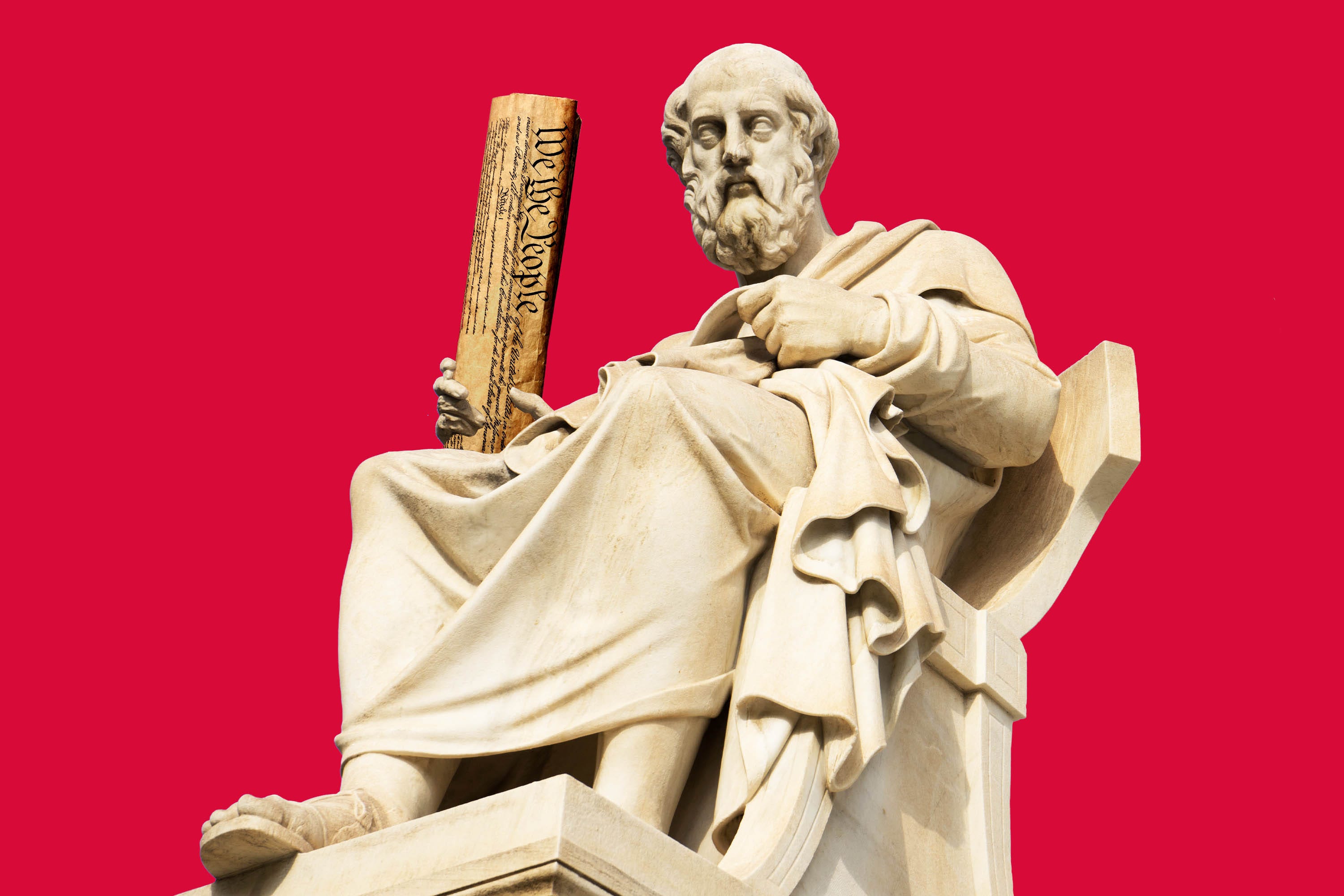
HERE’S A PUZZLE. On May 26, a three-judge federal panel concluded that Alabama’s congressional map intentionally discriminated against black voters. A week later, the Supreme Court allowed the map to remain in place.
The speed of the reversal was striking. So was the reasoning. The “stay” in Alabama put a fine point on a newly dominant line of reasoning coming from the Supreme Court. Relying on its recent decision in Louisiana v. Callais, the Court majority’s unsigned order suggested that the constitutional problem was not Alabama’s failure to remedy racial inequality, but the extent to which race had been used in efforts (particularly by the District Court) to do so. Taken together, Callais and the Alabama stay reveal something important about the Supreme Court’s current tactics. They also help clarify the nature of the Court’s growing threat to American democracy.
The Court habitually presents itself as neutral on supposedly contested moral questions. In practice, however, neutrality itself has become a substantive constitutional value—one capable of overriding competing commitments to democratic participation, voting rights, and racial equality.
To many, especially conservatives, this development may seem entirely appropriate. Indeed, the appeal of neutrality has long been central to conservative constitutional thought.
The modern conservative legal movement emerged in large part as a reaction against what it viewed as the excesses of the Warren Court and the rise of “living constitutionalism.” This theory treated the Constitution as a living tree, where the text provides the trunk and structure of jurisprudential reasoning, but contemporary values inform its growth. If constitutional meaning could evolve with changing social values, conservatives worried, judges would simply constitutionalize their own political preferences.
Living constitutionalism, in short, became synonymous with legal realism: a disrobing view of the law holding that judges were not merely neutral umpires who called balls and strikes but competing players on the field whose decisions reflect their own politics and policy preferences. As the adage goes, “law is whatever the judge ate for breakfast.”
This characterization, of course, made living constitutionalism seem unpalatably subjective to most of the American public, especially those who opposed the decisions made by the Supreme Court under Chief Justice Earl Warren and later Chief Justice Warren Burger. Conservative jurists who rejected living constitutionalism began looking at the original “intent” or original “meaning” of constitutional terms as not just informative, but binding.
“Originalism,” therefore, promised an escape from the danger of judges just winging it. Rather than considering what the Constitution ought to mean, judges would ask what it meant to the people (whoever that might be) at the time it was enacted. According to this vision, constitutional interpretation would be grounded in historical fact rather than the moral judgment of nine unelected judges.
The Supreme Court Justice Antonin Scalia became arguably the movement’s most influential advocate. To Scalia and other originalists, the attraction of the approach was not merely historical and jurisprudential, but institutional. As Scalia famously argued, although originalism was by no means perfect, it was the “lesser evil” insofar as it purported to constrain judges’ ability to go beyond the constitution in deciding cases. By curbing the judiciary, Scalia thought originalism preserved democratic self-government.
While so simple in theory, originalism has always faced problems of history and interpretation. The constitutional text is often indeterminate. Historical evidence is frequently contested. Many modern legal disputes arise in areas like data privacy, the internet, or air travel, where eighteenth- and nineteenth-century sources provide no clear answers. Not to mention that it is unclear how to bring together and resolve the range of incommensurable understandings of the Constitution “the people” had. Historians can and do write entire books on shifting historical meaning of single words.
More importantly from a strategic perspective, however, the conservative legal movement found themselves confronting statutes that—as originally understood—did not produce the outcomes they preferred. The Voting Rights Act offers a particularly revealing example. Congress enacted the statute in 1965 precisely because racial discrimination often operates through formally neutral mechanisms like the poll taxes or tests used to prevent Southern blacks from voting. As Congress understood then, addressing racial vote dilution required explicit attention to race.
It’s perhaps for this reason that “neutrality” has become a compelling companion to originalism—for if neutrality itself becomes the controlling constitutional value, then efforts to remedy racial inequality that require paying attention to race all begin to look constitutionally suspect.
As a result, conservative jurisprudence today relies more than ever on a principle more powerful than originalism alone. Constitutional actors such as attorneys general, and even legislatures themselves, are instructed not merely to follow historical meaning but to avoid race-conscious remedies, avoid differential treatment, and avoid taking sides in contested moral disputes altogether.
Neutrality, in short, seems to have offered something originalism could not always provide: a mechanism through which constitutional adjudication can continue to produce conservative outcomes even when text and history are insufficient to do so on their own.
WELL, YOU MIGHT THINK, shouldn’t we strive for neutrality? The problem is that neutrality is not nearly as neutral as it appears—a lesson learned decades ago.
For much of the twentieth century, philosophers of science embraced what became known as the “value-free ideal.” Scientific inquiry, according to this view, should remain free from moral, political, and social values. Objectivity, so the story went, required neutrality. And scientists could discover facts about the world precisely because they bracketed their values and followed the evidence wherever it led.
Like originalism, therefore, the value-free ideal in science was motivated by a legitimate concern. If values shape scientific inquiry, what prevents science from becoming politics by another name? If researchers are permitted to rely on moral and political commitments, why trust their conclusions at all?
Over the past several decades, however, philosophers of science largely abandoned the value-free ideal—not because they became hostile to objectivity, but because they recognized that values inevitably enter and inform scientific inquiry at every stage.
The ubiquity of values is most clearly seen in one of the more practically oriented parts of the STEM acronym: engineering. For instance, consider a seemingly straightforward engineering question: How safe should a bridge be before it is opened to the public? Engineers can calculate probabilities of structural failure, estimate loads, and model stresses. But no amount of scientific evidence can determine what level of risk a society should tolerate. A bridge designed to withstand a once-in-a-thousand-year flood will be more expensive than one designed to withstand a once-in-a-hundred-year flood. Deciding how much safety is enough requires judgments about acceptable risk, public welfare, and the value of human life that scientific reasoning alone is not capable of adjudicating because they require judgments about values.
The same problem appears in medicine. Before approving a new drug, regulators must determine what counts as sufficient evidence of effectiveness. Set the evidentiary threshold too low, and ineffective or dangerous treatments may reach patients. Set it too high, and beneficial therapies may be delayed or never become available at all. As philosopher Heather Douglas has argued, such decisions inevitably involve what she calls “inductive risk”—the risk of being wrong. Determining how much evidence is enough necessarily requires judgments about the consequences of error.
These are examples of values external to science. But philosophers recognize that values, broadly construed, enter science even more deeply than this.
Scientists routinely evaluate theories using standards such as simplicity, explanatory power, coherence, elegance, predictive success, and even reasonableness. Yet these standards are not themselves established by scientific evidence. Why should simpler explanations be preferred to more complicated ones? Why should explanatory breadth matter? These are judgments about what counts as a good scientific explanation. Values, therefore, are not merely imposed from outside scientific practice. They constitute the framework of scientific reasoning itself.
This realization led philosophers to reject the value-free ideal. The lesson was not that science is simply politics. Nor was it that objectivity is impossible. Rather, it was that objectivity does not require the absence of values. Scientific inquiry remains objective because value judgments are rendered visible, contestable, and subject to criticism by the broader scientific community.
Indeed, many philosophers came to conclude that the value-free ideal was not merely impossible to achieve but actively undesirable. When people pretended values were absent, it often obscured the very judgments that most needed public scrutiny.
The same insight applies to constitutional law.
When courts insist that race-conscious remedies are constitutionally suspect, they don’t remove values from constitutional adjudication. Instead, they prioritize one value—formal racial neutrality—over competing values such as anti-subordination, democratic inclusion, and remediation of historical discrimination.
We can see this dynamic clearly in the Court’s recent voting-rights decisions. When reaching decisions, conservative judges appear to focus not on whether minority voters are denied meaningful political representation, but whether government actors have paid too much attention to race while attempting to prevent that result.
In practice, then, neutrality functions as a particular value framework that precludes reference to race. The Court is not avoiding moral judgment. It is making a specific moral judgment—that any discussion of race in legislation is illegitimate—while refusing to acknowledge what it is doing.
The pattern extends beyond voting rights. For instance, in affirmative-action cases, formal equality receives priority over other possible values, like historical disadvantage and educational opportunity. In abortion jurisprudence, the Court frequently presents itself as returning questions to democratic processes rather than resolving moral controversies. Yet deciding which interests receive constitutional protection and which do not can’t help but reflect substantive judgments about liberty, equality, and personhood that have to be made by someone—in this case, Supreme Court justices.
BUT IF NEUTRALITY IS IMPOSSIBLE, why not simply abandon it?
Some on the right, like Adrian Vermeule, a professor at Harvard Law School, urge such an approach. Vermeule rejects both originalism and liberal constitutionalism, arguing instead that constitutional interpretation should openly pursue substantive moral goods. As he puts it, officials should exhibit a “candid willingness to legislate morality” and constitutional interpretation should be guided by principles that promote the “common good,” which to him means judges should read into the Constitution “majestic generalities”—in other words, values such as respect for the authority of rule and rulers, social hierarchies, and solidarity with families, social groups, and workers unions.1 Vermeule describes originalism as having been merely a “rhetorical and political expedient” whose usefulness has largely expired.
At first glance, Vermeule appears to offer a straightforward solution to the neutrality problem. If constitutional law is inevitably value-laden, perhaps judges should simply acknowledge that fact and openly pursue their favored substantive moral objectives.
But this response misunderstands the lesson philosophers of science drew from the collapse of the value-free ideal.
The failure of neutrality does not justify abandoning objectivity.
Scientists did not respond to the value-free ideal’s collapse by declaring that research should simply advance preferred political outcomes. Instead, they developed more sophisticated accounts of objectivity—accounts that recognize the role of values while demanding transparency, criticism, and institutional accountability.
Constitutional law requires a similar response.
The choice is not between neutrality and subjectivity. Nor is it between originalism and common-good constitutionalism. The challenge is to openly acknowledge that constitutional adjudication inevitably involves substantive values, ones that are themselves embedded in law, while also maintaining institutional practices that constrain judicial power.
The problem with Vermeule’s proposal is that it reproduces the very problem he identifies. If neutrality can become a vehicle for smuggling substantive commitments into constitutional law, so too can appeals to the common good. Once judges are authorized to determine which moral goods constitutional law should advance, disagreements about constitutional meaning quickly become disagreements about whose conception of the good society ought to prevail. Vermeule is almost certainly aware of this fact and relishes it.
The lesson from both constitutional law and philosophy of science is therefore surprisingly modest.
Values are unavoidable. The question is not whether they influence our institutions, but how they do so, and which ones. Values can be used judiciously, to call us to account and demand transparency, reasoned argument, and careful weighing. Or they can be used to steamroll every other consideration.
For Vermeule, common good constitutionalism amounts to imposing external values in ways that lead judges to decide cases in one way—the conservative way—rather than another. We can, however, imagine that judges are required to appeal to other values deeply embedded within the American legal tradition and constitution, such as liberty, equality, or dignity, to guide their judicial opinions when there is no clear answer.
The difference with Vermeule is that this approach would require justices to appeal to those values internal to law, much in the same way scientists rightly appeal to values internal to the practices and structures of science, rather than imposing outside preferences or assumptions.
More importantly, however, this is also different from the Court’s current practice. What the Alabama litigation ultimately reveals is that the Court is not merely applying neutral principles to difficult questions about race and representation. It is elevating neutrality itself into a constitutional value—one that overrides competing commitments to democratic participation and racial equality.
The upshot is that once we appreciate that this approach is not “neutral,” it becomes less obvious that the choices the Court is making about the primacy of its preferred values is correct, or even one that a majority of Americans would support.
The puzzle, therefore, may be more of a trick. The Court is telling us its decisions represent no more than a neutral reading of “the law”; in reality they are simply leaving the work of weighing and balancing competing constitutional values behind the curtain.
Eric Scarffe is an Associate Professor of Philosophy at Florida International University.
Of course, the concept of “common good,” as postliberals like Vermeule deploy it, often carries more politically volatile freight than one might assume from the benign-sounding name.
 | A guest post by
|