This Holiday, Give the Auntly Gift of Books
Young nieces and nephews may not thrill to them—but there is virtually no better way of inviting them into the world of your own childhood imagination.

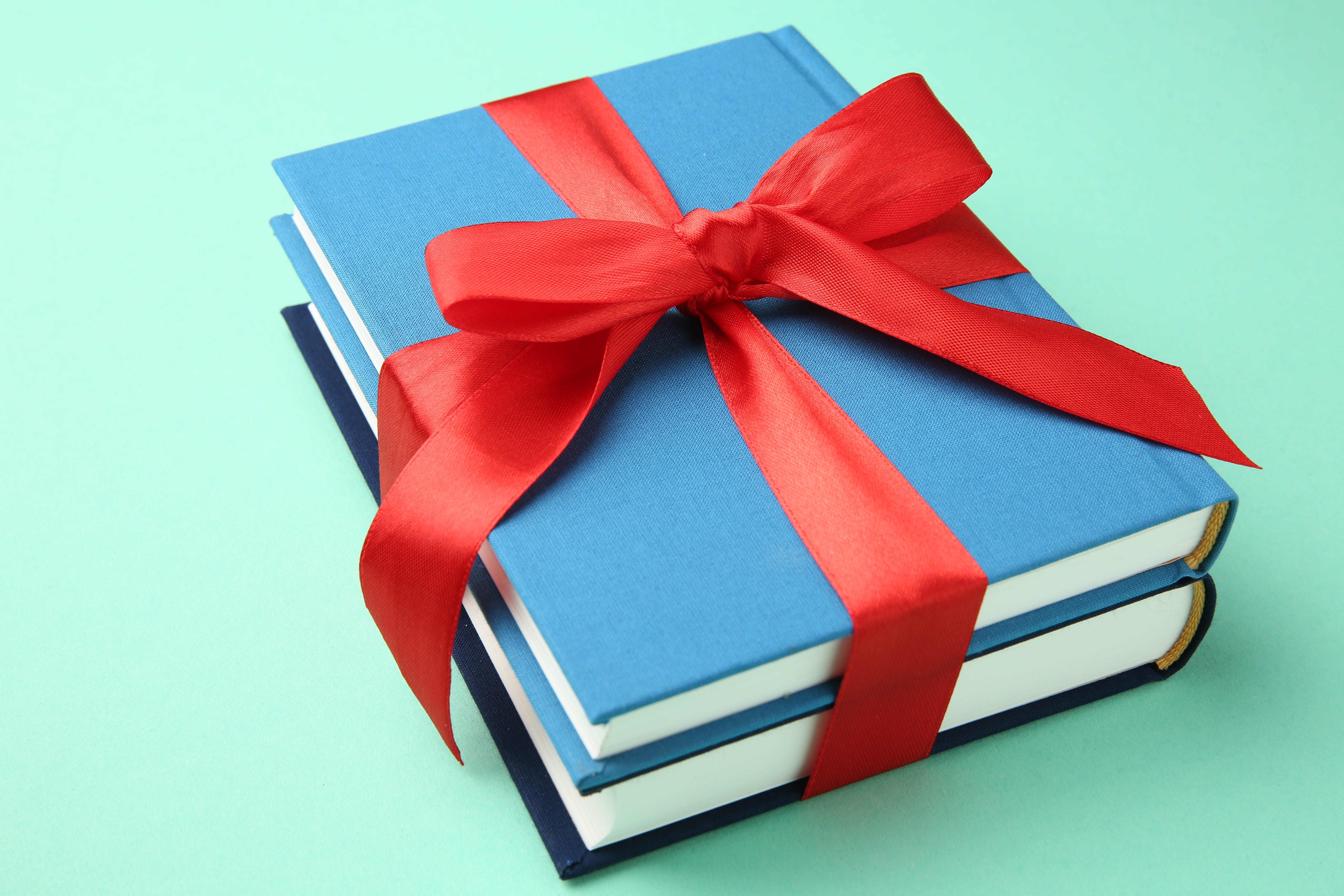
WHEN YOU FIRST BECOME AN AUNT, your most important and pressing task is to decide what kind of aunt you will be. Too often, people fail to give this choice the consideration it deserves, assuming they will simply emerge into aunthood as some vague amalgam of Cruella de Vil, Carmen Sandiego, and Miss Honey from Matilda, the last of these being the very archetype of “the cool aunt.” But in fact, the types and subtypes of aunt are numerous and varied and not easily mixed, and if you don’t take care to choose one, one will choose you. Will you be the aunt who drives too slowly on highways? The aunt who tells women they have “good birthing hips”? The aunt who wears a moth-eaten raccoon fur coat to every Christmas? The aunt who freely distributes her nieces’ phone numbers whenever she comes across a man wearing a tie and no ring?
The ways in which aunts are wonderful are largely consistent across the board: They are affectionate if sometimes terrifyingly plainspoken cheerleaders on the sidelines of their young relatives’ lives; often glamorous, always tough, they feed and host and mind and scold and laugh, both with and at; they knit sweaters and send money and show up to parties with bottomless crockpots of buffalo chicken dip. Taking so much as given helps you understand that it is instead the particular ways in which you, as an aunt, will be infuriating, incorrigible, or simply baffling that are so important to stake out early on.
As we approach this Christmas season, I am pleased to say that I have passed this important milestone: I have figured out what kind of aunt I am. I am the aunt who gives books for Christmas. This year, my sweet niece and nephews will unwrap a copy of The Mightiest Heart, The Names Upon the Harp, and E. Nesbit’s Melisande. And at the next Christmas, and at the next after that, and at their birthdays, they will, mutatis mutandis, do the same, until they beg for release from the tyranny of exquisite P.J. Lynch watercolor and gouache illustrations. (It will not be granted.)
It is easy to see why giving exclusively books for Christmas is a type of classic aunt behavior. After a short bout of intense infant fascination with books as prime teething material, interest in printed matter among the very young tends to drop, especially when compared to, say, a Lego set. Little eyes, alas, do not always light up with wonder at the sight of painterly landscapes whose edges fade into infinity—not the way they do for something that they can actually play with (let alone something that sings and beeps). If you give a very young child a book, you are giving them something that they cannot yet fully enjoy on their own, or perhaps even understand at all. As the years go by, they will come to expect the flat rectangular packages under the Christmas tree—but not without a faint, irrational glimmer of hope that this time it will contain a video game instead of a copy of Moominland Midwinter. Being the aunt who gives books means always being in a slightly orthogonal position to childhood desires—not being anti-fun per se, but humbly taking up your station as the least-fun person at the party. It has to be someone. Why not an aunt?
Of course, at some point, young relatives reach an age when the kindest thing to give them is money. It’s easy to slip a fifty between the covers of a book without sacrificing the tradition of physical gifts. (You can even put the money near the end of the book if you want to be slightly evil—which, as an aunt, you should be, if you possibly can.)
Giving books implies censoriousness, another key aunt modality. Books are improving and edifying: two qualities never exactly in fashion, but now, if social media is to be believed, severely out of it. They imply the carefully bounded and curated good taste of the Waldorf School, or the expensive children’s toy store full of exquisite under-stimulating non-gender-stereotyping dolls made of wood. Giving books as gifts is a precursor to telling people that you don’t own a television (or, more provoking in this day and age, a smartphone). The practice of giving exclusively books can easily read as a judgement: on the amount of time the recipient currently spends reading; on the video games and short-form video content the recipient presumably prefers to reading; on the crass vulgarity of this year’s in-demand unicorn princess pink plastic dream house, manufactured in a Chinese sweatshop and destined for the landfill once its flimsy construction breaks down; on the whole vortex of frenetic materialism whirling around the holiday.
This is all good news for the newly minted aunt, for whom a perceived censoriousness is more sacred calling than social pitfall. But even for those who do not follow the marterteral way, there are benefits to being a giver of books.
EVERY TIME YOU GIVE A CHILD a book, you are also giving a gift to the parents: the gift of assistance in keeping the Stuff levels in their home manageable. At this place and time in history, Stuff is, by and large, cheaper than it has ever been. Space and time are expensive. And Stuff eats space and time. Stuff needs to be stored, tidied and put away, sorted and disposed of appropriately at regular intervals. Caring for Stuff that you love, need, and use can be a positive pleasure. But most of us do not live surrounded only by Stuff we love, need, and use. We live on islands in a steady, gentle, river of Stuff: Stuff that seems to come into our homes through no agency of our own; Stuff whose relation to our lives is simultaneously so undefined and so insistent that it can be difficult, plucking any single object from the river, to know if it’s something you should throw away or keep; Stuff whose slow-moving flow nevertheless threatens to rise above our heads if we ever turn our backs on it.
Aunt modalities aside, this is not an anti-Stuff manifesto. The wonder of Stuff is what makes gift-giving so pleasurable: the ability to fulfill the material needs of another, the pleasure of considering and selecting beautiful and cunning objects, the mere fact of the emotional world concretized; a pledge of the relationship between two people, held in the palm of your hand. Stuff is good. But parents, especially, are likely to be drowning in it.
No one has ever introduced his household to new and exciting expletives after stepping on a book. Books are easy to store, easy to tidy, aesthetically unassuming, hard wearing, and easy to recycle with a minimum of mental agitation over all the microplastics in the water. Exciting gifts of the pink plastic unicorn dream house variety become quickly subject to diminishing returns; just one or two beneath the tree is enough to make Christmas morning special. Letting parents and grandparents be the ones to give them can be its own form of generosity.
Books are cheap. Giving a book means that you have more money left over to give more gifts, which means more people you can touch with pleasurable expectation, with the tiny apocalypse of an unwrapping, and with a piece of tangible proof that they have been remembered, they have been thought of, that they are individually valued. Books do not require you to pretend to intimacy in order to bestow a token of affection. Sometimes you really know what perfect object would improve a person’s life in a practical or sensuous or aesthetic way. But more often, contra the gift guides, you simply don’t, and won’t. This is why books and beeswax candles and beautiful soaps will always be staples of gift-giving. They are modest but excellent; generic in the sense of common pleasures, but still warm with the charisma possessed only by concrete objects produced and obtained through human effort and time.
But best of all, when you give children books, you are sharing a piece of yourself rather than making any claim of understanding them.
For anyone who enjoyed public libraries as a child, there is probably a set of texts that you returned to over and over. Their crinkly mylar-wrapped library dust jackets were smeared with your fingerprints, and the gilt-edged images inside lingered in your mind long after you had outgrown them. They formed a personal canon and a private world, and when you pull one of these texts from the depths of Thriftbooks or Amazon, you invite the recipient of your gift into that world. Here, you say, this mattered to me, and shaped me. Perhaps it will do the same for you. You cannot control whether someone reacts in the same way to the same things as you did. You wouldn’t want to produce an exact replica of your own experiences, even if you could. But you can make the gift with an open heart: This was my world. If you want it, it is yours, as well.
 | A guest post by
|