Trump Can’t Steal the Midterms
The case for being vigilant without panicking.

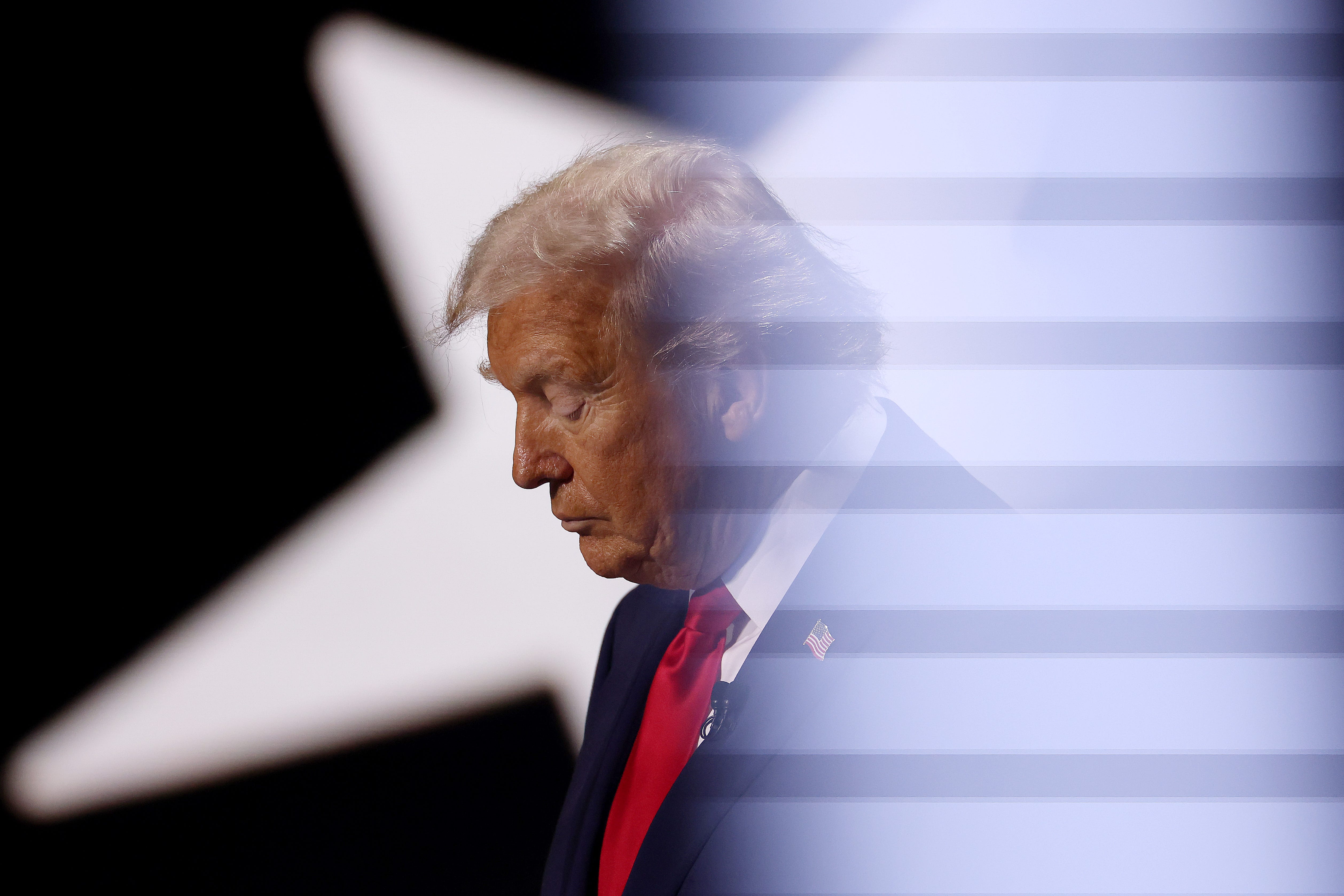
DONALD TRUMP WILL NOT BE ABLE to steal this November’s midterm elections. He and his allies will keep trying to manipulate the midterms in their favor, which Democrats, pro-democracy activists, and all Americans who care about our constitutional system should keep working to counter. But he won’t succeed: No matter how much Team Trump disregards norms and laws, there’s no mechanism for taking over state elections, reversing losses, or preventing newly elected members of Congress from sitting, especially if Republicans lose by substantial margins. Vigilance is warranted, but excessive fear plays into the authoritarians’ hands.
This is not a call for complacency. Backsliding from democracy into authoritarianism is greased by people saying Calm down, it’ll be fine, the institutions will handle it, he doesn’t mean it, someone will stop him. I’m not doing that.1
But I think it’s important to right-size worries. To focus on what could realistically happen rather than lose time and expend attention and resources worrying about what can’t.
Authoritarianism is partially in our heads. The Trump regime’s desire for domination is bottomless, but its capacity is not. They rely on bluster and fear to make up the difference, to get people to “obey in advance,” doing things the government cannot force them to do. The more the regime cultivates a vibe of strength and inevitability, the more room it has to operate. The more people think the regime is weak and failing, the more likely they are to say no, drag their feet, refuse demands, and resist.
After a year in power, the Trump regime has made serious gains against constitutional democracy—usurping some of Congress’s power of the purse, corrupting federal law enforcement, defying a great many court orders, turning ICE into a secret police force that disappears people without due process, killing people abroad without legal authorization or legitimate cause.
But they’ve taken big losses, too. In October last year, DHS Secretary Kristi Noem declared that ICE would be “all over” the Super Bowl. Then at the Super Bowl in February, ICE was nowhere to be seen, and Trump officials were left whining on social media about Bad Bunny’s halftime performance. As over 128 million viewers watched the wildly popular Puerto Rican musician, the president called it “an affront to the Greatness of America” and complained that “this ‘Show’ is just a ‘slap in the face’ to our Country.” But Trump couldn’t do anything about it. He sounded petty and weak and out of touch.
In 2025, Trump tried to get late-night comedian Jimmy Kimmel off the air, but a negative consumer reaction prompted Disney to put him back on.
Trump hated that Democratic veterans such as Senator Mark Kelly publicly explained that military personnel should follow the law, which includes refusing illegal orders, and tried to put them in jail. But the manufactured charges flopped with the grand jury. Amazingly, not even one grand juror agreed the government met the low standard of probable cause to proceed to trial.
Trump didn’t want his political allies and endorsed candidates to lose to Democrats last November, but many did. Most notably, with Zohran Mamdani becoming mayor of New York City and Abigail Spanberger becoming governor of Virginia, Trump lost sycophants who collaborated with his anti-immigrant campaign, both replaced by critics who oppose it. Procedurally, the 2025 elections went smoothly; electorally, Trump critics performed very well, shattering post-2024 narratives of a sweeping demographic and cultural shift in MAGA’s favor.
That points to a larger pattern: Since Donald Trump first took office in January 2017, there have been two midterms, five off-year elections, and numerous special elections, and he’s never really gone to the mat for anyone but himself. He lies and cries fraud a lot, but most vociferously for himself—even when he wins—and he went way beyond legal means only in 2020/21, attempting a coup after losing re-election.
But as some will note, he did regain power despite how January 6th turned out.
Yes, exactly—he regained power by availing himself of legitimate mechanisms: winning the GOP nomination via primaries, then winning the Electoral College, plus a plurality in the popular vote. He didn’t somehow go around the election or invent a different mechanism to become president.
The second Trump administration is less constrained than the first, with more authoritarian control, so another self-coup attempt in 2028/29 is a serious threat. But we should worry more about that next year. For now, the best thing pro-democracy Americans can do to partially check Trump in 2027, and get in position to remove him and his corrupt allies from power on January 20, 2029, is to take control of Congress via the midterms.
The White House won’t like that, as a Democratic House will conduct investigations, hold hearings, negotiate with leverage on the budget, and very possibly seek to impeach Trump and some of his cabinet members.
But even losing both the House and Senate wouldn’t get Trump officials out of power, or subject them to criminal prosecution. It takes only 34 senators to block removal after impeachment, which Republicans will easily have even if 2026 is a massive blue wave. Trump has twice before survived impeachments, and he and his second administration have become accustomed to manhandling Congress—treating oversight hearings with contempt, blocking funds from transferring as congressionally allocated, illegally cutting whatever programs they don’t like, and so on.
And since the Trump administration knows it can either ignore or fight with a Democratic Congress, Trump has little incentive to take a massive gamble, attempting a blatant Constitution-ending seizure of power in 2026.
Trump will lie, as he always does, and try to manipulate the midterms in his favor. But he and the Republicans are attempting it via existing mechanisms. Let’s look at those one by one.
Pick Your Voters
THE FIRST BIG MANIPULATION Trump allies attempted was gerrymandering. States usually redraw their congressional districts every ten years following the census, but Texas heeded Trump’s call and redrew its map in 2025, aiming to increase the number of Texas Republicans in the House of Representatives by five.
Florida is in court to get the opportunity to redraw maps ahead of the midterms, potentially taking Republicans from twenty to twenty-three of the state’s twenty-eight House seats. Missouri, North Carolina, and Ohio already succeeded, potentially netting Republicans four more seats. But other red states declined, such as Indiana, where the Republican-led state senate voted down an aggressive gerrymander despite Trump’s urging.
Texas’s gerrymander prompted retaliatory efforts in California—it needed a public referendum, which was approved by over 64 percent of voters—and in Virginia, via the state legislature. The Supreme Court is letting partisan gerrymanders go ahead. California’s expected five additional Democratic seats would zero out Texas’s likely Republican gains, but depending how the rest shake out, Republicans could net up to four.
There’s a good chance that all this partisan gerrymandering will be a wash, and that even if Republicans max out their gains, a swing of four won’t matter. Remember that in the 2018 midterms during Trump’s first term, Democrats gained forty-one House seats.
If there was a “steal midterms” button Trump could press, Republicans wouldn’t have bothered with the gerrymandering push.
Any election manipulation Trump attempts can be overwhelmed by big voting margins. That includes gerrymandering, where Republicans may have spread themselves too thin for a political environment less favorable than 2024 . A blue wave that swings the House by anything close to forty seats and puts the Senate in play would be impossible to stop.
The Power-Grab Scenarios
ELECTIONS ARE ADMINISTERED at the state and county levels, not the federal level. Even if Trump decides to break the law and try to “nationalize” or “cancel” elections, there is no bureaucracy under the president’s control prepared to handle that massive decentralized process, or even significantly disrupt it.
The vote is going to happen in November, and all signs point to Republican losses. The president’s party usually loses seats in the midterms, especially when the president’s approval rating is as negative as Trump’s. Numerous Republicans aren’t running for re-election. Anti-Trump protests have been huge. The races that Democrats have won since Election Night 2024—the special elections and the 2025 elections—have been by big margins. Trump’s party consistently underperforms when he isn’t on the ballot, as many of the lower-propensity voters who powered him to victory don’t show up.
Nevertheless, I’ve seen three scenarios floated where Trump’s unpopularity doesn’t matter and Republicans manage to illegitimately retain control of Congress. Let’s consider each in turn.
ICE at Polling Places. ICE and other DHS forces have been acting more like secret police targeting objects of the White House’s hatred than like public servants enforcing the law. That raises fears of armed federal officers stalking around polling places, especially in areas with large nonwhite populations.
It’s an unfortunately plausible possibility, but voter intimidation isn’t new—as black voters in the South know all too well—and the counter is well established: Brave the intimidation, show up to vote, endure any inconveniences, and overwhelm them with numbers.
Look to anti-ICE protesters in Minnesota and elsewhere, peacefully observing, recording, and sending out warnings. That disrupts some of ICE’s operations, and documents the worst violations. When parents patrolled in front of schools, ICE officers stayed nearby to intimidate, but didn’t move to assault or arrest.
If ICE goes to sparsely populated locations, it won’t impact the vote outcome. If they go to polling places in densely populated areas, they’ll have to deal with a bunch of U.S. citizens with camera phones, not too different from crowds ICE shied from in Minnesota. The chances they can go to enough of the right locations and intimidate enough people out of voting—without the attempt causing more voting in backlash—is quite small. If turnout favors Democrats as expected, it’s virtually impossible.
America now has a federal goon squad, one that answers to Donald Trump, Stephen Miller, and Kristi Noem. That’s very bad. But on the bright side, they still don’t have nearly enough goons.
Seizing Ballot Boxes. If they can’t intimidate enough people out of voting, maybe they can disenfranchise enough afterwards by seizing ballot boxes and using fake claims of fraud to withhold votes.
However, as with ICE at polling places, changing electoral outcomes by seizing ballot boxes takes numbers and precision. They’d need to identify which races would be close losses, and which locations represent the margin of votes for each, then send a large number of personnel to all of them, who all manage to get in and remove many ballots, enough of the right ballots to flip the outcome, all before these various locations can count and report.
That would require considerably more capacity, coordination, and competence than the Trump administration has displayed.
The recent FBI raid on a Fulton County, Georgia elections office provides a useful example. To some extent, it is what it looks like: conspiracy theorists ranting about the deep state seeking to validate some version of Trump’s Big Lie about the 2020 election. But it also functions as a test case for baseless claims about fraud as a pretext to seize ballots. According to Fulton County Commissioner Marvin Arrington Jr.: “They got copies of our voter rolls and all the original ballots. Now we cannot verify that we’ve received everything back because there was no chain-of-custody inventory taken at the time the records were seized.”
Nevertheless, that’s a single location, not many at once. They had a warrant—from a hack judge who relied on debunked claims, yes, but it’s still another hoop the government has to jump through. And it was a long-after-the-fact search about an old election, not an in-the-moment raid to swing a current one.
If it’s a dry run for anything, it’s 2028, when Trump’s allies might be trying to steal the presidential race. In 2020, Biden defeated Trump in Georgia by 11,779 votes. Afterwards, Trump was caught on tape pressuring Georgia election officials to “find” him 11,780 votes to flip the state.
Fulton County—the state’s most populous, containing most of Atlanta—voted for Biden by a margin of 242,965. Confiscating a bunch of ballots from a few Fulton County locations could cover the margin of a close race, and Georgia’s sixteen electoral votes make it the biggest swing state after Pennsylvania.
If they try seizing ballots in 2026, they might be able to, say, disrupt the re-election of Democratic Senator Jon Ossoff, but that wouldn’t stop Democrats from taking the House. And the attempt would throw into chaos the statewide races for governor, attorney general, secretary of state, and more, which Republicans might otherwise expect to win fair and square.
Rejecting the New Congress. If they can’t intimidate or disenfranchise enough voters, maybe they can stop the winners from taking office. Speaker of the House Mike Johnson could refuse to seat them, like he did with Adelita Grijalva; after she won a special election in 2025, Johnson refused to seat her for seven weeks. Or Trump could simply declare the new Congress illegitimate.
He might very well say that, but there’s no mechanism to make it happen. At noon on January 3, 2027, the current Congress ends, and a new one takes office. Johnson will no longer be speaker, and will have no authority over seating new members. It’s similar to when Trump left office on January 20, 2021. He didn’t want to; he broke laws trying to stay; but his presidency ended that morning. Executive branch officials would start taking orders from Joe Biden, so Trump slunk away.
If Trump tries declaring Congress illegitimate, that doesn’t magically end the Constitution. States would defend their vote counts and assert their citizens’ rights to congressional representation. There’d be a lot of lawsuits and court orders. Newly elected legislators would demand to be seated, perhaps going so far as to meet elsewhere, claiming to be the legitimate Congress. Mass protests would spring up throughout the country, especially in Washington, D.C. Even if Trump tries to steal Congress this way, he couldn’t sustain it.
In 2025, we saw Trump sweat a government shutdown, needing Congress to pass a budget. The crisis of dueling Congresses or the president attempting to indefinitely jail newly elected representatives without due process would be more chaotic. Markets would crash, rich donors would complain, and he’d back down.
There’s a decent chance he won’t try, since it’s a big risk and his back isn’t against the wall. More likely, the regime will save drastic moves for 2028.
AGAIN: VIGILANCE MAKES SENSE. Citizens should vote early if they can, and prepare physically and mentally to brave any intimidation or inconvenience on Election Day—if you’re in line, stay in line—recording if ICE or some MAGA militia shows up. Electoral workers should film any federal activity at polling places or vote counting centers. Local authorities should be prepared to refuse entry to any federal forces without a proper judicial warrant. Lawyers should be ready to go to court, and where necessary and possible, get litigation going in advance. Some already are.
What doesn’t make sense, what’s actively detrimental, is searching for One Weird Trick that’ll kill off the Constitution, and insisting Trump will pull it off, even if it’s not possible to explain step by step how. To indulge in that kind of speculation is to grant the regime power it does not have, raising anxiety, disincentivizing voting, and discouraging societal resistance.
Any midterms malfeasance Trump can attempt is beatable. The fact that attempted electoral malfeasance is a realistic possibility shows how badly American democracy has degraded. And the likely outcome that Trump loses control of at least one house of Congress will show, yet again, that his attempts to permanently end American democracy are failing.
Not that my bona fides here matter as much as my argument does, but if it’s useful to demonstrate that I’m not Pollyannaish: In the summer of 2020, I was among those warning that Trump would try to steal the election by lying about fraud with mail-in ballots. That November, I broke down the plot step-by-step as it was happening. On January 5, 2021, I chastised Ted Cruz and other Republicans lying about the election for making “the unthinkable a lot more thinkable.” I was among the earliest to call the January 6th attack an “insurrection” and “sedition.” I’ve warned about voter intimidation, and repeatedly warned that the 2024 election was effectively an up-or-down vote on constitutional democracy. All of which is to say, I’d put my record on this stuff up against anyone’s.
 | A guest post by
|