Trump Decimated Our Global Health Network. Then Ebola Hit.
Scientists and officials don’t think it’ll become a pandemic. Here’s why they’re worried anyway.

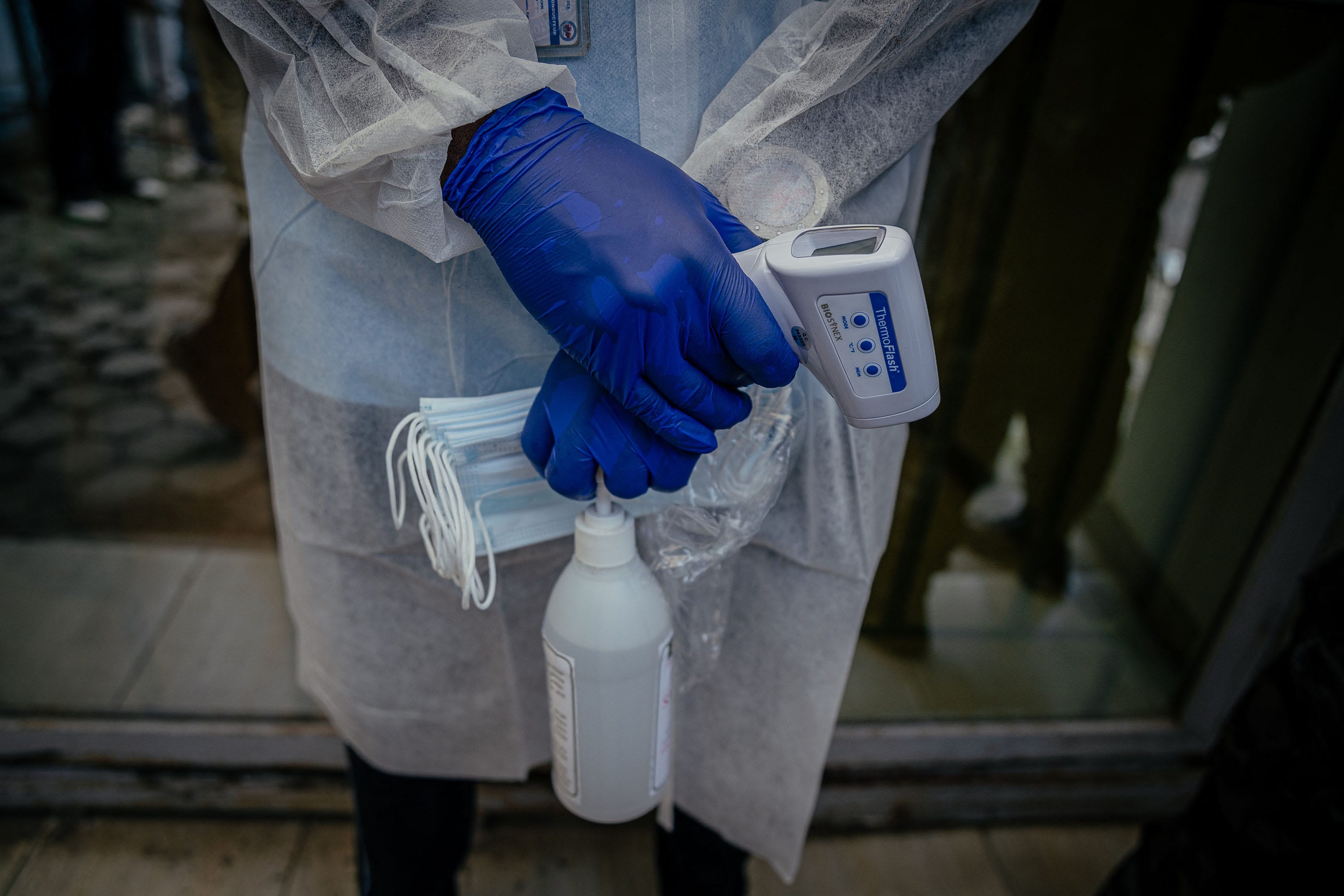
AN OUTBREAK OF EBOLA in Africa. Global health authorities scrambling to catch up. And Donald Trump pushing for aggressive travel restrictions at the border.
That’s how things unfolded in 2014, during the historic West African epidemic that eventually killed more than 11,000 people. And that’s how things are unfolding now, with a new Ebola outbreak in Central Africa that already, going by caseload numbers, appears to be the third-worst ever recorded.
But last time around, Trump was a political agitator, leading a chorus of critics screaming that the administration then in power—i.e., Barack Obama’s—wasn’t doing enough to seal off Americans from the rest of the world. Now Trump is the president. And the U.S. response has changed accordingly.
The most obvious contrast is the one the Trump administration created on Monday, when it announced a ban on non-American travelers coming from the two affected countries, the Democratic Republic of the Congo (DRC) and Uganda, as well as from nearby South Sudan. Back in 2014, the Obama administration rejected more aggressive travel restrictions on the theory they would undermine the international response and actually make it tougher to contain the disease.1 Increased screening at airports and border crossings, the Obama administration argued, would protect Americans.2
But the travel bans aren’t the only difference between now and then, nor the most important one. After a slow start, the Obama administration poured personnel and materiel into the affected countries, while helping to coordinate the global response. It was, as officials said at the time, a “whole-of-government” effort, with the United States Agency for International Development (USAID) playing a big role because it possessed the knowledge and contacts necessary to make public health efforts work on the ground.
USAID isn’t part of the American effort this time. Trump and his then-adviser Elon Musk effectively killed the agency last year. And according to almost everything I have seen and heard, including several advocates and scientists I interviewed over the past forty-eight hours to gauge how seriously we should be taking this outbreak, the withdrawal of so much American assistance
Join Bulwark+ to unlock the rest
Become a paying member of The Bulwark to get access to this post and other subscriber-only content. A subscription gets you:
- Unlimited access to articles and newsletters including The Triad by JVL and Receipts by Catherine Rampell.
- Ad-free editions of our shows (with transcripts) and member-only shows like The Secret Podcast.
- Plus community chats and commenting features. Your support helps keep our work sustainable and available to those who cannot afford a membership. Cancel anytime.