Trump Destroyed the EV Industry, Just When We Need It Most
Those gas guzzlers he loves sound a lot less appealing when filling them costs $4 a gallon.

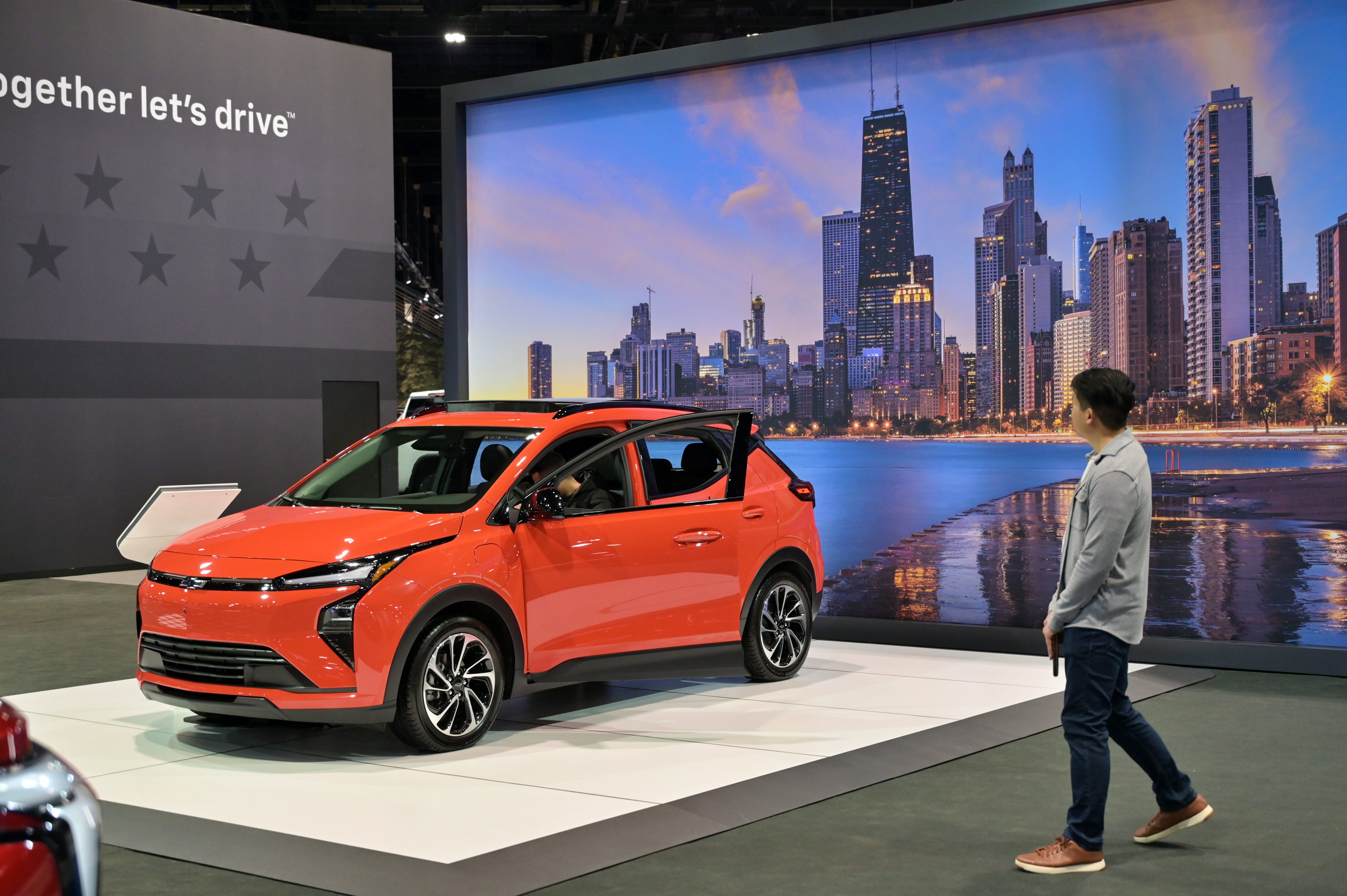
GENERAL MOTORS JUST ROLLED OUT A CAR that’s perfect for the moment. It’s the 2027 Chevrolet Bolt—a relatively cheap, all-electric subcompact that will let you drive right past gas stations, and dodge those high prices from the war in Iran.
But if you want a Bolt, you’d better act fast, because they won’t be on dealer lots for long. GM has already confirmed that production will end next year. The plan is to convert the Bolt’s factory in Kansas City back to manufacturing vehicles with internal combustion engines.
GM says it made its decision to limit the Bolt a while ago, and remains committed to producing other EVs. That’s almost certainly true. But it’s also true that GM has dialed back its overall EV ambitions—by, for example, shelving plans to convert more factories to EV production—and that other companies are doing the same. Just this past week, Honda announced it was scrapping plans for three EVs it had been preparing to manufacture at factories in the United States.
There’s no single, simple explanation for the retrenchment. But a big part of the story is Donald Trump. Since taking office, he has launched an all-out assault on EVs—by working with Republicans in Congress to eliminate tax breaks for vehicle production and purchases, and by using his regulatory powers to gut federal and state emissions standards that favored fuel efficiency.
“It wasn’t just the subsidies that Trump removed,” Corey Cantor, research director at the Zero Emission Transportation Association, told me. “It was the fuel economy standards. It was the California regulations. So it was almost a triple whammy of policy pullback.”
Trump has insisted that these old policies—the bulk of which were put in place by former President Joe Biden and the Democrats—were forcing the auto industry to make unprofitable vehicles, while sapping America of its petroleum-powered swagger. But high gas prices are turning that swagger into a stagger: Edmunds, the website for car buyers, says it has in recent weeks seen a rise in customer inquiries about EVs. You can safely assume that’s going to continue as long as gas prices stay high, which means that more American consumers are going to be looking for vehicles that U.S. manufacturers are becoming less able to provide.
One product that makes economic sense and is very much available: a Bulwark+ membership! Get one now for 20 percent off:
The saddest part may be that it’s all happened before. Demand for fuel-efficient cars surged after a series of oil price spikes in the 1970s, starting with the 1973 embargo by countries in the Middle East. American automakers were unable to meet the demand, because they had staked their future on the ability to keep selling large vehicles that guzzled gas. GM and the other Detroit legacy companies fell behind international competitors like Toyota, ceding big chunks of the market they were never able to recover.
Now the American automakers are poised to suffer another huge setback, under strikingly similar circumstances. But there is one critical difference between then and now.
Join Bulwark+ to unlock the rest
Become a paying member of The Bulwark to get access to this post and other subscriber-only content. A subscription gets you:
- Unlimited access to articles and newsletters including The Triad by JVL and Receipts by Catherine Rampell.
- Ad-free editions of our shows (with transcripts) and member-only shows like The Secret Podcast.
- Plus community chats and commenting features. Your support helps keep our work sustainable and available to those who cannot afford a membership. Cancel anytime.