Trump Is Doing Structural Damage to American Intelligence
The issue isn’t just his disregard for facts. It’s that he’s reshaping the government in his image.

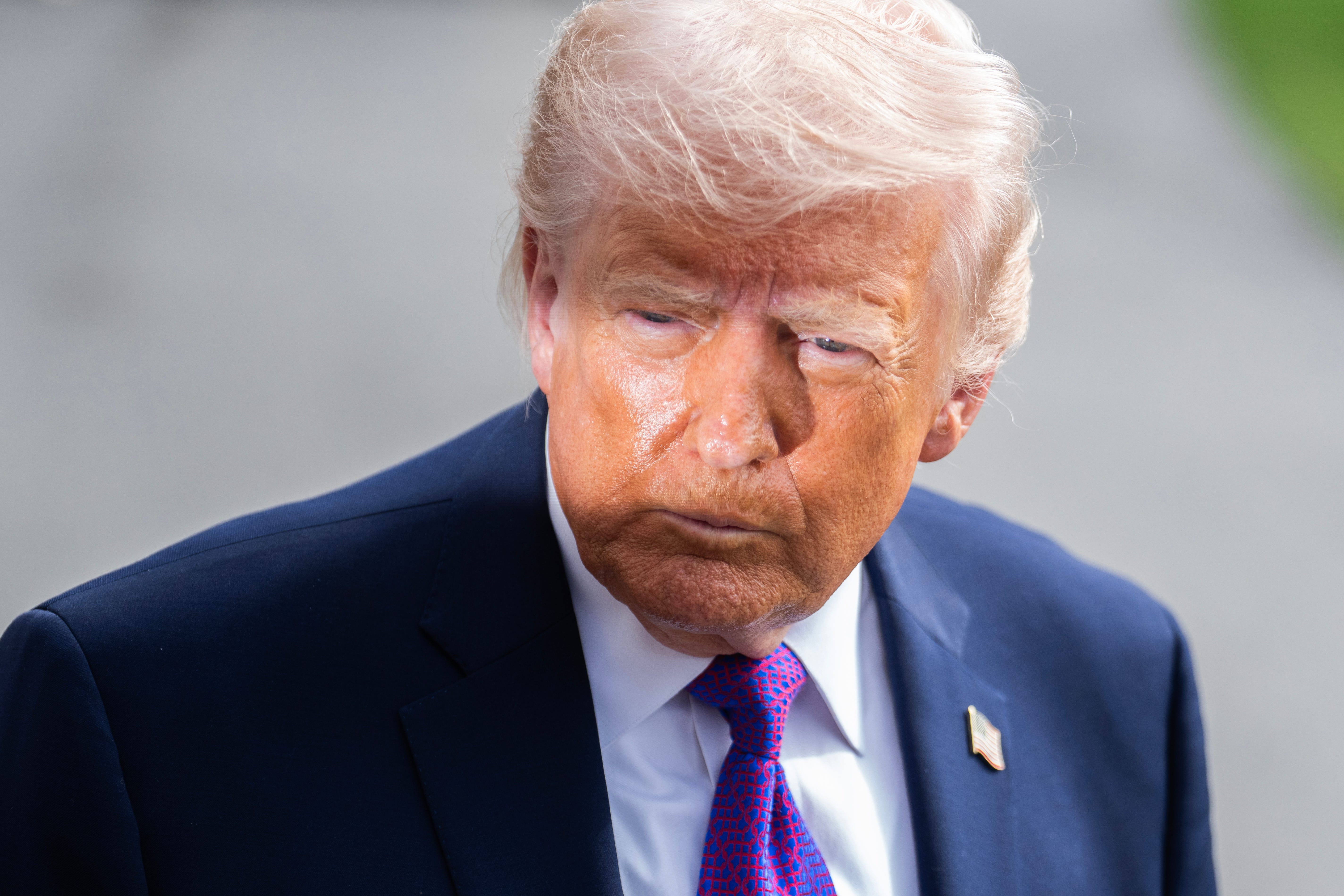
PRESIDENTS HAVE ALWAYS DIFFERED in how they use intelligence. Some devour briefings, while others prefer to read and be left alone. That, by itself, is not new. What is new in the Trump era is something more consequential and dangerous—not mere indifference to intelligence, but a broader contempt for the institutions and professionals whose job is to tell presidents what they do not want to hear.
Tension between presidents and intelligence agencies is hardly new. Bill Clinton was reputedly so disengaged that, when a small plane crash-landed on the White House lawn, the running joke in Washington was that it was probably his CIA director trying to get a meeting. Richard Nixon repeatedly called the CIA “clowns,” and Lyndon Johnson likened the agency’s habit of delivering bad news to a milk cow swinging its “shit-smeared tail” through a bucket of clean milk. Trump, however, has taken presidential distrust of intelligence in a different and more harmful direction. He compared American intelligence agencies to the Nazis in 2017, publicly contradicted them in favor of the word of Vladimir Putin in 2018, and has in general treated them not as an asymmetric advantage in his decision-making compared to other world leaders, but as an enemy.
Trump’s contempt has been dressed up in the language of the “deep state.” Intelligence officers, diplomats, analysts, and career national-security professionals are cast not as public servants but as partisans and even saboteurs. When expertise is recast as political opposition, the administration can easily justify ignoring it and replacing experts with zealots. Perhaps no example is more illustrative that Steve Witkoff, the former developer who has no international or national security experience and is now Trump’s special envoy for the Russia–Ukraine war, among other things. He declined to consult with any experts on Russia or Ukraine before starting negotiations with both countries, which have been at war for more than a decade. He was following his boss’s example.
Numerous credible reports indicate that the second Trump term has produced a critical erosion of the channels through which expert input normally reaches decision-makers. This pattern includes the sparse use of formal intelligence briefings, the removal of analysts after inconvenient findings, deep cuts to the National Security Council, the hollowing out of the State Department (including the oil and gas experts in the Bureau of Energy and Resources), and the diversion of FBI personnel away from established national-security functions. All of this points in the same direction—the institutional channels through which professionals speak truth to power are being dismantled or ignored, leaving policymaking in the hands of an ever-smaller circle of servile loyalists.
That matters because intelligence is not simply a stream of secrets delivered to a president. It is a system for forcing reality into the policy process. Its value lies not only in collection but in disciplined analysis, competing interpretations, red-team skepticism, and the professional ethic of speaking truth to power. CIA officers from day one are taught from day one that there is no greater sin than politicization of intelligence. To withhold, shade, or tailor analysis to fit policy preconceptions is anathema to professionals. America has already paid dearly for what happens when intelligence is bent to politics—the Iraq WMD fiasco remains the defining warning.
The damage, however, does not stop at analysis. Foreign policy depends on process. Even if a president makes all the right decisions, it doesn’t matter if he can’t get the government to understand and carry out his intentions. The United States does not succeed in the world simply because a president relies on his instincts. It succeeds when intelligence, diplomacy, military planning, counterintelligence, and alliance management are forced into conversation with one another before and after decisions are made. Of course, a president can choose to overrule the bureaucracy. But if he first disables or humiliates it, he is not demonstrating strength. He is stripping himself of the very machinery that helps avoid blunders.
There is also a deeper alliance problem. Much of America’s most valuable intelligence comes not from satellites or unilateral espionage alone, but from trusted relationships with allies and partners. Those relationships are built over years. They depend on discretion, professionalism, and confidence that the United States will handle sensitive information responsibly. Intelligence sharing is a system built on trust. If foreign partners begin to suspect that American intelligence channels are politicized, amateurish, or vulnerable to misuse, they will hesitate before sharing their most sensitive reporting. We may not ever know what they’re withholding. And once that trust erodes, it is exceedingly difficult to rebuild.
The internal consequences are no less serious. The damage is already visible. As a source told the Economist, morale at the CIA is “in the toilet.” As time passes, retirements will accelerate, attrition will accelerate, and frustration will deepen among professionals who fear their work will be distorted or simply ignored. A government can survive one round of politically motivated departures. What it cannot easily survive is a culture in which its most talented officers conclude that honest analysis is futile, and that advancement depends on ideological compliance. Over time, such a culture will not only drive out strong officers, it will also attract recruits who see intelligence less as a discipline of evaluating evidence than as an instrument of politics. The immediate result is self-censorship. The medium-term result is institutional mediocrity. The long-term result is institutional failure.
By the end of Trump’s second term, the intelligence community will still exist on paper, likely in exactly the same way it does now. But if current trends continue, it will be less trusted internally, less candid externally, more cautious in dissent, and less able to attract or retain the people who make it effective. The NSC will be thinner, the State Department weaker, FBI priorities more distorted, and intelligence analysis more vulnerable to political pressure. The United States will still possess immense capabilities. But it will be using them in a degraded decision-making system, one less able to judge what is meaningful and what is misleading and less willing to hear unwelcome truths.
The post-war American order was not sustained by military power alone. It also rested on information advantages, alliance networks, professional diplomacy, and the credibility that came from taking facts seriously. If Washington begins to operate as if expertise were treason and truth were whatever flatters the leader, then the United States will not only make worse decisions. It will become a less reliable ally, a less formidable adversary, and a less powerful country.
The gravest risk is not that Trump dislikes the intelligence community. It is that he is normalizing a presidency that treats independent expertise itself as illegitimate. A country can recover from a president who does not read enough briefing papers. It’s much harder to recover from a political culture that teaches officials to stop being honest in the first place.
 | A guest post by
|