Trump Is Walloping Construction Businesses. The Industry Stays Quiet.
Raids on work sites. Roofers under siege. But builders keep mum.

WHEN LEO FELER GOT HOME, there was blood everywhere. On his front door, the window sills, the foyer. This wasn’t some tragic accident or a murder scene; rather, while he was out of town to run a marathon, immigration agents had decided to attack the workers replacing windows on his house.
Footage from Ring surveillance cameras around the house, as well as cell-phone videos from protesters outside, tells the story: Masked agents sent to Chicago as part of “Operation Midway Blitz” saw workers taking items to a dumpster in front of Feler’s home. The agents then hopped his locked gate. They trampled his property, aggressively manhandled at least one worker, and entered Feler’s garage. They even tried to pull a bleeding worker out of a second-story window.
They did it all without ever presenting badges, identification, or a warrant.
“It was violent. There’s blood all over the house. It’s insane,” Feler, who is a U.S. citizen, told me the day after this happened in October. “It’s complete lawlessness. How does the government have impunity to jump into my home without a warrant?”
As far as Feler has been able to discern, his house and the crew working on it were targeted at random. The Department of Homeland Security did not reply to detailed questions about agents’ actions or why they were there, but did send me a statement complaining about “agitators” (i.e., protesters) in the street who “obstructed federal law enforcement and ignored multiple warnings to disperse.”
This wasn’t an isolated incident. Rather, it was just one of a rash of warrantless raids on private, residential construction sites recently—raids that are sweeping up basically anyone who looks Latino, including U.S. citizens, and subjecting them to dangerous and sometimes life-threatening conditions.
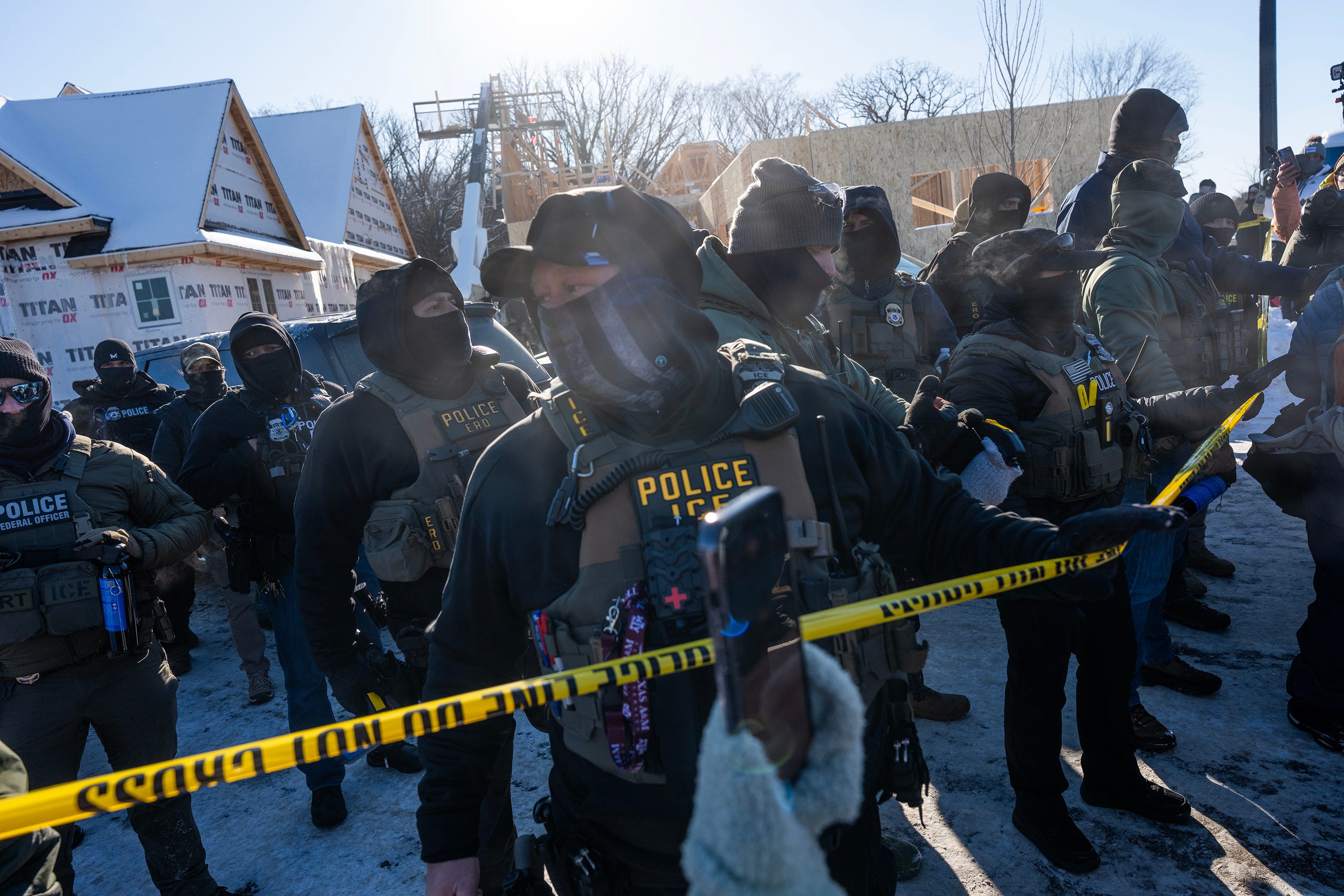
In a Minneapolis suburb this week, masked men wearing ICE vests—who refused to present a warrant or identify themselves—roped off a construction site, trapping two workers on a partially built roof for hours in subzero temperatures. It was so dangerously cold that “at least 30” masked federal agents present took shifts rotating in and out of their cars to stay warm, a state representative on the scene told local media.
Protesters gathered; some said they were prevented from bringing the trapped, shivering workers warm blankets and extra coats. In one dramatic video, a bystander climbed the spindly rafters herself to hand a worker a cup of hot coffee.
Eventually the masked men left, and one worker on the roof was taken away by ambulance.
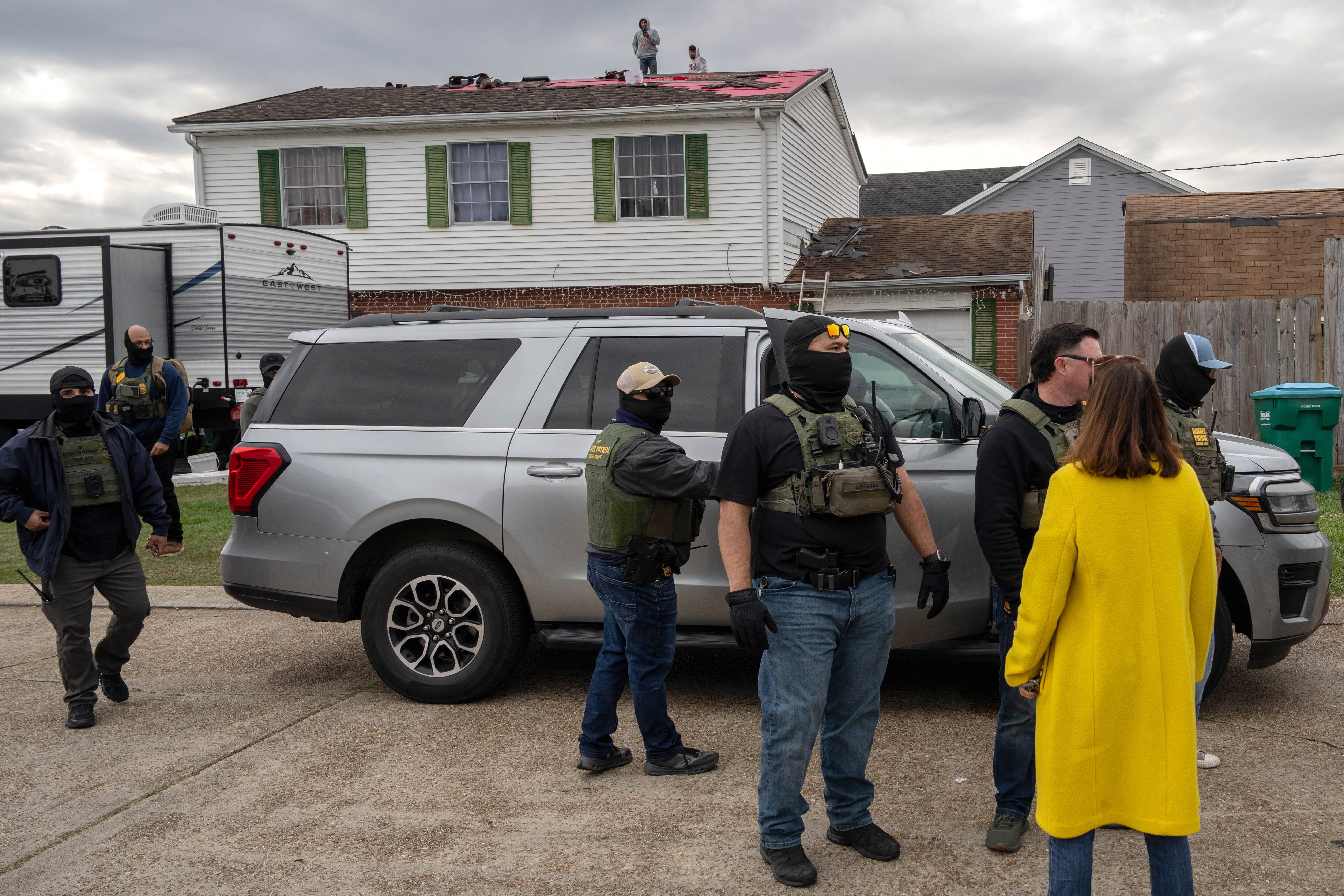
A week earlier, in a New Orleans suburb, agents pointed guns at workers balanced on a roof before hauling at least one away.
And in Alabama, a U.S.-born construction worker has been detained not once but twice, at different job sites twenty miles apart from one another. The first time, agents kept him handcuffed for over an hour even after seeing his REAL ID (which Alabama issues to lawful residents only). The second time, agents barged inside the house where he was working, detained him, and again refused to accept his REAL ID as identification. All without a warrant.
“The administration isn’t doing any front-end investigation, targeting specific people,” Jared McClain, an attorney with the Institute for Justice, a nonprofit representing the Alabama worker, told me. “They’re just showing up on construction sites and arresting Latinos.”
There is no question that this wave of deportation operations has hurt workers who are just trying to do their jobs. But it’s also terrible for the contractors and construction companies that employ them. So why hasn’t the construction industry, ya know, done anything?
Here’s what I found when I attempted to get an answer to this question.
Join Bulwark+ to unlock the rest
Become a paying member of The Bulwark to get access to this post and other subscriber-only content. A subscription gets you:
- Unlimited access to articles and newsletters including The Triad by JVL and Receipts by Catherine Rampell.
- Ad-free editions of our shows (with transcripts) and member-only shows like The Secret Podcast.
- Plus community chats and commenting features. Your support helps keep our work sustainable and available to those who cannot afford a membership. Cancel anytime.