Trump’s Pro-Crime Power Grab
Deploying federal agents on the streets of Washington, D.C. makes the whole country less safe.

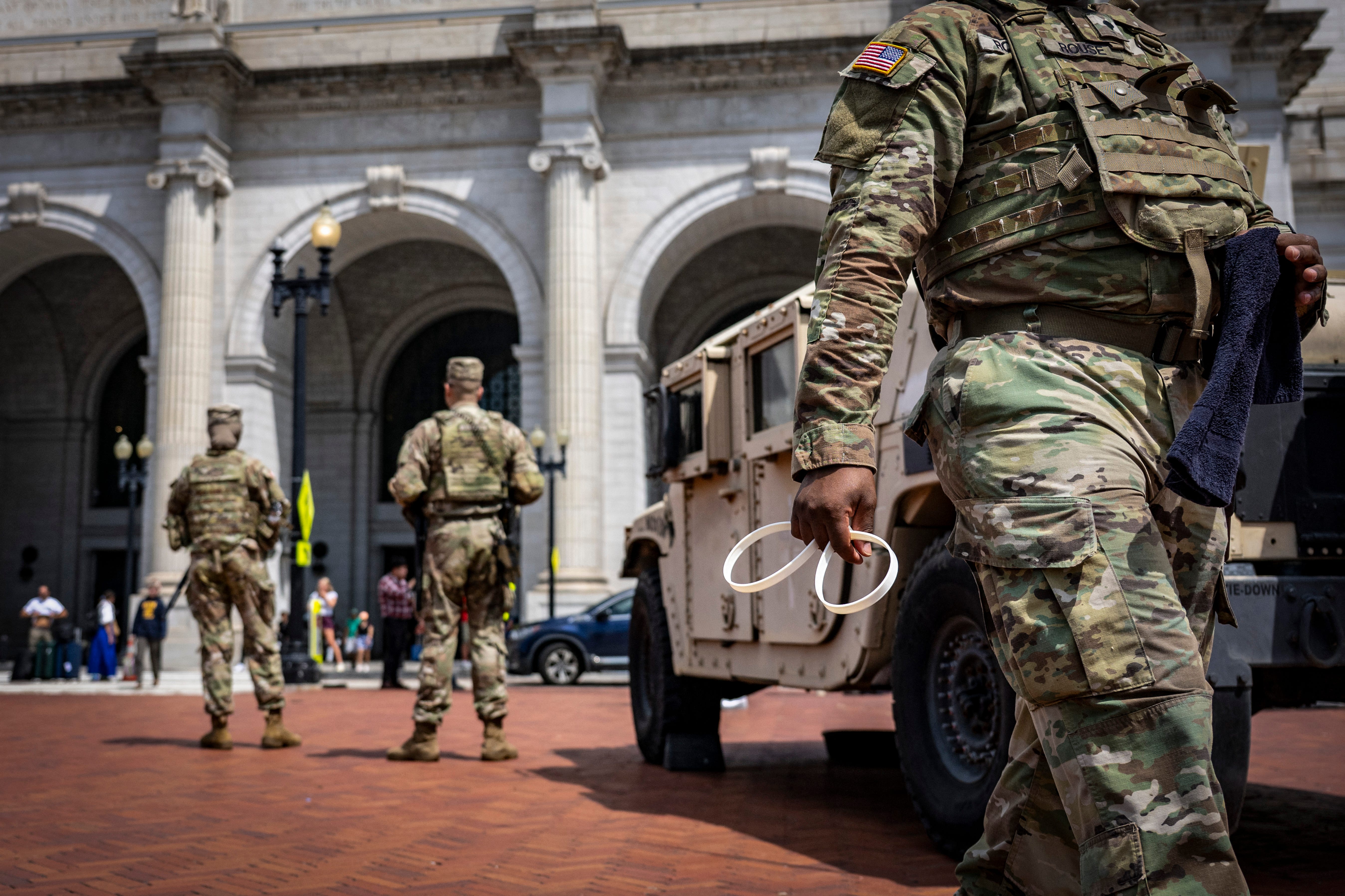
PRESIDENT TRUMP’S INVOCATION of Section 740 of the D.C. Home Rule Act, bringing the local police department under federal (i.e., his own) control while deploying federal law enforcement and the National Guard to police the capital’s streets, is a cynical ploy that has nothing at all to do with reducing crime. Much like the authority he used to impose his disastrous, haphazard tariffs around the globe and the law for which he invented a farcical invasion to deport immigrants—not to mention the law he abused in his first term for a still-not-built border wall—Trump is using statutory power in the guise of a manufactured emergency that does not, in fact, exist. The federal takeover of D.C. is a power grab and PR stunt to make the administration look tough on crime, despite months of evidence to the contrary. Although there are nuggets of truth buried in the administration’s disingenuous crime claims, they don’t justify federal involvement on this scale. This is probably just the latest administration action that diverts scarce federal resources away from serious crime reduction and toward its deeply unpopular political goals.
Although overstated in the administration’s over-the-top rhetoric, urban crime is real and deserves attention in the nation broadly and D.C. specifically. The capital had a significant crime spike two years ago, bucking national trends, but new leadership and other factors have crime falling again, particularly violent crime. As crime data guru Jeff Asher notes, there may be truth to the claim that MPD is making the violent crime drop appear bigger than it is, but all evidence suggests that the discrepancy is the degree of decline, not a lack of one. Crime journalist Radley Balko has fisked the many other dubious administration crime assertions.
Put simply, while some agencies massage data to make themselves look better, crimes in American cities are not “orders of magnitude higher” than reported, as White House Deputy Chief of Staff Stephen Miller claims. As with so much of Trump administration rhetoric, its disdain for empirical evidence is an act of political projection.
Despite cop-centric dramas that have been mainstays of network television for decades, policing in practice is generally an unsexy endeavor. Patrol officers often endure long stretches of boredom or long nights responding to calls of domestic abuse and mental health crises. Occasional rushes to violent events or, more often, the tragic remnants of violence come with the hopeful expectation they will help the victims and their loved ones pick up the pieces. In many instances, these calls put officers in contact with people having the worst day of their lives. For many officers, these are typical shifts, four days a week, twelve hours at a time.
The tedium is the point: Just being present in their service area is the most common and effective way most police officers prevent crime on a daily basis. A visible police presence in high-crime areas increases the perceived likelihood of being caught for misbehavior, so more visible law enforcement personnel will almost certainly reduce street crime where they are deployed. In this respect, Trump’s influx of law enforcement personnel may decrease crime where they are. But critically, an important part of effective policing is that officers develop trust and contacts in their assigned areas—something which federal officers lack. Plus, calling in the feds isn’t always the best use of resources, particularly specialized agents and National Guard members who literally did not sign up for this. Nor are any of these actions long-term solutions.
But, despite rhetoric to the contrary, Trump has deprioritized federal crime enforcement practically since Inauguration Day. In January, the administration gutted D.C.’s U.S. Attorney’s Office—which is responsible for prosecuting most felonies in the district—because career attorneys had the temerity to investigate and prosecute January 6th insurrectionists. And Trump, notoriously, pardoned or commuted the sentences of hundreds of violent criminals who participated in the riot, who—as it happens—were attacking MPD officers alongside the U.S. Capitol Police. In March, the administration retasked thousands of Homeland Security and other law enforcement personnel from major criminal investigations to immigration enforcement. In May, hundreds of FBI agents were reassigned to help meet the goal of tripling immigration arrests, leading some agents to worry about threats to national security and counterespionage work. Stephen Miller reportedly dressed down ICE and DHS staff for focusing on criminals, asking, “What do you mean you’re going after criminals? . . . Why aren’t you at Home Depot? Why aren’t you at 7-Eleven?”
What’s more, wasting federal resources on police stunts like this likely has a demoralizing effect on the agents involved. FBI agents are apparently trying to just weather the storm, going along with this glorified patrol assignment for which many of them lack training or experience. Chasing down Chinese spies is important, but it doesn’t give an agent the skills to respond to a burglary or mugging.
Low morale is also reported at ICE, despite its obscenely large new budget, because money and political demands cannot make the impossible a reality. And in my own anecdotal experience passing DEA agents patrolling Union Station, they look uncomfortable, probably because they know most residents don’t want them there, but perhaps also because they know that while they’re baking in the summertime D.C. heat, they’re not doing what they have trained to do.
Institutions are made of people who have their own skills, ambitions, and goals. These people must be managed for the institution to run effectively. Morale is key to effective operational competence in any organization, but it’s starting to look like demoralization in law enforcement is every bit as important to the administration as it is in the rest of the federal workforce. Even those within these agencies who may be sympathetic to Trump’s agenda can be dispirited by the arbitrariness of the new regime and the demeaning roles they are ordered to perform. If attrition of federal law enforcement agencies is a goal, these actions may hasten it.
The introduction of National Guard soldiers from South Carolina, Ohio, and West Virginia increases the likelihood of misunderstanding and government violence without any perceptible public benefit. There is no reason to believe the administration has any interest in public safety or crime reduction as much as it has an interest in looking tough and, perhaps, provoking confrontations that they could use retroactively to justify their overreach.
The line between civil liberties and public order is sometimes a fine one, but one more easily navigated with local knowledge and relationship-building, which the National Guard and federal agents lack. There is little Trump’s feckless actions can accomplish in crime reduction, and top-down federal priorities implemented by MPD officers could erode whatever trust patrol officers have built with their service areas. Meanwhile, Trump’s actions seem corrosive to federal law enforcement agencies, undermining public safety, national security, and trust in government.
 | A guest post by
|