Trump’s China ‘Deal’ Is Bad Economics and Bad for Democracy
It will leave us with higher prices, less trade, and a too-powerful executive branch.

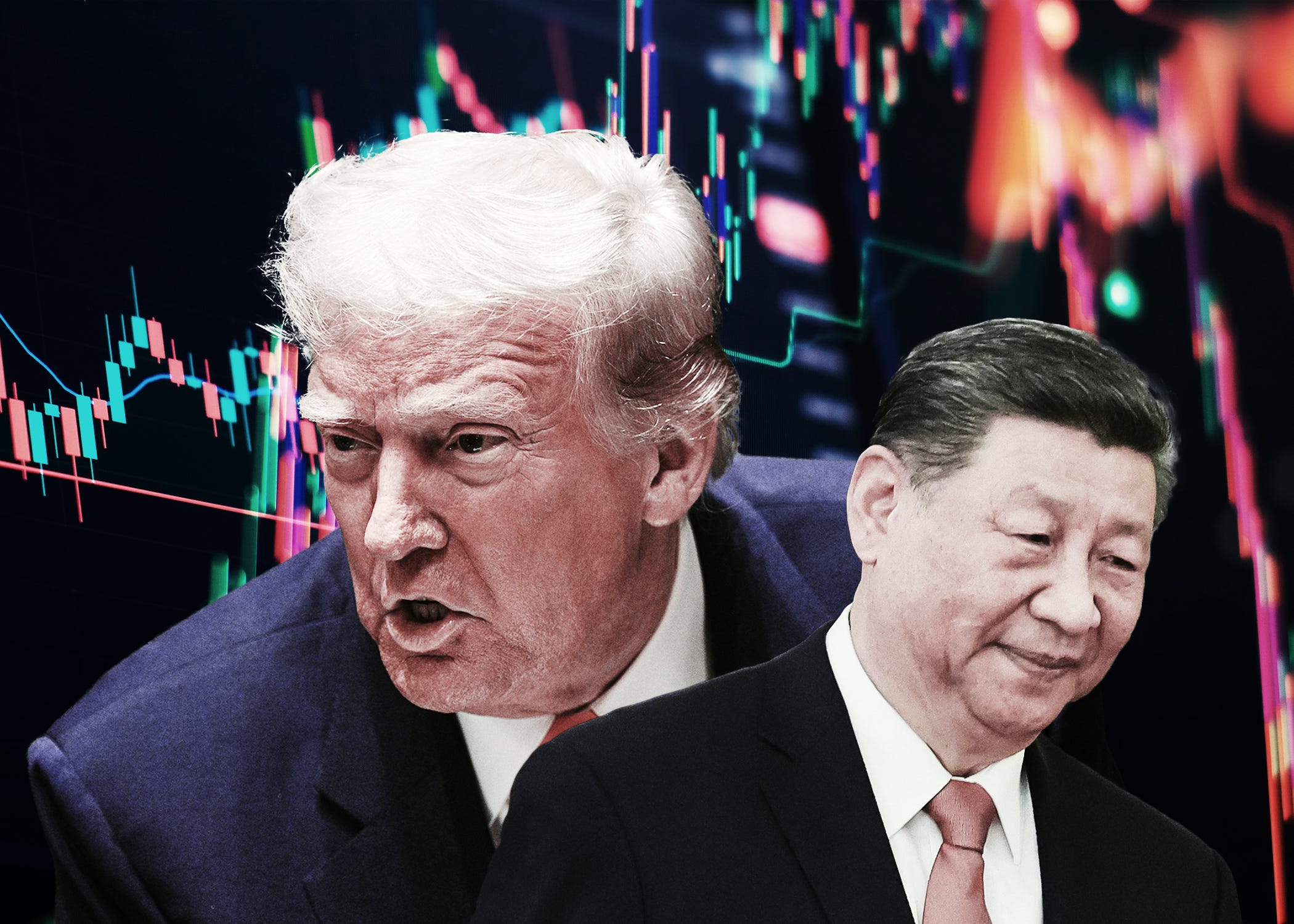
ON MONDAY, U.S. AND CHINESE NEGOTIATORS agreed to drastically reduce tariffs in an effort to end the destructive trade war President Donald Trump started earlier this year. Chinese tariffs on American goods will fall from 125 percent to 10 percent, while U.S. tariffs on Chinese goods will be reduced from 145 percent to 30 percent. The agreement has sent global stocks soaring, and MAGA is taking a victory lap.
This “breakthrough” is an encapsulation of Trumponomics: First, create a crisis that leads to deep anxiety and global instability, then desperately try to defuse the crisis while publicly maintaining an attitude of belligerence and confidence. In the case of Trump’s eye-watering tariffs—which threatened to grind a significant share of global trade to a halt and which Treasury Secretary Scott Bessent insisted were not “sustainable”—it wasn’t difficult to get China to agree to back out of economic mutually assured destruction. The final step in Trumponomics is to surrender a few concessions that are nowhere near justified by the scale of the original crisis Trump manufactured, like China’s pledge to cooperate on fentanyl ingredient trafficking—and declare victory.
One of the most corrosive aspects of Trumponomics is that it conditions people’s expectations and encourages the acceptance of destructive policies. After Trump’s catastrophic “Liberation Day” tariffs sent global equity markets into a tailspin, tanked the value of the dollar, and triggered a dangerous selloff of U.S. bonds, markets breathed a collective sigh of relief when Trump implemented a 90-day pause but retained across-the-board 10 percent tariffs. This means the effective overall tariff rate is still higher than before “Liberation Day,” which will lead to higher prices for Americans, slower growth, lower levels of market competition and innovation, and all the other negative consequences of protectionism. But while a near-universal 10 percent tariff represents the United States’ biggest shift toward protectionism in many decades, it’s far preferable to the original policy that threatened to cause a global economic meltdown.
A few days before the agreement with China, Trump announced a trade deal with the United Kingdom. While the administration hailed this deal as a “breakthrough,” it keeps the 10 percent tariff on most British goods in place while reducing duties on particular sectors like cars and steel. The American Enterprise Institute’s Stan Veuger observed that the administration “basically took the status quo, made marginal changes and called it a deal.” This is a status quo in which tariffs on British goods are actually higher than they were before Trump.
The deal is also evidence of the incoherence of Trump’s trade policy: American car manufacturers protested that the agreement makes British cars cheaper to import than many of their models, which rely on production in Canada and Mexico. This exposes the central contradiction of Trump’s trade policy. In one breath, he argues that he can revive American manufacturing by hiking up tariffs. In the next, he says the tariffs are merely tools to extract concessions before restoring relatively free trade—never mind what that means for American manufacturing.
While the agreement with China will make a substantial economic difference, this is only because Trump raised tariffs to such destructive levels in the first place. The agreement with the U.K., however, will have only a marginal impact—and it is probably the template for future agreements. “Many other deals, which are in serious stages of negotiation, to follow!” Trump declared. This is a glimpse at what Trump appears to believe is a winning economic strategy—a steady drip of trade deals that (he hopes) will make him look like a master negotiator, but which still leave the United States, its trading partners, and American consumers worse off than they were before.
BUT THE MORE DISTURBING REALITY is that these negligible deals make it even less likely that Congress will rein in Trump. After the U.K. deal was announced, the administration posted a long list of sycophantic plaudits from Republican members of Congress.
Beyond using the shock of global financial turmoil as leverage to coerce the world into accepting bad economic policies, there’s an even more alarming implication of Trump’s trade warfare: It represents a sweeping abuse of power. The Trump administration has justified the unilateral imposition of tariffs under the 1977 International Emergency Economic Powers Act (IEEPA), arguing that the “large and persistent trade deficit that is driven by the absence of reciprocity in our trade relationships” represents a “national emergency.” But the idea that trade deficits constitute a national emergency is a weaponization of economic illiteracy. Trade deficits are a necessary and natural part of many trading relationships, and the concept of a national emergency in the bill—which is meant to cover any “unusual and extraordinary threat,” such as the outbreak of war between the United States and a trading partner—can’t be contorted into a shape that fits the political whims of the president.
IEEPA requires the president to “consult with the Congress before exercising any of the authorities granted by this title” and to “consult regularly with the Congress so long as such authorities are exercised.” Moreover, the authorities granted by the Act “may not continue to be exercised under this section if the national emergency is terminated by the Congress.” There hasn’t even been the pretense of Congressional due diligence in overseeing Trump’s pointless trade war. Instead of exercising Congress’s constitutional duty to check the executive branch, House Speaker Mike Johnson declared that it’s necessary to “trust the president’s instincts on the economy.” This isn’t how American democracy is supposed to function.
There’s a reason Trump is so enamored with tariffs, and it isn’t just his long-held belief in protectionism. Tariffs are a multi-purpose economic weapon that concentrates power in Trump’s hands. Trump says world leaders are “kissing my ass” to avoid economic retaliation, and this is the whole point. There’s no economic argument for the tariffs—the White House even got the math wrong on the kooky formula they claimed to be using. But Trump recognizes that tariffs give him a bludgeon to use in negotiations over everything from trade deficits to immigration and fentanyl smuggling. By making such a huge concession to presidential power, Congress is enabling Trump to rule by fiat. Thousands of American businesses, millions of consumers, and countries around the world are hanging on Trump’s every word. Truth Social posts now have the power to generate or wipe out trillions of dollars in value in a matter of seconds. This is an extremely dangerous arrogation of power to the executive branch, and the GOP-led Congress is content to give Trump all the latitude he wants.
As global markets cheer for Trump’s retreat from the China trade war, the situation for American democracy is more perilous than ever. The real-world economic consequences of Trump’s reckless behavior are among the most important checks on his power because—unlike Congress, the private sector, law firms, and universities—markets can’t be bullied. If anyone thinks Trump’s decision to call a cease-fire in the trade war he started is permanent, they’re in for a brutal reality check. In just a few months, Trump has inflicted historic damage on the United States’ reputation as a reliable trading partner and as the most important pillar of the global financial system. The uncertainty created by Trump’s on-and-off tariffs will have a devastating impact on investment. Faith in American debt and economic stability has been undermined, and countries will search for new hedges against future instability caused by wild day-to-day swings in policy—if they aren’t already.
Like the pause on the reciprocal tariffs, the China trade war has only been suspended for 90 days—a reminder that Trump will continue to use the threat or the reimposition of tariffs throughout his presidency. This is a status quo that Congress shouldn’t allow to persist, though Trump’s spineless party shows no sign of reversing it. The health of the global economy shouldn’t hinge on whatever Trump decides to publish on Truth Social at one in the morning, and American democracy can’t be dependent on the mercurial whims of a would-be tyrant. The separation of powers exists to prevent precisely what we have witnessed over the past several months: an out-of-control executive capriciously swinging from one destructive policy to the next with no checks or accountability.
FOR MILLENNIA, CHINA HAS CONTENDED with what’s known as the “bad emperor problem.” While its highly centralized system can get a lot accomplished with a relatively benign leader in charge, every once in a while, a bad one comes along and inflicts almost-incomprehensible damage with no laws or institutions to check him. Extreme concentrations of power enable swift action that won’t get bogged down in bureaucratic proceduralism or legal wrangling—for example, the state can requisition any land it pleases to build public infrastructure like high-speed rail.
In the United States, property rights, laws about eminent domain, the often-plodding speed of litigation, and federalism all inhibit such quick, sweeping decisions. But the trade-off for inefficiency is protection under the rule of law and the assurance that the state can’t abuse citizens or ignore their interests.
But thanks to Trump and the cowardice of GOP lawmakers, the United States now has its own bad emperor problem. There has never been an American president who feels more emboldened to behave like a tyrant—from the Supreme Court’s 2023 ruling on presidential immunity to the complete collapse of Congressional oversight, new precedents have given the executive branch far too much power and autonomy.
Although Wall Street and Silicon Valley are cheering the détente in the trade war with China—along with many Americans who have been watching their 401(k)s shrink over the past several months—now isn’t the time for relief. Americans can’t rest easy when our bad emperor continues to systematically destroy the guardrails that have restrained all previous presidents. After all, the real scandal wasn’t the wanton creation of an economic calamity due to one man’s arrogance and incompetence—it was always the fact that he had the power to do it in the first place. Trump still has that power, and Americans should never get used to it. Nor should they praise Trump for replacing a devastating and potentially ruinous economic policy with one that is merely very bad.
There’s nothing wrong with exhaling a little bit as the stock market climbs and the administration slaps a bandage on the worst self-inflicted economic wound in a century. But we can’t lose sight of the fact that the crisis of American democracy continues to get worse.
 | A guest post by
|