Tulsi Gabbard’s Office Shouldn’t Exist
And her tenure in it proves exactly why.

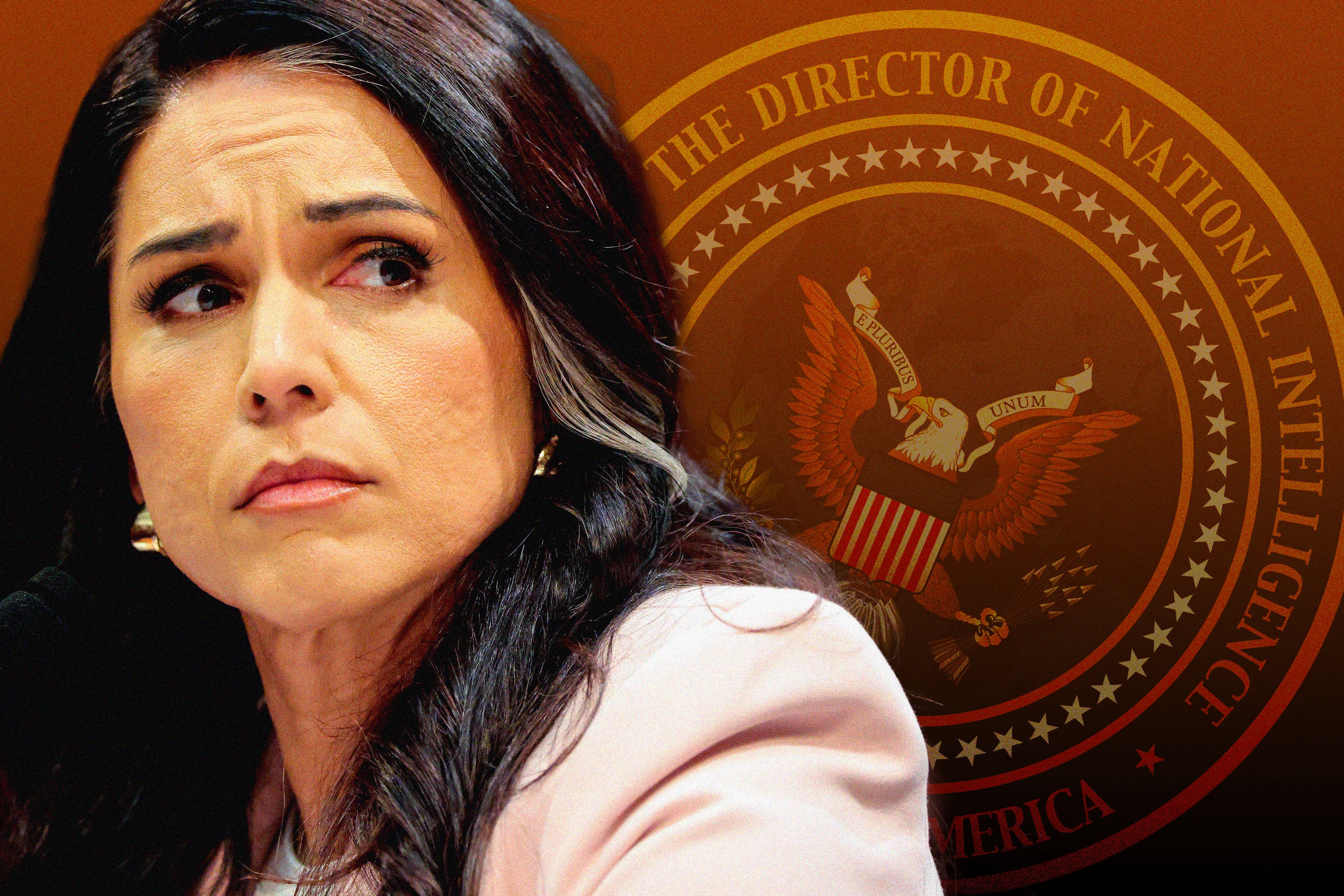
I HAVE SPENT MUCH OF THE TRUMP ERA warning against the cynical assault on the so-called “deep state” and the reckless effort to hollow out public institutions. However, there is one national security bureaucracy I would gladly see abolished, the Office of the Director of National Intelligence (ODNI).
The ODNI was supposed to coordinate, clarify, and impose accountability on the intelligence community. It hasn’t. Now, under Director Tulsi Gabbard, the problem is no longer merely bureaucratic, but political. The office that was meant to safeguard intelligence from fragmentation has become another perch from which intelligence can be politicized and bent toward partisan narratives. If this administration wants to dismantle something, it should start here.
The DNI was created after September 11th in the familiar Washington cadence of crisis, panic, and performative reform. Politicians needed to show they had “fixed” the intelligence failures that preceded the attacks, so they built a new layer atop an already sprawling intelligence community. The result was a classic Washington solution, a bureaucracy designed to prove that something had been done, whether or not it actually solved the problem.
After more than two decades, ODNI has become what many intelligence professionals feared it would be: an additional bureaucracy with vague authority, uneven leadership, and a persistent tendency to complicate rather than improve the work of intelligence. ODNI is an entire bureaucracy of middle management, neither doing the work of intelligence itself, nor consuming intelligence to make policy decisions. And worst of all, the “Office of the Director” was designed around a person rather than a mission.
The case for the DNI after September 11th rested on the claim that the attacks happened because the agencies “failed to connect the dots.” There was some truth in that. The 9/11 Commission identified organizational fragmentation, poor information-sharing, and institutional stovepipes as problems that contributed to the attacks. It recommended a new national intelligence director to manage the intelligence community and serve as the president’s principal intelligence adviser. In the heat of a presidential campaign, Congress rushed through the Intelligence Reform and Terrorism Prevention Act of 2004, creating the DNI (and by extension the ODNI) and separating the role from the CIA director, who had previously been the president’s chief intelligence advisor.
But the public story was far cleaner than the real one. The pre-September 11th failures were not failures of wiring diagrams. They were failures of political leadership, urgency, policy, domestic intelligence, imagination, and accountability. The FBI’s inability to function as a true domestic intelligence service mattered. So did the lack of high-level political attention to al-Qaeda before the attacks. Political leaders in both parties sought to avoid blame, and the eventual “fix” allowed Washington to look busy without confronting the hardest questions.
The mythology that grew out of the 9/11 Commission was that the disaster proved the need for a DNI-like structure. The facts are far less clear. The commission’s report dodged many of the hardest questions, declined to assign direct accountability to senior officials or agencies, and translated a complex failure of policy, domestic intelligence, bureaucratic culture, and political attention into a cleaner story about institutional sharing.
That is a classic Washington story. Blame is assigned to no one—especially not the politicians of both parties who ignored warnings about Islamist terrorism for years. An idea already on the shelf becomes “reform” without accountability. Bureaucracy accretes. September 11th did not prove that America needed a DNI. It proved that political leaders failed to act with urgency, that the FBI was not built for the domestic intelligence mission, that agencies hoarded information, and that Washington would rather reorganize boxes than assign responsibility. The DNI was not the necessary lesson of the terrorist attacks. It was the most politically convenient one.
The 9/11 Commission rightly warned that the intelligence community needed better integration, but the office Congress created was less an answer to a specific intelligence problem than a political compromise dressed up as reform. The DNI did not become the clean, small coordinating body many imagined. Instead, it became another bloated Washington institution, adding meetings, products, turf fights, and bureaucratic rituals that made coordination more cumbersome rather than more effective. A system this large certainly needs someone to set priorities, deconflict collection, and force agencies to share information. But that does not require a cabinet-level superstructure. A small professional staff inside the National Security Council, or a lean intelligence management office with real budget-review authority could have done the job.
While the Office of the Director of National Intelligence was born in the heat of national trauma and presidential politics, that alone does not make it illegitimate. Some institutions created in crisis prove their worth. ODNI has not. To many collectors, foreign partners, and practitioners, it has proved confusing, irrelevant, and often faintly ridiculous, a bureaucratic layer more likely to prompt a shared eye roll than respect. In Washington, the ODNI duplicates work. It reviews, edits, massages, and reissues intelligence that originates elsewhere. For example, the President’s Daily Brief, once a CIA product, is now, under the ODNI’s auspices, a community product. That sounds sensible until one considers what happens when every agency fights over inclusion, phrasing, emphasis, and risk. Intelligence should be coordinated, but it should also be sharp. Too much coordination can become sanitization. By the time everyone has had a chance to soften the edges, what reaches policymakers may be less a judgment than a consensus memo. The DNI has not become the indispensable intelligence chief, but merely another voice in an already crowded room.
The DNI’s defenders argue that someone must stand above the agencies. In theory, yes. In practice, the office never truly did. The Department of Defense—which houses the National Security Agency, the Defense Intelligence Agency, the National Geospatial-Intelligence Agency, the National Reconnaissance Office, and intelligence enterprises within all five military services—retained enormous control over the intelligence budget and major collection agencies. The CIA retained operational power and direct presidential access. The FBI reorganized to strengthen its domestic law enforcement-intelligence hybrid role. The DNI was asked to be supreme coordinator without command authority sufficient to make that supremacy real. In his writings and commentary, former Israeli Mossad Chief Efraim Halevy expressed his view that the person above the agencies should be the president, and adding a layer of bureaucratic apparatchiks over the top of the people who actually do the work just weakens America’s national security.
THAT PROBLEM WOULD BE TOLERABLE if the DNI had insulated intelligence from politics. Instead, the office has become especially vulnerable to politics because it is so far from a distinct operational culture. CIA has flaws, but it has a mission: recruit sources, steal secrets, pursue hard targets, and conduct covert action under law. NSA, NGA, NRO, and DIA all have missions. The DNI has a role. And we are learning that roles are easier to politicize than missions.
Worse, the current DNI, Tulsi Gabbard, lacks the experience, character, and competence the role demands, leading some to joke that, in this administration, DNI stands for “do not invite.”
The intelligence profession depends on an ethic that is simple to state and hard to practice: speak truth to power. Former CIA and NSA Director Gen. Michael Hayden has warned about the danger of the “post-truth” political environment for intelligence services. Intelligence officers are trained to search for facts in a world of ambiguity. They are not equipped to compete in a partisan marketplace where the winning product is the most useful narrative or political weapon rather than the most accurate assessment.
That is why the recent performance of the ODNI is so alarming. Gabbard’s tenure has made manifest what was always structurally possible, the transformation of an “honest broker” into a political amplifier. The ODNI’s press releases under Gabbard have included highly charged claims about alleged conspiracies tied to Trump impeachment fights, using the language of partisan combat and culture-war nonsense rather than offering sober intelligence assessments.
The problem isn’t just that the current occupant is malicious and incompetent. The problem is that the office is uniquely suited to this kind of misuse. The DNI has prestige, access to secrets, and the aura of community-wide authority. But because the DNI does not run the core collection agencies in a meaningful operational sense, a politically minded DNI can spend less time improving intelligence and more time curating narratives and sifting through the combined work product of the whole intelligence community for partisan hand grenades to throw at their opponents.
The problem predates Gabbard. Richard Grenell’s brief turn as acting DNI during the first Trump administration showed how easily the position could be handed to an unserious political loyalist with thin intelligence credentials.
Other DNIs—even those who were serious public servants—have struggled with relevance, access, or authority. “Enlightened statesmen will not always be at the helm,” but a government office of this much responsibility should not be designed to work properly only when led by someone of unusual competence and restraint. Institutions must be designed for the people who may someday occupy them, not only for the people we wish would occupy them. The DNI fails that test.
ABOLISHING THE OFFICE WOULD NOT MEAN abolishing intelligence coordination. It would mean admitting that the current model is the wrong one. As David Ignatius argued recently, budget coordination could be moved to a small, professional intelligence-management office modeled more like the Office of Management and Budget. Community-wide analytic standards could be maintained by a compact board of senior career analysts. The president could receive intelligence from the CIA director, supported by an interagency deputies process, while the national security adviser ensures that dissenting views are heard.
Congress would also need to do its job. One reason Washington creates new offices is that it does not want to perform sustained oversight of old ones. The intelligence committees should force agencies to share relevant information, punish failures to do so, and protect dissenting analysis. They should also stop treating intelligence as a partisan weapon whenever it becomes inconvenient. No organizational chart can fix political cowardice.
The DNI was supposed to make the intelligence community more coherent. Instead, it has too often made it more cumbersome, more political, and less accountable. The office was created in haste, justified by an oversimplified diagnosis, weakened by compromise, and preserved by inertia. Now it has become soiled by cheap partisan point-scoring that puts the interests of the DNI herself over the interests of national security.
The DNI has had its chance. The experiment failed. Abolish the office, preserve the functions that matter, and return intelligence to the professionals whose job is not to serve a party, a president’s ego, or a cable-news storyline, but the security of the republic.
All statements of fact, opinion, or analysis expressed are those of the author and do not reflect the official positions or views of the U.S. government. Nothing in the contents should be construed as asserting or implying U.S. government authentication of information or endorsement of the author’s views.
 | A guest post by
|