Ukraine’s Secret Weapon: Adaptation
Nothing beats outthinking the enemy.

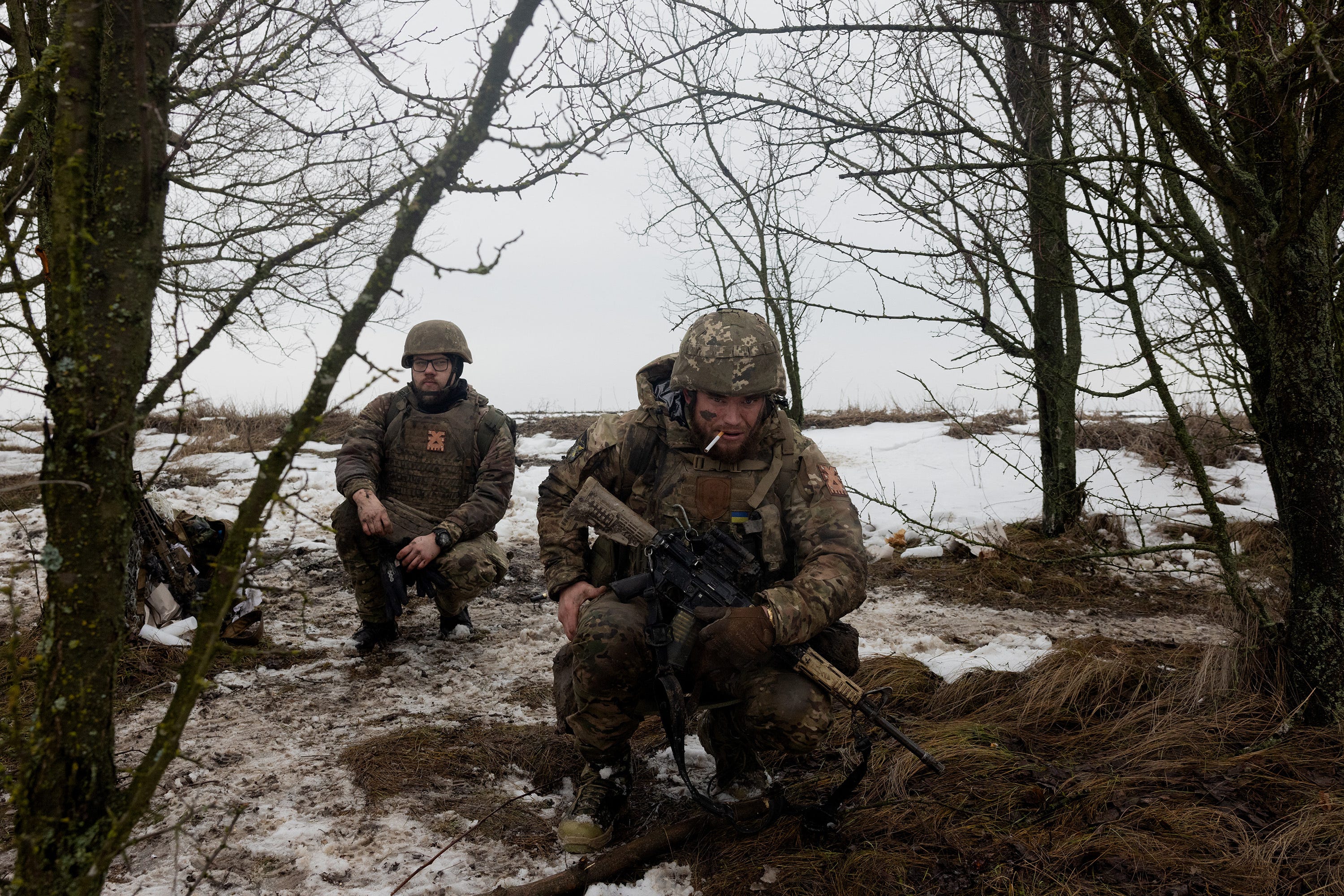
SOMETHING IMPORTANT IS HAPPENING on the battlefields of Eastern Europe. Quietly and steadily, without much fanfare, Ukraine is beginning to reverse the strategic geometry of its war against Russian aggression.
There are many reasons why Ukraine has regained the strategic initiative, but they all come down to the same principle: adaptation. Military leaders have always spent enormous effort thinking about how to outmaneuver opponents and gain an advantage, because warfare is never static. One side always falters or becomes complacent, which allows the other side to adjust. Every battlefield evolves, every new technology creates both opportunities and risks, and every enemy at some point presents vulnerabilities. Successful commanders are usually those who can recognize changing conditions fastest, discard outdated assumptions, and adapt before the enemy does, in small and big ways.
During my time commanding in Iraq, we learned that even the phrases we used needed to evolve. Early in the war, we borrowed the mantra of “winning hearts and minds” from earlier insurgent wars. But we realized Iraqis didn’t want Vietnam-era slogans, and they certainly didn’t want to be like us; instead they wanted security, reliability, and partnership. We shifted our thinking toward “gaining trust and confidence” with both Iraqi soldiers and civilians, and we showed it by fighting alongside them rather than merely operating around them. It was an adaptation—not just in tactics, but in mindset, language, and operational approach.
That wasn’t the only adaptation American forces were forced to make in Iraq. Insurgent networks rapidly adapted to American strengths by using decentralized attacks, roadside bombs, and information operations designed to undermine public support and operational momentum. The initial American responses lagged behind the evolving threat—in some cases, for years. Eventually, however, U.S. commanders and soldiers adjusted by more closely integrating intelligence with operations, employing counter-IED technologies, adopting decentralized operations, employing electronic warfare, and forging closer partnerships with local forces. Success came because American forces eventually learned faster than the enemy.
Military history offers plenty more examples of small, adaptive forces overcoming larger, slower ones. After the Tet Offensive in 1968—which was an abject military failure for the North Vietnamese and effectively extinguished the Viet Cong as a fighting force—the North Vietnamese decided not to try to engage the United States military in pitched battles, resorting instead to guerilla tactics. During the Winter War of 1939–1940, the Finns used winter camouflage, ski-based mobility, and improvised weapons like Molotov cocktails to fight the massive Red Army to a draw and defend Finnish independence. In World War II, the Germans used “blitzkrieg”—super-fast maneuvers of relatively small, armored units well in advance of the still horse-drawn main force—to conquer Poland, the Low Countries, and France. The Soviet Union adapted by trading space for time, allowing the German momentum to stall out as winter began.
UKRAINE HAS ADAPTED AS WELL.
For much of the past two years, Western observers have judged the war primarily through territorial movement. If Russian forces advanced a few kilometers, headlines portrayed Moscow as regaining momentum. If the front lines remained largely static for months, commentators described the war as a stalemate. But these narrow interpretations increasingly missed how modern warfare functions, particularly in an era shaped by new technologies, were causing adaptation on the battlefield: drones, precision strikes, electronic warfare, and attacks on industrial infrastructure far from the front lines became the approach.
According to recent assessments from the Institute for the Study of War (ISW), Russian forces in April 2026 experienced a net territorial loss across the theater for the first time since Ukraine’s Kursk incursion in 2024. Russian rates of advance have declined for months as Ukrainian’s long-range strike campaigns against key logistics nodes, electronic warfare hubs, and Russian command-and-control problems—synchronized with limited Ukrainian counterattacks on the ground—contributed to increased Ukrainian success across the battlefield.
Equally revealing is the widening gap between Kremlin claims and battlefield reality. Russian Chief of the General Staff Valery Gerasimov recently stated that Russian forces had seized more than 1,700 square kilometers and dozens of settlements this year. But independent assessments from ISW suggest the actual gains are a fraction of his assertions and that in several sectors, Russian units have lost ground.
That disconnect matters because senior military leaders who exaggerate success often reveal deeper institutional weaknesses. In authoritarian systems, civilian and military leaders frequently attempt to shape reports to satisfy expectations rather than operational realities. Over time, those actions distort military and political decision-making, weaken adaptation, and cause strategic dysfunction. It’s been happening in Russia since before the full-scale invasion, and it appears to be happening still.
Meanwhile, Ukraine continues evolving tactically and operationally.
Perhaps the most important change in this war is that Ukraine is no longer fighting Russia symmetrically. Ukrainian commanders have always understood they cannot indefinitely trade artillery shells, armored vehicles, and soldiers against a larger adversary with deeper reserves. So instead of attempting to match Russian quantitative advantage, Ukraine has increasingly shifted toward attacking vulnerabilities across the broader Russian military-industrial system. Rather than focusing exclusively on trench lines and front-line attrition, Ukrainian forces have adapted by targeting the infrastructure, logistics, energy production, navigation systems, and industrial facilities that sustain Russian combat operations. That represents a profound evolution in how Ukraine is fighting.
ISW reporting and related open-source imagery assessments indicate Ukrainian strikes deep into Russia have been exceedingly successful in damaging major oil refineries, fuel depots, explosives facilities, and plants connected to Russian drone and missile production. Ukrainian attacks reportedly damaged the Kirishi oil refinery near St. Petersburg—one of Russia’s largest refining facilities—and struck the VNIIR-Progress plant in Chuvashia, which manufactures navigation and electronic warfare-resistant guidance systems used in Russian drones and missiles. These attacks reflect increasingly sophisticated intelligence collection and targeting priorities aimed at disrupting the connective tissue of Russia’s military machine.
Ukraine’s expanding long-range strike campaign is also exposing an uncomfortable reality for the Kremlin: Russia cannot reliably defend its own rear areas, even its capital.
Recent reporting citing leaked European intelligence assessments suggests Russian authorities have increased security measures around Vladimir Putin and key Russian leadership facilities as Ukrainian long-range strike capabilities continue expanding. Reports indicate Russian authorities continue to reposition air defense systems to protect elite leadership facilities and critical infrastructure while imposing enhanced security measures and communications restrictions around sensitive locations and major public events. Whether every detail of these reports proves accurate is ultimately less important than the broader strategic reality they reflect: Ukraine has succeeded in bringing the war home to Russia.
Even the Kremlin’s rhetoric surrounding this year’s Victory Day celebrations reflects that anxiety. Russian officials publicly threatened retaliation over the possibility of Ukrainian strikes near Moscow during the May 9 parade (which was down-scaled, likely due to a lack of equipment and soldiers available for the parade), underscoring how seriously the regime views Ukraine’s growing long-range capabilities. Putin’s insistence on holding the parade despite those concerns may have been intended as a demonstration of strength, but it also highlighted an emerging weakness.
Interestingly, according to new ISW reporting, Ukraine showed good faith by unilaterally enacting a ceasefire beginning on the night of May 5 to 6 in response to Russia’s request for a Victory Day ceasefire, and stated it would continue observing the ceasefire if Russia reciprocated. Russia did not. Instead, Russian forces continued offensive operations while launching missile and drone attacks that killed and wounded dozens of Ukrainian civilians. Russian officials then falsely accused Ukraine of violating the ceasefire despite evidence to the contrary. That contrast says something important about the character of the two countries involved in this war.
NONE OF THIS MEANS THE WAR is nearing an end. Russia remains dangerous and capable of inflicting enormous destruction. Russian missile and drone strikes continue purposely targeting and killing civilians across Ukraine. While Moscow is hindered by significant manpower shortages and substantial industrial capacity despite sanctions, Ukraine also faces increased manpower shortages, dependence on Western support, and the relentless strain of a prolonged war of attrition.
Ukraine is far from perfect, as all nations at war are challenged in a variety of ways. But even while fighting for its survival against an enemy attempting to erase its sovereignty, destroy its infrastructure, terrorize its civilians, and fracture its society, Ukraine continues to operate within norms recognizable to democratic nations and civilized societies. Russia, meanwhile, continues a pattern of coercion, deception, indiscriminate attacks, and disregard for both civilian life and international norms.
All the ammunition, vehicles, and shiny helmets in the world aren’t equal to learning and adapting faster than the enemy and forcing the opponent into a constant cycle of reaction. Ukraine is increasingly doing exactly that. It is imposing pressure not just at the front lines, but throughout Russia—economically, psychologically, and politically.
And while much of America is looking to the chaos in the Middle East, the shift in Europe is proving to be one of the most important adaptations by a country in modern warfare. We should take some lessons from our friends in Ukraine.