Ukraine Stands Firm
Attacks on its infrastructure and a major corruption scandal have rocked the country. But President Trump is wrong that Ukraine is destined for defeat.

DONALD TRUMP HAS ASSUMED from the start of the war in Ukraine that Russia will win. “You have no cards,” the president told Volodymyr Zelensky when he ambushed the Ukrainian leader in the Oval Office in February, and he repeated the point recently on Air Force One. Asked why the latest U.S. peace proposal would give Russia a huge chunk of land it has been unable to win on the battlefield, Trump told a reporter, “Look, the way [the war is] going . . . it’s just moving in one direction. So eventually that’s land that over the next couple of months might be gotten by Russia anyway.”
Vladimir Putin rushed to underscore the point, boasting when Trump’s special envoy, Steve Witkoff, visited Moscow last week that Russian forces had captured the frontline city of Pokrovsk. Many Western observers parrot Putin’s claims about the contested rail hub in eastern Ukraine, arguing that the battle there is a major turning point, giving a Russia a “gateway” to the west and, before long, conquest of all Ukraine. In fact, it’s not clear that Russia has yet taken Pokrovsk—Kyiv maintains it’s still holding on. But even if the town falls in the coming weeks, it hardly means Ukraine is losing the war.
On the contrary. Both sides have fought hard in Pokrovsk—it has been the hottest spot on the front for nearly eighteen months—and Ukraine would mourn the loss. But Kyiv continues to hold its own in the east and elsewhere—militarily, politically, technologically, and in the hearts and minds of Ukrainians.
What would it mean for Russia to win the war? Putin announced his goals months before the fighting began in his mid-2021 essay, “On the Historical Unity of Russia and Ukraine.” The Kremlin sees Ukraine as an integral part of Russia—not a nation on its own right that can make its own decisions about how it wants to be governed. Putin aims to reclaim the entire country, replace its democratically elected leadership, and override its decision to ally itself with the West. He also wants to push NATO back to its 1997 borders, cracking the back of the alliance by dividing Europe from the United States. His ultimate prize: restoring the Russian sphere of influence in Europe—a realm that once reached all the way to the border of Greece and the middle of Germany.
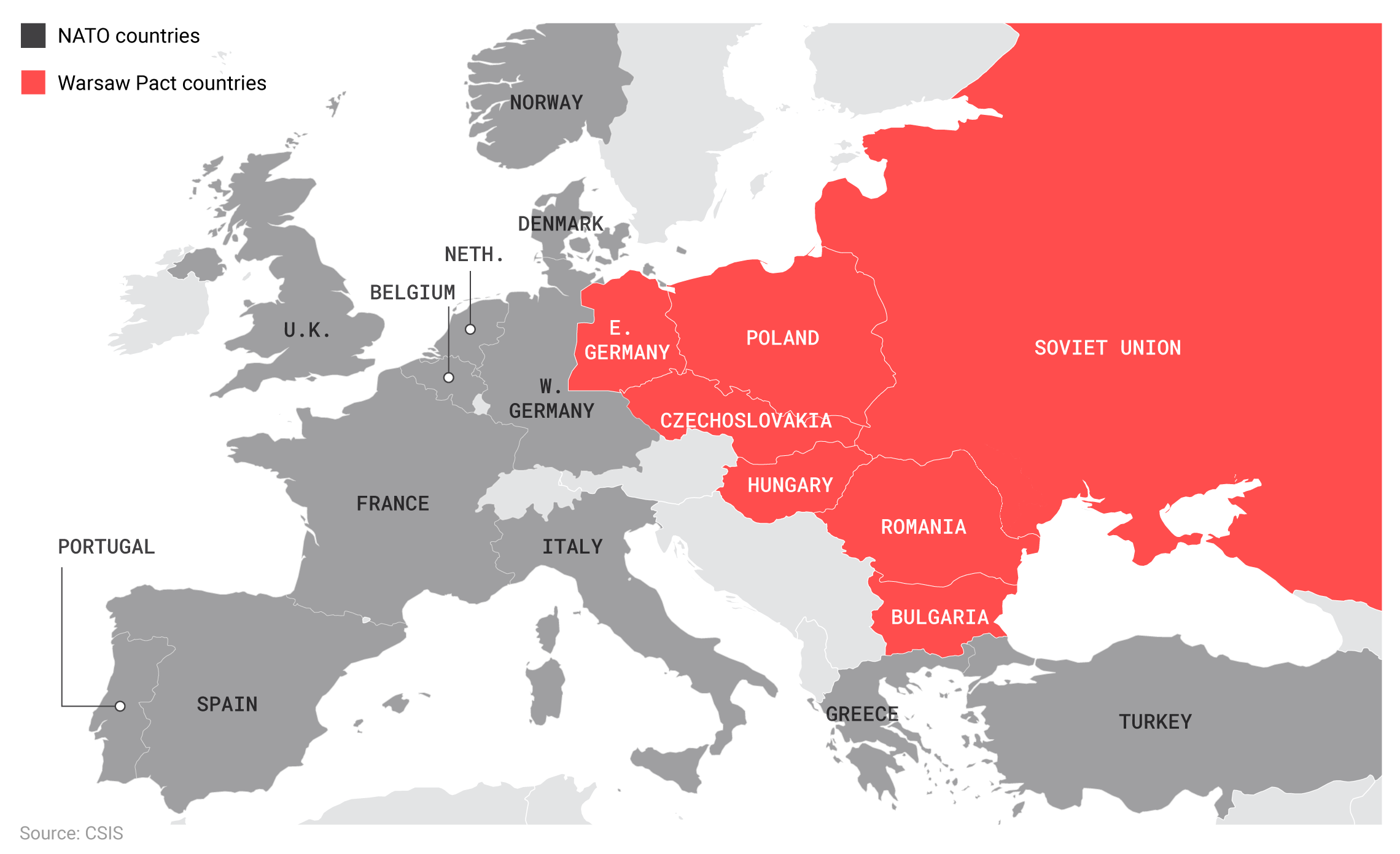
By this standard, Moscow is a long, long way from winning. Every day that Ukraine remains a sovereign state and NATO meets in Brussels is a victory for the West. Whatever happens in Pokrovsk, Ukraine is standing, NATO is holding, and the war meant to end in three days with a Russian dress parade in Kyiv will soon enter its fifth year with no sign that Ukraine is flagging. Surely even Trump can see that’s not a victory for Moscow.
Other doomsayers point to what they view as Ukraine’s internal weaknesses, insisting the inevitable end is near. More than 5 million Ukrainians—roughly one-eighth of the prewar population—have fled the country. Kyiv’s financial problems are mounting; one estimate suggests it will need $45 billion from Europe to survive the coming year. Russian drone and missile attacks have destroyed vast swaths of Ukraine’s energy infrastructure, now said to be operating at one-third of its prewar capacity. Most recently, a $100 million corruption scandal at the state-owned nuclear power company forced Zelensky to ask his once all-powerful number-two, Andriy Yermak, to resign, delighting Kyiv’s enemies in Moscow and elsewhere.
All this is true. But Ukraine is far from giving up. According to a recent survey by the Kyiv International Institute of Sociology, more than three-quarters of the Ukrainian public—76 percent—believe it’s possible to win the war with continued help from the United States and Europe. Some 56 percent look ahead ten years and see a prosperous country aligned with the West through membership in the European Union.
Economically, the Ukrainian defense industry is thriving. The country now manufactures close to 50 percent of the weaponry it uses on the battlefield, and Ukrainian military technology is in demand across Europe and in the United States. This winter’s worsening energy outages can be devastating—days without heat or electricity—but most Ukrainians have developed routines to adapt, just as they have found ways to cope with regular drone and missile bombardments.
Most Ukrainians were also thrilled to see the mighty Yermak relieved of his duties. People have watched over the years as Zelensky’s old pal from the entertainment industry consolidated power and edged out rivals across the government, taking over agencies responsible for the judiciary and international diplomacy. Protests erupted this summer when Yermak engineered passage of a law emasculating two independent anti-corruption agencies. Zelensky took note, and the law was quickly rescinded, allowing the agencies to pursue the investigation that has now revealed the $100 million scandal.
Yermak’s ouster completes the circle—the protesters and the anti-corruption agencies have won. Unlike many Westerners, who see the scandal as evidence of rot at the top, Ukrainians understand their country is fighting a long legacy of corruption, and most see the investigation as a sign that helpful antibodies—civil society and the anti-corruption agencies—are working to combat the disease.
Many questions remain about what Zelensky will do next. Will Yermak be prosecuted? Will the president’s new number-two move to dismantle the meddlesome, overcentralized state Yermak created? We’ll see. But far from signaling the imminent fall of the government, for most Ukrainians, recent developments are a sign of strength and hope. “By dismissing Yermak,” leading anti-corruption advocate Daria Kaleniuk, executive director of the Anti-Corruption Action Center, said last week, “Zelensky chose to stand with the people rather than with his corrupt inner circle.”
So too across the front line. By and large, Ukraine has managed to “fight smarter” than its much larger, better-equipped adversary. Challenges loom this winter. Moscow has massed a huge force along the front line—710,000 men, according to Ukrainian authorities, roughly three times as many as invaded in 2022—and power cuts are almost sure to get worse. But Kyiv is still holding its own.
The war is being fought in several domains—sea, air, and land. In the Black Sea, Kyiv long ago bested Moscow, using a handful of modest early drones to destroy one-third of Russia’s vaunted Black Sea Fleet. More recently, Ukraine has escalated the fight by destroying several large Russian tankers—part of the illicit “shadow fleet” Moscow uses to bypass Western energy sanctions—cutting into the oil revenue Russia uses to finance the war.
In the all-important air war, Ukraine’s increasingly sophisticated fleet of domestically produced long-range drones and missiles is destroying targets deep in enemy territory. According to one report by Radio Free Europe/Radio Liberty, this autumn alone, Kyiv struck more than fifty Russian strategic assets: oil refineries, gas processing plants, fuel terminals, and military-industrial sites. These strikes don’t match Russia’s wholesale assault on Ukraine’s energy infrastructure—for one thing, Kyiv’s focus is military assets, while Moscow aims to sap civilian morale. But over time, the damage is adding up, shrinking Russian oil refining capacity by 10 percent.
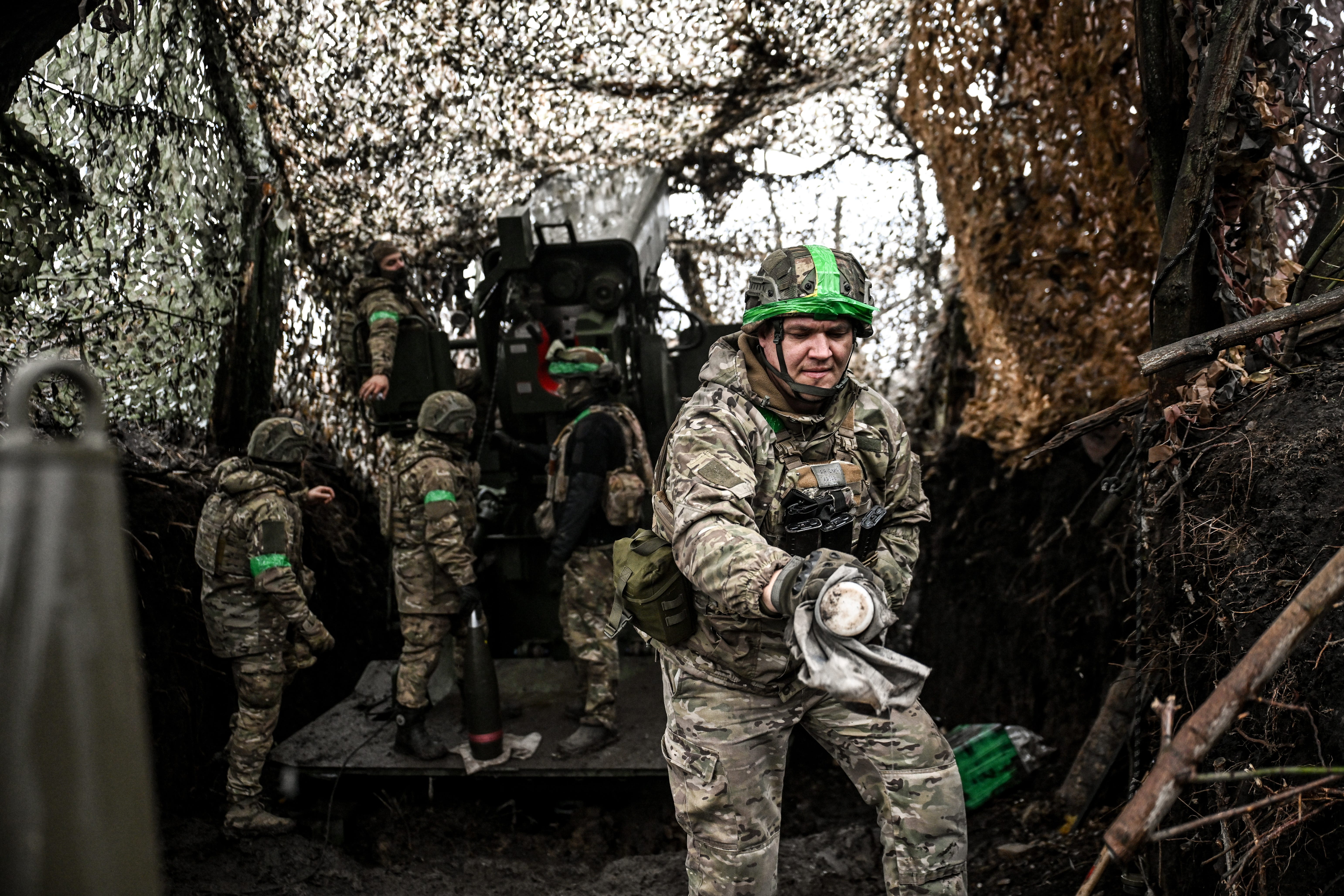
Moscow has had some alarming success lately using small, first-person-view drones to attack Ukrainian supply lines far to the rear. But both sides continue working to get the upper hand in drone development, outdoing each other’s new weaponry and innovative tactics, and the technology war is far from over. “Some weeks, they’re ahead,” one soldier fighting on the eastern front told me recently. “Some weeks, we are.”
AS FOR POKROVSK, like several other long-raging battles of the last four years—in Bakhmut, which Russia captured in May 2023, and Avdiivka, finally taken in February 2024—its significance is way overblown. All three cities—all within 45 miles of each other along the 800-mile eastern front—were once small to medium-sized Ukrainian mining or manufacturing centers, and all three have been reduced to rubble by months of Russian bombardment and intense urban warfare.
Tens of thousands of Russians died taking Bakhmut and Avdiivka, but by the time the ruined cities were captured, they were meaningless prizes. The same is true of Pokrovsk, according to the Telegraph’s associate editor for defense and former British Army officer, Dominic Nicholls. “Losing any ground is a disappointment for Ukraine,” he says, “but taking Pokrovsk offers no significant military advantage to Russia.”
Many Western observers have called the contested city an essential strategic hub, but if that was ever so, it is no longer true today. Pokrovsk’s prewar population of 60,000 has fallen to perhaps 7,000. Its rich coal mines, now flooded, are useless to either side. The vital rail line that once ran through the town has been destroyed, and whatever weapons and ammunition were once stored there have been removed, according to Ukrainian fighters. “There’s nothing important left in the city,” Nicholls confirms. “No oil refinery, no vast stores of petrol, no ammunition that could be captured by the enemy.”
Nor, he maintains, is it a “route to anywhere.” Contrary to Putin and the Western commentators who echo him, insisting Pokrovsk is a gateway to the rest of Ukraine, Nicholls sees several reasons why the Russian advance is unlikely to pick up momentum in the event the city falls. The rail line Russia might use to deliver supplies to troops in Pokrovsk has been severely damaged, and it will take many months to repair. Tanks and other mechanized vehicles are too heavy for the narrow highway heading west toward Ukraine’s central urban hub, Dnipro. Perhaps most important, Kyiv has constructed robust fortifications—earthworks, barbed wire, and concrete “dragon’s teeth”—just beyond the besieged eastern town.
The bottom line for Nicholls: Pokrovsk is “not going to be a springboard for Russian forces to move further west. They will not suddenly leap forward. They can’t. If they were able to do that, they would already have done so.” NATO analysts agree. According to one official commenting behind closed doors last week, “capturing the rest of Donetsk region”—the area, roughly as big as Delaware, Trump is proposing to give Moscow without a fight—“is not a real possibility for the Russians for at least another year or two.”
What Russia takes away from Pokrovsk is not the spoils of victory—it’s a huge loss of manpower. According to one estimate by the Ukrainian defense ministry, some 383,000 Russian fighters have been killed or wounded in 2025—that’s a city the size of Cleveland or New Orleans—the overwhelming majority of them on the eastern front. Other estimates, including by British intelligence, support this number, and it’s widely agreed that more than 1 million Russians have been killed or injured over the course of the nearly four-year war.
Looking at the big picture, Russia’s main advantage over Ukraine is and has always been its size—a population roughly four times as large—and an ability to pay or coerce large numbers of its citizens to take up arms. Russian strategy on the eastern front leverages this numerical imbalance. Moscow throws men at the Ukrainian line, no matter how severe the risk, until it finds a weak point. Then it throws more men at that vulnerable spot—a tactic Ukrainians call “meat assaults”—until the attacking army breaks through by sheer dint of numbers.
Ukraine is working to rectify this imbalance with technology—unmanned ground and aerial vehicles that protect and substitute for human troops. For Washington, it’s apparently easier just to assume Russia will win the war and foreclose Ukraine’s options at the negotiating table. Sadly, neither Ukrainian technology nor U.S. diplomatic efforts are likely to make much difference in the short run, and the war will likely grind on as it has, yard by yard, through the winter and beyond.
 | A guest post by
|