We Can’t Let History Blind Us to Our Options on Iran
The past is important, but now is a time to focus on the future.

WE ALL KNOW THE FAMOUS ADVICE of philosopher George Santayana: “Those who cannot remember the past are condemned to repeat it.”
But less familiar is the observation of American historian Ernest May in his short, sharp book, “Lessons” of the Past: The Use and Misuse of History in American Foreign Policy. Policymakers, May observed, “are often influenced by beliefs about what history teaches or portends.” But far too often, he writes, they “use history badly.”
In today’s discourse on Iran, many participants think they are channeling Santayana. But I fear May’s words offer a more accurate description of our current debate. The tendency to reach for convenient historical analogies that reinforce our own positions, or to interpret current events exclusively through the lens of the recent past, is distracting us from focusing on the outcome we need to achieve.
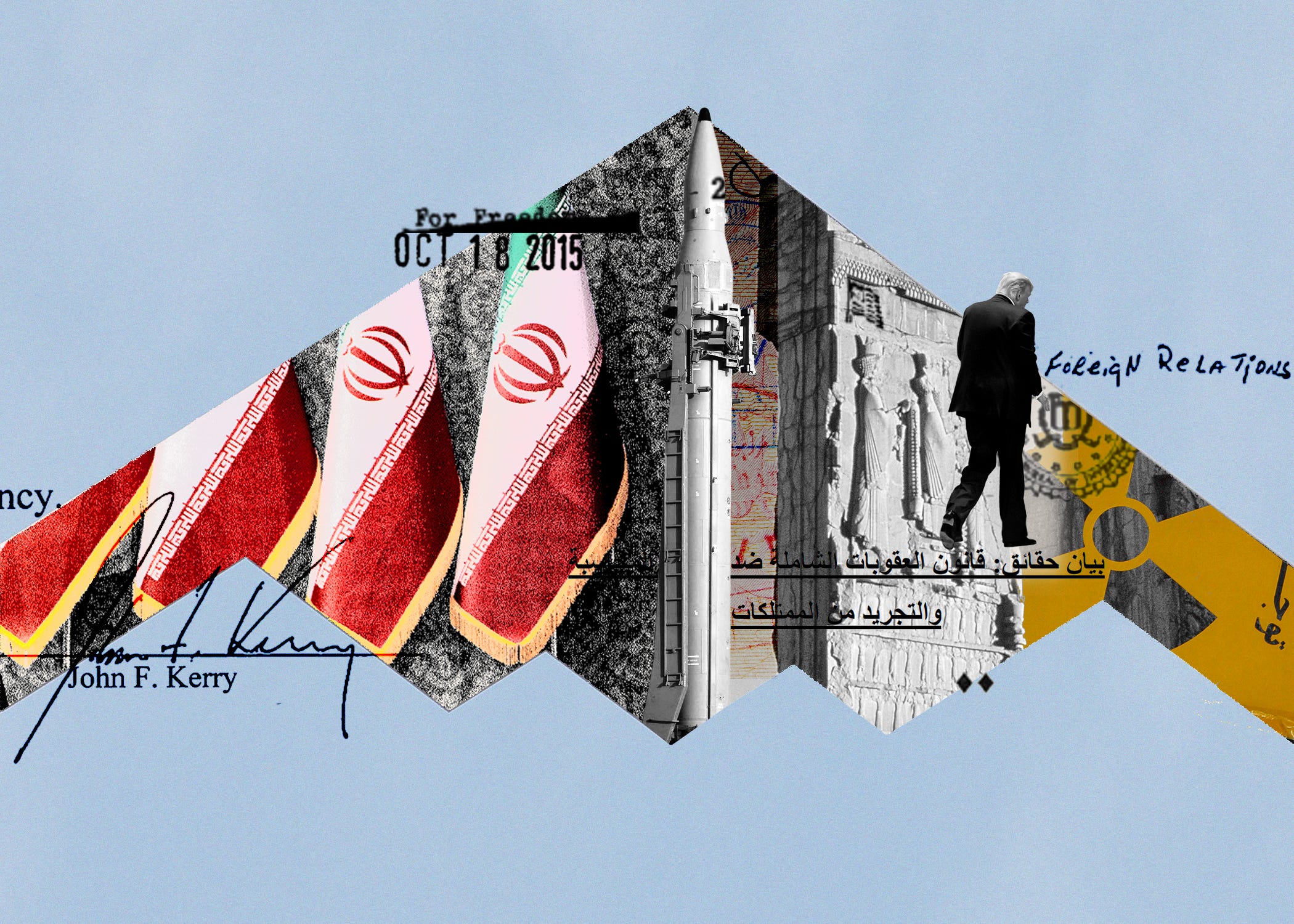
Many come to this debate casting blame on former President Barack Obama, who signed the nuclear deal, the Joint Comprehensive Plan of Action (JCPOA) with Iran in 2015. It conceded to Iran, they point out, the right to enrich uranium, and placed sunsets on limitations on enrichment and other nuclear activities. They tell us it is the source of the crisis we face today.
Defenders of the deal frame the debate differently. The JCPOA placed limits on the Iranian nuclear program for a considerable time, they argue, but President Trump tore it up in 2018, which gave Iran license to violate its commitments. In this telling, the subsequent advances Iran made in uranium enrichment and centrifuge technology, dramatically shortening their distance to a nuclear breakout, are the reason for the current war.
The discourse is almost tribal. Many proponents and opponents of the JCPOA are stuck relitigating this history in a debate that has lost its relevance. As the U.S. ambassador to Israel under Obama, I defended the agreement as the best available option to buy time, but I have always acknowledged its flaws. And while I criticized Trump’s decision to withdraw from the deal, which did accelerate Iran’s advances in its nuclear program, I recognize that more of the advancement occurred under President Biden than under Trump.
The claims of the two tribes may explain why we are facing this crisis in 2025 rather than in 2030, or why the 2030 version would be even worse. But insisting on basing your position today on where you stood in 2015 or 2018, and trying to deform historical comparisons to more neatly fit current events, does not really help us find our way forward.
All of us are influenced by America’s experiences in Afghanistan and Iraq. These long wars, which we entered without adequate planning or sufficient understanding of the societies in which we were operating, pulled us into campaigns of regime change and two decades of nation building. That experience makes us cautious, and it should. Lives are at stake, including those of our servicemembers.
But it is also possible to overlearn, or misapply, the lessons of those campaigns. Or, as May suggests, to learn the wrong lessons. May describes the obsession of policymakers in the mid-twentieth century to avoid making the mistakes of the previous generation. So they made new mistakes. Fearing a repeat of World War I, the Allies tried to appease Hitler, which brought about World War II. Then, fearing another Hitler, they saw continent-conquering monsters around every corner—including in Nasser’s Egypt. And so on. The tendency to draw on the most convenient historical analogy, or draw direct parallels between the current situation and one in the recent past, leads us, metaphorically, to try to fight the last war.
Others act as though the current actors and their histories are the only things that shape our choices. Israeli Prime Minister Benjamin Netanyahu is remembered for speaking in Congress against the JCPOA, and for years of warnings about Iran’s nuclear program. He is as divisive at home as he is abroad. So some believe nothing he presents about Iran can be true.
Trump stirs strong passions, and quite a few Americans would not have chosen him to lead us in a crisis. (I am one of them.) He definitely doesn’t help matters with impulsive tweeting about threats to kill the Supreme Leader of Iran, calling to evacuate Tehran (a city of 10 million), or demanding “UNCONDITIONAL SURRENDER.” But he is the commander-in-chief, like it or not, and our nation’s interests are at stake. I also put faith in the careful, thoughtful military commanders I know are advising him.
How we got here is important. There will always be room for historical debates. But in a crisis, the most important thing to focus on is the outcome: choosing the one we want, steering toward it, and mitigating the downside risk.
The Iranian regime has long called for Israel’s destruction. Indeed, it had organized plans to achieve it—disrupted, ironically, by Hamas’s October 7th attack, which surprised Tehran as well. In the past year, Iran has twice launched overt, direct, state-on-state attacks against Israel, barrages of missiles and drones that represented unprecedented acts of war. The International Atomic Energy Agency last month documented Iran’s ability to produce a bomb’s worth of weapons-grade uranium within days, and ten bombs’ worth within weeks. And while we know of no clear decision to build a bomb, the Iranians have advanced their knowledge of weaponization and shortened the time it would take to create one once such a decision is made to no more than a few months.
With all these facts, the necessary outcome is clear: Iran cannot be left with an enrichment capability, able to produce a nuclear weapon at a time of its choosing. After this conflict, they will be more motivated than ever to have one. Trump was right to pursue that goal through negotiations, and perhaps the talks should have been given more time. Had they been, there very likely would have been a need for a crisis in the talks, backed by a credible threat of force, to have any chance of success. But Trump elected not to give Netanyahu a red light, and now we are where we are.
Israel has made impressive gains in a week of war, damaging much nuclear infrastructure and killing key scientists. That is positive progress toward the necessary outcome. But the goal has not been achieved. One way or another, the deeply buried enrichment facility at Fordow must be dismantled. There are three possibilities: an ingenuous Israeli solution using means other than aerial bombs; a U.S. bunker-busting strike using unique American capabilities; or a return to negotiations, leveraging the threat of military action, and a concession by Iran. There is still a narrow window for coercive diplomacy to produce the latter outcome. If he decides to act, Trump should make every effort to mitigate risk, protect U.S. forces and partners, and deter Iran from widening the war.
The outcome we should seek should not include regime change. The mullahs’ regime is brutal to the Iranian people and aggressive against its neighbors. But a military campaign against nuclear sites cannot execute regime change, nor control its course. If the Iranian people take matters into their hands, we should make every effort to support them.
History is a tool, not a guide. It does not replace clear-eyed confrontation of real-time choices before us.
Daniel B. Shapiro is a distinguished fellow at the Atlantic Council. He previously served a U.S. ambassador to Israel and deputy assistant secretary of defense for the Middle East.
 | A guest post by
|