What Happens After ICE Chews You Up and Spits You Out?
No longer detained, but the fear remains.

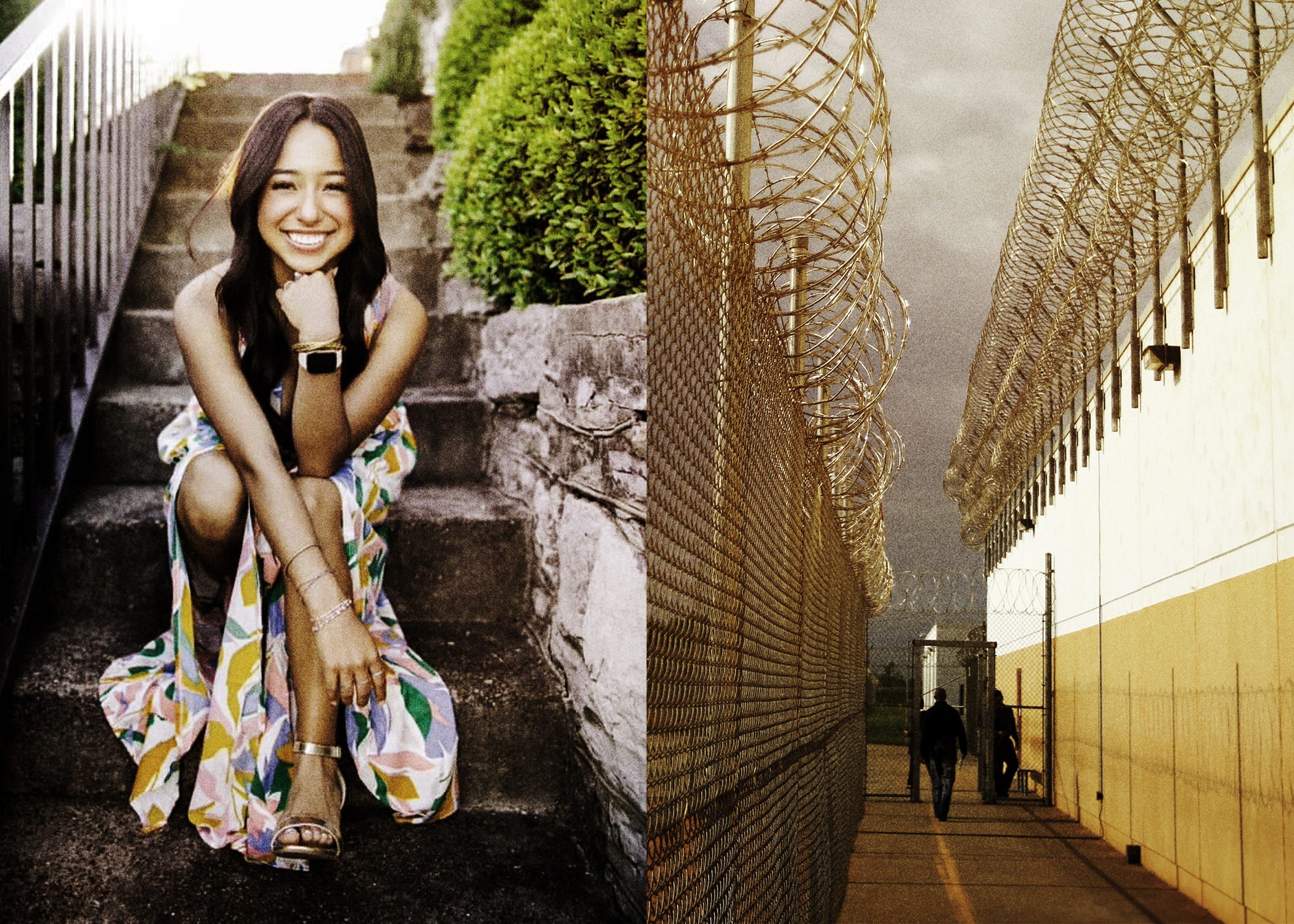
BY NOW, WE’VE ALL SEEN STORIES of people being violently rounded up and deported. We’ve even heard of people let out of detention after their neighbors and local officials passionately advocate for their release.
What we don’t yet have is a good grasp of what comes next. What happens to immigrants after they’re released, only to have the cloud of future deportation keep following them around wherever they go? Are they able to enjoy a night out or take a drive to see friends or family? And do those friends or family themselves live in sharp, persistent fear that at any moment they may not see their loved one again?
The story of Ximena Arias Cristobal illustrates the degree to which Trump’s anti-immigration regime impacts people long after their detention or deportation.
A 19-year-old college student from Georgia, Arias Cristobal was mistakenly stopped by police and put in a detention facility for more than two weeks in May. She was dismissed and the charges against her were dropped after her local community, as well as Democratic and Republican politicians, called for her release. But that was not the end of her saga, as she’s in the United States illegally. She has an active deportation case and a court date in 2026.
She also fears for her father, who was initially being held in the same detention center as she was after being detained in April, but was released on bond a week before her. He has a court date in 2026 as well.
And while Arias Cristobal is now home, preparing with her lawyer for what’s ahead, she feels trapped, she told The Bulwark. In an interview three months after her release, she explained that being let out of detention and returning to freedom aren’t the same thing, and that her life now is totally different than what it had been before she was detained.
It’s just as hard as being in a detention center but in a completely different way. You’re still living in fear, knowing that us being outside a detention center doesn’t necessarily mean we’re going to stay in the U.S. or won’t have other legal troubles while being out. . . .
I’m out of detention on bond, but still facing all the hardships of being an immigrant in the United States. You can’t drive, you can’t work, how do you pay the bills? How do you go out without being scared? A lot of people believe they are out of the detention center but in reality, at times, it feels a lot worse because you’re still trapped out in the real world watching everybody’s life keep going and yours is just on pause.
Arias Cristobal came to the United States at the age of 4 from Mexico. She knows only one state, Georgia, and only one country, the USA. She said she loves her family’s culture, but considers herself American. And she clearly loves American culture, especially country music and football—specifically college football and the Georgia Bulldogs. She also loves running; training for marathons in November and December has her running as much as forty-five miles a week.
Her case quickly became a prominent cause within her community of Dalton, Georgia, a town of about 34,000 a half-hour south of Chattanooga, Tennessee. Footage of the incident showed her pleading with the officer as he detained her. “I can’t go to jail,” she stressed. “I have finals next week and my family depends on this.”
Neighbors protested her detention, displaying signs that read “Justice for Ximena” and “Cruelty Does Not Make America Great.” It was a noteworthy show of defiance, because while Dalton is more than half Latino, it’s in deep-red Whitfield County, where 72 percent of voters backed Trump. It’s in Rep. Marjorie Taylor Greene’s district.
Members of both parties also got involved, with a Republican state representative, Kasey Carpenter, writing a character statement to help secure her release. “Unfortunately, good people that have been here for a really long time are being caught up in the deportations when in reality we all thought it was going to be about hardened criminals,” Carpenter told the local news, noting that shared acquaintances, including friends and fellow churchgoers, reached out to him with pleas to help her. “There are certain people we want to detain and get out of this country, but I firmly believe Ximena is not one of them.”
On June 11, weeks after her release, Arias Cristobal came to Washington to speak at a forum hosted by Democrats from the Senate Judiciary Committee. She detailed her life story: how she was an honor student and active in sports and volunteering; how she attended Oglethorpe University in Atlanta thanks to a scholarship from TheDream.US; how she ran cross country there before transferring to Dalton State College, where she is “currently working on my degree in finance and economics, with a minor in marketing.”
Arias Cristobal never set out to be part of a national political debate, but that too has been a tricky component of life after detention. She certainly didn’t imagine that her story would come to exemplify the excesses of a presidential administration. And yet, at 19, she now feels the weight of a sense of responsibility—and of the hopes of others.
Sen. Raphael Warnock (D-Ga.), one of the Democrats who met in D.C. with Arias Cristobal, later asked her to speak at his church, Ebenezer Baptist Church in Atlanta, famously the home church of Martin Luther King Jr. Warnock’s office has kept in touch with Arias Cristobal, constantly checking on her, she said, which she has appreciated given how it is easy for people to forget about you once the media spotlight moves on.
“This administration said they would go after criminals, which I support, but instead they are terrorizing neighborhoods, masked officers are grabbing people off the street, and putting honor roll Dreamers like Ximena in our detention centers,” Warnock told The Bulwark in a statement. “This is what happens when people with no vision get access to political power: they traffic in division, and they try to tell us that our neighbors are the problem. Ximena and stories like hers are why we need to hold this administration accountable for terrorizing communities.”
“I had no freedom. . . . What I wanted to do was run.”
IN THE DARK MOMENTS, surrounded by other immigrants also being detained, her ankles, waist, and hands chained, denied both dignity and the privacy of using the bathroom away from surveillance and other people, Arias Cristobal leaned on her faith. She said the treatment was more befitting of prisoners than of peaceful people in a non-criminal immigration proceeding. She grew close with a young pregnant woman only a year or two older than her, who began to feel pains, was given medicine, and subsequently lost her baby.
“I had no freedom when I was in the detention center,” she told me. “What I wanted to do was run.”
But even though she’s no longer locked away like a felon, that feeling of being boxed in is still with her. She’s starting college classes again—thanks to the $33,000 scholarship TheDream.US gave her—but they will be online because of her inability to travel to college or live anywhere but home.
Gaby Pacheco, the immigrant activist who was a leading voice of the Dreamer movement during the Obama era and serves as the president of TheDream.US, told me that in the hundreds of cases she has worked on, there is tremendous survivor’s guilt. While people like Arias Cristobal experience the trauma of detention, they also feel grief for the people still there.
“This concern for others drives people to go into depression and guilt, but it brings out determination for people like Ximena speaking out and speaking up with purpose,” Pacheco said.
There have been other signs of how Arias Cristobal’s time in detention has remained with her. Some have been subtle: As she left the detention center, swarmed by the media, she was chewing gum; she later told Pacheco it was because all she wanted in detention was to brush her teeth.
Others have been profound: A young woman of faith, Arias Cristobal wrote on Instagram of the effect the experience had on her life, that she had surrendered her worry at God’s feet, and found peace in the assurance that God has a purpose for her. The experience, she wrote, had equipped her to be a voice for “millions who are enduring injustice,” and for a nation in “desperate need of change.”
“To still hold this hope and joy in her heart despite all the sadness and trauma that she had gone through, I think that’s how we fight back,” Pacheco said.
Thanks for this story. We need even more reporting on affected folks after the media spotlight moves on. More coverage about the actual impacts on actual humans—friends & neighbors—will strengthen the counter swell resisting this cruelty.
Ms. Cristobal is an American for all intents and purposes. She seems to be an asset to our country. It is good she received bipartisan support to secure her release, but it maybe a matter of time when she gets roughed up again by the regime. It is a painful reminder that 77 million people either fervently support this policy or blindly ignored it at the ballot box last year.