Why Democrats Must Think Hard About Voting to Fund the Government
It’s pretty simple: Congress can’t keep giving away its power.

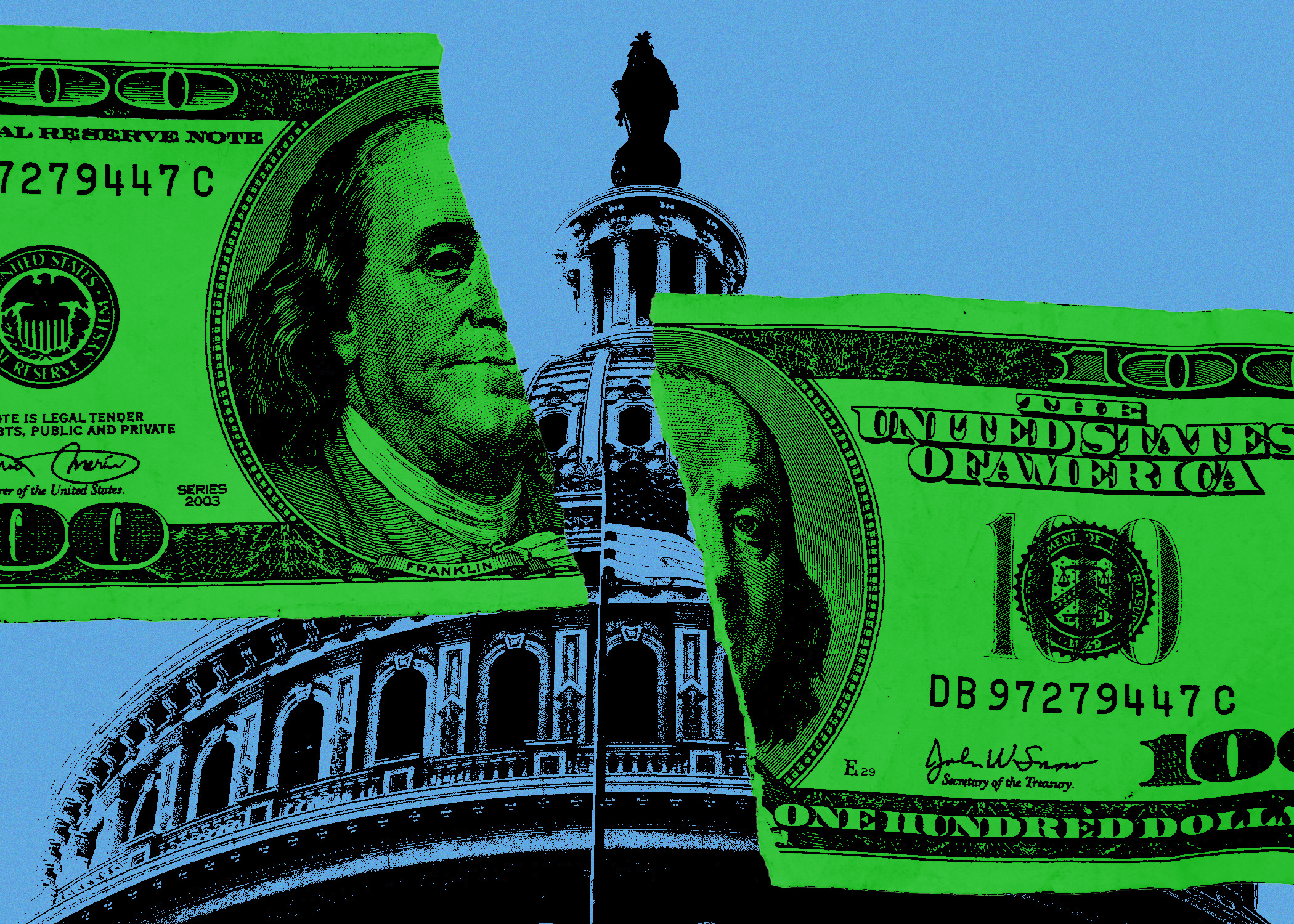
FOR THE FIRST TIME IN MORE THAN TWENTY-FIVE YEARS, Republicans in Congress passed a rescissions bill—a rarely used process that claws back funding previously approved by Congress and signed into law by the president.
Doing so marks a new low in the partisan weaponization by President Donald Trump of the appropriations process. It forces us to ask tough questions about the Constitution’s division of power. It may very well force us to ask even tougher questions about how we fund the government when the current funding bill runs out at the end of September.
This particular bill rescinds about $9 billion, mostly from foreign aid and public broadcasting. You might think that’s a small change given the trillions the government spends every year, but the impacts are much bigger than the dollar amount.
Foreign aid often gets described as charity, but it’s really a strategic investment in American security and global credibility. Through it, we help stabilize countries around the world, build alliances, and keep rising powers in check. When we pull back, other nations—like China and Russia—move in fast, filling the void and shifting the balance of global influence.
Republicans claim their rescissions bill is about fiscal responsibility. But just weeks ago, these same lawmakers backed Trump’s legislation adding $3.4 trillion to the deficit with tax breaks overwhelmingly benefiting billionaires and big corporations. Considering that vote, Republicans’ supposed concerns about fiscal responsibility ring hollow.
But while this rescissions bill is reckless, the precedent being set by its passage is even more alarming. Our Constitution gives Congress the ‘power of the purse’ for a reason. It ensures federal spending is controlled by people’s elected representatives, not an all-powerful executive. It’s a crucial check against the expansion of presidential power.
This rescissions bill fundamentally alters that balance.
Republicans, including President Trump, enacted a funding bill that included this money for foreign aid and public broadcasting only months ago. Then they reversed course and voted to cut those programs. By walking back those commitments, congressional Republicans showed, yet again, they will refuse to stand up to President Trump, even for things they support.
The danger doesn’t stop there. OMB Director Russell Vought has said another rescissions package “will come soon,” even hinting at options to illegally use this process to withhold or defer funds unilaterally at the end of the fiscal year. Just this week, Vought—a man I have previously called the most dangerous person in this administration no one has ever heard of—said he wants the funding process to be more partisan.
All this unfolds as we race toward the September 30 deadline to fund the government. How are we Democrats supposed to trust any funding deal going forward? Why would anyone bother negotiating a deal that could be undone in a fit of political convenience? Republicans have eroded the appropriations process, one of the last real areas of bipartisan work left in Congress. It’s been the engine that kept the government running during intensely divided times. If it breaks down fully, especially ahead of a funding deadline, we’re in trouble.
THE QUESTION THAT WILL SOON be before my party is: Should we provide our votes to fund the government—and they need our votes—knowing that Republicans may very well undo, on a strictly partisan basis, any deal we’ve made with them?
I certainly don’t speak for every Democrat, but I believe we must be prepared not to do so. No one wants a shutdown, but agreeing to a deal that can be revoked whenever Trump demands it isn’t responsible. It only teaches the other side that they can do it again and again.
Guided by Russell Vought, Donald Trump has set out to seize complete control over federal spending. Meanwhile, the administration is already impounding—that is, illegally withholding—billions in congressionally approved funds for public services and infrastructure across the country. We’re already in a slow-motion government shutdown. We cannot allow this blatant power grab to continue.
We need to ask ourselves: Is Congress going to defend its responsibility to set and safeguard federal spending? Or are we just going to roll over?
Many Republicans talk up the power of the purse when a Democrat is in the White House. Now that a Republican president is challenging that power, most are deafeningly quiet.
And so I encourage my fellow Democrats to be wary this September before lending their votes for deals that President Trump is inevitably going to disregard through illegal impoundments, or that Republicans are just going to rip up anyway. Doing so will chip away at public trust, undermine our ability to govern effectively, and weaken the checks and balances meant to protect democracy.
This goes well beyond dollars and cents. The heart of the matter is this: Will Congress continue to be a separate, coequal branch of government?
Congressman Brendan F. Boyle is the ranking member of the House Budget Committee. He is also a visiting lecturer at Princeton University’s School of Public and International Affairs.
 | A guest post by
|