

Why Stone-Faced Fascists Keep Getting Antiquity Wrong
Online bigotry masquerading as a love of history in the fever swamps of Elon Musk’s X.

HOMER IS BACK in the discourse on account of Christopher Nolan’s upcoming film, The Odyssey. The latest controversy began with Elon Musk, among others, protesting the supposed inaccuracy of casting Lupita Nyong’o as Helen, a fictional character, who among other fantastic elements is the daughter of the god Zeus and was laid as an egg by her human mother. On X, the debate has spiraled to include renewed criticism of Emily Wilson’s 2017 translation of the Odyssey, attacked for being “ideological,” which is to say that it attempted to more clearly portray the perspectives of the women in the narrative, as compared to earlier translations.
While it might seem unexpected that a 2,750-year-old poem (and a nearly decade-old translation of it) would become such a flashpoint in the culture wars of 2026, for scholars engaged in public education in the classics, it is all too unsurprising. Instead, the fight over Homer represents just another skirmish in the campaign mounted by bigoted very-online right-wing self-described “chuds” to claim Greek and Roman culture for their own fascist, or at least fascist-adjacent, ideology, which demands the exclusion of minorities, women, and LGBTQ people.
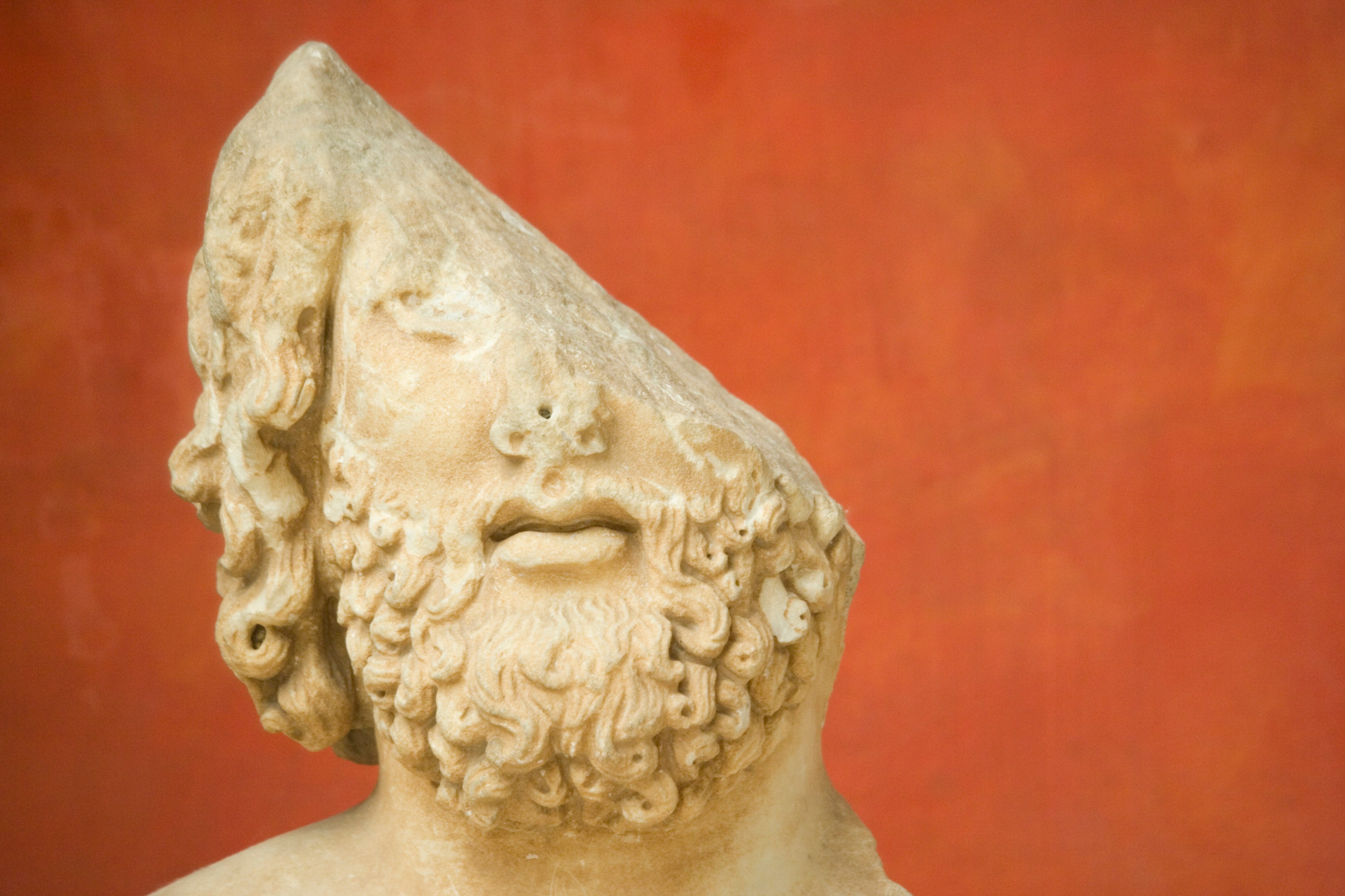
This community of self-appointed defenders of Western civilization emerged only relatively recently. While a few such accounts antedate the beginning of Musk’s takeover of Twitter in 2022, the great majority emerged only later in 2022 and 2023 as Musk fashioned the re-christened X into the online platform of the MAGA right. Derided online as “statue accounts” for their frequent use of Greek or Roman statues as profile pictures, these users are almost invariably pseudonymous, with names like “Trad West,” “The Cultural Tutor,” “Daily Roman Updates,” and “Roman Helmet Guy.” Focusing on Greco-Roman antiquity and the European Middle Ages, they produce content promising to reveal an un-woke version of Western history (Roman Helmet Guy’s profile, for instance, promises “dangerous history”). Superpowered by shifts in X’s algorithm, the largest of these accounts have amassed audiences for their visions of the ancient past numbering in the hundreds of thousands of followers—and some have even surpassed a million.
WITH SO MANY EYEBALLS on what is, to my mind, an inherently interesting subject, it’s unfortunate that almost none of the people behind these accounts know very much about the ancient world. Since the accounts are typically pseudonymous, they can avoid disclosing that the authors generally lack any expertise in their topic. One incapability is easy to assess: Almost none of these would-be antiquarians are able to read Greek or Latin. Roman Helmet Guy, currently leading the charge against Emily Wilson’s translation, was compelled to attack Wilson’s translation by comparing English translations (and even one modern Greek translation) of the epic, unable to read the ancient Greek text on his own, or even decipher its grammar.
Almost wholly untutored, the brigade of statue accounts generally evince a college freshmen’s command of the historical record. Their posts consist mostly of over-dramatized renderings of the greatest hits of history and often inaccurately stereotyped memes about ancient peoples, combined with an equally weak grasp of ancient cultural values. It is a stark contrast from other online historical enthusiast communities (such as the substantial YouTube communities interested in historical European martial arts or historical dress and dress-making), which tend to be quite open to engagement with academics and feature leading voices that have developed considerable expertise over the years—expertise that academics in turn take seriously.
One might expect this community of untutored but enthusiastic fans of Greek and Roman history and culture to have rejoiced at the chance provided by social media to access specialist scholars and their expertise directly. Quite to the contrary, however, the statue accounts are almost universally hostile to Classics as a field in general and the classicists who research and teach about antiquity in particular. Theirs is a world in which they are pitted against professional classicists, who are nothing but cultural enemies.
Indeed, as Learn Latin, one of the very rare examples of such an account with a working knowledge of Greek or Latin, declared, “the academic world, dominated by woke professors, doesn’t want YOU to learn Latin,” a statement that would surprise the many academic classicists, myself included, who teach Latin and are dedicated to encouraging students to learn it. Academic classicists studying Greece and Rome, statue heads allege, “focus on the text as a kind of dilettante sport” and so “fail to learn or apply wisdom from the texts.” But worry not: “the anons we’ve got among us know at least as much” as formally trained academic classicists with years of experience uncovering and teaching the ancient world. Naturally, those academics, they claim, study antiquity only to “diminish and outright malign the classics.” But I can’t think of an instance where people regularly dedicate their lives and careers to the very fields of inquiry they hate and wish to undermine.
The problem, of course, is that historians and classicists tend to insist on highlighting the messy, complex, and challenging nature of the past and its peoples. What the statue accounts and their followers want is a simple narrative of “greatness” and “Western civilization,” which can be mobilized to support their ideological program of justifying their sense of inherent (often racial) superiority as the true heirs of the West.
At points, this program becomes explicit—as do its conflict with rigorous historical inquiry. For instance, when pseudonymous user Athenian Stranger bemoans that “Classicists chose to privilege the scientific study of the texts . . . they deliberately abandoned . . . what the texts might be said to teach: Greatness!” That is to say, a rigorous, even scientific, study of the classics would interfere with reaching the right conclusions, so the rigor and method must be discarded in favor of “greatness.” Many of these accounts openly tout a Great Man theory of history, flattening the complexities of historical causation and culture down to engagement-friendly hagiography of men like Alexander or Caesar. The fact that their great men of choice are almost exclusively violent figures known primarily for warfare, essentially the classical world’s greatest killers, is also not an accident, but a feature. The engagement with the past need never be more than skin deep, because its purpose is merely window-dressing: a gateway and justification for a certain ideology.
This type of traditionalism and pining for the past that is married to a kind of thick anti-intellectualism and a worship of action and violence for its own sake is hardly new. Indeed, as the Italian scholar Umberto Eco noted in his famous essay “Ur-Fascism,” the rejection of modernity for the sake of an imagined past, necessarily paired with irrationalism and a “distrust of the intellectual world,” is a core component of fascist ideology. In turn, that anti-intellectualism serves an ideology that, as Eco notes, valorizes violence for its own sake and can only understand heroism through the prism of violence. Once we realize this, it no longer surprises us that many of the followers of these accounts appear to believe that the Homeric hero Achilles was a real historical person or that they become enraged by any suggestion that he wasn’t. These accounts and their followers have a version of antiquity, an angry child’s version, simplified and flattened down, and they are profoundly hostile to learning anything that might disconfirm their ideological beliefs.
And the ideology, it turns out, is rancid. Here it is necessary to be blunt: Many of the accounts in this space are frequently misogynistic or racist bigots, intent on using the Greek and Roman past to justify that bigotry. Learn Latin, with 187,000 followers, asks, “Can the Latin language be used as an instrument of Western supremacy?” agreeing with those who answered in the affirmative. Roman Helmet Guy, with 120,000 followers, riffed off a scene from the Lord of the Rings films and declared it “Authoritarian. Ethnic Nationalist. Romanticization of the past.” Enlisting the heroic Gondorian king in the ranks of the chuds, he added, “If Aragorn were alive today, he’d be posting ‘Look what they took from you,’” using a far-right, if not white nationalist, slogan. They are hardly alone. When user The Hellenist told his more than 30,000 followers that “Blacks should support slavery” and “Christians and Jews are who tore us apart,” he faced little criticism or repercussions within the community; Daily Roman Updates, with 266,000 followers, responded, with nihilistic irony, that The Hellenist is “one of the best posters on this app.” And when Daily Roman Updates’ own followers told him that he was “not racist enough,” Daily Roman Updates cheerfully agreed, echoing the website’s owner, Elon Musk: “Vox Populi, Vox Dei.”
While not every account goes mask-off like this regularly, the less openly bigoted accounts in the ecosystem regularly follow, repost, and link to the more bigoted ones. The result is a radicalization pipeline in which users coming to X looking for information about antiquity are rapidly steered towards alt-right misogyny, racism, and authoritarianism. The followers of the major statue accounts have no difficulty understanding either the ideology or their role in it. Anyone who challenges the child’s vision of antiquity that predominates among the statue accounts is guaranteed to be inundated by a loud chorus of homophobic, antisemitic, racist, and misogynic slurs.
IT IS THIS VERY IDEOLOGICAL PROJECT that demands the flattening down of the real historical Greek and Roman tradition and demands hostility towards classicists who actually cherish it, because the study of the ancient world does not conform neatly to modern bigotries or hard-right ideology. The irony is that it is precisely this complexity that has drawn generations of readers and scholars to the Greek and Roman classics and ensured their continued place in the pantheon of “great works.” Indeed, as Stanford classicist Reviel Netz notes in Why the Ancient Greeks Matter, it was the very fractious, discordant, individualistic nature of Greek culture—clearly visible in their literature—that set them apart from previous and contemporary societies.
For its part, Rome was a diverse society from its foundation and regularly extended citizenship to foreign ethnic groups and even freed slaves. Roman authors like Livy, and even foes of Rome like Philip V of Macedon, recognized that this liberality was a foundation of Roman strength. While the Greeks and the Romans could certainly be bigoted, their stereotypes map poorly onto the modern racism demonstrated by X’s unworthy defenders of Western civilization. Herodotus thought Egypt the oldest of all peoples, in some ways more civilized than Greece, with a better calendar and an older and deeper religious tradition. Homer imagined the mythical Ethiopian king Memnon as a cousin to the hero Hector and also the most beautiful man Odysseus had ever seen, a stark contrast to racialized claims that actress Lupita Nyong’o could not possibly play the famously beautiful Helen. Meanwhile, the Greeks and Romans felt little kinship with other European “whites.” If anything, Gauls, Britons, and Germans could be far more alien and barbarous to ancient writers than Egyptians, Syrians, Persians, or even Ethiopians.
The classical canon does not present a single vision of greatness, but many. It even questions the value of greatness itself. Even in Homer, Achilles’s vision of greatness through glory in the Iliad conflicts with Hector’s dogged defense of his home. The poem does not render a clear verdict on who is right, only who won. Homer doesn’t end with the triumph of Achilles, but wistfully notes “such was their burial of Hector, breaker of horses.” Even if we take the Iliad and Achilles’s victory at face value, what triumph he has is undermined in the Odyssey: Achilles’s shade appears in the Underworld and rejects Odysseus’s declaration of his greatness. “I would rather follow the plow as thrall to another man, one with no land allotted him and not much to live on,” he laments, “than be king over all the perished dead.”
Homer is hardly the only figure in the classical canon to question the sort of violent masculine greatness to which the statue accounts aspire. Sallust famously concludes that the great military achievements of the Romans merely served to undermine their morals and domestic politics, while he extols the greatness of writing history. Tacitus, in the midst of praising his father-in-law Agricola’s military achievements, in turn questions the fundamental morality of Roman conquest itself through the famous words he attributes to Calgacus: “robbery, butchery, and plunder they call by the lying name empire and where they make a wasteland, they call it peace.” Unless we view the ancients as if they were cartoons, it should not surprise us to find classical views on both violence and masculinity were complex and varied.
Despite their thumbless grasp of antiquity, the “chuds” have come to dominate discussion of antiquity on X, because the playing field has been deliberately tilted to favor them. Prior to Musk’s 2022 purchase of Twitter, the platform hosted a large and vibrant community of academic classicists and classics enthusiasts. Musk’s mismanagement led many academic classicists to leave the platform in 2022 and 2023. Even before the classicist exodus from X, however, Musk’s takeover coincided with detectable shifts in the algorithm that pushed users toward accounts offering a far-right vision of antiquity, preferring them even over longer-standing classics accounts with more followers and higher engagement.
There is an obvious reason for this change: Musk shares the bigoted worldview of many of these accounts and often interacts with them. Any platform engineered to promote Musk’s own posts and his worldview is going to promote the often inaccurate and bigoted visions of antiquity he holds.
Mercifully, the statue crowd’s dominance on X does not extend to the real world. This is the heart of their complaint. For all of their resentment and engagement farming, Christopher Nolan’s film has been made; his interpretation of the Odyssey will in turn be layered upon centuries of previous interpretations and reception, thereby making our world just a little more complex.
By contrast, I doubt Roman Helmet Guy’s promised “chud translation” of the Odyssey will ever see the light of day (not least because he cannot read ancient Greek). Wilson’s translations of Homer have already become best-sellers. And while her translations are not necessarily everyone’s favorite, they needn’t be. They join a chorus (if you will) of complexity alongside older translations; the modern fan of Greek epic poetry is spoiled for choice in this regard. In the academy, though their numbers have been badly diminished by funding cuts and department closures, classicists continue the work of understanding, teaching, and promoting the real, rigorous study of antiquity. Of course, if we wish to see rigorous publication education in classics grow and be more available, we ought to fund and preserve these departments, rather than ceding the field to bigots with statue profiles and axes to grind.
Beneath the warp and weft of historical interpretation and controversy remains classical antiquity itself: its texts, history, artifacts, and peoples, which stay as diverse, intricate, and fascinating as ever. No amount of angry social media screeds can rob that history of its color, the kaleidoscopic brilliance of which emerges anew for each generation. Homer’s poetry, after all, has already endured waves of fascist appropriation none the worse for wear; the poems will endure this abuse, too, and alight on the other side as vibrant, complex and thought-provoking as ever.
Bret C. Devereaux is a teaching assistant professor at North Carolina State University and an ancient historian whose research focuses on the intersection of the economy and military of the Roman Republic. He also writes a weekly history blog, A Collection of Unmitigated Pedantry, and has an upcoming book, Of Arms and Men: Why Rome Always Won.
 | A guest post by
|