The Pentagon Purge and the Moral High Ground
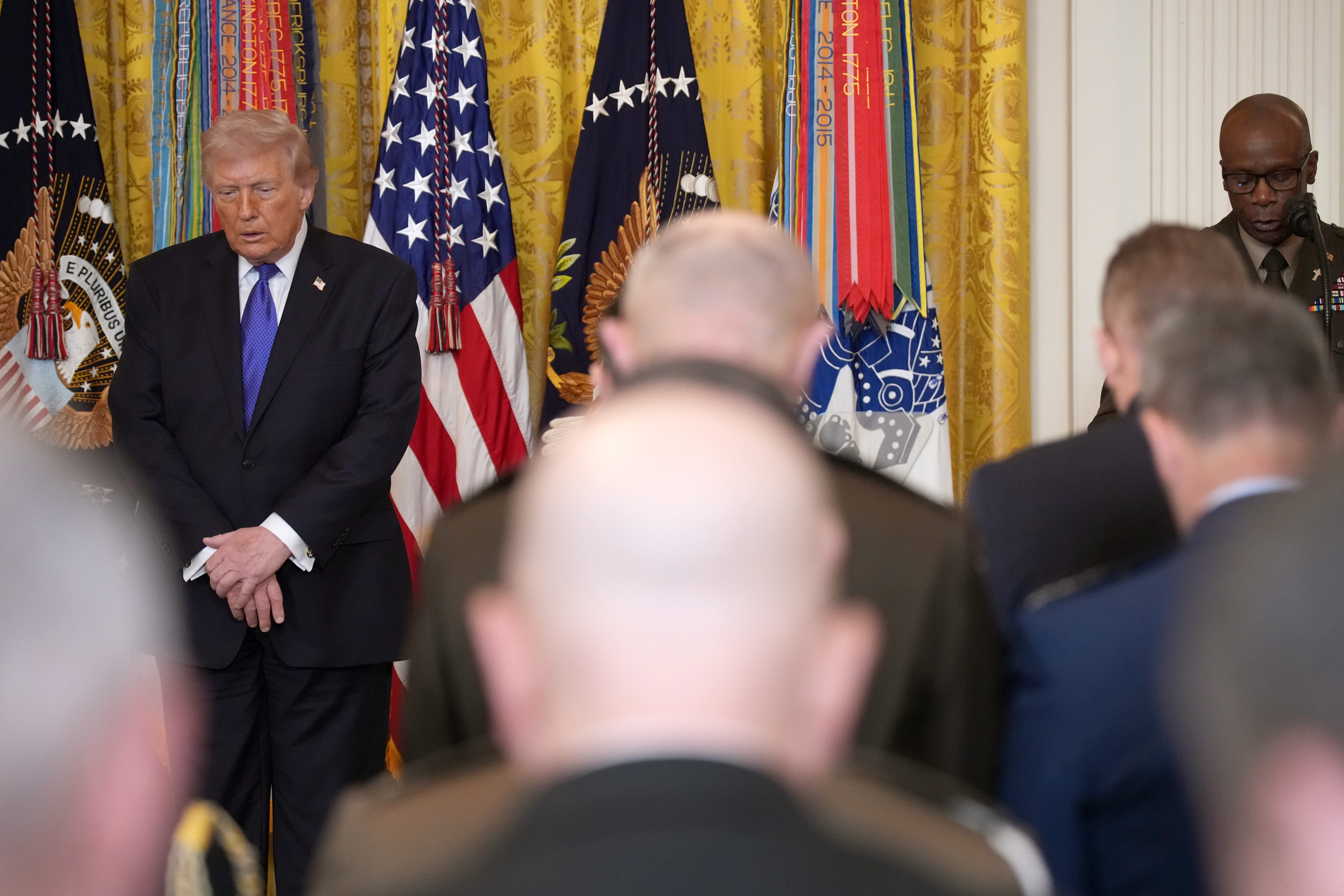
Chief of Army Chaplains Maj. Gen. William Green is a good man, a good officer, and a good chaplain.

LAST FRIDAY, I WAS STANDING on the high ground above the Gettysburg battlefield with a group of MBA students I teach when the lesson we were studying came into focus. Not just for them, but in a powerful way, for me.
We were conducting a battle staff ride, walking terrain that has been studied for more than 160 years, learning lessons in leadership and decision-making from events over the course of three days in July 1863. Our battlefield guide, a retired marine with the kind of quiet authority that comes from knowing both history and the realities of war, pointed out to these aspiring business executives what every soldier comes to know: that high ground is decisive terrain because it provides not just a tactical advantage, but perspective. It allowed leaders to see, to anticipate, and to act with clarity when others do not.
Then he paused, turned to the group, and said something that landed with particular force: “In the business world, it won’t be physical terrain. You will need to find and hold the moral and ethical high ground.”
That’s when my phone buzzed.
The text message was brief, but the implications were not. Two terrific soldiers I know, two four-star generals—Army Chief of Staff Randy George and commander of the Army Transformation and Training Command Dave Hodne—had been asked to retire early, part of what appears to be a broader pattern under Secretary of Defense Pete Hegseth of replacing senior leaders across the force. That alone was significant. But it was the third name, overlooked in much of the coverage of the firings, that shocked me: Maj. Gen Bill Green, the Army chief of chaplains.
I know Bill, and I know what kind of chaplain, what kind of leader, and what kind of man he is. As I stood there with those students, distracted while listening to a lesson about terrain and perspective, I realized that what we were really talking about was no longer geography. It was judgment. It was character. It was the kind of leadership that allows organizations and institutions to hold a moral high ground even when the pressure to descend from it is strong.
Bill’s story begins in a way that many Americans would recognize. Right after graduating from high school, he enlisted in the Army, serving as an artillery crewman and later as a radio repairman. He learned the Army from the ground up, in the ranks, in the field, in the kind of environment where trust is earned, tested, and relied upon every day.
After completing his initial service, he left the Army, but his sense of purpose remained. He felt called to something more, and that calling led him to divinity school. But even then, his path did not take him away from soldiers. It brought him back to them. He returned to uniform as a chaplain, combining theological training with the lived experience of a soldier who understood the culture, the pressures, and the unspoken realities of military life.
That combination shaped how he served as a spiritual leader.
When Bill was assigned to the same units I had the privilege to lead—first at Fort Lewis and later in Wiesbaden, Germany with the 1st Armored Division—he was never confined to an office or a chapel. He was always present where soldiers lived and worked: motor pools, barracks, sitting with young troopers who were dealing with challenges they didn’t always have the words to describe, and with spouses and family members who needed a counselor. He listened more than he spoke, and when he spoke, it was always with a calm steadiness that built trust over time.
He didn’t ask soldiers what they believed before he cared for them. He understood his role was not to define their faith, but to support their humanity. Because that is what a chaplain is supposed to do.
THE ARMY CHAPLAIN CORPS EXISTS within a uniquely American framework grounded in the First Amendment, which guarantees both the free exercise of religion and the prohibition against its establishment by the state. That dual responsibility requires chaplains to navigate a complex and often delicate balance: They provide for the religious needs of those who share their faith while also ensuring that every soldier—regardless of their belief—feels respected, included, and supported. This task has become more complex as the force has become more diverse. While a majority of service members still identify as Christian, the ranks also include Jews, Muslims, Buddhists, Sikhs, Hindus, and a growing number of individuals who claim no religious affiliation at all. When they join the military, they bring different traditions and different perspectives, but they all are united by a common oath—not to a religion, but to the Constitution.
What is striking, though, is that many of those traditions share a common metaphor, one that resonates deeply with service members and was brought home by our guide at Gettysburg. In Christianity, Jesus Christ delivered the Sermon on the Mount, elevating moral teaching above the noise below. In Judaism, Moses received the Torah and the Ten Commandments on Mount Sinai. In Islam, Muhammad received revelation in the mountains near Mecca. For Buddhists, the “axis mundi” of Mount Meru still links heaven, earth, and the underworld. Hem Kund Sahib, a lake surrounded by seven Himalayan mountain peaks, remains a major pilgrimage site for Sikhs. Different faiths, different doctrines, but a shared instinct: to seek clarity and purpose from higher ground.
In the military, we seek the high ground because it allows us to see more clearly and to act more decisively. But as warfare has evolved, that idea has taken on a broader meaning. The high ground is now a set of principles and values that guide decisions when judgment is blurred, and the path forward is uncertain or contested.
Chaplains help leaders and soldiers hold that ground—not by elevating one belief above others, but by ensuring that every soldier has the right guidance when they wrestle with questions of faith, doubt, duty, and purpose.
That is what Bill Green represented throughout his career, and why I was delighted when he was chosen at the chief of all chaplains.
MAJ. GEN. GREEN’S FORCED DEPARTURE is troubling, particularly when viewed alongside the other signals coming from senior civilian leadership. When Secretary Hegseth suggested that American soldiers are fighting for Jesus, he may have been reflecting his personal beliefs, but words spoken from his office carry institutional weight. They shape perceptions, influence culture, and risk redefining the purpose of military service in ways that depart from our constitutional foundation.
Faith has always been an important source of strength for many who serve. It certainly has been for me. But trust—the foundation of any effective military—is built on the understanding that every soldier is valued equally and led fairly.
That’s what Chaplain Maj. Gen. William Green believed, as did Gen. George, Gen. Hodne, and all the others who have been dismissed without true cause. Their departures say less about them than it does about the direction we are heading—away from the quiet, steady leaders who hold the moral high ground, and toward something narrower, louder, and far more fragile. At Gettysburg in 1863, leaders learned what happens when you give up the high ground. We would be wise not to relearn that lesson the hard way.