Zero Chucks Left to Give
Chuck Schumer now sees a path back to the majority. Can he manage his way through it?

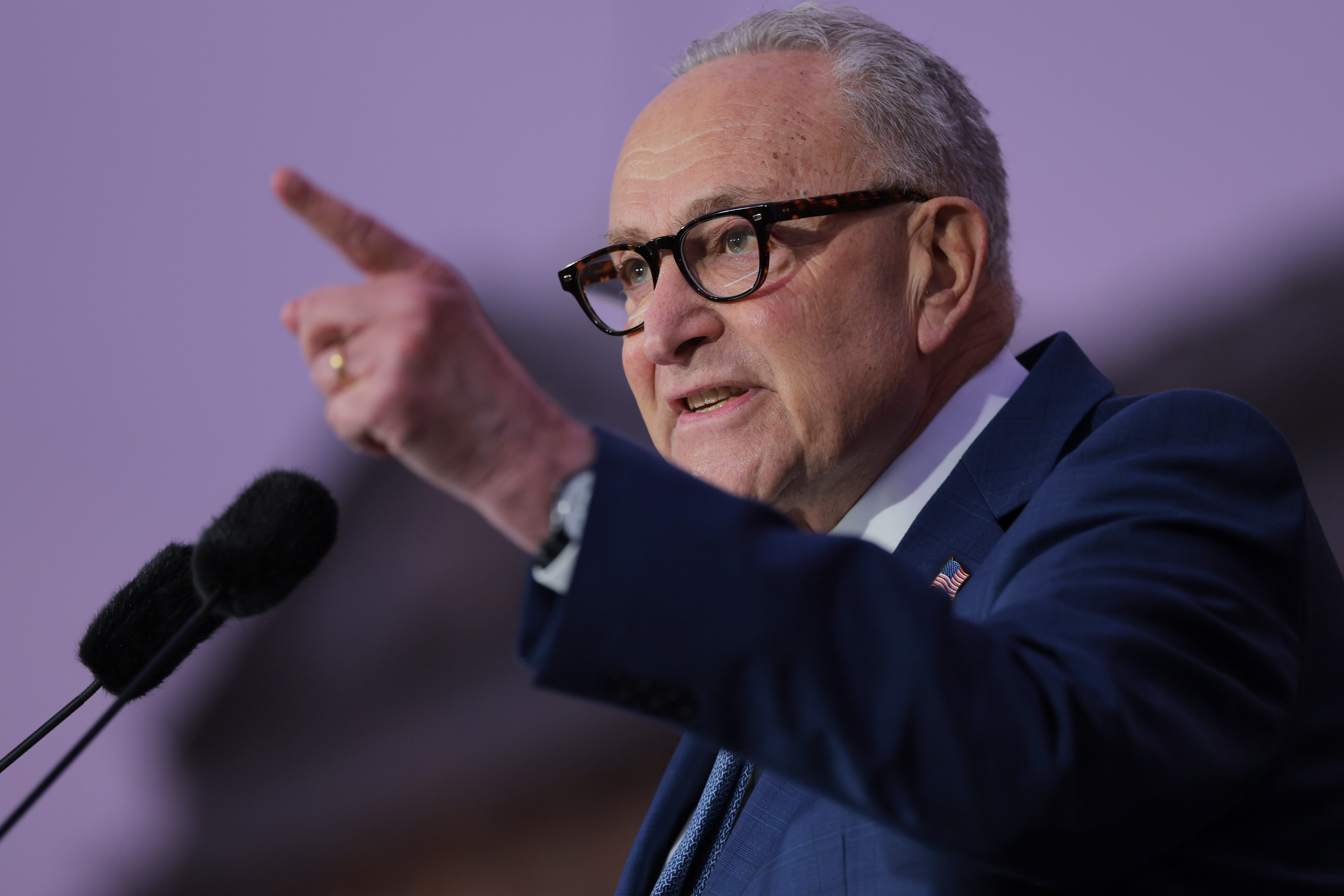
IT IS NEVER FUN TO BE out of power. And no Democrat has felt that more acutely this past year than Chuck Schumer.
Democratic voters have pointed to the Senate minority leader as the embodiment of everything wrong with the party: too old, too weak, and too meek—unwilling to put up a proper fight against Trumpism. Schumer, who is 75 and has been in Congress since 1981, faced calls last year to step down from leadership.
So it’s not hyperbole to say that Schumer’s credibility as leader hinges on his ability to flip Senate seats this November. And here’s the thing: That outcome is no longer a pipe dream. In fact, in my conversations with Democratic party operatives, flipping control of the Senate is now treated as a distinct possibility. Much of that optimism is thanks to President Donald Trump’s failure to address voters’ affordability concerns—alongside his obsession with acquiring Greenland and building a new White House ballroom. But part of the shift in outlook is also credited to Schumer’s ability to recruit candidates in a number of competitive states. Just last week, former Alaska Rep. Mary Peltola officially announced her campaign for Senate, which Schumer described to me as “the last piece of that puzzle” that “fell into place.”
But the buzz around Peltola’s announcement was overshadowed by the chaotic, violent situation in Minnesota. And with ICE agents continuing to roam the streets of Minneapolis terrorizing its residents, Schumer quickly found himself facing another round of doubts from Democratic voters who are looking for the party to rein in the Trump administration using what little leverage it has—namely, in funding the government.
Schumer and I caught up at the end of last week to talk about that funding fight, as well as the midterms, and what he thought of that David Plouffe column about the Democrats’ need for new leadership. Our conversation below has been edited for length and clarity.
EGAN: Be brave. What percentage chance do you give the party of emerging from election night 2026 with 51 seats in the chamber?
SCHUMER: Let me say this: We have a strong, clear path to winning the majority. We are on our front foot and we are in much, much better shape than people ever thought we would be. A year ago, people thought we had no chance of taking back the Senate. And then I laid out to people that we had to do three things to take back the Senate: recruit candidates in our battleground states, create a political environment where across the country Trump was much weaker, and show that when we get back in charge, we’re going to actually do things. That we’re not just criticizing them.
You will see in the next months, we’re going to be focusing on five buckets. One is housing, one is the high price of food [and] food monopolies playing a major role there. One is electricity. One is the high cost of childcare. And then, of course, health care.
EGAN: What’s the pitch you made to these Senate recruits to get them to jump in?
SCHUMER: They all ran for the same reason: patriotism. I talked to these candidates quite a bit and I told them how important it was to run. But it came from themselves. I said to one of the candidates at one point, “Look, you’ve got a great family, you’ve got a great career. But if you sit on the sidelines and we lose the Senate by one vote and the Supreme Court gets stacked so that even your grandchildren won’t live in a democracy, you’ll regret it. You won’t be happy in your retirement.”
EGAN: Some Dems in competitive primaries have said they won’t support you as leader. In a New York Times op-ed, David Plouffe explicitly advised candidates to call for new leadership. Does that hurt your feelings?
Join Bulwark+ to unlock the rest
Become a paying member of The Bulwark to get access to this post and other subscriber-only content. A subscription gets you:
- Unlimited access to articles and newsletters including The Triad by JVL and Receipts by Catherine Rampell.
- Ad-free editions of our shows (with transcripts) and member-only shows like The Secret Podcast.
- Plus community chats and commenting features. Your support helps keep our work sustainable and available to those who cannot afford a membership. Cancel anytime.