A Cautionary Note to Fellow Dems From an AIPAC Target
How big-money super PACs are warping Democratic politics—and how to fix it.

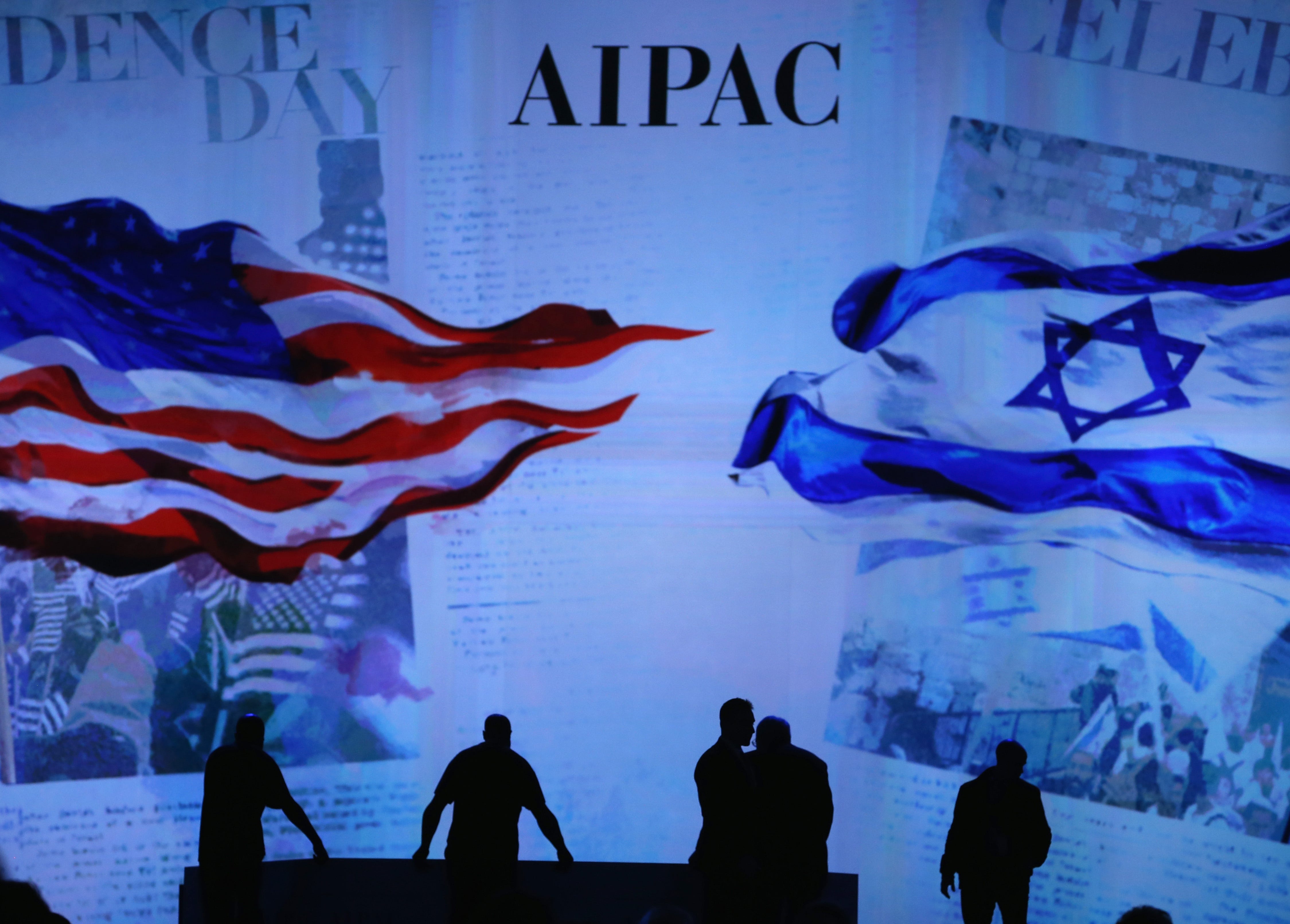
I KNEW I HAD A PROBLEM when voters I met while campaigning at a train station asked me, “Are you MAGA? Are you pro-ICE?”
I was running in the Democratic special primary election in New Jersey’s 11th Congressional District, touting my passionately anti-Trump and pro-immigration record. But in the final days of the race—perhaps in a harbinger of something we may see frequently during this year’s midterms—the American Israel Public Affairs Committee (AIPAC) spent $2.3 million on a deluge of ads, mailers, and phone calls linking me to Trump’s mass-deportation campaign. It was transparently false, based on a vote that I and most Democrats had cast in the House of Representatives, seven years ago, to surge mostly humanitarian funding to the southern border. But it worked. According to early vote totals, I was comfortably ahead before the AIPAC attacks began. I lost narrowly on Election Day.
The pro-Israel group’s intervention in my race was bizarre in several ways. First, because the candidate it tacitly supported never had a chance to win, its campaign against me enabled a victory by my actual closest rival, a progressive Democrat—Analilia Mejia—who expressed “incredible discomfort” with Israel’s existence as a Jewish state. This has been widely derided as a self-own, but the organization didn’t (and doesn’t) seem to care.1
Second, my own views on Israel are mainstream. As a member of Congress, I voted consistently for aid to Israel. I’m a child of a family that protected Jewish friends and neighbors during the Nazi occupation of Poland, and have condemned antisemitism on the left and the right. I have no problem identifying as a Zionist, and have always believed that a people who still haven’t recovered their pre-World War II population, and who face violence and hatred wherever they go, should have the insurance policy of one small state of their own.
To be pro-Israel for me, however, requires listening not just to the government of Prime Minister Benjamin Netanyahu, but to the hostage families who accused Netanyahu of unnecessarily prolonging the Gaza War, and to the hundreds of retired Israeli security officials who urged President Trump to help end it. The United States should always provide what aid is necessary for Israel and its people to stay safe. A blank check for policies that even many Israelis consider self-destructive is not that.
Late last year, an AIPAC official told me that the organization was concerned by a statement I had made that the United States should make case-by-case judgements about Israeli requests for military aid, based on what is happening on the ground (a standard I would apply to all U.S. partners, including Ukraine and Taiwan). He added: “Some of our members are also concerned you’ll be influential in Congress” because of my past foreign policy experience.
The implication was that AIPAC considered a small challenge to its hard line of unconditional support for the current Israeli government from someone like me to be scarier than electing a person hostile to the very concept of Zionism, but to whom Democrats might not listen.
But if AIPAC’s definition of “pro-Israel” now demands blind a embrace of and funding for policies that even most Americans with a lifelong commitment to Israeli security cannot in good conscience support—like the violent expulsion of West Bank Palestinians from their homes—and if it requires smearing even the most moderate elected officials who ask questions about those policies, the number of Americans (and the number of members of Congress) who pass its test will be too small to sustain any kind of relationship with the Jewish state.
AIPAC’S ATTACK ON ME matters for reasons that go beyond its impact on my race alone. It also seemed intended to frighten other Democrats running in this year’s midterms. Its super PAC has amassed almost $100 million for this purpose. Its tactic of accusing a Democrat of having funded ICE could be used against any Democratic incumbent in the House or Senate who has ever voted for a government funding bill.
AIPAC is already spending heavily in several Democratic primaries in Illinois. I would not be surprised if it were to intervene in the Michigan Democratic Senate primary against Mallory McMorrow, who is running against the group’s preferred candidate, Rep. Haley Stevens. If so, it could (as in my race) boost the candidacy of the most progressive contestant in that race, Abdul El-Sayed, increasing the chance that Republicans will pick up a critical Senate seat. That may even be AIPAC’s goal.
Waiting in the wings are PACs funded by the cryptocurrency and artificial intelligence industries, which should be a greater cause for concern than what AIPAC did to me. AI is about to change the lives of billions of people, and the companies developing it are arming to threaten any legislator who dares regulate it. This fear hangs over every discussion about tech policy on Capitol Hill.
Unfortunately, the outcome of my race signals that super PAC money intimidation can work, especially in House primaries where few candidates have the cash to fight back. Why risk having millions of dollars dumped into your race at the last minute, whether by AIPAC or some tech billionaire funded outfit, if you’re running with no margin for error? Some candidates may censor themselves—or curry favor with their potential antagonists—to survive. I felt pressure to stifle some of my opinions in this last race, though obviously I failed to do so.
But Democrats are not without leverage here, if they have the guts to use it. For one thing, these special interest organizations need to maintain at least the illusion of bipartisanship. AIPAC is a case in point. Its biggest donors are pro-Trump billionaires, but most of its members are Democrats. If Democratic leaders collectively were to refuse its support, instead of letting it pick off candidates one by one, AIPAC would face a crisis of identity and legitimacy. Democrats running for Senate and for president, who will have the resources to match whatever super PACs throw at them, should lead the way in rejecting endorsements and telling these groups they don’t want their help.
That the big-money groups never run ads on the issues they care about, but instead resort to personal attacks on their enemies, also reveals their political weakness. AIPAC knows that even most pro-Israel Americans don’t support a blank check for Netanyahu, just as the crypto and AI companies know Americans overwhelmingly support safeguards on their products. They intimidate because they cannot persuade.
The best political move for Democrats would be to embrace—loudly and unequivocally—the popular position on these issues (which happens to be the principled one, too). They should be pro-Israel, but anti-Netanyahu. They should campaign on stopping crypto scams and corruption and on regulating AI before it upends our lives. They should tell the super PAC groups either to move to the mainstream, or come out honestly as part of the MAGA coalition. And then they should let the Republicans own the baggage.
Though I disagree with Mejia on this issue, I have endorsed her in the April special general election in our district, and strongly believe that the seat must remain in Democratic hands.
 | A guest post by
|