A Defense of the Thanksgiving Turkey
The noble, beautiful, all-American bird pays worthy homage to our grand culinary inheritance.

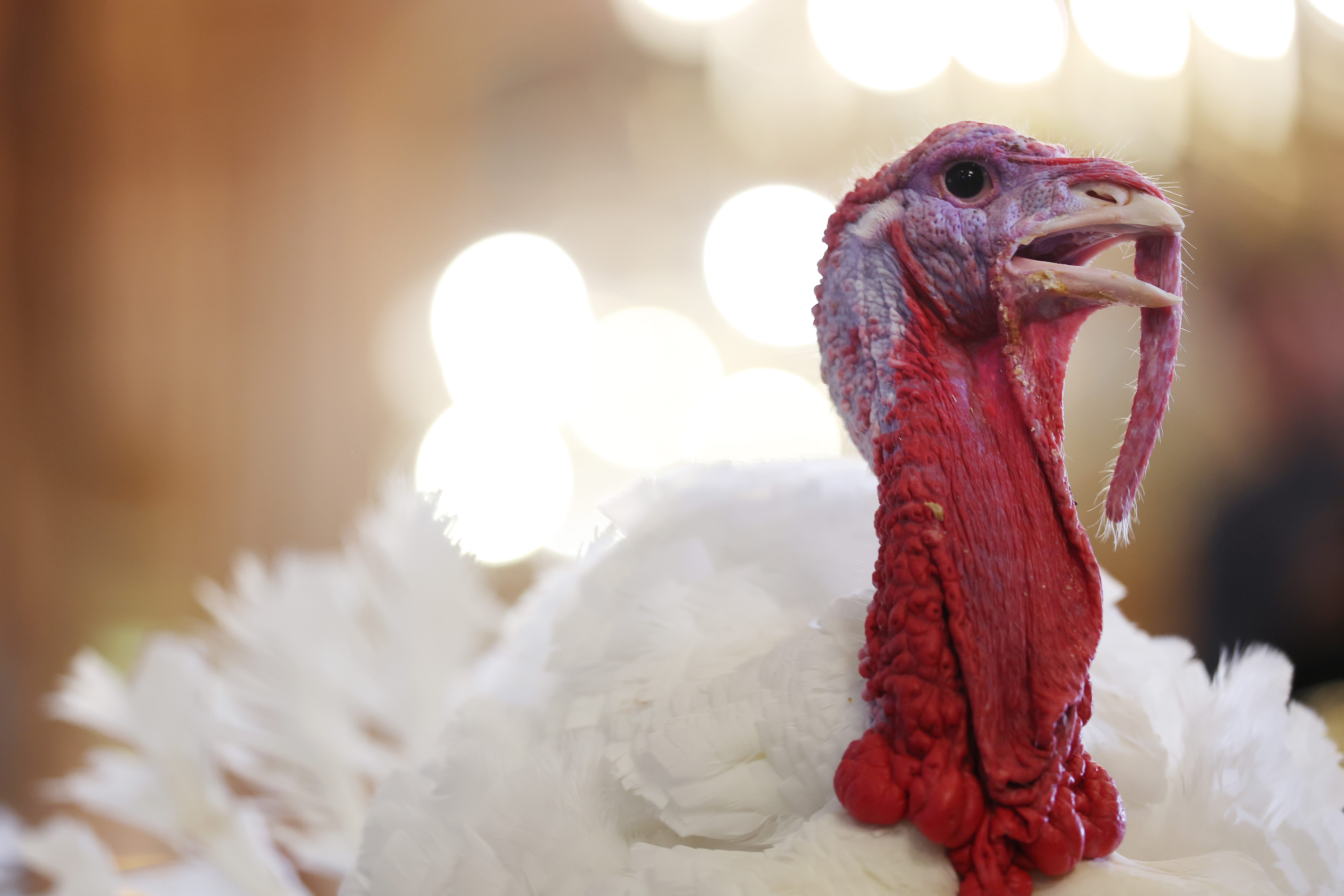
FOR TOO LONG, OUR SOCIETY has been hamstrung in the pursuit of justice, right, and truth by a policy of pusillanimous deference to any malcontent who raises a querulous objection. There are things we all know to be true, and yet we cannot say them. Why? Because it might offend someone. Because it might hurt their feelings. Because a comforting and harmonious lie is deemed more acceptable than the bracing clangor of reality.
Well, no more. It is time to stand up and be counted. I’m going to say it.
If you hate eating turkey on Thanksgiving, you are un-American.
Thanksgiving is, among other things, a celebration of the incredible bounty of foodstuffs with which the two great continents, North and South, that make up the American whole have graced the world. Possibly in no other domain did the New World so quickly, thoroughly, and permanently transform the Old. The potatoes of the English Sunday roast; the tomatoes of Rome’s pasta all’Amatriciana; the red chilis of India’s vindaloo curries—so many nations’ beloved dishes center on ingredients first cultivated by the people of the Americas and brought over the seas in the Columbian exchange.
The early colonists were beneficiaries of oyster reefs and endless clam beds; of forests teeming with persimmons and chestnuts, and carefully managed for game; of the three sisters—corn, beans, and squash—cultivated by the Haudenosaunee and Lenape peoples. And of course, there was also Tom Turkey: strutting through the woods, singing his song of love, fearless in his conquests, gallant in defeat, rich and succulent on the table.
Ben Franklin’s famous passage explaining his supposed preference for the turkey as a national avian symbol (“For my own part I wish the bald eagle had not been chosen as the representative of our country,” he wrote, for “he is a bird of bad moral character”) was part of a satirical letter, but his description of the humbler bird’s many excellent qualities could be appreciated in earnest:
For in truth, the turkey is in comparison a much more respectable bird, and withal a true original native of America. Eagles have been found in all countries, but the turkey was peculiar to ours, the first of the species seen in Europe being brought to France by the Jesuits from Canada, and served up at the wedding table of Charles the ninth. He is besides, (though a little vain and silly tis true, but not the worse emblem for that) a bird of courage, and would not hesitate to attack a grenadier of the British guards who should presume to invade his farm yard with a red coat on.
Franklin was, in this as in so many other regards, correct. The turkey is beautiful, clothed in a dark and shining plumage, a graduated symphony of woodland colors interrupted by the shocking blues and reds of the wattle. The turkey is striking, with its purposeful galliform strut, its fanned tail and its warlike little eyes. The turkey is prolific, capable of producing an amount of meat that crowds our ovens and makes our tables groan. The turkey is delicious, with a distinct, gently gamey flavor that produces incomparable stock. The turkey is ours.
THE DOMESTICATED TURKEY NOW CROWNS the smorgasbord of distinctly American food we consume on Thanksgiving: cornbread dressing, pumpkin pie, oyster stuffing, and mashed potatoes; crab cakes and candied salmon during the appetizer hour. But, as with many of these foods, appreciation of the turkey’s many excellences spread far beyond its native sphere. Shortly after the Spanish brought back a specimen in the sixteenth century, European breeders got to work. By the time Dickens published A Christmas Carol in 1843, the turkey was synonymous with holiday abundance:
“An intelligent boy!” said Scrooge. “A remarkable boy! Do you know whether they’ve sold the prize Turkey that was hanging up there?—Not the little prize Turkey: the big one?”
“What, the one as big as me?” returned the boy.
You would think that such a storied history might inspire a little respect. You would think that the bird whose life and death is virtually synonymous with Thanksgiving might enjoy an amount of unquestioned esteem. But no. Every year, I hear a chorus of bitching and moaning about the turkey’s supposed faults. It’s too big to cook. It’s too dry. It takes too much time. Chicken is better. (Chicken!)
Perhaps even more insultingly, an answering chorus of weak-willed apologists appears to concede every point except the bare fact of turkey’s customary presence on the holiday table. Yes, they say, no one really likes turkey. Yes, chicken is better. (Chicken!) But it’s just one day a year, and it’s traditional, so, well, if you don’t mind, here are all our tricks for making turkey tolerable: You can serve only the legs. You can make fun, deconstructed turkey meatballs. You can at the very least brush your turkey with a garlicky, citrus-y, miso-y, brown butter caramelized anchovy-y hot honey marinade.
To the people whose palates have been so thoroughly warped by a lifetime of tutelage in factory-farmed Cornish Cross blandness that they think chicken tastes better than turkey, I have nothing to say. Go with God. But the people who think turkey is dry are wrong. Domestic turkey is not dry when it is competently cooked. If you are roasting it, you have to brine. You have to baste. You have to monitor internal temperature carefully. You have to let it rest. But in return for these labors and cares, you get seemingly endless cuts of juicy fowl falling away from the carving knife under crackly skin, all of it draped in a glistening gravy whisked up from the bird’s own rendered fat and perfuming the air with its particular aroma, rich and sweet and deep, so friendly to autumn nights and woody herbs and simple accompanying drinks.
An objection often raised here: If it takes so much effort to make it tasty, doesn’t that mean the food in question is not actually that good? Why not go with something that takes minimal effort to produce near-perfect results every time?
I reject this objection and the entire philosophy behind it, which, if followed to its conclusion, would have us eating only cheeseburgers. There is nothing wrong with a cheeseburger. A cheeseburger is, in its own class, a perfect food. But its circumference does not girdle the world and all the goods therein, and ease is not a measure of excellence. We were made for more and better things than we can acquire through the frictionless pursuit of easy satisfactions, and Thanksgiving, despite the elasticity of wardrobe the prudent person will adopt for the occasion, must never surrender to the soft pants–and–DoorDash-burrito mindset.
If there is a fault with the contemporary Thanksgiving table and turkey’s role as its centerpiece, it is that it comprises too small a selection of American bounty. Wild duck, stewed rabbit, venison backstrap, buffalo tongue, and more—all arguably have their place.
But, as things stand now, it is impossible to survey the Thanksgiving table without experiencing a rush of pride and amazed gratitude. From Point Barrow to Tierra del Fuego, from the marshes of New Jersey to the Oregon coast, all of us who share this landmass share an inheritance of incredible culinary abundance, managed and increased over thousands of years of stewardship. If the noble turkey does not make your mouth water, I suppose you are entitled to your tastes. But if it can’t whet your appetite, it should at least wet your eyes.
 | A guest post by
|
"The turkey is beautiful, clothed in a dark and shining plumage, a graduated symphony of woodland colors interrupted by the shocking blues and reds of the wattle. The turkey is striking, with its purposeful galliform strut, its fanned tail and its warlike little eyes. The turkey is prolific, capable of producing an amount of meat that crowds our ovens and makes our tables groan. The turkey is delicious, with a distinct, gently gamey flavor that produces incomparable stock. The turkey is ours."
Unamerican Vegan here. So, where you see a litany of reasons to kill and eat these birds, I see reasons to let them alone. And to say that they are prolific, one might think you'd have to be awfully prolific to produce the 50+ million birds we slaughter each year for one day's meal! But only if you think we're going out into the wild hunting turkeys like the pilgrims did. No, they are raised on concentrated feed lots fattened at a pace their legs cannot sustain, artificially inseminated, live short and miserable lives, walk in their own and other turkeys' piss and shit (that's why they get antibiotics in their diets), and are killed on a conveyor belt with quotas that mean inevitably botched jobs.
If this piece is a defense of the turkey, then the turkey needs representation that has his or her best interests at heart.
All of this is total nonsense. Turkeys are intelligent, fiery, stunning creatures — curious, social, full of personality. They want nothing more than to roam, dust-bathe, flare their feathers, and live in peace.
They have zero intention of being strung upside down, killed, and turned into that depressing mountain of pale, plastic-wrapped turkey “units” piled in every supermarket — a grotesque contrast to the vibrant, living beings they once were.
Maybe it’s time we stop celebrating the killing of animals for food. Try putting yourself in the place of the animal for once — the truth hits different when you actually imagine being the one on the line.