America Is an Unserious Country Filled With Unserious People
Stories about revealed preferences and who we really are.

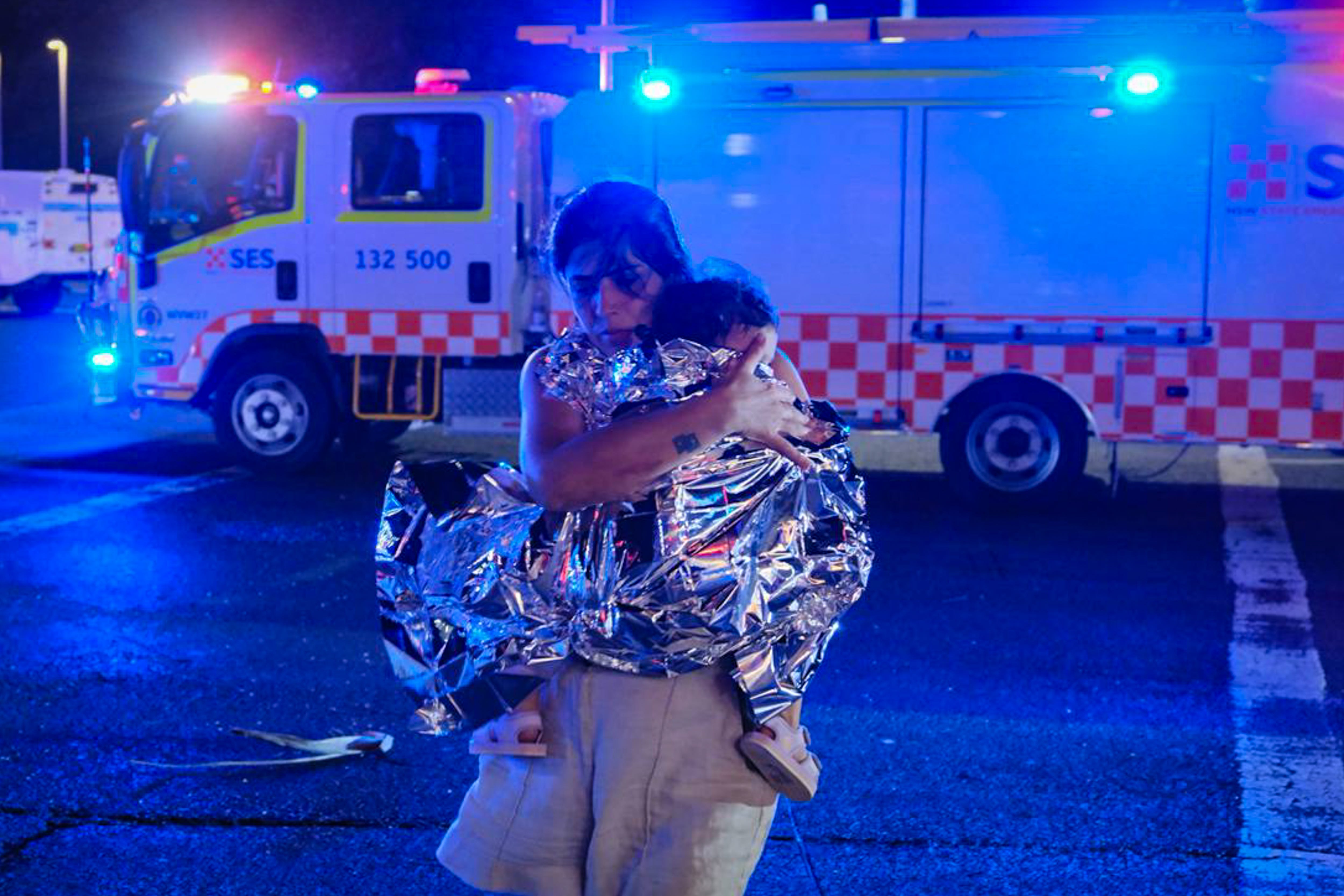
1. Bondi Beach
On April 28, 1996, an Australian man took two semiautomatic rifles to the seaside town of Port Arthur and killed 35 people. Twelve days later the Australian government passed the National Firearms Agreement.
Twelve days.
Prior to the passage of the NFA, Australia had millions of guns. The NFA established a national gun registry, a 28-day waiting period for buying a gun, strict gun-licensing rules, and other provisions.1 The result was that gun-related murders declined and mass shootings more or less disappeared. This account is from a 2016 assessment of the NFA’s effects:
The risk of an Australian dying by gunshot remains less than half what it was before Port Arthur. Research shows that murderers did not move to other methods.
But although Australia hasn’t seen a public mass shooting since 1996, we have no shortage of firearm-related crime. Gun owners who know each other well – be they family members or gang members – have always been the ones to kill each other most frequently.
Then there’s the killer already in the room. About 80% of gun deaths in Australia have nothing to do with crime. Instead, they’re suicides and unintentional shootings.
So:
People in Australia still own guns.
The NFA did not stop all gun violence.
But it seriously curbed the kind of random gun violence that is most preventable. And it all but eliminated mass shootings.
Translation:
A country can do something about gun violence and mass shootings. If it wants to.
Oh, and one other note: The prime minister who pushed the NFA through so quickly after the Port Arthur massacre was John Howard, who was a pretty conservative figure in Australian politics.
A serious country populated by serious people is not helpless to solve its problems.
Americans preen and posture as if they want to do something about random gun violence and mass shootings. But we do not.
A majority of Americans have decided that active shooter drills and school massacres are an acceptable price for preserving our gun regime.
What makes us unserious is that practically no one in this majority is willing to state this revealed preference openly.
And to think that some of us were surprised that Americans could elect Donald Trump. Twice.
2. Rob Reiner
Speaking of unserious people, America’s president took to Truth Social this morning to offer his thoughts on the murder of Rob and Michele Reiner.

What an amazing statement:
The Reiners were not murdered; they “passed away.”
They died because of “the anger they caused others.”
Because they suffered from the “mind crippling disease” of not liking Donald Trump.
Ah-ha. Ha ha ha. Yes. How droll.
I can already hear Trump’s defenders:
That’s just how he talks; he’s not a regular politician.
You have to take him seriously, not literally.
He’s only doing what some libs on Bluesky did after Charlie Kirk was murdered.
Someone, somewhere, said something worse about Trump.
But he fights!
Certainly his mean tweets are regrettable, but look at all the excellent True Conservative policy outcomes he’s given us.
And you know what? Two weeks from now we’ll all have forgotten about this tweet. Trump will have said or done twenty other outrageous, cruel, stupid, or evil things. When we look back on 2025, this Rob Reiner tweet won’t make the top hundred worst things he did or said.
We’ll tolerate this just like we tolerate everything else. Because this is who we are, collectively, as a country.
3. USAID
Every story ever written about Elon Musk should mention his decision to “feed USAID into the wood chipper.”
On the one-month anniversary of President Donald Trump’s inauguration earlier this year, a group of his appointed aides gathered to celebrate.
For four weeks, they had been working overtime to dismantle the U.S. Agency for International Development, freezing thousands of programs, including ones that provided food, water and medicine around the world. They’d culled USAID’s staff and abandoned its former headquarters in the stately Ronald Reagan Building, shunting the remnants of the agency to what was once an overflow space in a glass-walled commercial office above Nordstrom Rack and a bank.
There, the crew of newly minted political figures told the office manager to create a moat of 90 empty desks around them so no one could hear them talk. They ignored questions and advice from career staff with decades of experience in the field.
Despite the steps to insulate themselves, dire warnings poured in from diplomats and government experts around the world. The cuts would cost countless lives, Secretary of State Marco Rubio and the other Trump officials were told repeatedly. The team of aides pressed on, galvanized by two men who did little to hide their disdain for the agency: first Peter Marocco, a blunt-spoken Marine veteran, and then 28-year-old Jeremy Lewin, who, despite having no government or aid experience, often personally decided which programs should be axed.
By the third week in February, they were on track to wipe out 90% of USAID’s work. Created in 1961 to foster global stability and help advance American interests, USAID was the largest humanitarian donor in the world. In just a month’s time, the small band of appointees had set in motion its destruction.
In a corner conference room, it was time to party. They traded congratulatory speeches and cut into a sheet cake. . . .
Days later, on a remote patch of land in South Sudan, a 38-year-old man named Tor Top gathered with his neighbors outside the local health clinic. Surrounded by floodwaters, their hamlet of thatch and mud homes had been battling a massive outbreak of cholera, a deadly disease spread by poor sanitation. Around the country, it had infected 36,000 people in three months, killing more than 600, many of them babies. Top’s family lived in the epicenter.
The clinic, one of 12 in the area run by the Christian, Maryland-based humanitarian organization World Relief and funded by USAID, provided a key weapon in the fight: IV bags to stave off dehydration and death. The bags cost just 62 cents each, and in three months, the clinics had helped save more than 500 people.
Now, Top, who lived with his wife, children and mother in a one-room house less than 50 feet from the clinic, listened as World Relief staff shared grim news: The Trump administration had stopped USAID’s funding to World Relief. Their clinic, their lifeline, was closing.
Top’s usual gentle demeanor broke down. Why would the U.S. just cut off their medical care in the middle of a deadly outbreak?
Read the whole thing. America chose this. This is our revealed preference.
Other provisions of the NFA required gun-license applicants to prove that they could safely store guns and to provide a “genuine reason” for wanting to own a gun. There were other reforms, too, such as a nationwide gun buyback and stipulations for removing firearms from a house following domestic disputes.
In 2012, after Sandy Hook, there were days and days of despair that I went through. My kids were of the same age as those kids at the time and I could not fathom the unending grief and anger those parents must’ve experienced. It’s a tragedy I’ve never forgotten. But I realized that when we decided - as a country - that the mindless massacre of elementary school kids was not enough to make a change, nothing else would be.
It is the shame that I, as a voter, carry with me - that we’ve still not been able to make a difference to this massive stain on our body politic.
I've talked about this a whole bunch (my latest Substack post is all about this: https://neoreality.substack.com/p/it-takes-60-votes-to-pass-a-law-and ), but you cannot separate the current moment of dysfunction in America from Congress' willing abdication of responsibility. It has become impossible to create legislation to change laws in response to horrific shootings, because Congress realized that they would be held responsible for the effects of any laws they passed, so they set the rules of Congress so that no laws could ever be passed.
In the absence of laws, we have to hope that people other than Congress will act; either nine unelected politicians in robes will agree with us to reinterpret the Second Amendment one way or another that we prefer, or an overbearing (some would say 'imperial') executive power that promises that 'I alone can fix it' will do something on their own, something potentially illegal.
It is said that we are a nation of laws and not men.
Congress has made it impossible to create laws.
Therefore, we have no choice but to be ruled by men.