‘Americana’ Review
Westerns, the arts, and the pursuit of happiness.

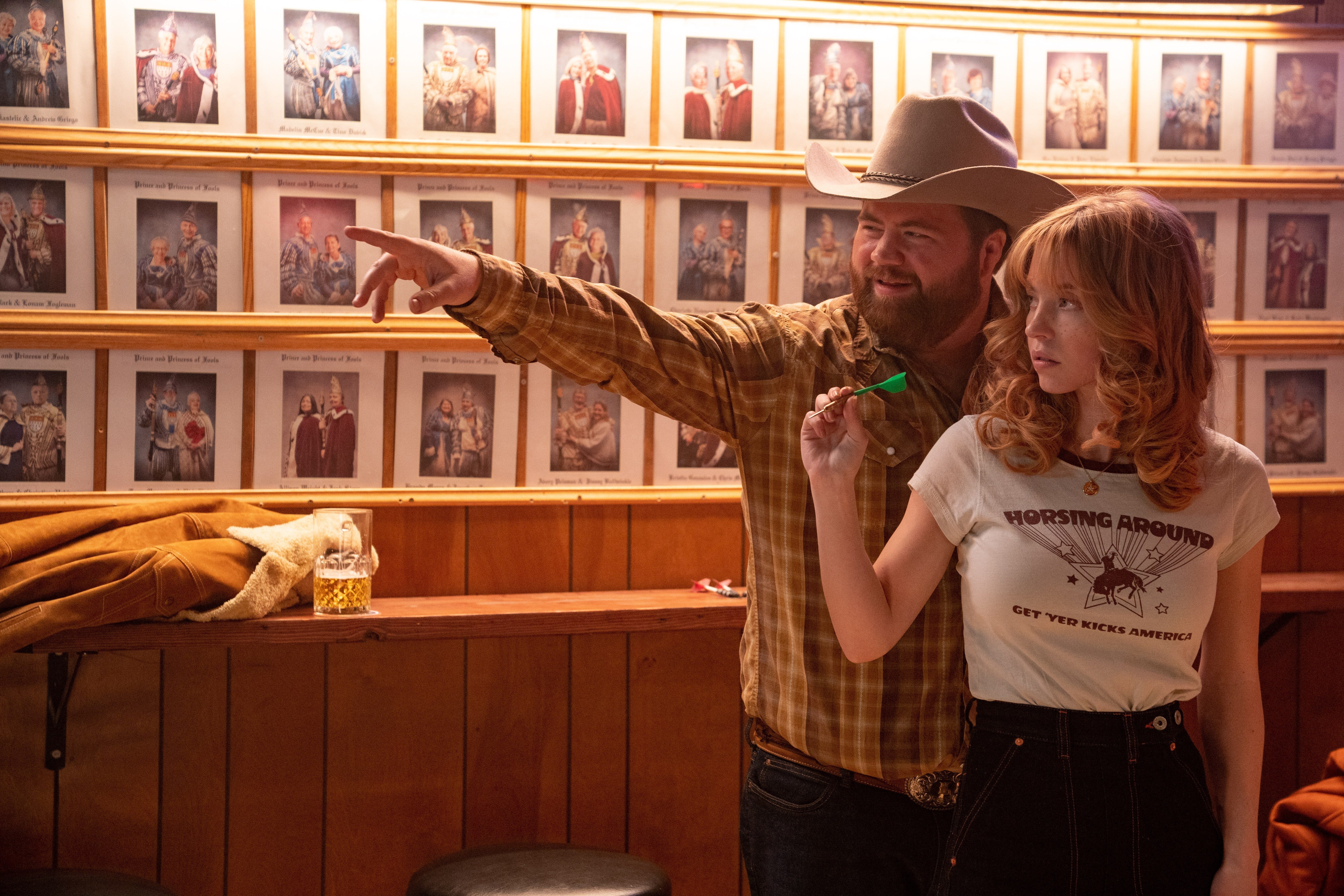
Chronologically,1 Americana is bookended by Paul Walter Hauser’s Lefty Ledbetter delivering a wedding proposal. “People shouldn’t be alone. People should be happy,” he says, practicing his vows across from his diner waitress, Penny Jo (Sydney Sweeney). He’s a normal guy with a normal job who owns a normal house, but there is comfort in the familiar and happiness in comfort. He would like his bride-to-be to be his “happy wife.” He will be the “happy husband.” They will be happy together, no longer being alone in the wide open West.
Lefty, we learn, has delivered a version of this proposal four times this year to four different women.
Americana is a film about the pursuit of that last inalienable right promised to us by the Declaration of Independence, happiness, and the myriad forms it takes in the expansive openness of the United States. We are a nation of weird little pockets of people, all pursuing our own goals and dreams, hopes and desires; we are, on some level, an agglomeration of ideas and ideals picked up from around the world and generated at home. Pick your preferred culinary metaphor—melting pot or stew—the fire that keeps America bubbling is that desire for happiness and the lengths we will go to pursue it. If the western is the story America tells about itself, Americana depicts a moment in which we hunger for connection, sometimes from the wrong people and wrong places.
Lefty and Penny Jo are just part of Americana’s pageant of American life, and one of the film’s great joys is in watching its ensemble slide into their disparate roles. There’s the punk-minded Mandy (Halsey) and her little brother, Cal (Gavin Maddox Bergman), who believes himself to be the reincarnation of Sitting Bull, much to the chagrin of Ghost Eye (Zahn McClarnon) and his band of AIM-affiliated Native Americans. Mandy and Cal live with lowlife Dillon (Eric Dane) in South Dakota, who takes on a robbery of bougie art collector Pendleton Duvall’s (Toby Huss) priceless Lakota Ghost Shirt for Roy Lee Dean (Simon Rex) that kicks off the meat of the plot and moves the action to Wyoming for a proper modern cowboys-and-Indians gunfight on Mandy’s ancestral homeland.
“Modern” because writer-director Tony Tost is very much interested in deconstructing the tropes of the genre, occasionally to the film’s detriment. (Without spoiling too much, there is a clearing of the decks during the film’s climactic shootout that hews desperately to an ideological desire to punish the Oppressor while aiding the Oppressed in a way that may prompt a few eyerolls.) But he also has an eye for the amusing clash between modern and classical; when McClarnon is offering instruction to one of his fellow Native radicals, the lesson comes not from Geronimo or Crazy Horse. The young man guesses the quote is a Fanon, or maybe a Žižek. Nope. It’s Marx. This is a “people’s army,” after all.
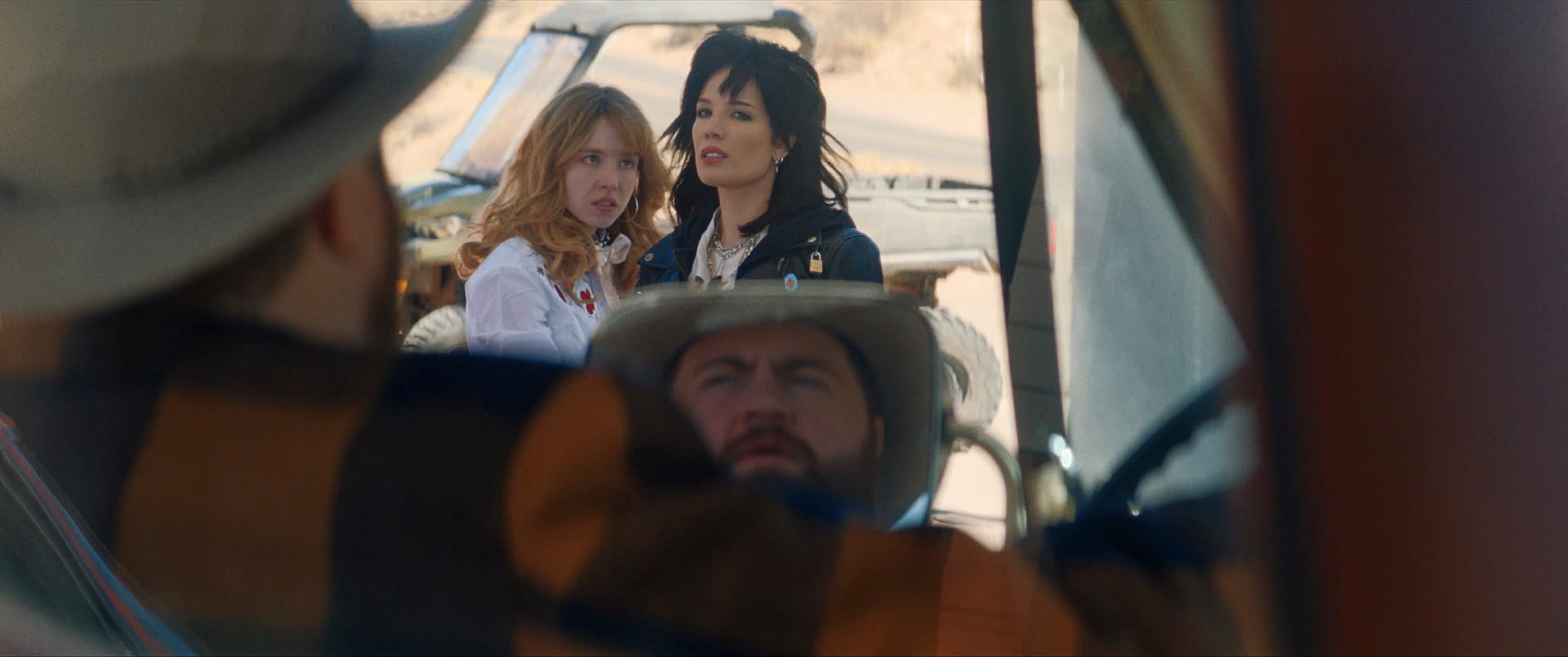
Here again we see this idea of America as a place where ideas come to mix and merge and meld, and one of the throughlines of Americana is the role played by art and artistry in America as a driving force in that amalgam. Near the film’s midpoint, Huss’s Duvall delivers a fantastic monologue about America’s penchant for creating great artists, and it’s the stuttering waitress Penny Jo’s desire for fame and fortune as a singer in Nashville that gets the happiness-seeking Lefty tied up in all this gunplay. Ghost Eye himself has drawn his name from the black artist he has enjoyed, Forest Whitaker’s work in Ghost Dog and the musical stylings of the Wu-Tang Clan’s Ghostface Killah. That this cultural crosspollination is only permitted to go one way barely needs to be said; Ghost Eye and his fellows treat Cal’s appropriation of Sitting Bull with a mixture of annoyance and contempt, and it’s the desire of white men to display the sacred ghost shirt as totemic art that gets so many people in this movie killed.
Even if the thematic core of Americana doesn’t resonate with you—the arts, happiness; who needs ’em?—the film is a delight to watch on a moment-to-moment basis purely for the performances. McClarnon and Huss are the MVPs, but Rex brings his trademark twitchy scumminess to the role of his antiquities collector and Halsey delivers a genuinely heartbreaking turn as Mandy.
Technically, there’s a coda at the end that feels more like a sequence to be played over the credits than a piece of the movie. But the film opens in medias res with a comedic action beat before looping back in time to introduce us to Lefty, and it closes with him delivering the same speech in a different context, so I’m going to allow myself this fudging.
Discussion about this post