Why Dramas Have Flocked to the Small Screen
‘Ballad of a Small Player’ and ‘Nouvelle Vague’ hit Netflix.

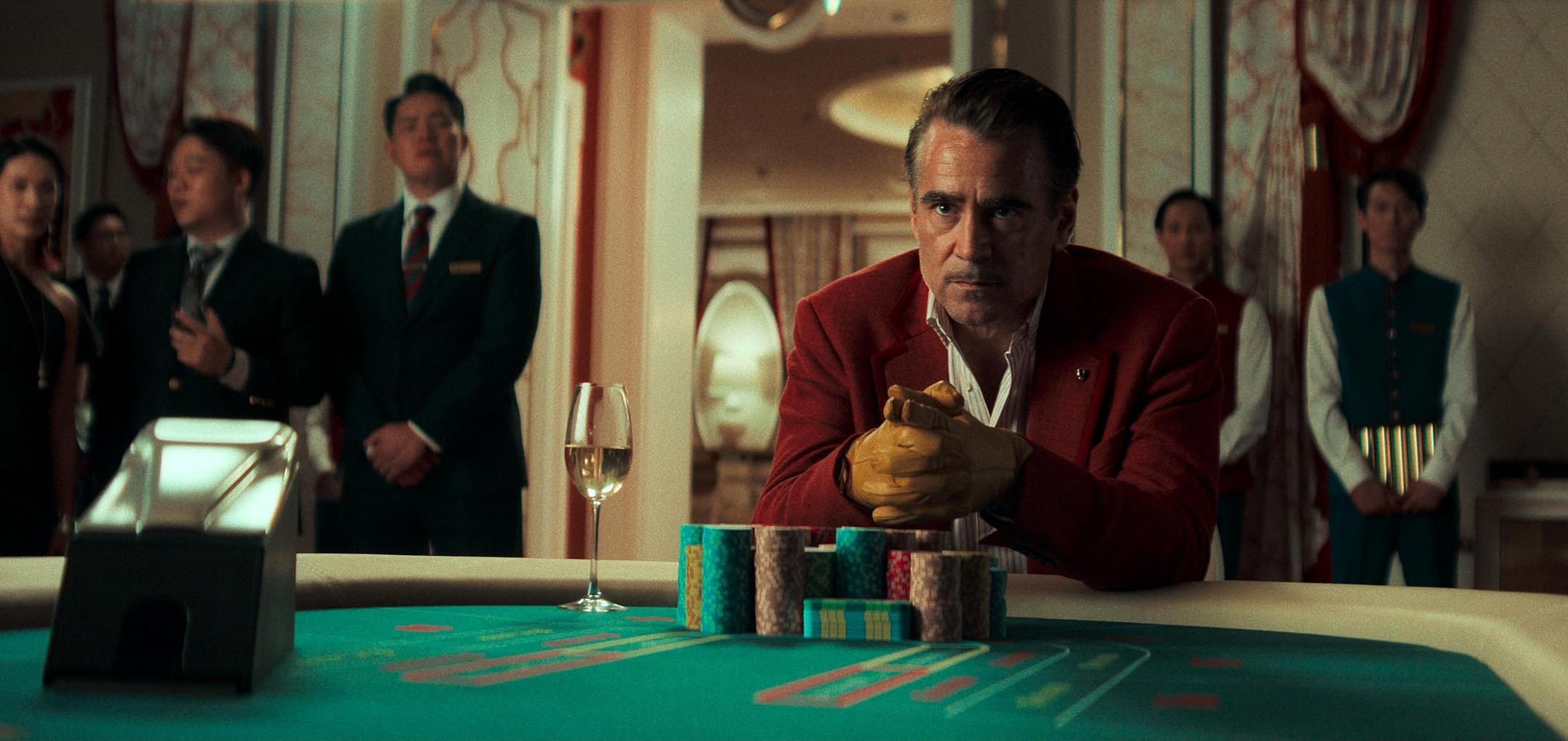
BALLAD OF A SMALL PLAYER IS AN ODD MOVIE, part psychological portrait of an obsessive personality, part ghost story, part travelogue through the faux-glitzy side of Asia. But it is anchored by Colin Farrell in one of the most devastatingly precise portraits of a roguish scamp in a career defined at least in part by playing rogues and scamps.
When we first meet Farrell he is going by the name Lord Doyle and living the high life in a Macau casino, though something is obviously not quite right. He has the cravat; he has the fine smoking jacket; he has the supple leather gloves. But his room’s a mess and he himself is scattered, unsure when his roll of cash is. He practically cowers from the bill slipped under the door and, once he hits the valet, is set to flee from the hotel and its apparatchiks. He owes several hundred thousand in Hong Kong dollars to the casino, it seems, and the time has come to settle up. Needless to say, this lord is a pauper.
But he can win what he needs through the mysterious art of baccarat. And here the descent begins, the façade starts to crumble away. Farrell starts the movie with a posh accent that simply doesn’t suit him, but that fades and his natural Irish lilt returns as the losses pile up, as the sweat accumulates on his brow. Director Edward Berger’s camera tilts and pans to show his descent (literally, down an escalator); he is occasionally shot with his face half in the dark, a visual clue that we can’t see the whole man behind this Lord Doyle routine. The more desperate he gets, the sweatier Farrell gets, and the more that accents comes and goes. And when he’s cornered by an agent of the British state (Tilda Swinton) who has tracked him down for the fraud he has committed, the whole thing collapses, and him along with it.
I don’t want to dwell on the plot too much here; Ballad of a Small Player is more concerned with mood and tone and internal pressure than pure plotting. And Farrell has evolved over the years into one of our best actors when it comes to making internal strife externally visible. From the suffering hitman in In Bruges to the befuddled clod in The Banshees of Inisherin, he has mastered the art of making the pain his characters feel on the inside abundantly clear to anyone who comes across him. Even when he’s buried under fifty pounds of makeup, as on HBO’s The Penguin.
Ballad of a Small Player is not an easy or a pleasant watch, precisely; it is, at heart, a movie about people living in the shadow world between manic excitement and suicidal depression, a murky nether-region embodied by the relationship between “Lord Doyle” and loan shark Dao-Ming (Fala Chen) is hauntingly beautiful. But it looks great, Berger perfectly capturing both the neon-soaked grubby splendor of the casino city of Macau and the grimy muck of its extremities, the muddy shores and the city’s detritus that remains when the tide pulls out.

NOUVELLE VAGUE CONCERNS THE MAKING of Jean-Luc Godard’s Breathless (1960), a key text of the French New Wave. Director Richard Linklater has aped Godard’s playful style—we are introduced to all the key figures in the movement, from Truffaut to Coutard to Varda, with straight-ahead shots, eyes meeting the camera with their names right below them—while hewing to the basic form of the historical biopic.
As such, it’s a weird beast, a movie that feels both breezy and restrained. Linklater himself has often employed a sort of loosey-goosey style, particularly in movies like the coming-of-age hangout comedy Dazed and Confused or Slacker, but this movie feels much more precise than either of those; it’s so beholden to portraying the New Wave as a period of odd indulgence that, ironically, everything has to be more locked down.
Guillaume Marbeck plays the always-sunglassed Godard, a man riven by jealousy that his peers at the magazine Cahiers du Cinéma have all made films while he languishes in criticism. Prone to spouting quotes about the nature of art rather than providing proper direction to lead actors Jean-Paul Belmondo (Aubry Dullin) and Jean Seberg (Zoey Deutch), Godard hopes to collapse the distance between screen and viewer. Cut the slow parts of driving scenes, discard continuity: Life is remembered as a series of jumbled moments and we only really focus on the highlights, so why not show that on the screen?
Yes, Nouvelle Vague is the dreaded movie-about-movies, though Linklater steers mercifully clear of attempting too many grand statements about the importance of art; Godard speaks in quotations about the meaning of film and life, yes, but these feel more like clichés and platitudes designed to deflect angst about his shooting style than pronouncements about What It All Means. Instead, the film feels more like a workplace comedy. You have coworkers ribbing each other and professional jealousies and an overbearing boss in the form of producer Georges de Beauregard (Bruno Dreyfürst), who quickly comes to regret giving Godard the money to get this thing made. That lends the proceedings a breezy, comic air; this isn’t in quite the same mode as Linklater’s hangout movies, but it’s not far off either.
What little conflict there is stems from Seberg’s annoyance at Godard’s improvisational style and the lack of a finished script. She’s a proper actress, she wants to do proper work with proper makeup and proper costuming. She has a reputation to uphold, an onscreen image to purvey, and more to lose than just about anyone else involved. In a different movie this is a completely thankless role—she’s set up to be a real buzzkill—but the combination of Deutch’s joie de vivre and Linklater’s, I think, sympathy for her frustration with Godard’s ramshackle shooting style keeps her from coming across as whiny or annoying. Ultimately, Godard’s mad method helps her deliver the performance of a lifetime, and the rest is history.
I WROTE ABOUT THESE TOGETHER because they’re both Netflix films and are, as of this Friday, both available on the streaming service’s app after a token Oscar-qualifying theatrical run. They share other similarities. The directors, Berger and Linklater, are critical darlings and often in the awards season mix: Linklater has been nominated for five Oscars, including best director, while Berger’s last two films (Conclave and All Quiet on the Western Front) were nominated for a combined seventeen Oscars, winning five. Once upon a time, these were the sorts of adult dramas that would, at least, get a serious limited push theatrically in the hopes that they caught on with coastal audiences and could make a little money at the box office. Now, they go (functionally) straight to streaming. If they’re made at all.
Which, as Richard Rushfield noted this week, they rarely are.
“In this year’s box office so far, here in early November, you have four films that could be classified as ‘dramas’ that have grossed more than $20 million,” Richard noted. “Turning to the streaming world: By my count, Apple, Amazon and Netflix will release between them 57 scripted American feature films. Of those, eight are dramas.”
Richard runs through all the reasons why these films don’t get made that frequently, but there’s a chicken-and-egg problem: The movies don’t get made because audiences don’t go see them, but they don’t go see them because so few get made, but then how do we know if making more will get them to show up, etc. Regardless of the ultimate cause, the problem is, on some level, the audience: They simply don’t show up. They’re not interested in stuff like this.
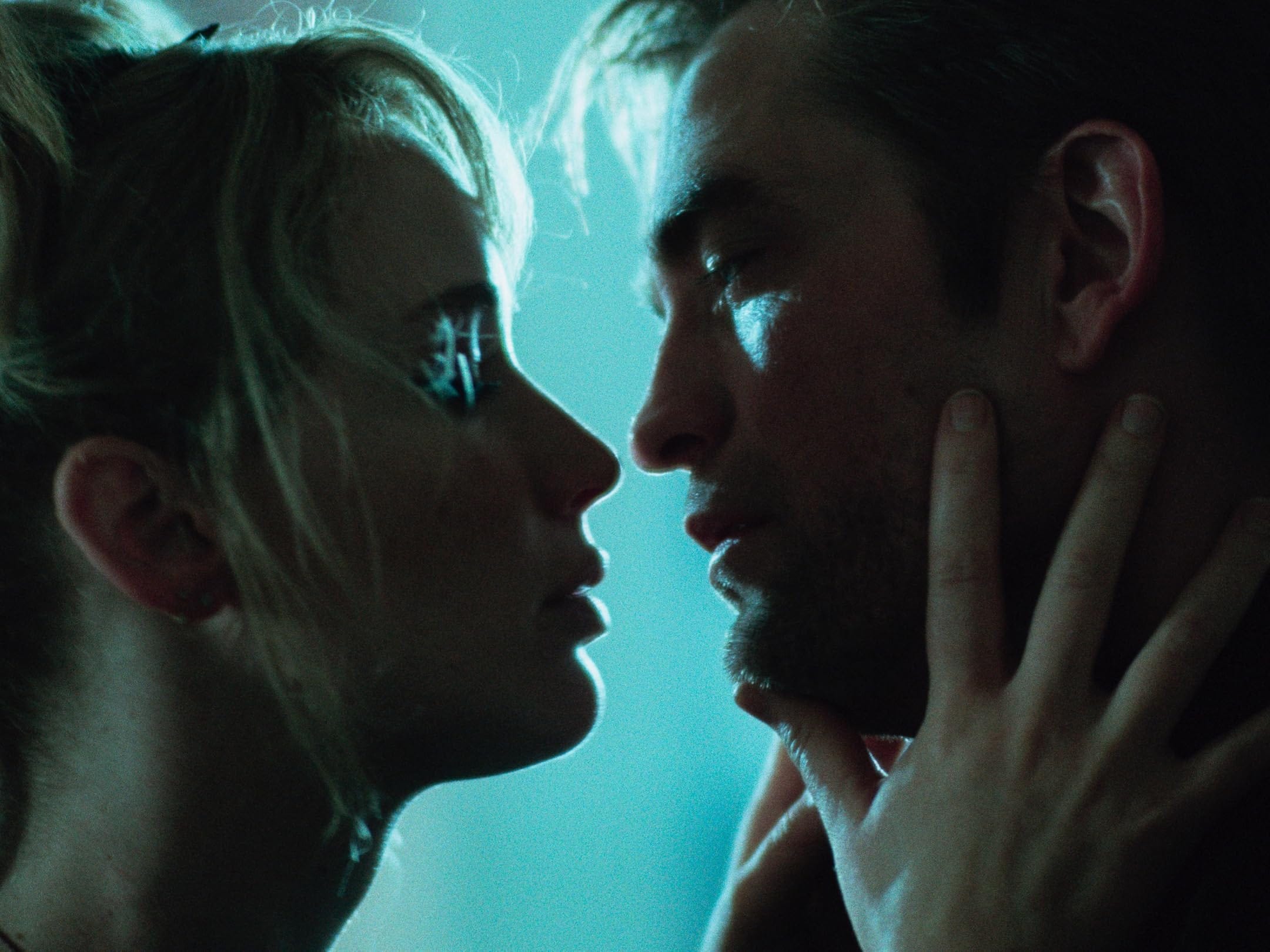
And I can prove it with science: Linklater has another movie in theaters right now about the making of a legendary work of art, one that happens to have a bigger name (Ethan Hawke) attached to it than anyone in Nouvelle Vague. That movie, Blue Moon, has grossed just $1.5 million after four weekends. The Sydney Sweeney Oscars-season boxing drama, Christy, opened to just $1.3 million. Die My Love, a domestic drama starring Jennifer Lawrence (cumulative career box office: $2.4 billion, domestically) and Robert Pattinson (cumulative career box office: $1.8 billion dollars, domestically) also opened last weekend. It earned $2.6 million.
The money made tells you nothing about the quality of these films, but it tells you everything about interest in them. It’s nil. My own personal experience can confirm all this. Podcast episodes about adult dramas in limited release always fare poorly when compared to, say, podcast episodes about Marvel movies. They want to listen to Peter, Alyssa, and me banter about Predator: Badlands, a not-great-but-fun piece of IP exploitation. This edition of this newsletter will be one of my least-read of the year1: No one is that interested in a psychological drama/ghost story about a gambler in Macau; no one cares that much about the making of a 65-year-old black-and-white French film. I can almost guarantee these movies won’t make any streaming hours-viewed charts, even if they do manage to score some nominations. I’m writing about them because I’m interested in them and am lucky enough to have a job where I can, hopefully, convince some of you to be interested in them. But, for the most part, people just don’t care.
And it’s not clear that the studios have either the ability or the inclination to make them care.2
Unless my editor manages to select a compellingly flesh-baring image to put atop this newsletter, and maybe not even then.
In a follow-up post, Richard argued that the indie studios have made a mistake by focusing on the awards-season storylines revolving around these films: Dwayne Johnson’s return to respectability in The Smashing Machine, Sweeney attempting to transcend sexpot status in Christy, etc. I think this is basically right, as normal people don’t really care about the Oscar horse race unless they already care about the film itself. All of this is tied up in the death of platforming—showing a movie on 10, then 200, then 2,000 screens, allowing it to build word of mouth as it goes—but that’s an essay for another day.
I read your entire post-and I am one of those who have not seen a movie in a theater for probably five years. Thank you for writing about these movies.
High five to everyone else who did read this post!
My luddite take is streaming sucks. I want the cable bundle back (the zombie version of today doesn't count) and random movies for grown-ups on the big screen.