‘Black Phone 2’ Review
Who needs internal logic when you’re a ghostly grabber?

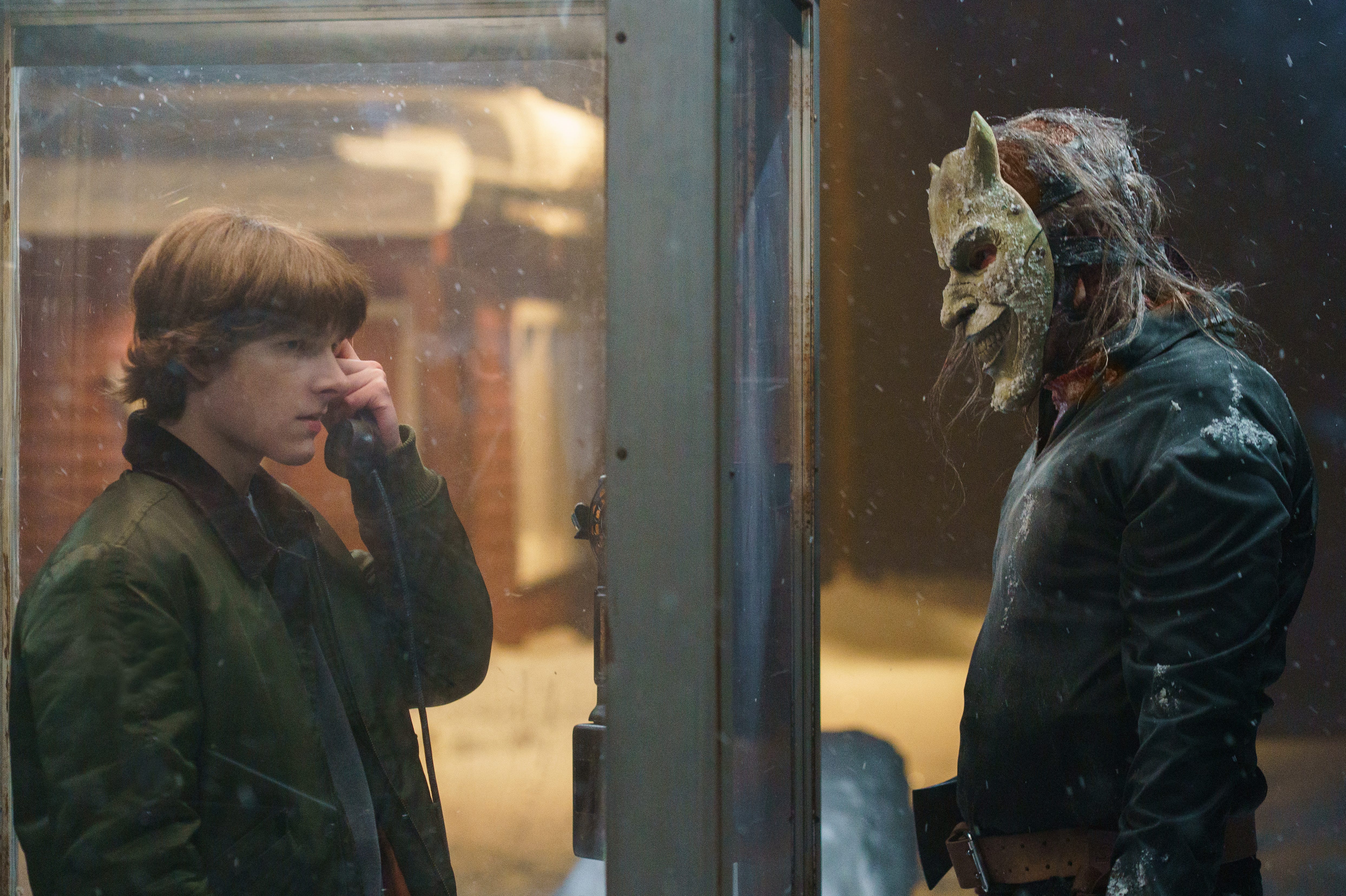
I honestly can’t tell if I admire cowriters C. Robert Cargill and Scott Derrickson for simply saying that there didn’t need to be any internal logic to Black Phone 2 or if I was annoyed by the wanton lack of rules and rigor. There’s something to be said for just saying, “Screw it, it’s a ghost movie, we can do whatever we want; what are you going to do, call the ghost cops on us?”
I’m usually a pretty big stickler for internal logic. You can do whatever ridiculous thing you want, so long as the ridiculousness is consistent. All of which is to say that I’m willing to buy that The Grabber (Ethan Hawke) has transcended death and escaped Hell by feeding off the terror of his first, previously unknown victims, who were located in an isolated Christian camp in the middle of the Colorado Rockies. And I’m willing to believe that The Grabber would be able to invade the dreams of psychic Gwen (Madeleine McGraw), tormenting her in the hopes of exacting revenge on Finney (Mason Thames), the one child who escaped The Grabber’s clutches and, in the process, killed him.
But what I have trouble with is when The Grabber is, somehow, able to communicate with Armando (Demián Bichir), the guy who runs the camp. And then, in the midst of all this, The Grabber is able to make a demented-looking snowman, and then throw the snowman against a window, and make blood appear in the snowman’s eyes, all in the hope of terrifying Armando. There is no consistency whatsoever with how The Grabber can interact with the real world and how the real world can interact with him. I guess what I’m saying is that this is the sort of movie where a live, waking teenager can choke a dream ghost, and you’re pretty tempted to just say “sure, why not,” because Derrickson does a great job of making you spring out of your seat with the quick-cut jump scares and musical score spikes.
The movie feints at deeper themes about faith and family, about how people who tell you to avoid bad words and bad thoughts aren’t necessarily good Christians, but that’s not where the series’s strengths rest. These are simple movies about a child killer and his victims’ ghosts. In particular, I’ve always appreciated the idiotic simplicity of the name “The Grabber.” It’s why I keep repeating The Grabber in this review (and hope my henpecking editor will grant me the capital t in “The Grabber,” contrary to our general style). It really cuts to the chase! More of a title than a name. What’s this guy do? Oh, he’s our head grabber. Grabs kids. Grabs ’em and kills ’em. The Grabber! All of the spooky elements from the original film were in service of stopping The Grabber from grabbing kids, and I thought that was great. The unfussiness of the original, though, is complicated by the sequel’s addiction to Grabber lore. We find out all about the kids The Grabber grabbed before and the horrible ways in which The Grabber has secretly changed Finney’s and Gwen’s lives.
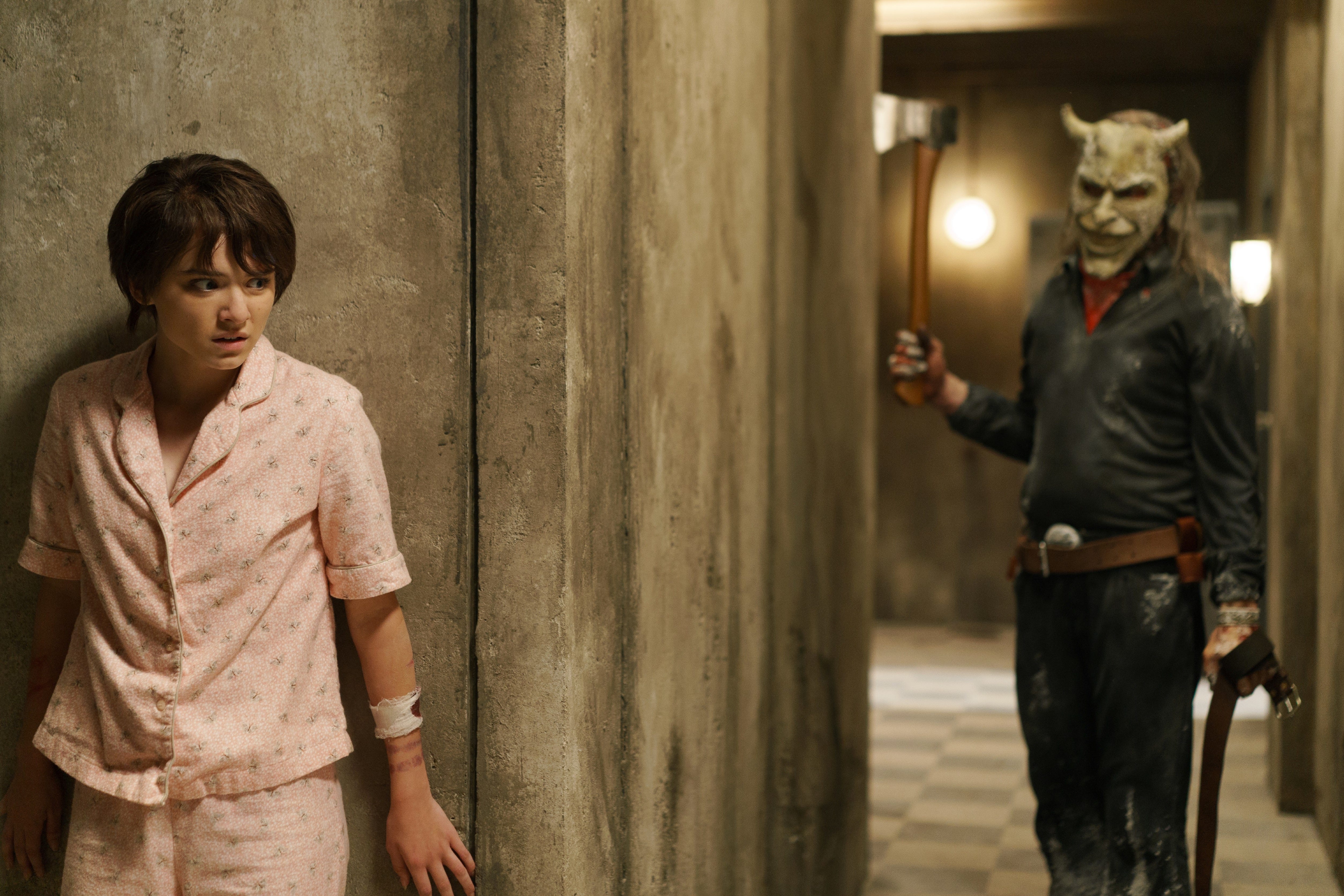
I’m not really sure any of this is necessary except as an excuse to bring The Grabber back, but that may be reason enough as The Grabber is one of those great horror villains in that the character features a single fantastic design choice—in this case, the iconic horned mask that detaches at the jawline for extra spooky effect—that can spawn a whole franchise. This is why we’ve been subjected to something like thirty-seven Hellraiser sequels: one character with fifteen minutes of screentime in a dreadful movie had pins stuck in his head, and people loved it.
Black Phone 2 honestly could have used a little bit more of The Grabber: Ethan Hawke isn’t wasted, precisely, but you do get the sense that Derrickson had him on set for about four days and made the most of it. Hawke exuded a raw theatrical menace in the original that is occasionally matched here, particularly in the rare quiet scenes he’s afforded. At one point, The Grabber and Gwen are in the back of a van and Hawke plays the villain as exhausted and almost reluctant; he’s driven to his villainy here by a compulsion instilled by the depredations of hell.
“I am a bottomless pit of sin,” he says, explaining that the torment of the damned is to have every trace of humanity stripped from you until all that’s left is evil. It’s an intriguing idea, but being so consumed by wickedness all the time takes a lot out of a guy.
You can tell he barely even has the energy to do all the grabbing that needs to be done.
Sure, but did the movie grab you?
I wonder what the timeline was for Hawke to shoot this while also shooting The Lowdown for FX (which I have to recommend highly)