

Europe’s Only Hope Is to Stand Up to Trump
Time for some transatlantic hardball.

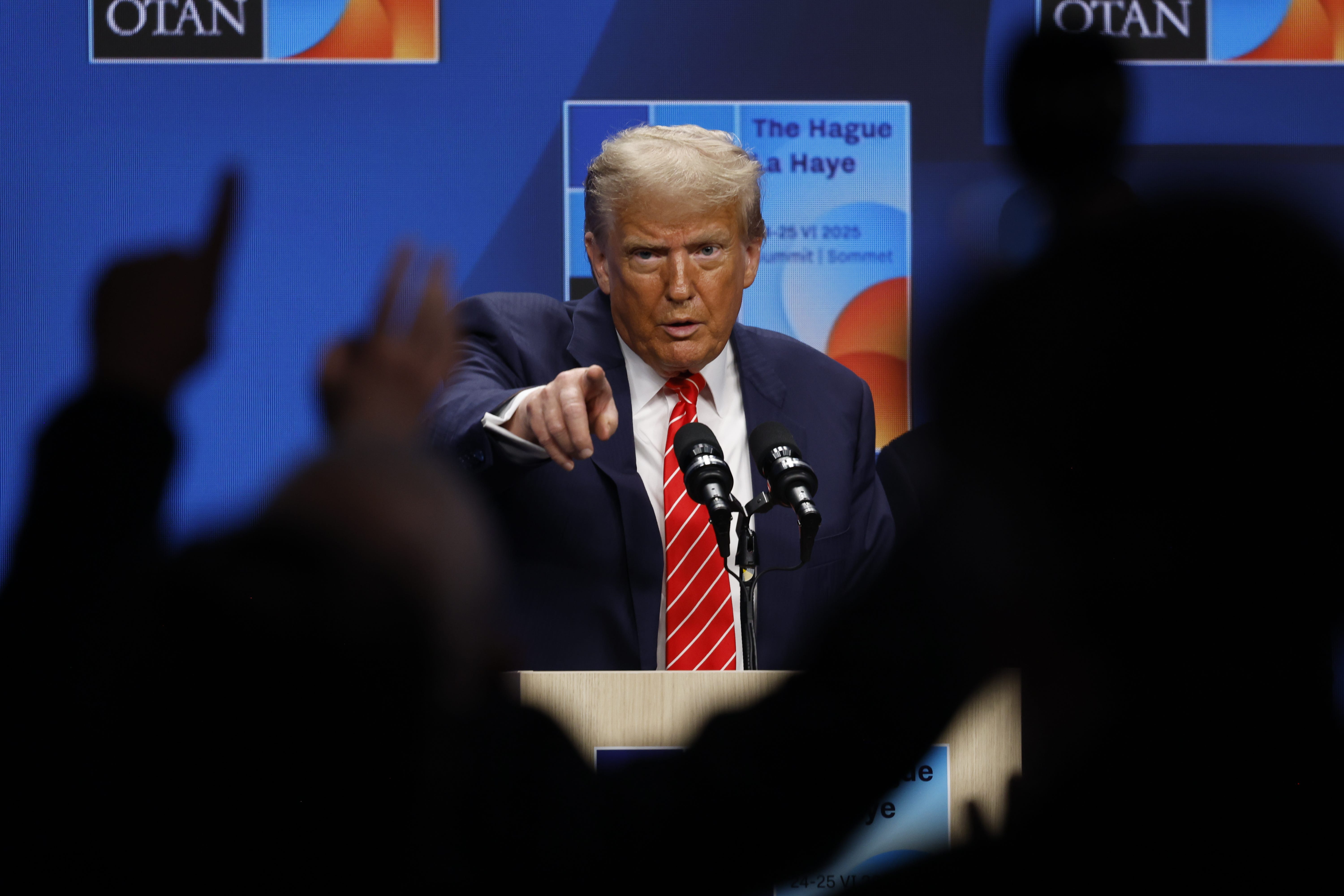
AMERICAN SABER-RATTLING over Greenland is pushing Europeans toward an unenviable choice: either to stand up to the bully and risk both the end of NATO and the end of U.S. support for Ukraine, or to accommodate Trump in the hope of keeping both going until Europe can secure its neighborhood itself. It is an unenviable dilemma, but there is one correct answer: to stand up to Trump. Alas, it is the answer that European leaders, in their defensive crouch, are less likely to pick.
An ally that insists on the transfer of territory, by force or blackmail, is not a terribly reliable one, if it can be called an “ally” at all. Even before Greenland started dominating the headlines, the chances of the United States under Donald Trump’s leadership coming to the defense of, for example, Estonia in the case of a Russian invasion looked unlikely.
Accommodating Trump just to keep up the appearance of an alliance is a fool’s errand. The summits, the common standards and interoperability, the military-to-military cooperation that characterize the transatlantic relationship are valuable only in the context of a shared willingness to fight together, as one team. But the Trump administration, as its National Security Strategy makes clear, sees the European theater as a vital U.S. interest only insofar as the United States can facilitate the dismantling of the EU and foster the emergence of ethnonationalist, Trump-aligned regimes.
Recent reporting suggests that Trump is offering to “buy” Greenland to the tune of $700 billion, more than 2 percent of U.S. GDP. That is a staggering figure. There is no federal piggybank that can be smashed to come up with that much cash—except a supplemental appropriation from Congress, which would face massive resistance—so the administration is likely to reach that number with pledges of future investment, perhaps coming from the private sector. Greenlanders and Danes should take such an offer about as seriously as they take emails from “Nigerian princes” offering highly lucrative “business transactions.”
Ukraine complicates the picture. The success of Ukraine’s self-defense, inflicting major damage to the Russian military and getting Russian forces stuck in the mud of Donbas, is doing more for Europe’s security at this point than the transatlantic alliance. Ukraine, after all, is trying to ensure the borders of European countries remain inviolate, while Trump is trying to violate them. At the same time, continued U.S. intelligence sharing and arms sales under NATO’s Prioritized Ukraine Requirements List are playing an important role in keeping Ukraine in the fight—and in saving Ukrainian lives. It is striking that despite his attachment to Russia, Trump has not completely severed U.S. ties to Ukraine. Setting aside Steve Witkoff’s and Jared Kushner’s harebrained diplomacy, the status quo is something that both Ukrainians and Europeans have learned to live with, however uneasily.
It is imaginable that, as leverage in his quest to grab Greenland, Trump will threaten to withdraw all U.S. support and stop military sales to Ukraine, as he did in March 2025. And it is equally imaginable, even likely, that some European leaders will pressure Denmark to come to some kind of accommodation.
But giving in would be a mistake. Trump may hate Ukrainian President Volodymyr Zelensky and be indifferent to Ukraine’s fate, but most Americans—including many voters and politicians in Trump’s party—feel differently. The reason why U.S. assistance in the form of intelligence sharing and arms sales continues is because there would be political costs for Trump at home if the situation in Ukraine became catastrophic.
In fact, Trump’s current foreign policy adventurism, of which the Greenland shenanigans are a part, betrays his domestic weakness, which was on full display in the GOP’s splintering over the Epstein files. For a foreign adventure to successfully distract from his domestic woes, however, it would have to be popular, relatively speaking. Trump likely imagines that the abduction of Nicolás Maduro to put him on trial in New York or possible strikes against the collapsing Iranian regime fall into that category (though polling suggests the opposite); the wanton destruction of NATO and the abandonment of Ukraine would be dismally unpopular.
EUROPEANS CAN DO MORE to turn the American public against the Trump administration’s anti-European moves. EU foreign ministries and their colleagues from countries such as the United Kingdom and Norway should agree on common, coordinated strategic communication, outreach to Congress, state governors, associations of Americans of European extraction, and businesses with European ties. At the same time, the likes of Finnish President Alexander Stubb and Italian Prime Minister Giorgia Meloni should not only be trying to woo Trump but should also go on a charm offensive across red and blue states, underwritten by a European-funded, well-targeted social media campaign to counter the anti-EU narratives pushed both by the MAGA world and by Russia.
Like the Ukrainians, Europeans ought to be able to work with reasonable American demands—the Danes have signaled openness to a discussion about a stronger American military presence in Greenland, and mining rights for rare earth minerals is fair game—while also remaining unflinching in confronting the gangster-like demands to transfer sovereignty.
It is incumbent on Europe to articulate, collectively, the ways in which the EU and other European allies would inflict pain on the United States in response to expansionism against Greenland. A good start would be encouraging the European Commission to be much tougher about enforcing EU legal obligations against large U.S. social media platforms such as X. Making it clear that U.S. bases in Europe, used to project U.S. power way beyond the European theater, would close; that European financial institutions would be forced to sell off U.S. debt; or that trillions in private investments, underwriting over three million American jobs, would face an uncertain future should add to the list of reasons for Trump to move on to something else.
America’s power remains unparalleled, and the main reason why Greenland’s future is in jeopardy is Trump’s intuitive sense of Europe’s weakness and dependency. But even an apex predator will back off if its desired prey is indigestible. In contrast, the more Europe validates Trump’s perception of its weakness, the more obscene and unreasonable the demands will become—and the hollower the shell of the once-great transatlantic alliance will be. The best hope for keeping America’s NATO and Ukraine policies in their holding patterns until U.S. politics changes is for Europe to become, in Trump’s eyes, too much trouble to be worth it.
 | A guest post by
|