

Gen Z Has a Love/Hate Relationship with AI
They use it for everything, but fear what it’s doing to their job prospects, relationships, and brains.

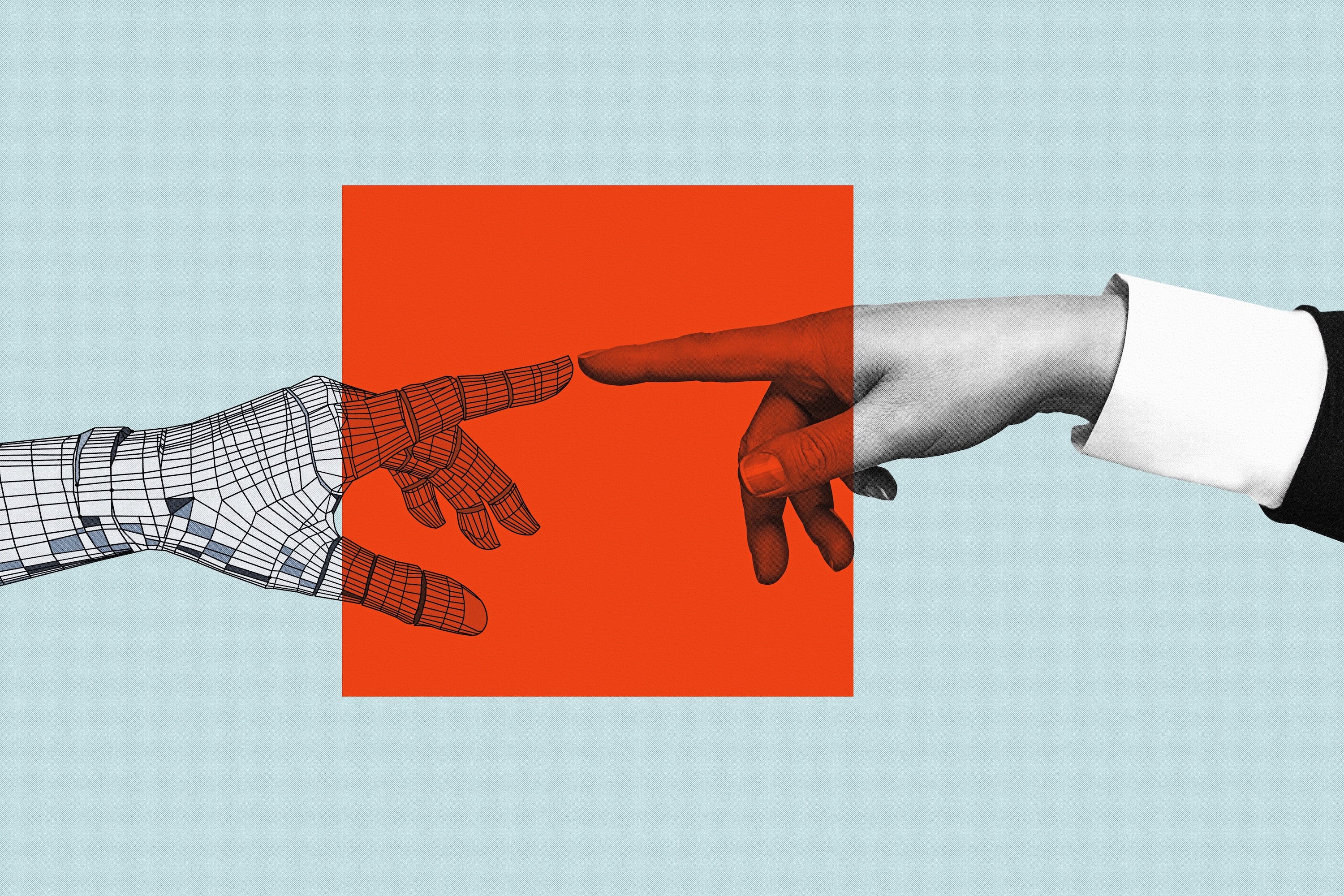
GEN Z USES AI FOR EVERYTHING. It’s embedded in apps for everything from social media and messaging to music and podcasts, it fills the role that search engines played only a few years ago, and it’s even common in online dating. The majority of Gen Z uses AI at home, at school, and at work every month, if not every day. In fact, nearly three in ten U.S. teens report using AI chatbots daily, according to a new report from Pew Research Center.
But just because Gen Z uses AI doesn’t mean they like it. Despite its omnipresence—or even because of it—Gen Z has a complicated, ambivalent relationship with AI.
Gen Z is constantly inundated with noise about how the new technology is going to upend their future. Meanwhile, they’re told they’ll be left behind if they don’t become AI fluent. Yet, few schools have openly embraced AI or encourage their students to use it, nor are employers clear about how their employees should be incorporating it into their work. It’s confusing, to say the least.
In my work with focus groups, I’ve witnessed young people’s hesitancy around AI first-hand, with some going so far to say they’re “AI-skeptical.” In recent listening sessions, one-on-one conversations, and qualitative surveys, Gen Z adults have shared a mix of attitudes about AI. Many expressed concern. And while some share optimism about the good that artificial intelligence could do in the world, from healthcare to education and blue-collar work, most fear that the cons outweigh the pros.
The conventional wisdom about Gen Z and AI is that the whole generation is becoming too reliant on the nascent technology, using it as a crutch to circumvent traditional learning or even using it to cheat. Some members of Gen Z even share this worry. I’ve heard a Gen Zer complain that all their friends are using AI to cut corners more times than I can count. And there’s a sense of FOMO that if they don’t use it too, it’s their loss. They fear that type of group-think has consequences. “My biggest fear with AI is that we’re just going to be relying on this, not mentally thinking about things,” a student at University of Arkansas Pine Bluff told me last spring. “If we rely on it too much, we’ll be running around like little dummies.”
Others are concerned that their college degrees could be outdated the moment they’re earned because of the evolving future of work. (The effects of AI on the job market are still uncertain enough that people with humanities degrees are as nervous in many cases as those with hard-science or engineering degrees.) As the cost of college becomes exponentially more expensive and the cost of living rises, what’s the point if the degree doesn’t guarantee a job? Asked about the impact of AI on their education, a Norfolk State University graduate shared: “It made assignments easier. However, it took away future jobs I wanted.”
Other members of Gen Z are laser-focused on the impact of AI data centers, which are driving up the cost of living and energy bills. While most Gen Zers I talk to worry about the environmental impact of AI, it’s not stopping them from using it. “In Arizona right now, our public utilities are proposing rate increases in energy bills because of databases,” a teenager from Tucson said in December. “Taxpayers and people who pay for these public utilities are taking on that burden right now, and we’re being told that AI will fix the climate issue because there’s going to be so much innovation and that we should step off regulation so we don’t fall behind China and all these other countries, but I think that’s misleading, and I think people are allowed to ask these questions now,” he said.
GEN Z’S CONCERNS ABOUT AI are not so different from those of Boomers, Gen X, and Millennials. Though Gen Z relies on AI in school and at work, they are still AI-anxious. In fact, a Gallup Walton Family Foundation poll from last spring found that more than half of Gen Z adults say AI makes them anxious, while just 26 percent said it makes them hopeful.1
Whenever I ask Gen Zers the top issues they don’t hear enough about, AI tops their list of concerns. And it’s not just linked to the value of their education in a changing job market; it’s about fear—of misinformation, deep fakes, and flat-out lies.
“In terms of specific policy that I’m watching, it would have to mainly do with AI and the type of safety regulations that are being created around that,” a 21-year-old student in D.C. told me at the end of last year.
She’s not alone. “There’s so many dangers that come with AI and the misinformation that it can perpetuate. And right now we have I think we have, like, no regulations on it in America. So that’s something that I would want to see politicians speak about more,” said a college student from New York City.
“I definitely don’t think it needs to be a ban or anything like that, but I’d like to see politicians that want to take a bit of a step to limit its ability to take over certain fields. I feel like when it starts to fully take over and have the power to take over certain job fields . . . that’s becoming like a really negative thing for us and could, like, become really serious really soon,” said a high-school student in California.
Much of Gen Z may be innately digital, they’re not innately AI-trained. Their complex relationship with AI is the result of trying to hedge against a technological revolution just as they’re kickstarting their careers and adult lives.
This generation has watched tech go unregulated before. They were the guinea pigs of social media and have faced the brunt of its consequences: deteriorated mental health, a culture of comparison, body image issues, and a pervasive fear of missing out, to name a few. Now, as they stare down the future with AI, they don’t want a repeat. They’re craving intervention.
I work with the Walton Family Foundation on Gen Z–focused research.
 | A guest post by
|