Good Luck Explaining This Florida Democratic Ticket
A Democratic Socialist and a former Republican walk into an election...

DEMOCRATIC OFFICIALS did not go into this election year believing that they had a good shot at flipping the Florida Senate seat that’s on the ballot this November.
And for good reason. Once a deeply purple state, Florida has been trending away from Democrats since Donald Trump carried it in 2016. As the state’s large Latino population has shifted rightward and as Republican-leaning baby boomer retirees have flocked to the Sunshine State in search of warmer weather, it has become harder for Democrats to break through. (The last Democrat to win a statewide race was Nikki Fried, elected agriculture commissioner in 2018.)
So winning the Senate race against Republican Ashley Moody—who was appointed to the seat last year to replace Marco Rubio when he became secretary of state—was treated by national Democrats as almost beside the point. In my conversations with party officials over the past few months, many emphasized that it was important just to compete in the Florida Senate race as a means of forcing Republicans to spend money there. Even more importantly, they believed it was critical to put up a good fight as the party confronts the looming 2030 census changes that will make Southern states like Florida, Texas, North Carolina, and Georgia all the more politically powerful.
Thanks to a decades-long flood of cross-country migration from states like California and New York, Florida is projected to gain four or more congressional seats after a new census is conducted in 2030. Texas may gain four—or even five—more seats, while North Carolina, Georgia, and Tennessee could each gain a seat. Meanwhile, reliably blue states like California could lose as many as five; New York might lose three; and Illinois, Minnesota, Oregon, Pennsylvania, Rhode Island, and Wisconsin could all potentially lose seats.
All of which means that in order to win sustainable House majorities and the presidency in the future, Democrats must start performing better in places like Florida.
“People get caught up in the fire in front of us and forget that there is a bigger fire coming,” said Amanda Litman, cofounder of the progressive group Run for Something, which works to develop downballot candidates, when I asked her about the implications of the 2030 census for Dems.
So when Lt. Col. Alex Vindman—a former national security official who was a top witness in President Trump’s first impeachment—jumped into the Florida primary race, there was hope among Dem officials that he could help build a party brand more palatable to red-leaning voters across the state. His ability to quickly raise money (he raked in over $8 million in his first two months in the race) gave party leaders additional hope that Vindman could put the state in play.
Careful reporting.
Savvy commentary.
And a growing pro-democracy community.
Stick with us this campaign season. Join Bulwark+.
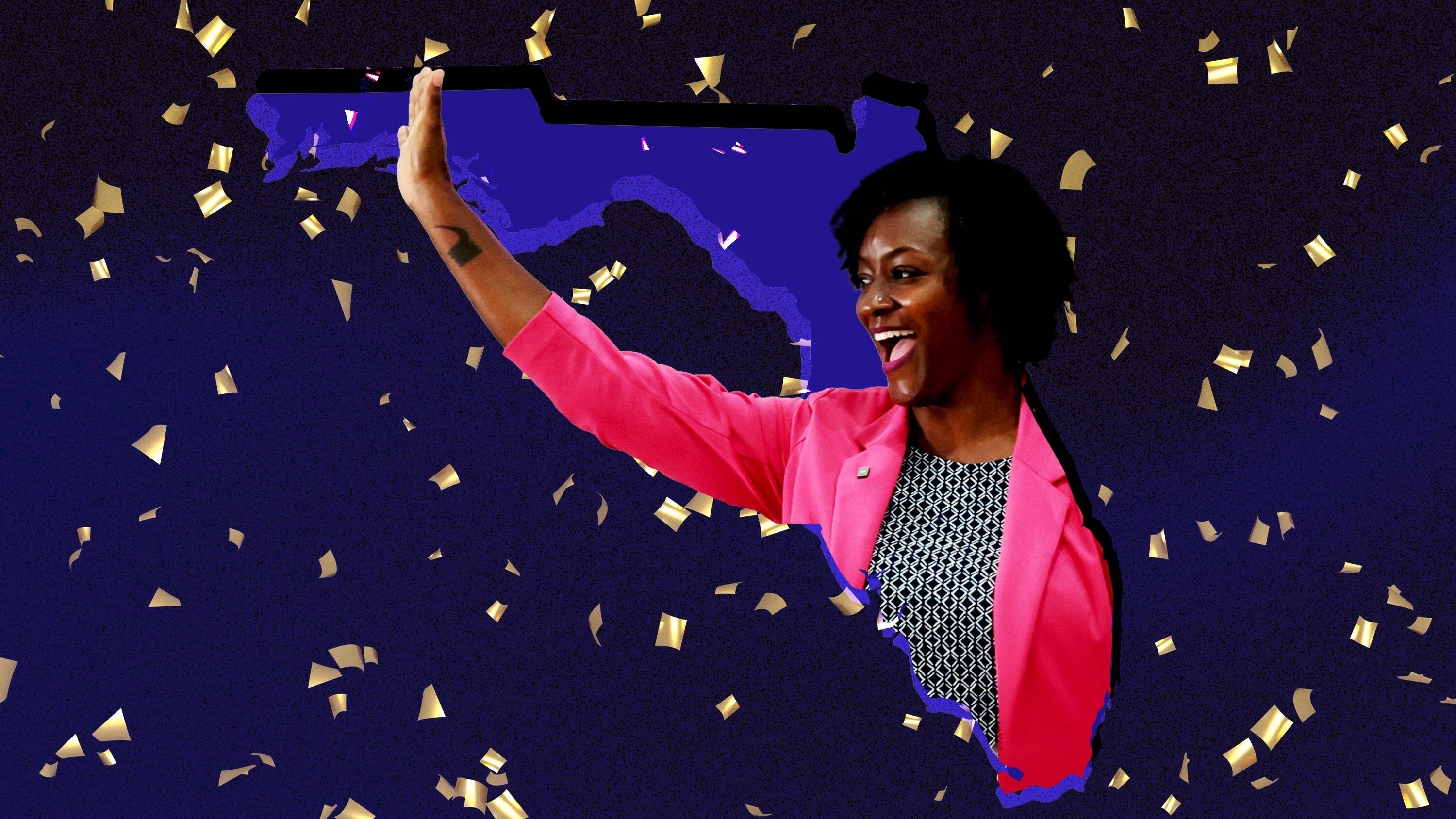
But Vindman’s surprising loss in Tuesday’s Senate primary to Angie Nixon—a state legislator who is a member of the Democratic Socialists of America—has complicated all of that.
“To win statewide in Florida, a big chunk of that is winning back Hispanic voters that we’ve lost,” said Democratic strategist Steve Schale, noting that the word “socialism” is poison among this subset of voters, many of whom fled left-wing dictatorships. Nominating someone who has flirted with that label could be consequential to the party’s brand in the state.
“There’s a group on the left that thinks that we lost them because we didn’t go left enough. I’m pretty sure that’s wrong,” said Schale. Nixon is “going to have to figure out how to overcome [Moody’s attacks], and I’m skeptical. It’s just kind of hard to know where that leads us.”
Much of the work of convincing independent and frustrated Republican voters that there is a place for them in the Democratic party will fall to former GOP Rep. David Jolly, who won the Democratic nomination for Florida governor.
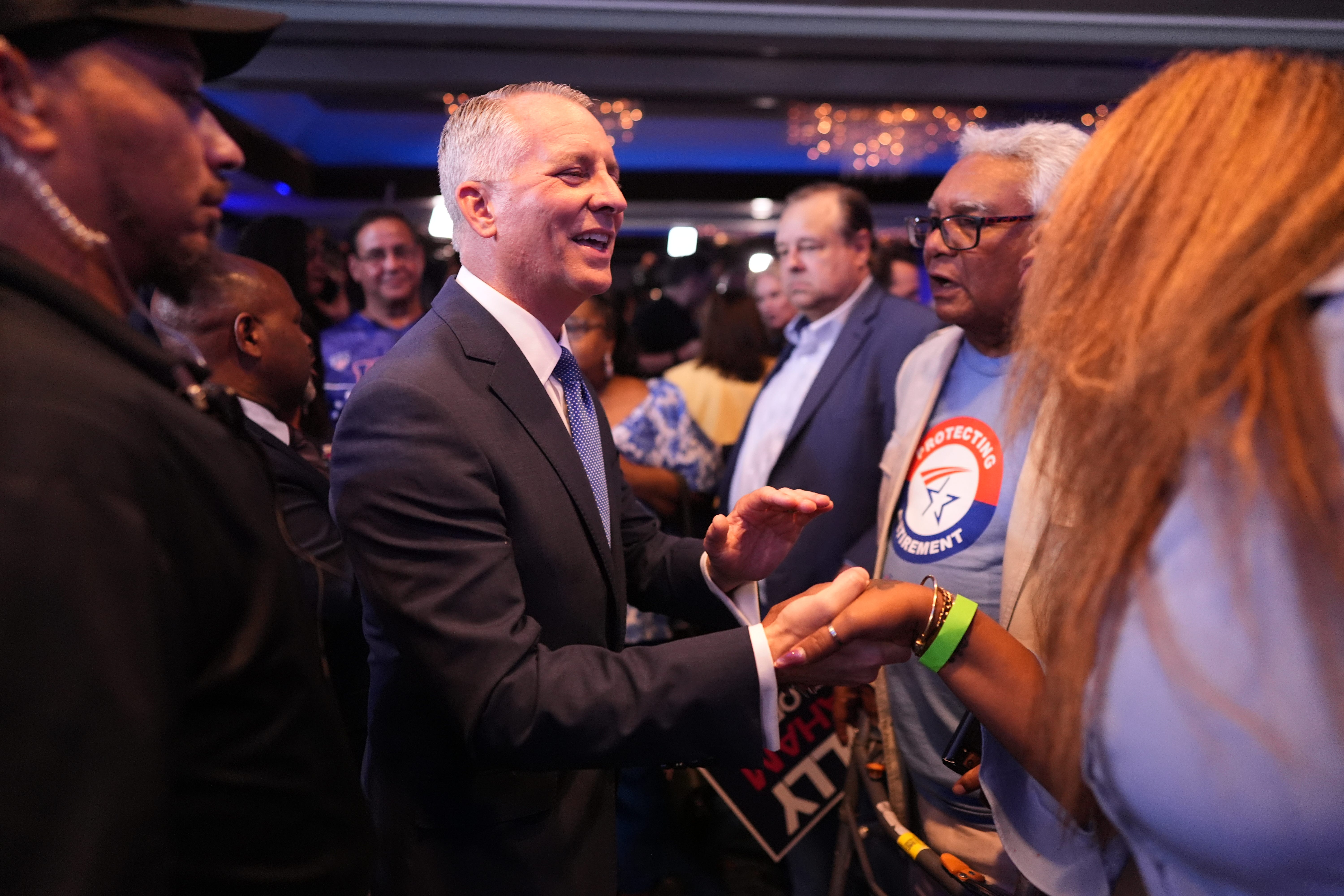
“I reject the DSA. I reject socialism. I’m a capitalist and I think capitalism provides the greatest amount of economic mobility,” Jolly said in an interview with MS NOW on Tuesday.
It’s hard to think of two statewide candidates from the same party who are more misaligned.
NIXON’S ALLIES ARGUE that if mainstream Dems were really so worried that she would hurt efforts to rehabilitate the party brand, they would have worked harder to defeat her in the primary. Her backers say she simply outworked Vindman, who appeared to believe he could coast to the nomination without putting in much effort. In a display of confidence that he had the nomination locked up, Vindman already had a Nantucket fundraiser scheduled for next week. Vindman’s campaign also seemed to think voters would reward him for the role he played in Trump’s first impeachment and look past the fact that he moved to the state only recently and lacked longstanding relationships in the community.
But his 12-point loss is the latest sign that the era of impeachment politics is over; Democratic voters are no longer impressed by actions—however heroic they may have been—taken during Trump’s trials. In this cycle, billionaire Tom Steyer, who led the “Need to Impeach” campaign during Trump’s first term, lost his bid for California governor; Colorado Rep. Diana DeGette, who served as an impeachment manager for Trump’s second impeachment, also lost her primary; and George Conway, who made impeaching Trump a central message of his primary campaign for New York’s 12th Congressional District, received less than 10 percent of the vote (although we are very happy to have George back with The Bulwark fam).
“Impeaching Trump is not a great talking point when he is back in the White House and worse than ever,” tweeted Democratic strategist Rebecca Katz.
Nixon’s primary victory might have complicated the party’s long-term goals in the state. But despite the very real concern that Nixon will drag the party brand further down, some Dem operatives stressed that there may be an upside to Vindman’s loss.
Adam Jentleson, president of Searchlight Institute, argued in a post on X that Vindman would “attract a ton of grassroots money only to set it on fire, a la Jamie Harrison and Amy [McGrath]” and that the cash could be better spent in more winnable races.
Of course, Harrison and McGrath were running in South Carolina and Kentucky, states that are far less critical to the future viability of the Democratic party and where building a party brand and infrastructure doesn’t have the same payoff on the national level.
🫏 Donkey Business:
— If you’ve been closely following the Los Angeles mayoral runoff, odds are you came across a poll from Median Strategies showing Mayor Karen Bass leading Councilmember Nithya Raman by nearly 12 percentage points. Or if you tuned into the Democratic primary for Wisconsin governor last week, then perhaps you saw another poll from Median Strategies claiming that Francesca Hong led the field by more than 20 percentage points.
Well, it turns out that Median Strategies fabricated those surveys. On Monday, Median Strategies withdrew the polls and posted a statement on its website claiming it had been conducting a “short-term social experiment examining how purported polling information could enter and spread through the political information ecosystem without independent verification.”
Although major polling aggregators didn’t include the Median Strategies surveys in their trackers, the polls still got traction online and influenced media coverage. In the case of the L.A. mayoral race, the poll was covered by conservative tabloid the California Post (the new sister publication of the New York Post) and L.A.’s Fox 11. Bass even shared the survey to her campaign’s X account in a post that has since been deleted. Less directly but still significantly, the New York Times reported that Bass’s election odds showed slight improvement in the betting markets after the poll was reported.
We don’t know the motivations behind Median Strategies. On its website, the organization said that the project was not funded by any political group, and that no one involved in the project traded any position in an election prediction or betting market. But the fact that these surveys were able to seep into the political discourse with little interrogation is a concerning sign—especially with the 2028 presidential primary coming up.
“Fake/cooked poll releases are quickly becoming the hottest form of election interference,” tweeted Democratic strategist Lis Smith. “This does not bode well for 2028.”
— One of the hazards of covering politics is that I’m on just about every fundraising solicitation list you can possibly imagine. I get emails from Donald Trump about how he has “OFFICIALLY informed my team to grant you MAGA Guardian status for your never-ending commitment to the MAGA Movement” . . . an honor he can officially bestow upon me if I just give him $50. Democrats, of course, use similar tactics to get supporters to open up their checkbooks. I’ve spent countless hours trying to unsubscribe or filter these emails into separate folders with limited success.
That task is about to get even more challenging.
On Monday, Google introduced a new policy that will allow candidates, political parties, and super PACs to more easily circumvent Gmail’s spam filter. The program will go into effect on September 8.
The change comes as Republicans have long complained that Gmail has unfairly blocked more of their solicitations from landing in users’ primary inboxes than it has Democrats. The Republican National Committee unsuccessfully sued Google in 2022, claiming that it was sending their emails to users’ spam folders, rather than primary inboxes, for political purposes.
Given that Google is making this change in the final few weeks before the midterm elections, brace for your inboxes to be flooded with pleas for money.
My open tabs:
— Searching for Answers From the Man Accused of Sabotaging Alaska’s Senate Race
— The ‘Body Guy Caucus’: The Lives of the Men and Women Paid to Shadow Senators
Could it be that the DSA is winning some
primaries because voters are desperate for a federal policy that offers affordable necessities m, like healthcare, housing and groceries? The point isn’t that these Democratic voters want “socialism”. What they want is a fair system of taxation that makes the very wealthy pay their share (like we had here in the 50’s) and then distributes that money into social policies that benefit all of us (like they have in “socialist” countries like Denmark.)
Tim had an interesting take on today's pod, that Jolly and Nixon could actually end up helping each other by energizing different groups of voters to get out and vote. He suggested that the Nixon voters may have stayed home in November if it had been two moderate white guys at the top of the ticket.