Here Is How an Obamacare Deal Might Actually Work
A compromise on subsidies is possible—but not if Republicans are determined to resurrect their repeal agenda.

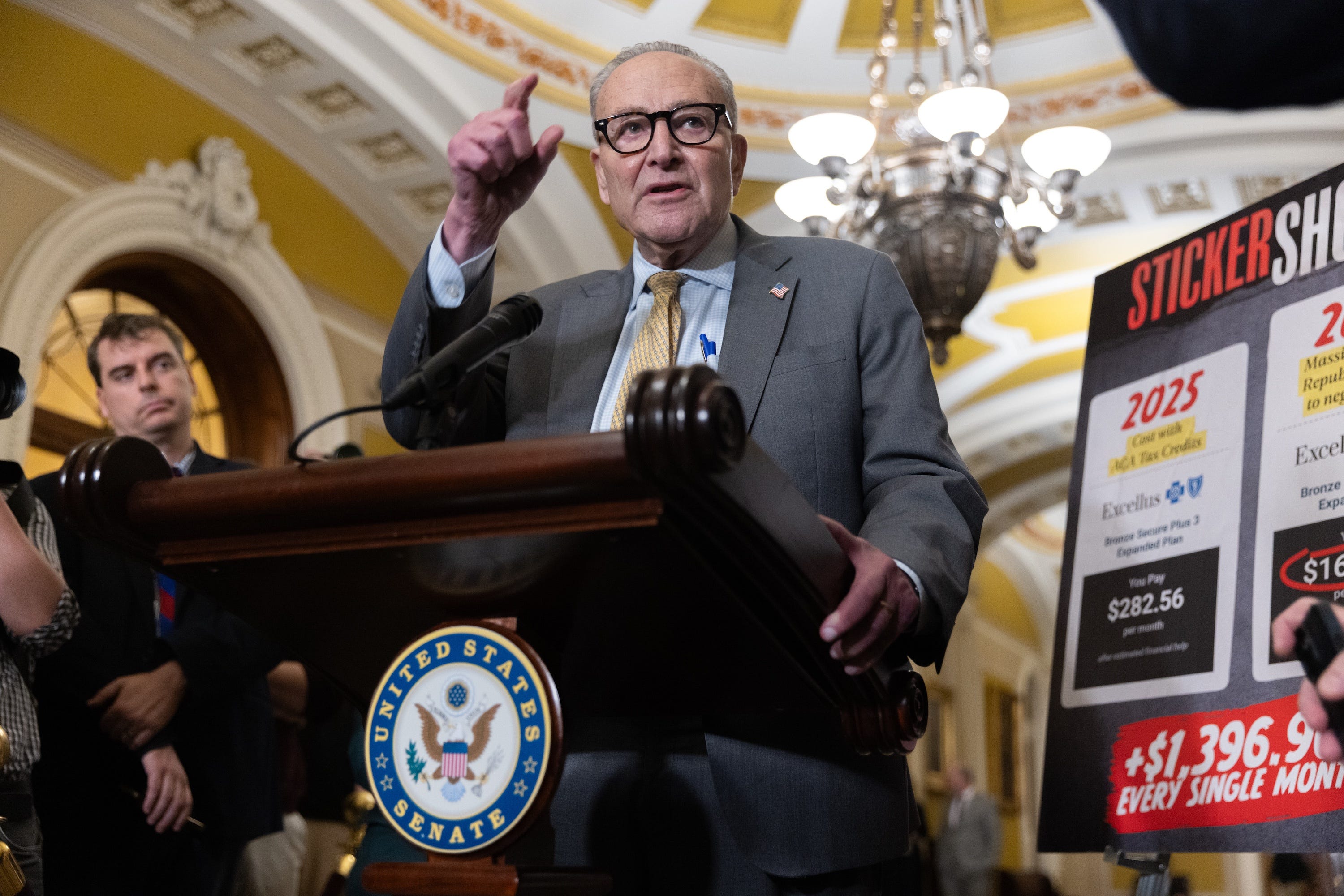
THE FIGHT OVER THE GOVERNMENT SHUTDOWN appears to be over. But the fight over what to do about those enhanced Affordable Care Act subsidies hasn’t stopped—and the chance to do something about them hasn’t run out, either.
Yes, the House is about to vote to reopen the government, thanks to a short-term funding bill that got through the Senate with the support of all Republicans and eight Democrats. But precisely because that legislation does nothing to extend those expiring “Obamacare” subsidies, the problem at the heart of the fight hasn’t gotten better.
If anything, it’s about to get worse.
More than 20 million Americans are in the process of discovering their health insurance is going to be a lot more expensive next year. They disproportionately live in places like Florida, Arizona, and Kansas that voted for Trump in the last election. That’s going to keep the political pressure on Republicans—and it could create an opportunity for action at one of two coming inflection points.
The first will be in December, when Democrats get to hold a vote on extending the Obamacare subsidies. That vote was one of the few concessions the eight Democrats wrung from Senate GOP leaders as a part of the deal to reopen the government. It will force yet another high-profile debate over the subsidy policy, at a time when even some GOP lawmakers say they want to do something. And that might just be enough to sway House Speaker Mike Johnson, who so far has refused to say whether he’d allow a vote in his chamber.
“The world looks very different if the Senate does pass something with sixty votes, and it’s now in his lap, and he has a lot of his own members who don’t want to allow this to happen either,” Brendan Buck, a longtime GOP staffer who now represents some of the provider and insurer groups that want an extension, told me.
Even if no legislation emerges from December, Democrats will get their second chance to push for an extension at the end of January, because that’s when the new, short-term government spending agreement runs out. At that point, any extension in the subsidies would have to be retroactive to January 1, which is not ideal. But it’d still make a difference.1
Democrats are already floating some ideas for a health care deal. Republicans too. But compromise requires meeting somewhere in the middle and already some members of the GOP are doing the opposite—taking this new round of debate as a cue to dust off ideas that would roll back or repeal big pieces of Obamacare. And these efforts seem to have attracted the interest of Trump, who has been posting messages like “Obamacare Sucks” on social media.
Democrats won’t go for that, especially when the political consequences of doing nothing—a bunch of people angry about insurance premiums—probably hurt Republicans, right in time for the 2026 midterms. Republicans may come around to that realization too. After all, Trump may not have a head for policy but he does possess political survival instincts.
If that happens—yes, if—it’s actually not that hard to imagine a compromise coming together, probably involving deal-making over these four key elements:
Join Bulwark+ to unlock the rest
Become a paying member of The Bulwark to get access to this post and other subscriber-only content. A subscription gets you:
- Unlimited access to articles and newsletters including The Triad by JVL and Receipts by Catherine Rampell.
- Ad-free editions of our shows (with transcripts) and member-only shows like The Secret Podcast.
- Plus community chats and commenting features. Your support helps keep our work sustainable and available to those who cannot afford a membership. Cancel anytime.