‘Highest 2 Lowest’ Review
Spike Lee does Akira Kurosawa via New York City.

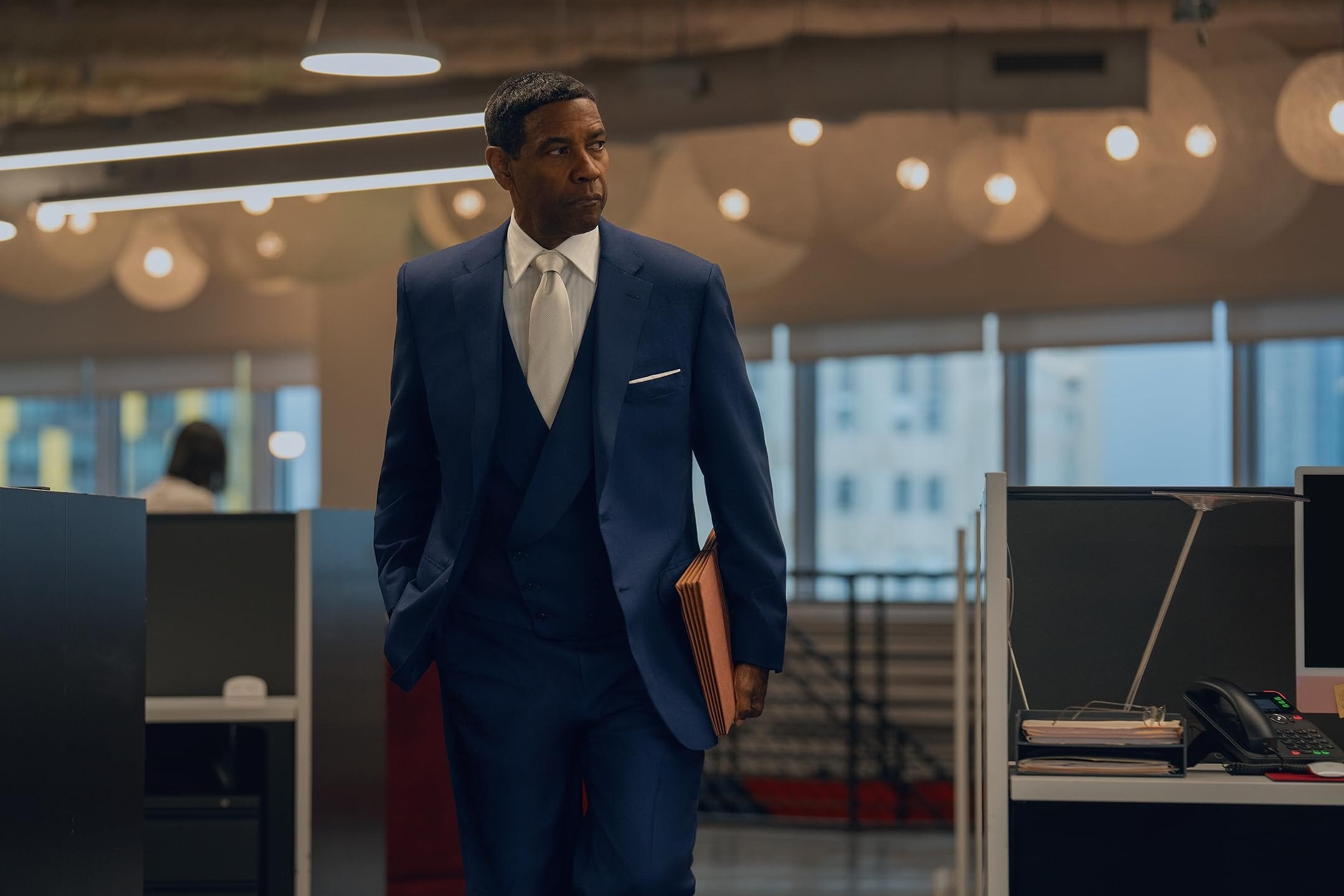
Highest 2 Lowest is a movie jam-packed with ideas: about the business of art, about the commodification of attention, about what we owe to ourselves and our families and our underlings. It’s a movie jam-packed with NEW YORK CITY, all caps, the streets and the subways and the skyscrapers and the parades. It’s a movie jam-packed with sounds, from the sounds of that city to the hits of years past to the rap tunes bubbling up from the underground.
All of which is to say: It is, as the poster says, a Spike Lee Joint.
One filtered through the lens of Akira Kurosawa, on whose 1963 High and Low this film is based. (Both are based, originally, on the novel King’s Ransom; the Kurosawa is currently streaming on the Criterion Channel and HBO Max, if you’d like to check it out.) The setups of both films are similar—a wealthy, overleveraged executive is the target of a kidnapping scheme, one complicated by the fact that the kidnapper mistakenly takes the executive’s chauffeur’s son rather than the executive’s own flesh and blood—though I think the Kurosawa film has a better handle on the professional stakes than Lee’s iteration.
David King (Denzel Washington) is the executive in question in Lee’s film: he’s a music mogul of the Quincy Jones variety, the head of a past-its-prime record label. King was about to sell the company to an overseas conglomerate that intends to strip-mine it for advertisements and flood the company with AI slop, but he has a change of heart, taking out a series of massive loans so he can buy enough of the firm back to block the sale and regain control of the label. To bring it back to its roots.
But before he can stymie the sale, his son is kidnapped. At least, that’s what he is told. Turns out that the kidnappers didn’t get Trey King (Aubrey Joseph) but Kyle Christopher (Elijah Wright), the son of King’s driver, Paul (Jeffrey Wright, Elijah’s real-life father). The angry young voice on the other end of the line doesn’t care whose kid it is; he demands $17.5 million in Swiss 1,000-franc notes. It’s an amount that King has, but only if he uses the proceeds intended to buy back his company. If he diverts the funds to rescue his driver’s kid, he could lose not only his fortune and his record label but also his homes and his cars.
The moral dilemma at the heart of both films is a complicated one: What do the wealthy owe their underlings? Eventually, both David King and Kingo Gondo (Toshiro Mifune) make the same decision—there wouldn’t be much of a movie if they willingly let the boy die—but, without spoiling too much, Gondo’s sacrifice is more dire, harder for him to swallow. Ultimately, I get the sense that neither Lee nor Washington nor screenwriter Alan Fox are all that interested in David King’s financial problems; they are, respectively, more interested in the dynamics of New York City, the dynamics of fathers and sons, and the dynamics of a good insurance industry joke.1
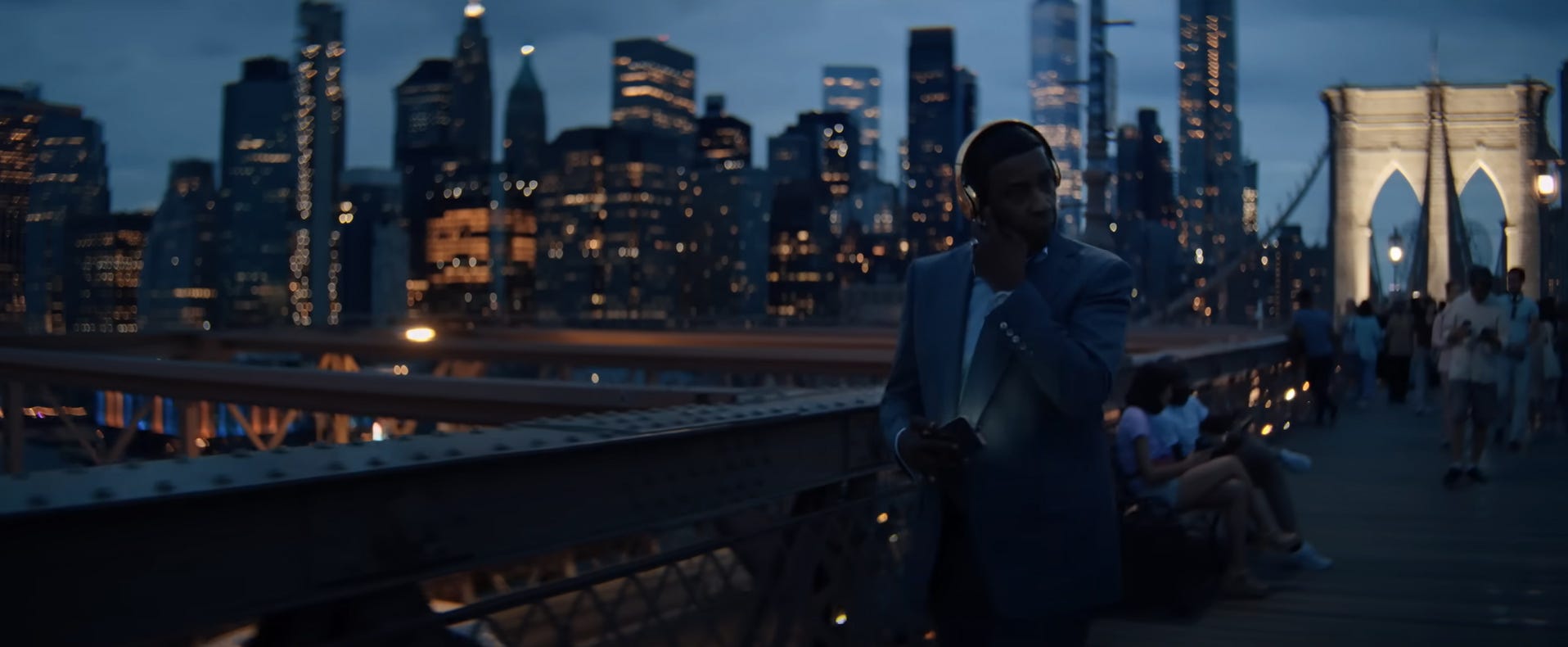
Lee has long been New York’s premier cinematic champion; from 25th Hour to Inside Man to Do the Right Thing, he’s always had an eye and an ear for the way the city looks and sounds. As the opening credits roll, we tour the city’s lowest streets and highest skyscrapers to the classic showtune “Oh, What a Beautiful Mornin’!” A bright red sign beaming WELCOME from Brooklyn Heights greets us on our circuit through the city, Lee returning to it repeatedly, and the whole sequence feels like a welcome to those out of town, assuming they’re not Bostonians.2 The best portion in the movie comes during King’s attempted handoff of the ransom, which combines Howard Drossin’s dynamic score with a rowdy ride on the subway and a car chase that runs smackdab in the middle of a Puerto Rican pride parade hosted by Spike Lee regular Rosie Perez, playing herself; the cacophony of the city threatens to overwhelm the senses, but it’s just another day in the Big Apple.
Denzel Washington is almost inarguably the most magnetic actor working today. He’s always doing something interesting on screen even when what he’s doing is not particularly interesting, as when he grabs a microphone-shaped paperweight and tells a business partner to just say yes into it. The man can monologue with the best of them, but it’s the moments where he’s trying to create a fatherly connection, to impart dadly wisdom, that he’s strongest, that his heart is most in the action onscreen. He, Washington, wants to be a shaper of men, and this is a movie with some young men who desperately need shaping.
Again, Highest 2 Lowest suffers somewhat in comparison to the Kurosawa because Lee’s movie ultimately isn’t that interested in the dilemma faced by King; at one point, Death of a Salesman is quoted by a character, but David King is no Willy Loman. There isn’t an ounce of sucker or loser in him, we never really doubt he’s going to come out on top. Still, it is interesting to see the same dilemma refracted through the lens of life sixty years later, how the rise of social media both echoes and transcends the role of the media in the original, how the influx of soulless AI interference in New York’s music biz resembles the desire to pump out cheap, shoddy shoes to save a few yen in postwar Japan.
I don’t want to spoil the joke, but there’s an outrageously funny setup/punchline involving insurance-company mascots at a key point in this movie that made me bark with laughter.
Another very funny moment in the film comes on a train ride to Yankee Stadium when a seeming ne’er-do-well is revealed to be nothing more than a Bronx Bombers fan, screaming “Boston sucks!” directly into the camera. Rick Fox, who plays himself, takes some guff for being a former Laker, but anyone caught professing fandom for Larry Bird’s team comes in for real mockery.
I recommend Kurosawa's *High and Low* for those who haven't seen it, and if you don't know anything about the film, keep it that way. Go in blind. It's not critical to do this, but I think watching the film unfold, without knowing anything about it, makes the experience a little better. It's an older films, but I think contemporary moviegoers will not have a problem enjoying the film.
By the way, when Kurosawa's name come up, people tend to mention *Rashomon*, *Seven Samurai*, and maybe *Yojimbo* and *Ikiru*. When I watched *High and Low*, I wasn't expecting much, thinking it was one of his minor films. After the film, I thought: "Man, this is one of his minor films?! This is a terrific movie!" (Along similar lines I would recommend *Red Beard*--nothing to do with pirates or samurai, by the way.)
As for Spike Lee's adaptation, I'm a little curious, but generally don't think it's a good idea. I would recommend seeing Kurosawa's film first.
Was glad to catch this yesterday in Baltimore. Definitely does not have the same concerns re: the Kurosawa film, but is very interested in the friendship between King and Christopher and their chosen expanded family relationship. Also in the commodification and corporatization of hip-hop -- music of the streets. Denzel Washington and Jeffrey Wright are the biggest reasons to watch, with ASAP Rocky and Wendell Pierce's cameo not far behind. Lots of people in the theater (about 1/3 full) stood up to dance through the scenes where Eddie Palmieri was playing.