How to Be Optimistic About the AI Apocalypse
Or: Why the manosphere shows optimism might be misplaced.

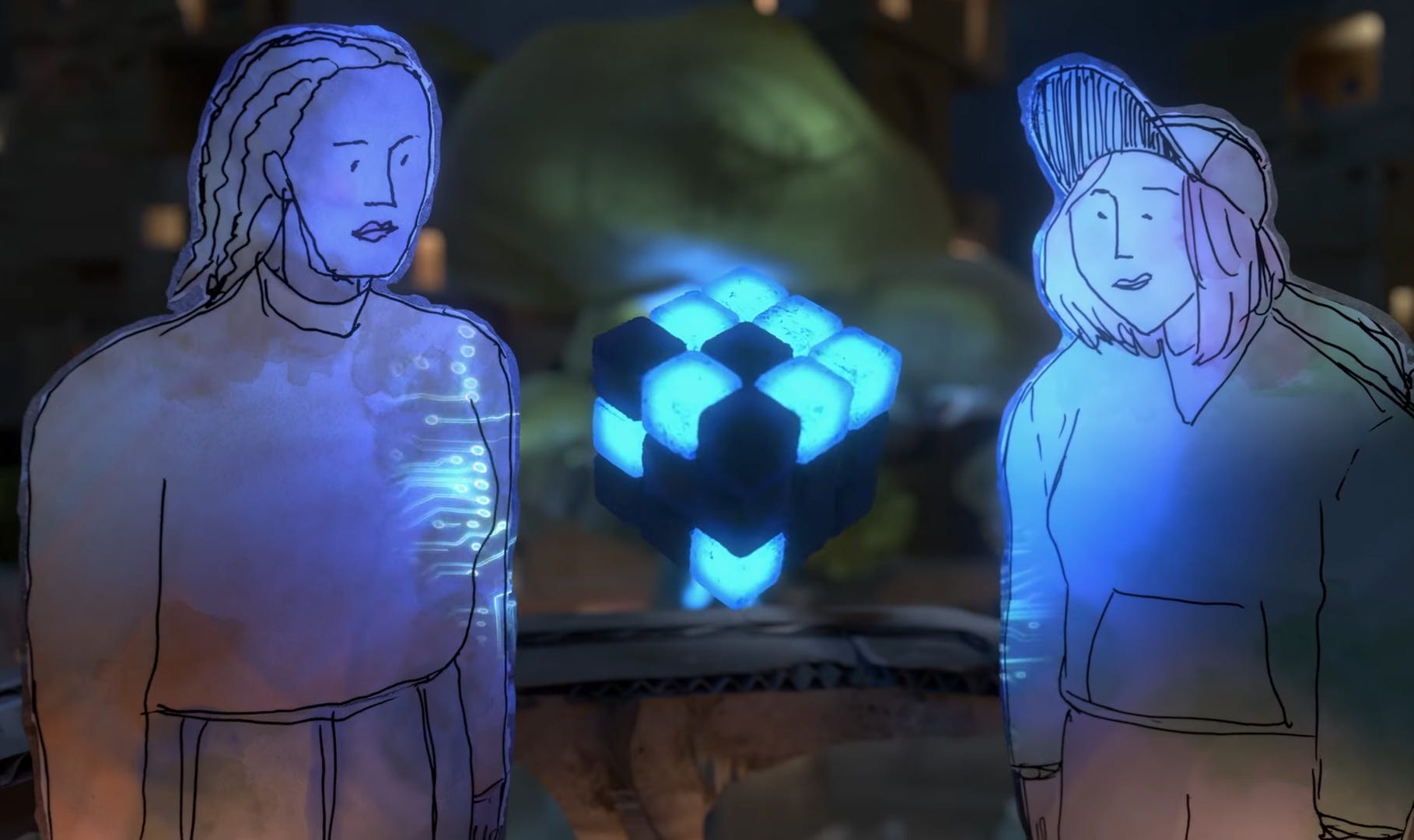
TOWARD THE END of The AI Doc: Or How I Became an Apocaloptimist, now out in theaters, codirector and chief interviewer Daniel Roher is talking to one of his guests when he drops the word “apocaloptimist.” A portmanteau of “apocalyptic” and “optimist,” the term handily sums up the schizophrenic nature of the documentary, veering as it does between terror and hope.
But the documentary is only schizoid because our age is schizoid: We exist on the knife’s edge of great change, a future of infinite promise and infinite peril beckoning in the middle distance.1 Will self-replicating machine intelligence offer us the tools to solve all of the world’s problems, ushering in an age of post-scarcity human excellence in which mankind focuses not on farming or food delivery or home construction but crafting perfect sonnets and great novels? Or does creating amoral intelligent machines empower immoral state actors, businessmen, and terror groups to unleash new horrors as yet unimagined by even our greatest poets and novelists?
As a longtime apocaloptimist myself, the answer I’ve settled on is, almost certainly, “yes.”
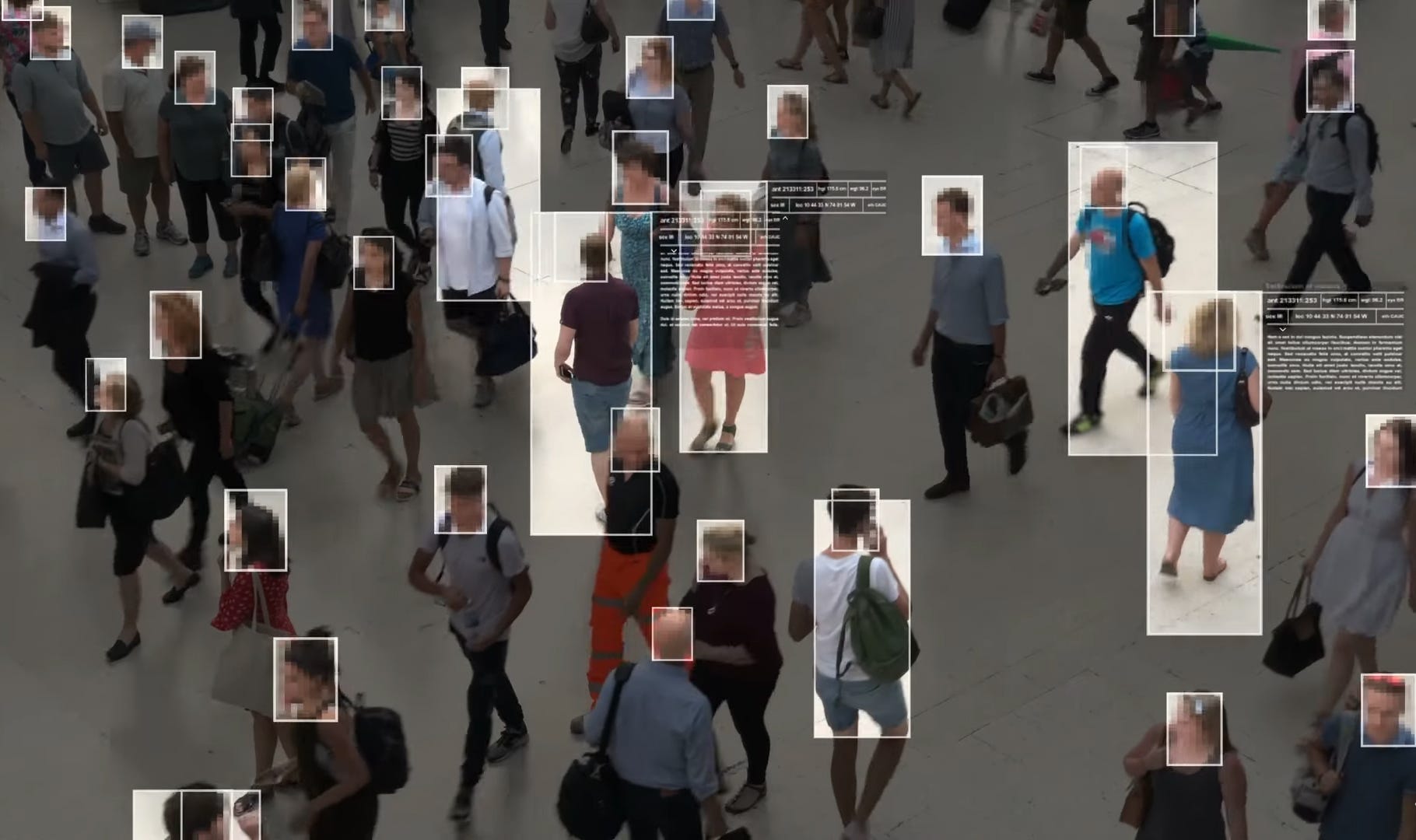
Roher’s journey begins as a filmmaker and an artist watching as artificial intelligence becomes able to create art (or, well, art-like designs) and write scripts (or, you know, script-like mutterings). Is he now obsolete? What does the future hold for him and his fellows? Will he join the masses of the unemployed and useless in our brave new world? Thus the first third of the film veers toward the apocalyptic: The AI skeptics air their concerns, their fears, their visions of doom. The problem with AI is that we only kinda-sorta know how it works: We understand the methods of weighting and how it jokes with us on ChatGPT. But it’s a black box in a very real way. We understand very few of the individual “decisions” these programs make. And they may well have “desires” that are so utterly alien to us they don’t even register to us as “desires.”
Freaking out atop his mountain of anxiety—an animated hill that calls to mind Richard Dreyfuss’s living room recreation of Devils Tower in Close Encounters of the Third Kind, another totem of incomprehensible, alien doom—Roher calls in the optimists. Artificial intelligence, they say, will be like a rising tide that lifts all boats: The smarter we get and the more intelligence we have access to, the more problems we can solve. You know how you have Claude running the background helping you with your vibe coding to better sort your emails? What if we can do that to solve cold fusion and cure cancer? Good news: We can! We are! It’s all happening. We’ll all be happier and richer and freer than ever. The sonnets and novels, they’re coming. Our best selves are right around the corner.
It’s a pleasing vision of the future. But it’s one that relies on a big supposition: that people, broadly speaking, have any interest in finding their best selves. That their best selves are even findable.
I am . . . skeptical. Because I’m a person and I’ve seen people and I’ve lived among them. We are, well—just look at the world, man! Our biggest problem isn’t AI.
It’s people.
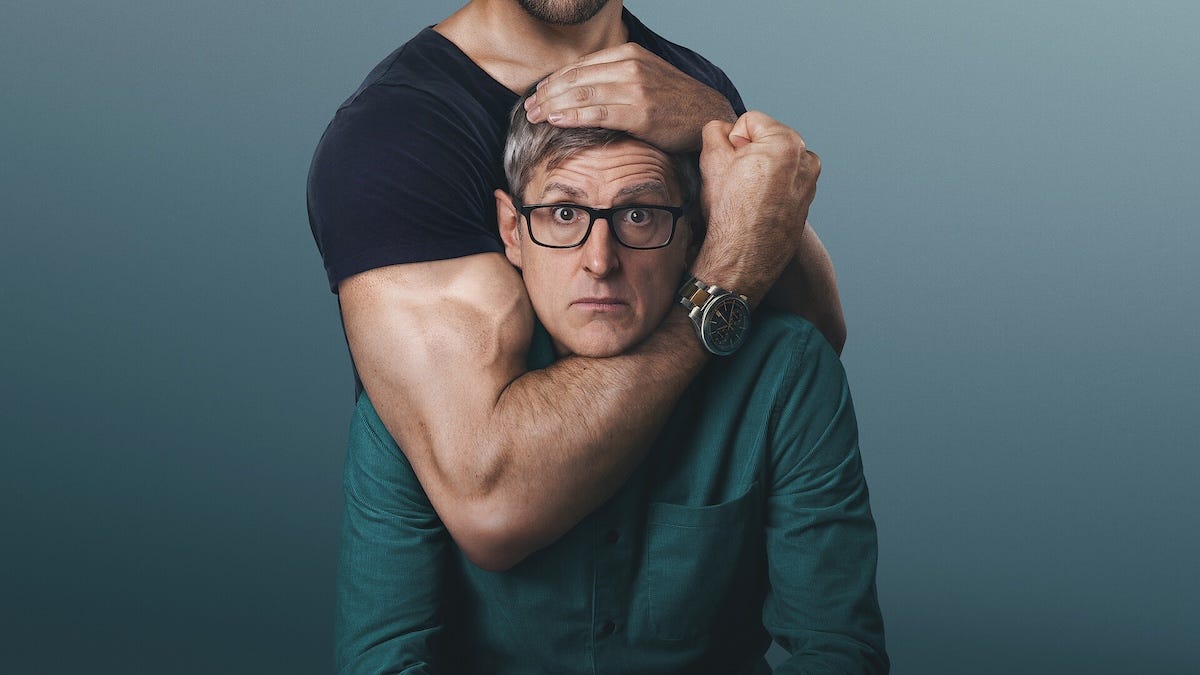
Louis Theroux: Inside the Manosphere (Netflix) is not a film about artificial intelligence. At least, it’s not about artificial intelligence in the sense that The AI Doc is about artificial intelligence. But it is about artifice and a sort of emotional intelligence that allows a new generation of hyperaggressive, amoral, self-replicating man-children to influence the lost and the weak-willed into believing they are owed everything the world has to offer. Money, women, fame, success, adoration: It’s all there for the taking.
You just have to be good at sales.
If there’s a throughline in Theroux’s interviews with the coterie of well-muscled internet personalities, it’s that: sell, sell, sell. Always, Be, Closing as lifestyle. Harrison Sullivan (aka HS) says as much: If you can sell folks on something, you’ll never go hungry. One imagines that HS and Justin Waller see Wolf of Wall Streetprotagonist Jordan Belfort as a deliverer of life lessons rather than a cautionary tale. Sell sad young men lifestyle tip sheets, get them to pony up for the Tate Brothers’ education system, have them invest in the nonsense funds that do nothing but lose: As long as you can sell these saps on your own lifestyle, you’ll never run out of marks.
Again: Artifice, sold intelligently.
Believe it or not, this is the bright side of the manosphere. As Theroux digs deeper into the world inhabited by real creeps like streamers Myron Gaines and Sneako, we see a world of truly noxious misogyny and antisemitism being capitalized on, quite literally: commenters paying to get the most noxious comments read out loud, Gaines ritually humiliating the female “influencers” stupid enough to appear on his show. The modern Colosseum isn’t mixed martial arts or other human cockfights: It’s the stream, the endless river of torment and nastiness indulged in by millions for a few laughs.
And this is why the apocalypticist inside of me has been edging out the optimist when it comes to our AI future. I don’t know how anyone can see the proliferation of increasingly sophisticated deepfakes fooling person after person and think we’re headed toward anything good, particularly when we can see who and what so many people choose to follow now.
Set aside the nightmare scenarios of bioterrorism or state-sponsored election interference or an AI that reduces humanity to gray goo to power an endless supply of super-Nvidia chips. The much more banal nightmare is the one we’re already living in. Where the techno-optimists fail is in their assumptions about human nature. Most people are not interested in human flourishing. Given their druthers, I can’t help but believe that many—maybe most—people in a post-scarcity society will revert to passive consumption, and revert further to the basest form of that consumption. Think of the fat slobs in Wall-E, or better yet, think of Dax Shepard on his toilet-chair in Idiocracy spending most of his time laughing at “Ow, My Balls” when he isn’t ’batin’. You can dismiss Idiocracy as meanspirited eugenics, if you like, but you can’t ignore the modern world in which so many have immersed themselves, the endless streams of petty cruelties and ugliness in which they indulge.
Maybe they’ll be anesthetized enough by their screens and their streams that they won’t realize they’re empty husks. But I am skeptical that the human urge to find meaning through production will be so easily sublimated. And I’d guess that more of these people will turn to Sneako and his heirs than to Shakespeare to find meaning.
A third option—that all the talk of AGI (artificial general intelligence) and the approach of the singularity (that moment when man and computer merge into a sort of eternal super-being), is pseudoreligious faff—is occasionally hinted at, though not much discussed.
Great juxtaposition of these 2 films in that they offer competing views of where we might be headed. Not that either contradicts the other, just different trends that lead in directions potentially NOT good. Reminds me again of Neil Postman contrasting Brave New World and 1984 - different because they took different extrapolations of similar human nature, one emphasizing authoritarianism, the other amusement, but both dealing with our individual submission.
As with those 2 novels, our future may well synthesize aspects from both these films. I’m tempted to say, imagine the worst implications of each, mix well, allow to fester.
Oh - and yes, I too am a person, I’ve seen people (including myself, in a mirror and in the eyes of others) and I’ve lived among them. We are the best. We are the worst. And everything in between. We’ve been in trouble for a long time. AI isn’t gonna solve “us”
I’m finding already that there are two kinds of people- those who love AI and those who hate and fear it. As an artist I want to pull my hair out every time I see AI generated (not)art. And that’s just the start of it.