How to Lose Friends and Alienate People
First insult them for years. Then demand their help.


A federal judge dealt a major blow to HHS Secretary Robert F. Kennedy Jr.’s antivax agenda yesterday, ruling that the Centers for Disease Control and Prevention’s attempted changes to the childhood vaccine schedule violated federal law. Our Jonathan Cohn will have much more on this in his Breakdown newsletter later today, so watch for that—we could all use a little good news. Happy Tuesday.
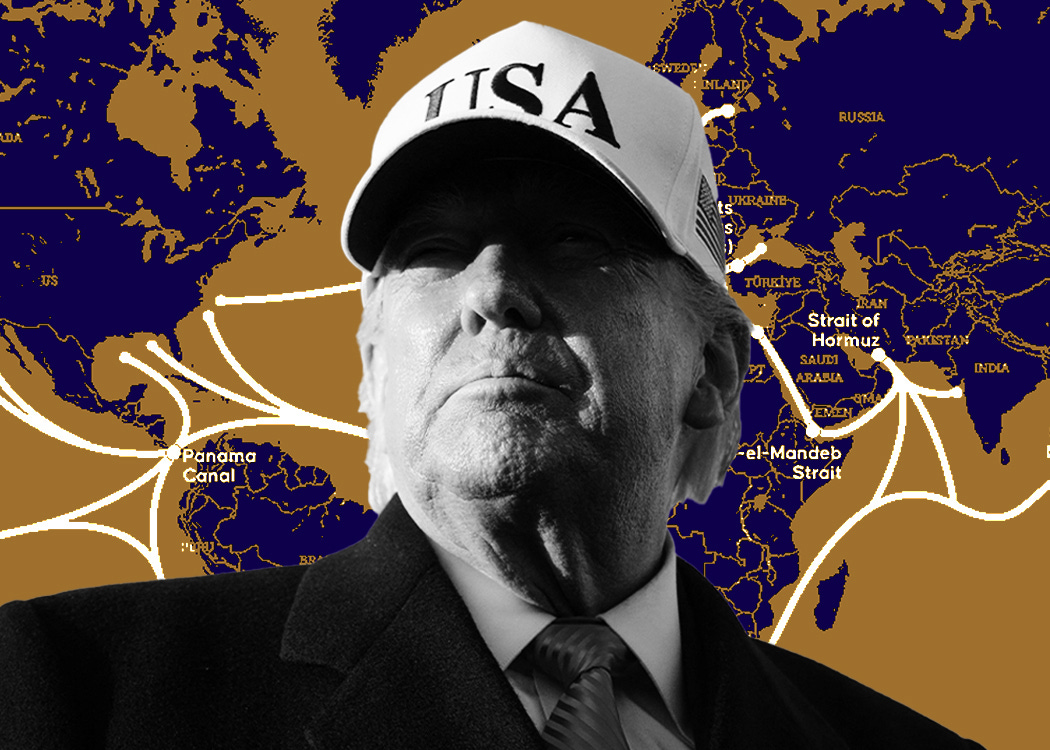
The Trump Doctrine
by Andrew Egger
Defense Secretary Pete Hegseth spends a lot of time fuming at the media, but last Friday he was particularly irate. CNN had just reported, citing anonymous administration officials, that the war in Iran was escalating beyond U.S. expectations or control, with Iran proving infuriatingly and unexpectedly capable of snarling oil traffic in the Strait of Hormuz.
“Patently ridiculous, of course,” Hegseth scoffed. “For decades, Iran has threatened shipping in the Strait of Hormuz. This is always what they do, hold the strait hostage. CNN doesn’t think we thought of that.”
Maybe they should have thought harder. Oil prices are surging again, with Brent crude cracking $100 a barrel again today for the second time since the war began. And in a televised interview overnight, Mohammad Baqer Qalibaf, the speaker of the Iranian parliament, insisted that “the Strait of Hormuz cannot be the same as before and return to its previous conditions” so long as America and Israel continue military operations. He laughed off the idea that aerial bombardment alone would cripple Iran to the point it could no longer contest the strait: “They think they can destroy our facilities with bombers,” he said, “but they don’t know that our design has completely changed.”
And why wouldn’t he sound confident? The United States may still be pounding Iranian targets with total impunity, but Iran knows how badly it has us over a barrel when it comes to the strait. So intense is the pressure on the Trump administration to keep oil prices under control that nearly every other geopolitical consideration has fallen by the wayside. Not only has the White House waived sanctions on Russian oil—it’s even allowing Iranian oil tankers to travel through the strait, as Treasury Secretary Scott Bessent confirmed yesterday. Such are the bizarro conditions of today’s war: America has utter military supremacy in the region, but Iran is the only actor able to freely conduct commerce. Apparently, the White House would rather Iran make a killing selling their oil at ultra-premium prices mid-bombardment than allow the additional price pressure of blockading their tankers.
It’s not that the U.S.–Israeli coalition isn’t still making military headway. Just this morning, Israel announced it had successfully eliminated two of Iran’s top remaining officials—Supreme National Security Council Secretary Ali Larijani and Basij commander Gholamreza Soleimani—in overnight strikes. But even this, it should be said, may not be the White House’s preference: At some point there needs to be someone left to surrender. And Trump, always hunting for a “deal,” may want to take one that he can spin as a victory as long as it gets oil prices down again.
If there is no “deal”—whether because there are no Iranian leaders left to make it or because they just don’t want to—there simply is no economic plan to keep prices under control. And we don’t need to rely on anonymous leaks to CNN to see this; we can just pay attention to the things the American president is saying in public. To recap:
Three days after Operation Epic Fury began, Trump posted on Truth Social that he had ordered his government and his military to guarantee the safety of all maritime traffic in the strait. “If necessary,” he wrote, “the United States Navy will begin escorting tankers through the Strait of Hormuz, as soon as possible.” It immediately became clear that the Navy did not have the bandwidth to do this; traffic through the strait remained snarled.
Four days after that, Trump fired off a post against U.K. Prime Minister Keir Starmer, who was considering sending two aircraft carriers to support U.S. forces in the region. Trump, piqued Starmer hadn’t sent them sooner, told him not to bother: “That’s OK, Prime Minister Starmer, we don’t need them any longer—But we will remember,” he wrote. “We don’t need people that join Wars after we’ve already won!”
One week later—this past weekend—it seemed finally to occur to Trump that the United States could not keep the strait open singlehandedly. He therefore turned on a dime and once more began threatening repercussions for countries that didn’t send ships to help out, including America’s (erstwhile?) European allies . . . and China. “I’m demanding that these countries come in and protect their own territory, because it is their own territory,” Trump told reporters Sunday night. “The United States should not be very much involved” in the strait, he groused at a press conference the next day. “Why aren’t we being reimbursed for that?”
Unsurprisingly, our (still, despite everything, we hope) allies weren’t too impressed, and nobody is leaping to volunteer to lend a hand. “This is not our war,” German Defense Minister Boris Pistorius said Monday. What does Trump expect, he added, “from, let’s say, one or two handfuls of European frigates in the Strait of Hormuz that the powerful American Navy cannot accomplish?” It was a wintry reversal of a decade’s worth of Trumpian grousing about the military uselessness of our allies: Wouldn’t you know it—look who’s come crawling back.
Pistorius was speaking, as it turned out, for all of Europe. “This is not Europe’s war,” echoed EU foreign policy chief Kaja Kallas last night. “Nobody wants to go actively in this war, and of course everybody is concerned what will be the outcome.”
This is the Trump doctrine on full display: blundering from half-considered position to half-considered position and quarter-baked strategy to quarter-baked strategy as the requirements of the moment seem to demand, never seeking cooperation, always demanding and threatening, trusting in America’s own brute military and economic strength to solve every problem, reasoning that nobody will have any choice but to obey. This strategy, which in the past has occasionally allowed him to bully small countries, may ultimately prove effective when it comes to achieving military ends in Iran, though that’s far from guaranteed. But the damage it has already done to our alliances around the world isn’t just apparent—it’s locked in.
If the Democrats control the House and the Senate next year, what can they do to staunch the bleeding? What would you ask your senators and representatives to do first? Share your ideas with us.
Making China Great Again
by William Kristol
One advantage the United States has had in our twenty-first-century competition with China is this: We have friends and allies, while China has customers and clients.
Donald Trump has been doing his best to blunt that edge. Unfortunately, he seems to be succeeding.
We’re not in great shape with allied governments, as Andrew details above. But it turns out we’re not doing too well with their publics either. Which suggests future governments of those nations may not be any more inclined to work with us.
A poll conducted last month in Canada, the United Kingdom, Germany, and France showed a startling degree of public alienation from the United States in those historic allies.
By itself, that might not mean much. Some degree of anti-Americanism on the part of Europeans and Canadians has been around for a long time.
But it’s not just that they’re unhappy with the United States. They’re now inclined to prefer to cast their lot with our primary competitor than with us.
When asked, “Is it better to depend on China, or on the U.S. under Donald Trump?” China was the choice. Canadians preferred China by 57 percent to 23 percent, Germans by 40 percent to 24 percent, the French by 34 percent to 25 percent, and the British by 42 percent to 34 percent.
Other questions found support for efforts to put this preference into practice by reducing reliance on the United States as opposed to China. The lean toward China and away from the United States is particularly strong among young people in these nations. And pluralities in all these countries believe China, not the United States, will be the dominant world power ten years from now.
One should note that this poll was taken last month, before the Iran war. Presumably the results would be worse today. And they could well get worse over the next three years.
This is only one poll, one data point. But it’s a striking one. It’s depressing that Donald Trump seems to have succeeded in depriving our republican example of its just influence and deserved regard around the world. But perhaps it’s fitting that our own wannabe dictator may prove one of the greatest friends the Chinese dictatorship has had.
AROUND THE BULWARK
Trump’s War Psychology… An extension of id by other means, observes MONA CHAREN.
Iran Gets a Vote in This War… The administration doesn’t seem to have planned for that, reminds MARK HERTLING.
‘Evacuation Day’ and the American Character… How the British occupation of Boston—which ended 250 years ago today—shaped our political sensibility, writes LINDSAY M. CHERVINSKY.
MAGA’s Online Nutjobs… On The Mona Charen Show, WILL SOMMER takes MONA (and us) on a tour of the groypers and other right-wing influencers.
Quick Hits
OUT TO PASTURE: Secretary Kristi Noem is leaving the Department of Homeland Security, and her favorite attack cow dog is following her out the door. Greg Bovino, the Border Patrol honcho whom Noem made the face of the administration’s immigration war on Minneapolis, will retire at the end of the month. Bovino, a regional chief who never officially headed even the Border Patrol, routinely bigfooted his ostensible superiors by reminding them he reported directly to Noem and her life/work partner Corey Lewandowski; with them gone, he seems to have judged it prudent not to linger. NBC News rolls back the tape on Bovino’s esteemed run:
He was featured in Hollywood-style movie posters and video mashups as the White House sought to promote its crackdown in Chicago, which Bovino led. His tactics, including throwing gas canisters into crowds of protesters, led to a lawsuit in Chicago and clashes with other administration officials.
He was chastised by a federal judge after using chemical agents in residential neighborhoods, violating a judge’s order to curb their use. The judge called Bovino back into court after finding he repeatedly lied about threats posed by immigrants and protesters. In one incident, he claimed he threw a gas canister after he was hit by a rock. But he had to walk back the claim after video evidence contradicted him.
And, of course, Bovino’s Punisher-fantasy enforcement operation led directly to the killing of Alex Pretti. We could go on and on about Bovino’s contemptible tenure, but why waste more time thinking about him at all? Don’t let the door hit you on the way out, Greg!
NO MORE TRUCKIN’: Any day now, Donald Trump is going to finish up the rest of his to-do list and finally get cracking on addressing the prickly political issue of affordability. He’s just got to spend a liiiiiiiiittle more time making the problem worse first. The Washington Post reports that Trump’s rule banning 200,000 immigrant truckers from renewing their commercial driver’s licenses went into effect yesterday:
The rule bars immigrants who are asylum seekers, refugees or recipients of Deferred Action for Childhood Arrivals, or DACA, from obtaining commercial driver’s licenses. And it’s part of the Trump administration’s widening campaign against immigrant truck drivers following several high-profile accidents last summer.
Those with valid commercial driver’s licenses will lose their driving privileges as their licenses expire, not immediately.
The policy—one of several clamping down on immigrant truckers—is cruel, but it’s also economically short-sighted. Truckers do most of America’s commercial hauling; banning several classes of immigrants (illegal immigrants who lack work authorizations couldn’t obtain commercial driver’s licenses in the first place) will slowly vaporize about 5 percent of the current industry workforce. That’s not an economic calamity, but it is one more factor slowly pushing industry costs—and prices—up.
THE COMMITTEE TO POLITELY SUGGEST THE PRESIDENT FOCUS ON OTHER STUFF: What’s old is new again. Republican apparatchiks are once more finding themselves quietly grimacing and shaking their heads as their lunatic leader endlessly relitigates his 2020 election loss. Boy, do they wish he’d keep his eye on the task at hand! Politico talked to a few of them.
“I’m always one to believe you should look forward, not backward,” said Pennsylvania-based GOP strategist Charlie Gerow.
“Focus on the things that matter to everybody throughout the whole country, or we’re going to have a problem in a few months,” said Michigan operative Todd Gillman, chair of the Monroe County Republican Party.
The money line: An endless barrage of 2020 election lying “might play well with the MAGA base in the primary, but it could alienate moderates tired of rehashing an election from nearly six years ago.” Trump wouldn’t want to do anything that might alienate moderates, that’s for sure!
Cheap Shots


No Kings 3, March 28th.
More important than ever to show the world that we do not support the actions of this government. Get out on the streets! In America, we have no kings!
https://www.nokings.org/
Depressing but not surprising article in The Guardian about the latest from the "world’s most credible democracy watchdog." Excerpt:
"'The US is no longer a democracy. One of the most credible global sources on the health of democratic nations now says this outright. The Varieties of Democracy (V-Dem) Institute at Gothenburg University reaches the alarming conclusion in its annual report, that the US is hurtling towards autocracy at a faster rate than Hungary and Turkey.
“Our data on the USA goes back to 1789. What we’re seeing now is the most severe magnitude of democratic backsliding ever in the country,” says Staffan Lindberg, founder of the institute.'"