It’s the Democracy, Stupid
It turns out voters care about rights and freedoms after all.

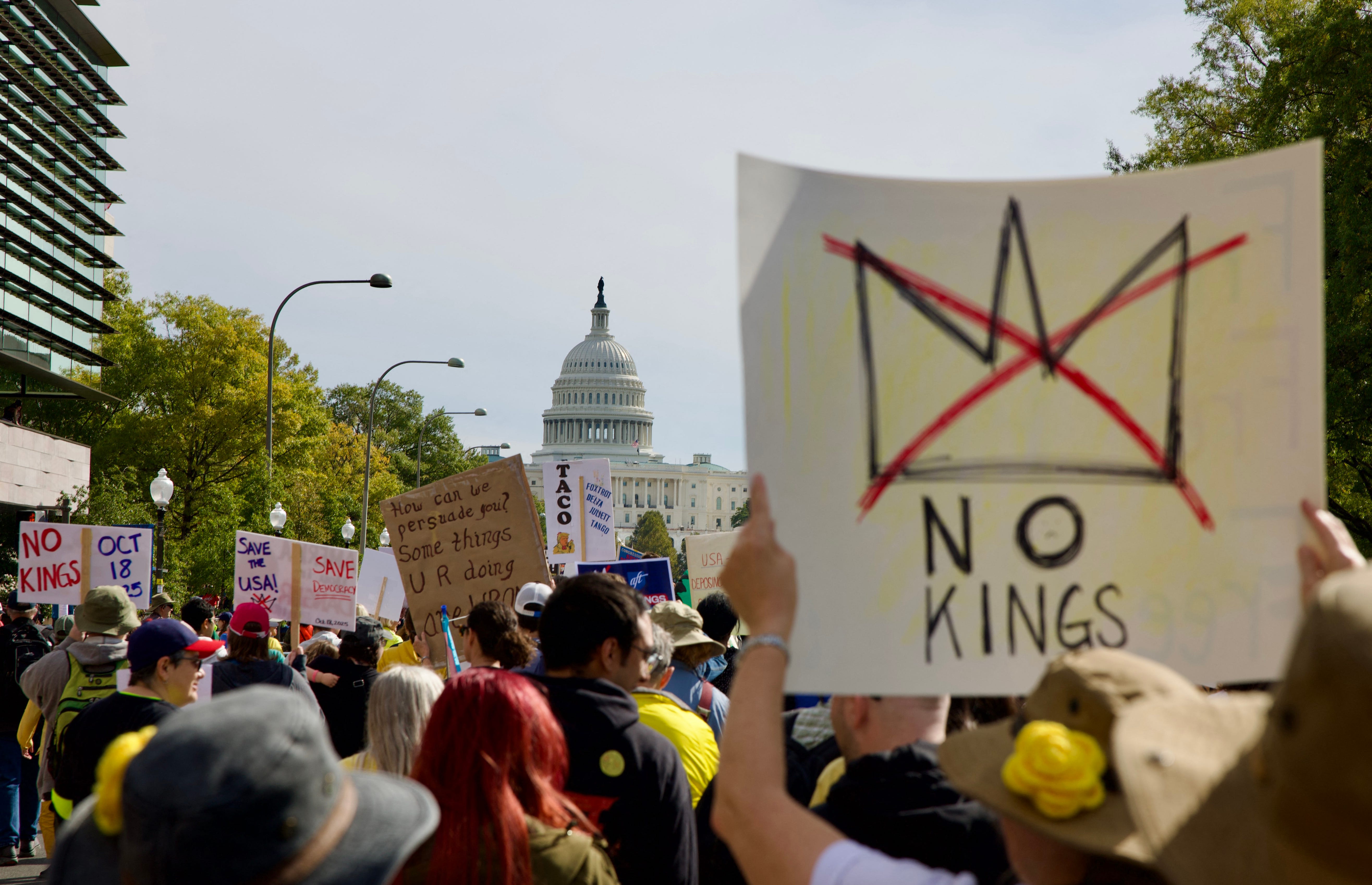
AFTER THE 2024 ELECTION, A CONSENSUS quickly formed among Democrats that they spent too much time talking about democracy and failed to focus on “kitchen-table issues” like affordability. As a campaign issue, the protection of American democracy was viewed as too abstract and hysterical. It was something elites in Washington cared about, but a matter of indifference for struggling Americans who had just suffered through a painful bout of inflation. After Trump won by his widest margin ever in 2024, Democrats resolved to table the whole authoritarianism thing and instead talk more about the price of eggs.
The killings of Renee Good and Alex Pretti by masked agents of the state in Minneapolis have changed all that. The Bulwark’s Lauren Egan reported last week on how many Democrats are rethinking their priorities:
Operatives have wrestled with how much to emphasize democracy issues during campaigns. Lawmakers have grappled with what kind of legislation they should prioritize—economic stimulus or “Trump-proofing” government reforms. And, for a period, a consensus appeared to be hardening around the idea that democracy and the threats to it simply weren’t good political fodder.
But Pretti’s killing and the lies peddled by the Trump administration in the immediate aftermath have altered that calculus. They’ve led Democrats to conclude that they can no longer dance around constitutional violations or the degradation of civil liberties and democratic norms.
It’s now impossible for Democrats to change the subject from the United States’ descent into authoritarianism, and they shouldn’t want to.
When thousands of immigration agents descended on Minneapolis in “Operation Metro Surge” in December—which the ICE described as the “largest immigration operation ever”—Democrats were still anxious about challenging Trump directly on immigration enforcement. There were three political justifications for failing to give the nationwide crackdown on civil liberties the attention it deserved. First, immigration has long been one of Trump’s best issues. In an October 2024 YouGov survey, Trump led Vice President Kamala Harris on immigration by 14 points—a larger gap than any other issue. Second, Democrats were worried about the perception that they were attacking law enforcement after the disastrous “defund the police” movement of 2020. And third, Democrats didn’t think Americans were interested in discussing the country’s slide into authoritarianism around the kitchen table.
Every one of these rationalizations has fallen apart. Trump’s numbers on immigration have hit a record low, while Americans’ support for immigration has surged. Gallup found that 79 percent of Americans regard immigration as a “good thing” for the country—the highest level of support on record.
Democrats’ concerns about being viewed as anti-law enforcement were also overblown. Cities under siege by masked, poorly trained, unprofessional, and menacing federal law enforcement agents have rallied around their local police forces. Minneapolis Mayor Jacob Frey frequently celebrates the professionalism and restraint of local law enforcement—a remarkable shift in the city where the George Floyd protests erupted in 2020, and where the relationship between citizens and police was toxic for years.
Finally, it’s inaccurate to assume that Americans only care about the price of eggs when an authoritarian government is trampling on their rights. A few months before the 2024 election, David Axelrod said, “people sitting around the table talking about democracy” could do so “probably because they don’t have to worry about the food they have on the table.” But a Gallup poll conducted in September 2024 revealed that 85 percent of Americans regarded “democracy in the U.S.” as extremely or very important, ranking second only to the economy and higher than immigration among voters’ priorities. And no, those numbers did not appear to be significantly skewed by MAGA Republicans convinced the 2020 election was stolen: Democracy was the top issue for Democratic and Democratic-leaning voters, but didn’t crack the top five for Republicans and Republican leaners. And according to the NBC News Exit Poll, democracy was the top issue cited by voters on election day—even more so than the economy.
DURING THE 2024 CAMPAIGN, Harris listened to Democratic consultants and focused on kitchen-table issues like the economy. However, after Trump suggested that he might have to turn the military on the “enemy within,” Harris pivoted. At a rally in Erie, Pennsylvania, she played a video montage of Trump’s threats to pursue his political enemies and told the crowd: “He considers anyone who doesn’t support him or will not bend to his will an enemy of our country.” She later told aides that making this case reminded her of presenting evidence at trial, and the campaign quickly turned that presentation into a TV ad. With just weeks left in the campaign, Harris made a final pitch to voters about the dangers Trump posed to democracy. Speaking at the Ellipse outside the White House one week before election day in 2024, she said,
These United States of America, we are not a vessel for the schemes of wannabe dictators. The United States of America is the greatest idea humanity ever devised, a nation big enough to encompass all our dreams, strong enough to withstand any fracture or fissure between us, and fearless enough to imagine a future of possibilities.
Then she lost. This is why the conventional wisdom after the election was that emphasizing the immense threat Trump poses to American democracy is a political loser for the Democrats. That notion lazily disregards the compact timeline Harris had to campaign as well as voters’ seething anger about the economy.
The perception that Americans don’t care about democracy stubbornly persisted well into Trump’s second term, even as voters turned against Trump’s draconian immigration crackdown and his other authoritarian moves—such as nakedly political prosecutions and attacks on media companies and law firms.
DNC Chair Ken Martin has personified the slow reversal of elite Democratic opinion. In November, he said: “It’s not to say that people don’t care about democracy . . . what really trumps that, no pun intended, is their concerns over their own economic condition.” Then, in late January, after witnessed in the abuses and chaos the administration visited on his home state of Minnesota, he declared that “the American people are outraged at the murders of two U.S. citizens in Minneapolis and demand an end to the lawlessness and disorder unleashed by Donald Trump, Kristi Noem, and Stephen Miller.”
Matt Yglesias, who is influential among pragmatically minded liberals, recently observed that the “single most important issue on the table—Donald Trump’s authoritarian aspirations and the conservative movement’s indulgence of those aspirations—is by almost all accounts a political loser.” The rest of his essay complicates this claim a bit, and he argues that Pretti’s death “forces the argument in a new way, one that is perhaps more persuasive than what we’ve seen in the past.” Yet while praising the “people in the streets filming” ICE as doing “the Lord’s work” because of the persuasive power of their videos, he criticizes the “people trying to leverage broad outrage about manifest abuses into specific policy demands.” But if the national outrage over the killings of Good and Pretti isn’t “leveraged” into concrete policy outcomes, such as the removal of federal agents from the streets of Minneapolis, it does little good.
One of the most common complaints about the political focus on Trump’s threats to democracy is that this is an “abstract message,” as Yglesias put it. But the message is only abstract if Democrats make it that way. After the killing of Renee Good, the Trump administration launched an investigation into her widow. As Minnesota Gov. Tim Walz recently put it, “That is demented shit right there.” There’s a difference between saying “Trump poses a threat to democracy” and “Trump’s personal militia is gunning down American citizens in the streets.” California Rep. Ro Khanna recently told Lauren Egan that democracy is “no longer an abstract issue” to Americans. He’s right, and more Democrats are beginning to realize it.
As someone who has been making the case for the political salience of democracy for years in the Trump era, I’d take it a step further. The assault on American democracy has never been an abstract issue. Trump refused to accept the results of the 2020 election and did everything in his power to remain in office. He tried to send slates of fake electors to Washington, D.C., he hatched ludicrous conspiracy theories about rigged voting machines and corrupt poll workers, and he pressured election officials to throw out the votes in their states. Hours before his supporters stormed the U.S. Capitol, he told them: “If you don’t fight like hell, you’re not going to have a country anymore.” Instead of calling the rioters off as they hacked their way into the building and assaulted police officers, he instigated them.
There was bipartisan agreement that Trump had finally crossed the line into true authoritarianism on January 6, 2021. His own party condemned him. Americans overwhelmingly viewed the assault on the Capitol as an attack on democracy. There was nothing “abstract” about clouds of tear gas filling the air around the Capitol, cops getting pummeled by a vicious mob, or members of Congress cowering in fear as that mob hunted them down. Just about every American knew exactly what they had just seen—a would-be tyrant tried to destroy their democracy right in front of their eyes. Yet pundits keep insisting that the siege of the Capitol is akin to a graduate seminar on the abstract intricacies of democratic decay.
Now Trump isn’t just trying to memory-hole his war on American democracy—he’s doubling down on it. He pardoned or commuted the sentences of every single January 6th rioter, including those who brutally attacked police officers. The White House has an entire page dedicated to venerating the “patriotic Americans prosecuted for their presence at the Capitol—many mere trespassers or peaceful protesters treated as insurrectionists by a weaponized Biden DOJ.” On Wednesday, a dozen FBI agents executed a search warrant at an election center in Fulton County, Georgia—one of the jurisdictions Trump believes is responsible for “rigging” the 2020 election against him. Just days earlier, Attorney General Pam Bondi sent a letter to Walz demanding that he give the DOJ “access to voter rolls” in Minnesota.
Trump’s political opponents shouldn’t just focus on democracy because it makes political sense to do so—they should focus on it because our civil society will never recover if it can’t mobilize against an autocrat who tried to shatter the bedrock of American democracy. Our democracy is in grave danger, and it’s long past time to say so.
 | A guest post by
|