The Last Full Measure, Quietly Remembered
What veterans recall on Memorial Day.

FOR ME, MEMORIAL DAY ALWAYS BRINGS with it a deep contradiction.
I watch as most of America marks the weekend as the unofficial beginning of summer: cookouts and baseball games, long weekends, beaches, family gatherings, flags fluttering from porches, and social media posts wishing everyone a “Happy Memorial Day.” And there’s nothing wrong with any of that.
But for some Americans—especially the veterans who have stood in combat zones beside those who sacrificed it all and family members who suffered the pain of the knock on a door—it arrives very differently.
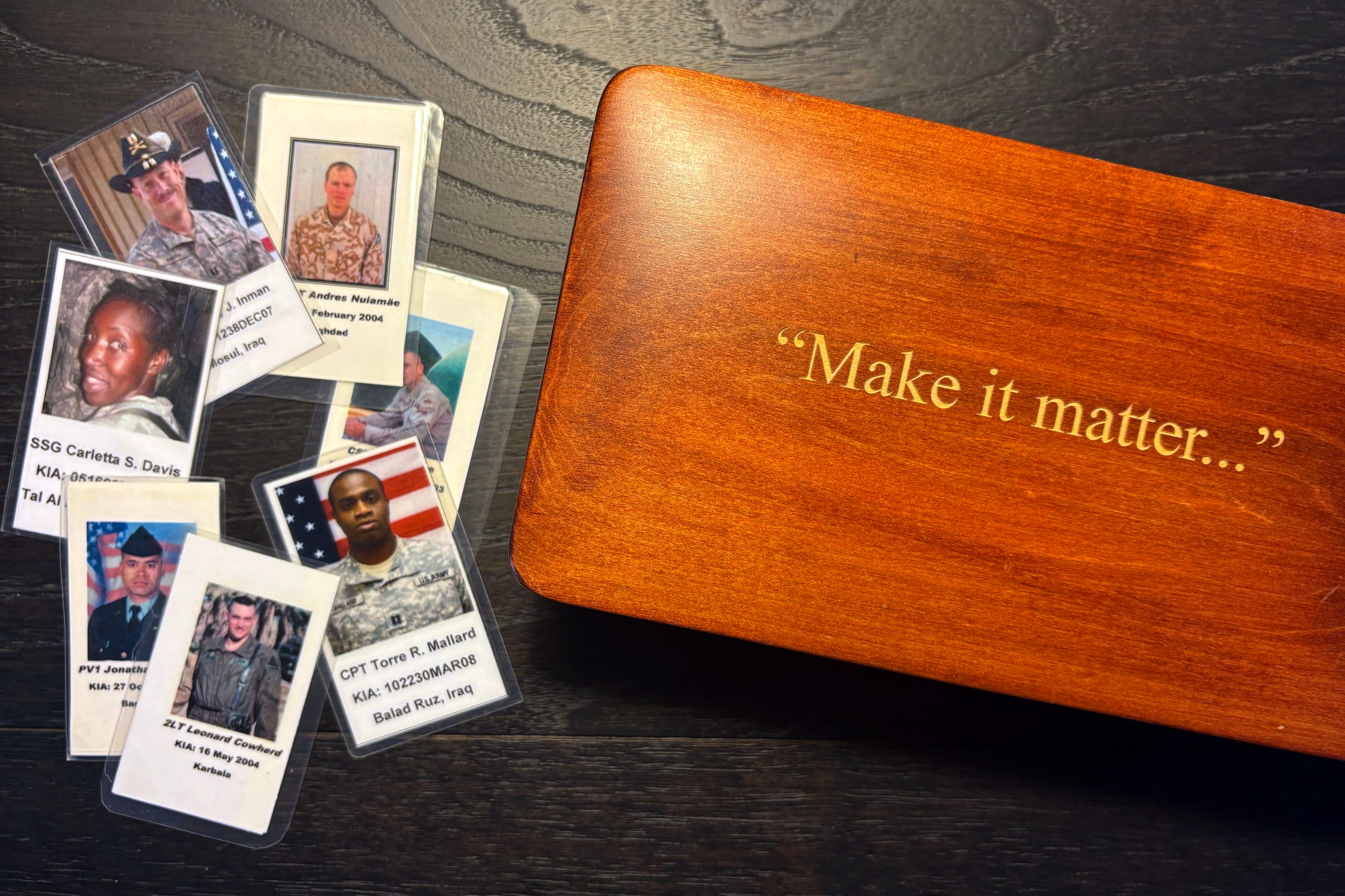
For me, it begins like every other day, as I open the wooden cigar box sitting on my desk and wonder what could have been for those I knew.
Inside the box are 253 laminated cards. Each carries the photograph of a young person I served alongside or commanded during combat deployments in Iraq. Soldiers. Two Sailors. One Airman. Medics. An ally from Latvia who was with us, and another from Tbilisi, Georgia. Faces frozen in youth. Most smiling. All stuck in time as younger men and women. Many barely old enough to fully comprehend how short their lives would ultimately be.
I still open that box every day. And on a recent Memorial Day, I thought about how, while the nation pauses briefly to remember them once a year, their families never truly stop mourning them.
They are remembered at graduations where there should have been a parent in the crowd; at weddings missing a brother, sister, son, daughter, husband, or wife; and at holiday dinners where an empty seat quietly says more than words ever could. They are remembered when an old voicemail unexpectedly appears, when a familiar song comes on the radio, or when the wind carries a smell or sound that instantly returns someone to a moment from twenty years ago.
Grief does not follow the federal holiday calendar. It lives quietly inside ordinary moments, resurfacing unexpectedly, even decades later.
Americans sometimes blur the distinction between Veterans Day and Memorial Day, but veterans understand the difference, and the distinction matters. Veterans Day honors all who served. Memorial Day honors those who never came home. Its roots hark back to the Civil War, when families decorated the graves of fallen soldiers with flowers and communities gathered to mourn the dead from the nation’s bloodiest conflict. Over time, that “Decoration Day” evolved into Memorial Day. In 1971, it became an official federal holiday observed on the last Monday in May.
But long before it became a three-day weekend, it was a day of mourning. And for many who have worn the uniform, it still is.
For those who have attended memorial ceremonies on dusty airfields in Iraq, Afghanistan, and even still Vietnam, or who escorted transfer cases draped in flags, or who listened to bagpipes while rifles stood inverted beside combat boots and helmets under a fading sunset, Memorial Day is not abstract patriotism. It is deeply personal.
YEARS AGO, DURING COMBAT OPERATIONS in Iraq, our 1st Armored Division commander—then-Major General Martin Dempsey—was struggling with something every commander eventually confronts in war. What do you say to soldiers grieving the loss of a close friend who was struck in the prime of his or her life? How do you comfort young men and women carrying the weight of death while still asking them to continue the mission the next morning—or even that same night?
One evening, after another memorial ceremony, Gen. Dempsey admitted there were no perfect words. No speech could restore what had been taken or erase the pain the living carried forward. The only comfort he could offer was a challenge on behalf of the dead: “Make it matter.”
The phrase spread quietly through the division and became a kind of covenant among us. Whenever we lost a soldier, Dempsey’s aide would create a laminated memorial card with that person’s photograph and details: hometown, age, family, place and manner of combat engagement. Before ceremonies, several of us would often look at one another silently for a moment, and then repeat the phrase.
Make it matter.
By the end of that deployment in 2003, I carried 121 of those cards. During a subsequent deployment in the 2007 surge, the number grew to 253.
On the cards are the faces of America: infantrymen from farming towns in the Midwest; black tankers from major cities; Hispanic cavalry troopers from Texas; Asian-American medics from California; one 19-year-old Samoan soldier from an engineer brigade who was killed within weeks of arriving in the unit, and whose father was the command sergeant major who had the unfathomable mission of carrying his son home to his wife, the son’s mother. First-generation immigrants who volunteered to serve a nation still becoming theirs; women who chose dangerous patrols beside men who trusted them completely; Navy corpsmen and EOD specialists attached to Army units; Air Force personnel supporting ground operations; and coalition soldiers from Latvia, Poland, Britain, and elsewhere who fought beside Americans because they believed freedom to be worth defending. A diverse group, to be sure, but brought together through their experience and shared sacrifice.
The same oath bound those young men and women. The same danger, and the same willingness to sacrifice for others. When I look at those cards, I feel grief, but I also feel gratitude. They remind me that courage and sacrifice in America have never belonged to one race, one religion, one political party, or one region of the country. They belonged to all of us. They still do.
THERE IS SOMETHING VETERANS often struggle to explain to civilians without sounding exclusionary: the bond formed in combat. Most veterans do not believe they are better than those who did not serve. In fact, most deeply respect Americans who contribute to society in countless other ways.
But there is something uniquely intimate about serving beside others in dangerous places. It emerges from shared fear, shared exhaustion, shared discomfort, shared responsibility, and shared grief. It comes from understanding that your life may depend entirely on the competence and courage of the person beside you—and theirs on yours. You remember absurd humor in terrible places and exhaustion so deep it became numbness. You remember who shared water, who carried the heavier weapons, who cracked jokes when morale collapsed, and who checked on others first after contact.
And you remember who never came home.
Over the past year, as my book, If I Don’t Return: A Father’s Wartime Journal, circulated among former soldiers and families, I heard from people I had not spoken with in decades. Men and women from Desert Storm, Iraq, and later deployments reached out with stories I had forgotten or never known. But the messages that affected me most came from spouses and now-grown children: the Gold Star families.
Many told me the book helped them understand the emotional terrain of military service—not the deployments and tactics, but the way of living. The waiting, the compartmentalization, the unfinished conversations, the dark humor, and the grief that veterans rarely express openly. Several Gold Star family members told me the stories reminded them of those they lost. That has been both deeply humbling and emotionally difficult. Because the memories and Memorial Day ultimately belong to them more than anyone else.
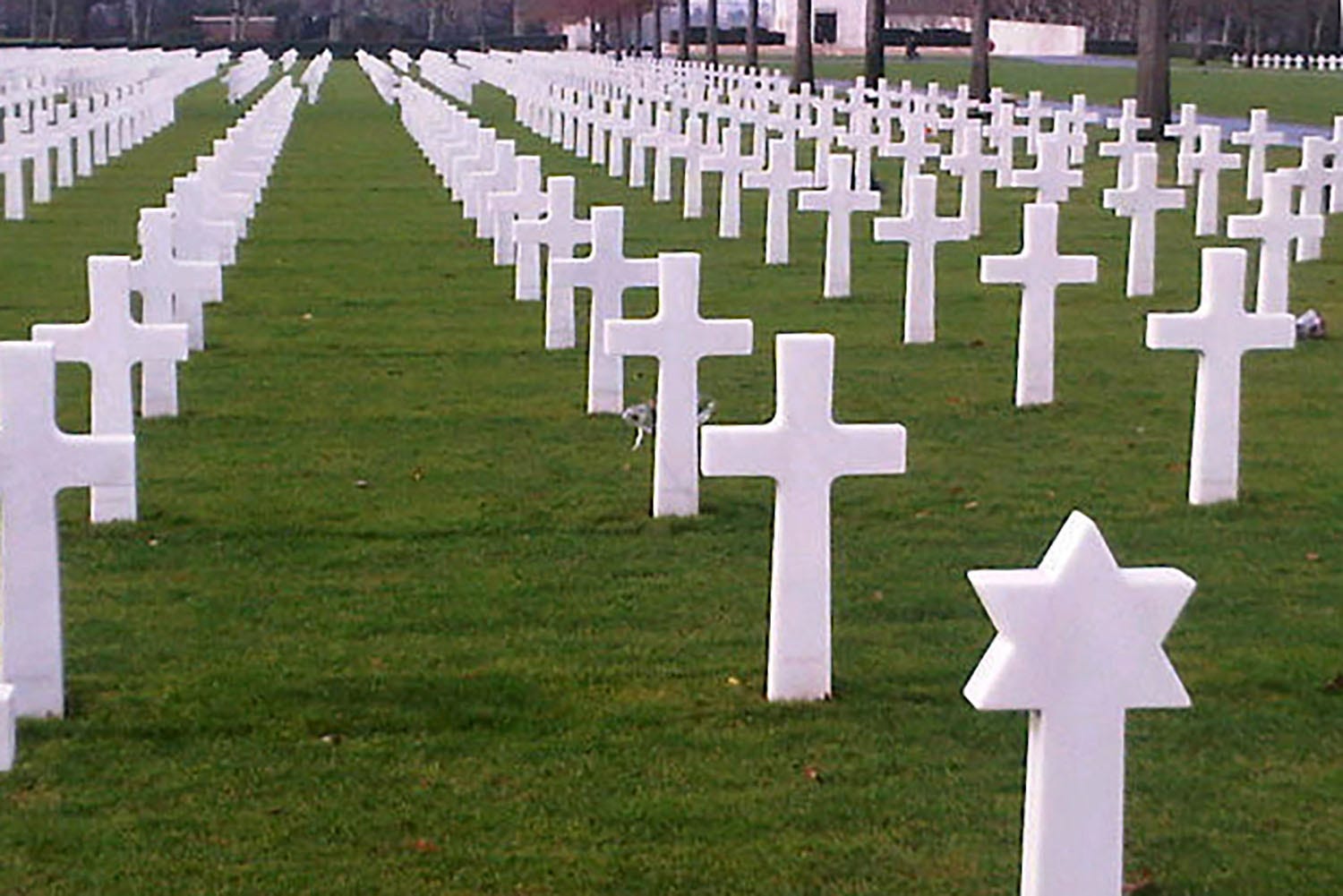
The American Battle Monuments Commission is an agency that maintains America’s overseas military cemeteries. More than 250,000 American war dead are commemorated at those twenty-six sacred sites around the world in places our military fought. One of the most extraordinary sites I ever visited as a member of that commission was the Netherlands American Cemetery in Margraten, where every grave has effectively been adopted by a Dutch family. For generations, citizens of the Netherlands have cared for those graves and taught their children that young Americans crossed an ocean not once, but twice—and many gave their lives—to preserve European liberty.
My wife, Sue, and I met elderly Dutch citizens who still, after decades, visited “their” American soldier every week. They always brought flowers, then simply stood quietly beside the graves. Others who had adopted graves described how they carefully cleaned the white marble headstones, though the standards maintained there were already immaculate. What they were really preserving was memory. The same emotions are apparent at the Manila American Cemetery in the Philippines, where American and Filipino dead are honored together. Filipino families quietly gather on the grounds, treating the cemetery not merely as burial space, but as sacred community ground connected to shared sacrifice against tyranny. The same is true in Tunisia among the graves of young tankers from my own 1st Armored Division who died fighting Rommel’s forces generations before I wore the same patch.
At these places, and all the others, the dead humble the living.
None of this is glorifying war. Most combat veterans I know are deeply skeptical of romanticizing combat. We understand too clearly its brutality, chaos, and permanence. War is not cinematic. But neither is sacrifice meaningless.
MEMORIAL DAY REMINDS US that freedom and democratic institutions have always depended on ordinary citizens willing to do extraordinary things for one another. It reminds us that some Americans gave every tomorrow they had so others could enjoy their today. And it reminds us that the responsibility of the living is not merely to remember the dead once a year, but to live in a way worthy of their sacrifice.
That obligation does not belong only to veterans. Every American can “make it matter.” We do it by serving our community honestly, by teaching our children integrity and citizenship, by treating fellow citizens with dignity even during disagreement, by rejecting cruelty and cynicism, by defending constitutional values, by helping neighbors in moments of hardship, and by choosing character over rage and service over selfishness. Those ideals are not partisan. They are American.
Near the end of my favorite movie, Saving Private Ryan, the dying Captain Miller looks at James Ryan and says two quiet words: “Earn this.” The first time I watched the film, I was moved. The older I become, though, the more I think about that scene alongside the one that follows. An elderly Ryan, standing in Normandy and haunted with emotion among the graves of those who died to save him, turns to his wife and implores her: “Tell me I’m a good man.”
I think that is the question Memorial Day should leave with all of us.
Put aside success, wealth, power, or political victories. Are our lives worthy of the sacrifices made by others on our behalf? Are we good citizens? Good neighbors? Good stewards of the freedoms entrusted to us?
Are we making their sacrifice matter?
The men and women in my wooden cigar box never got the chance to grow old. They never got the opportunity to ask those questions of themselves decades later. But we do.
Perhaps on this Memorial Day, as Americans from every background gather, we might do something that’s becoming rare in our divided age: come together quietly as one nation and reflect on what courageous sacrifice for one another truly means.
Remember them. Honor them. And above all—make it matter.